Defense automotive engineering combines vehicle systems engineering with mission assurance, safety, cybersecurity, human factors, manufacturing, software, communications and long-term sustainment. The system is not only the platform delivered at acceptance. It includes mission equipment, operators, maintainers, diagnostic tools, keys, update infrastructure, spares, suppliers, training and the configurations that accumulate across a fleet.
Use this defense automotive engineering implementation checklist alongside the practical defense vehicle guide, defense automotive FAQ, automotive engineering construction guide and construction implementation checklist. Program-specific law, classification, export, safety, airworthiness, weapons and acquisition requirements need authorized specialists.
Define mission threads and the system boundary
Begin with operational scenarios across preparation, deployment, mission, degraded operation, recovery, maintenance and retirement. Include terrain, weather, electromagnetic conditions, contested communications, supply constraints, mixed crews and coalition or civilian interfaces where relevant. State mission-essential functions and minimum acceptable behavior when sensors, navigation, network, power or cloud support are lost. This exposes requirements that a normal-road demonstration will never reveal.
The U.S. Department of Defense Systems Engineering Guidebook frames systems engineering as a disciplined way to balance cost, schedule, performance and risk across the lifecycle. Create an authoritative requirements and evidence baseline linking mission need to architecture, interface, hazard, test and field configuration. Record assumptions about doctrine, operator skill, maintenance interval and external systems. An unstated assumption can become an untestable requirement or a field safety problem.
| Engineering view | Core question | Required evidence |
|---|---|---|
| Mission | Can the force complete essential tasks in expected and degraded conditions? | Operational scenarios, measures and mission-thread results |
| Safety | Can hazards be eliminated or controlled through lifecycle use? | Hazard log, controls, verification and accepted residual risk |
| Cybersecurity | Can the system resist, detect, recover and adapt to compromise? | Threat model, secure design, testing and monitoring |
| Human factors | Can operators and maintainers act correctly under workload and stress? | Task analysis, interface evaluation and training evidence |
| Supportability | Can the fleet be repaired, supplied and configured in context? | Maintenance demonstration, spares and technical data |
| Manufacturing | Can conforming systems be produced and changed repeatedly? | Process capability, traceability and quality evidence |
Integrate safety, cyber and human risk
Maintain connected but distinct hazard, threat and failure analyses. A security control can create a safety or mission effect: locking a diagnostic interface may delay field repair; automatic isolation may remove a critical sensor; an update rollback may restore a vulnerable version. Bring safety, cybersecurity, software, human factors, reliability and operational representatives into architecture and change reviews so local optimization does not create system-level harm.
NIST SP 800-160 Volume 1 treats security as a systems engineering concern grounded in stakeholder protection needs, while Volume 2 focuses on cyber resilience: anticipating, withstanding, recovering from and adapting to adverse conditions. Apply those ideas to mission functions. Define protected assets, trust boundaries, adversary capabilities, safe and secure degraded modes, detection, isolation, restoration and evidence preservation. Security cannot depend on permanent connectivity or a single remote service.
Use modular architecture with controlled interfaces
A modular open systems approach can support competition, technology refresh and sustainment when modules are cohesive and interfaces are genuinely managed. Publish interface data appropriate to rights and security, use conformance tests and separate change authority. Modularity is not the same as exposing every internal detail or accepting any component. A replacement must preserve timing, power, thermal, safety, cyber, mechanical and diagnostic behavior at the system boundary.
Partition trust and criticality. Keep nonessential functions from gaining uncontrolled paths to propulsion, braking, steering, mission or safety systems. Authenticate devices and software, protect keys, minimize services and make diagnostic privileges time-bound and attributable. Design logs that help maintainers and incident responders without leaking sensitive mission data. Define what the vehicle does when certificates expire, time is uncertain or the authorization service is unreachable.
Control supplier, software and configuration evidence
Flow requirements to every supplier according to component consequence. Require part and software identity, version, provenance, build evidence, test results, known limitations, vulnerability reporting, counterfeit controls, change notice and support life. Maintain a component and interface inventory tied to each fielded configuration. A supplier certificate or software bill of materials is an input to assurance, not proof that the integrated vehicle is secure or safe.
UN Regulations 155 and 156 provide useful automotive reference points for cybersecurity management and software-update management, though applicability depends on vehicle category and jurisdiction. Their lifecycle emphasis is valuable in defense contexts: identify and manage cyber risk, keep assessments current, monitor attacks, protect update authenticity and integrity, record software versions and manage update processes. Map obligations to the exact program rather than claiming generic compliance.
| Gate | Evidence package | Do not advance when |
|---|---|---|
| Requirements review | Mission threads, constraints, hazards, threats and measures | Critical scenarios or owners are missing |
| Architecture review | Interfaces, allocations, trust zones, failure and degraded modes | Cross-domain tradeoffs remain implicit |
| Supplier readiness | Provenance, process, tests, rights, vulnerabilities and support | Critical component evidence is unverifiable |
| Integration readiness | Known configuration, simulators, facilities and entry criteria | Test cannot reproduce or isolate failures |
| Fielding decision | Operational, safety, cyber, maintenance and recovery results | Residual risk lacks authorized acceptance |
| Update release | Signed package, compatibility, cohort, health and rollback evidence | Fleet state or rollback path is uncertain |
Verify the vehicle in normal, degraded and adversarial conditions
Build verification from requirements and mission threads. Use analysis, inspection, simulation, component test, hardware-in-the-loop, range and operational evaluation according to risk. Include timing, resource exhaustion, corrupted inputs, sensor disagreement, spoofing, intermittent network, extreme environment, power cycling, partial update, maintenance error and recovery. Preserve test configuration, instrumentation, data, deviations and problem reports so evidence remains attributable.
Independent evaluation should focus on high-consequence claims and the seams between organizations and disciplines. Red-team activity is useful only with objectives, safety controls, representative access and remediation. Validate operator and maintainer behavior, not just system response. A control that works only when experts remember an undocumented sequence is not a dependable control. Re-test after material hardware, software, model, interface or supplier changes.
Follow a six-stage defense vehicle assurance procedure
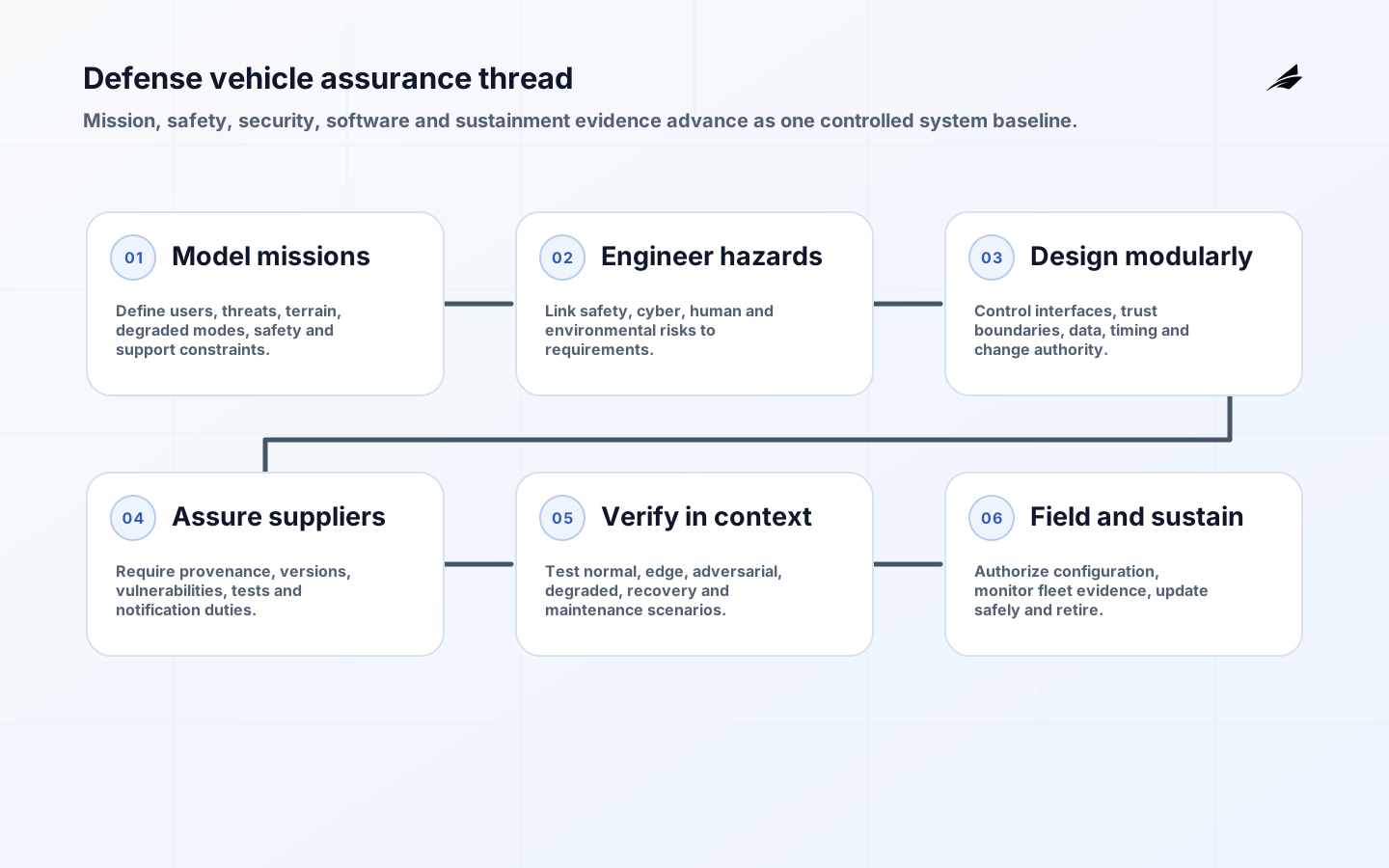
Frame mission scenarios and minimum service first. Translate hazards, threats and human needs into traceable requirements. Establish modular interfaces and trust boundaries before suppliers lock the design. Admit components with provenance and test evidence. Integrate incrementally around representative mission threads. Field only a known configuration with accepted residual risk, then sustain through fleet monitoring, controlled updates, repair evidence and retirement.
- Approve mission threads, system boundary, operational environment, minimum service and lifecycle owners.
- Connect safety, cybersecurity, human, environmental and support risks to verifiable requirements.
- Baseline modular architecture, interfaces, trust zones, data rights and configuration authority.
- Require supplier provenance, software and hardware identity, test evidence, change notice and support obligations.
- Verify complete mission threads under normal, edge, degraded, adversarial, recovery and maintenance conditions.
- Authorize field configuration, monitor fleet evidence, deploy updates in cohorts and preserve rollback plus retirement paths.
Example: a new telematics gateway needs more than bench connectivity. The program traces its power, network and data interfaces; evaluates whether compromise can reach safety or mission buses; tests loss of time and network; verifies key provisioning and depot replacement; injects malformed traffic; checks operator indications; rolls a signed update to a test cohort; and proves recovery from interruption. The result is evidence about a fielded mission thread, not merely a functioning device.
Field and sustain configuration-aware fleets
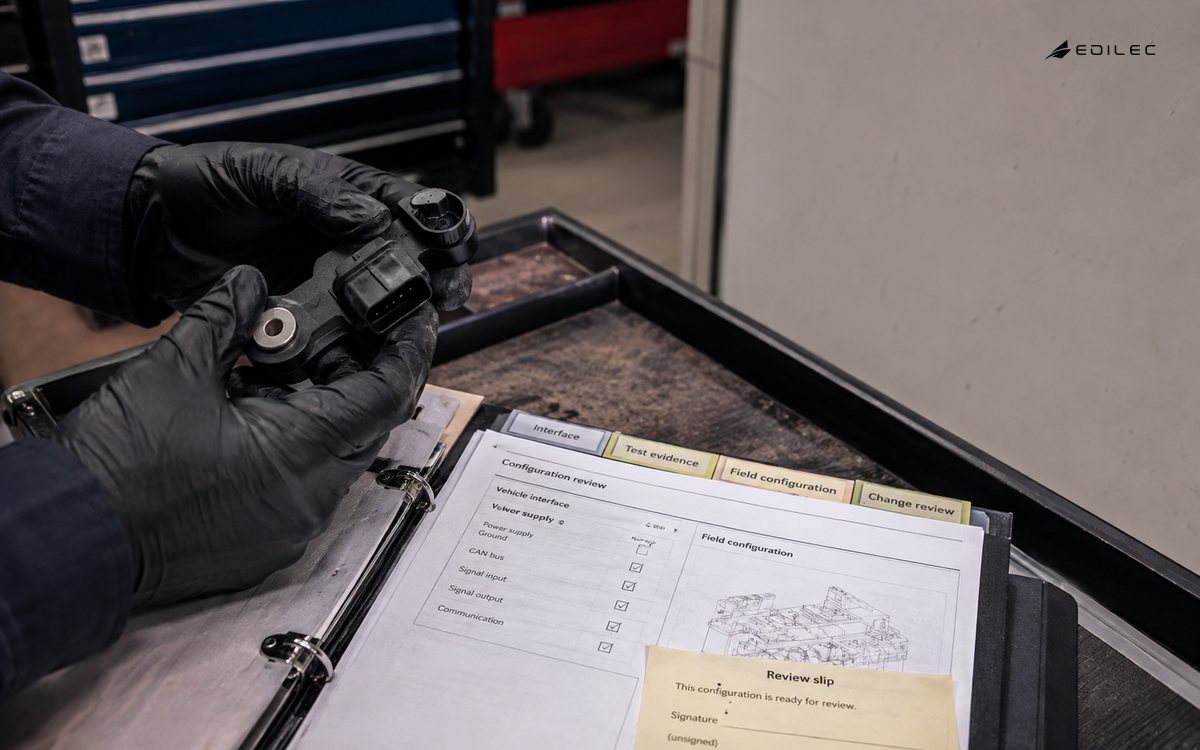
At fielding, record the as-built hardware, firmware, software, calibration, keys and approved deviations for every relevant asset or cohort. Link maintenance actions, incidents, vulnerabilities and updates to configuration. Monitor leading indicators such as unknown fleet state, unsupported components, failed updates, recurring faults, deferred critical fixes, unauthorized changes and recovery-test age. Aggregated availability can conceal a vulnerable or unmaintainable subset.
Use fleet cohorts to isolate uncertainty: laboratory, instrumented trial, training, limited operational and broad field groups. Promotion criteria should combine mission, safety, cyber and maintenance evidence.
Plan technology refresh and obsolescence before parts disappear. Maintain interface rights, test assets, source or escrow where appropriate, toolchains, data conversion and supplier exit options. Retirement requires data sanitization, key revocation, hazardous-material handling, controlled component disposition and update of inventory. A retired vehicle or module should not remain an active identity or a source of sensitive technical information.
Key takeaways
- Engineer the complete defense vehicle system, including people, tools, suppliers, updates and sustainment.
- Use mission threads and minimum degraded service to expose requirements conventional demonstrations miss.
- Connect safety, cyber, human and support analyses while preserving accountable specialist review.
- Make modularity verifiable through controlled interfaces, conformance evidence and configuration authority.
- Field and update only known configurations, with fleet evidence, rollback and residual risk acceptance.
Frequently asked questions
Do civilian automotive regulations apply to defense vehicles?
Applicability depends on jurisdiction, vehicle category, procurement and use. Civilian standards can still offer useful engineering practices, but programs should not claim compliance without a formal applicability and evidence assessment by authorized specialists.
Are over-the-air updates always desirable?
No. They can reduce deployment delay but add communications, authorization, fleet-state and recovery risks. Choose update channels by mission context. Require signed packages, compatibility checks, staged rollout, health monitoring, pause, rollback and an offline maintenance path.
Can a digital twin replace physical testing?
No. Models can accelerate trades and explore hazardous scenarios, but their validity is bounded by assumptions and calibration. Use them as part of an evidence strategy and compare predictions with representative component, integration and operational results.
How should AI-enabled vehicle functions be handled?
Treat the full AI-enabled function as a system, including data, model, software, sensors, human interaction, updates and fallback. Define operating limits, evaluate representative and adversarial conditions, monitor drift and require authorized decisions for material model changes.
Conclusion
Defense automotive engineering succeeds when assurance remains continuous from mission need to fleet retirement. Integrate risk disciplines, control interfaces and suppliers, verify realistic mission threads and know every fielded configuration. A vehicle is trustworthy not because each component passed alone, but because the complete system can perform, degrade, recover and change with accountable evidence.