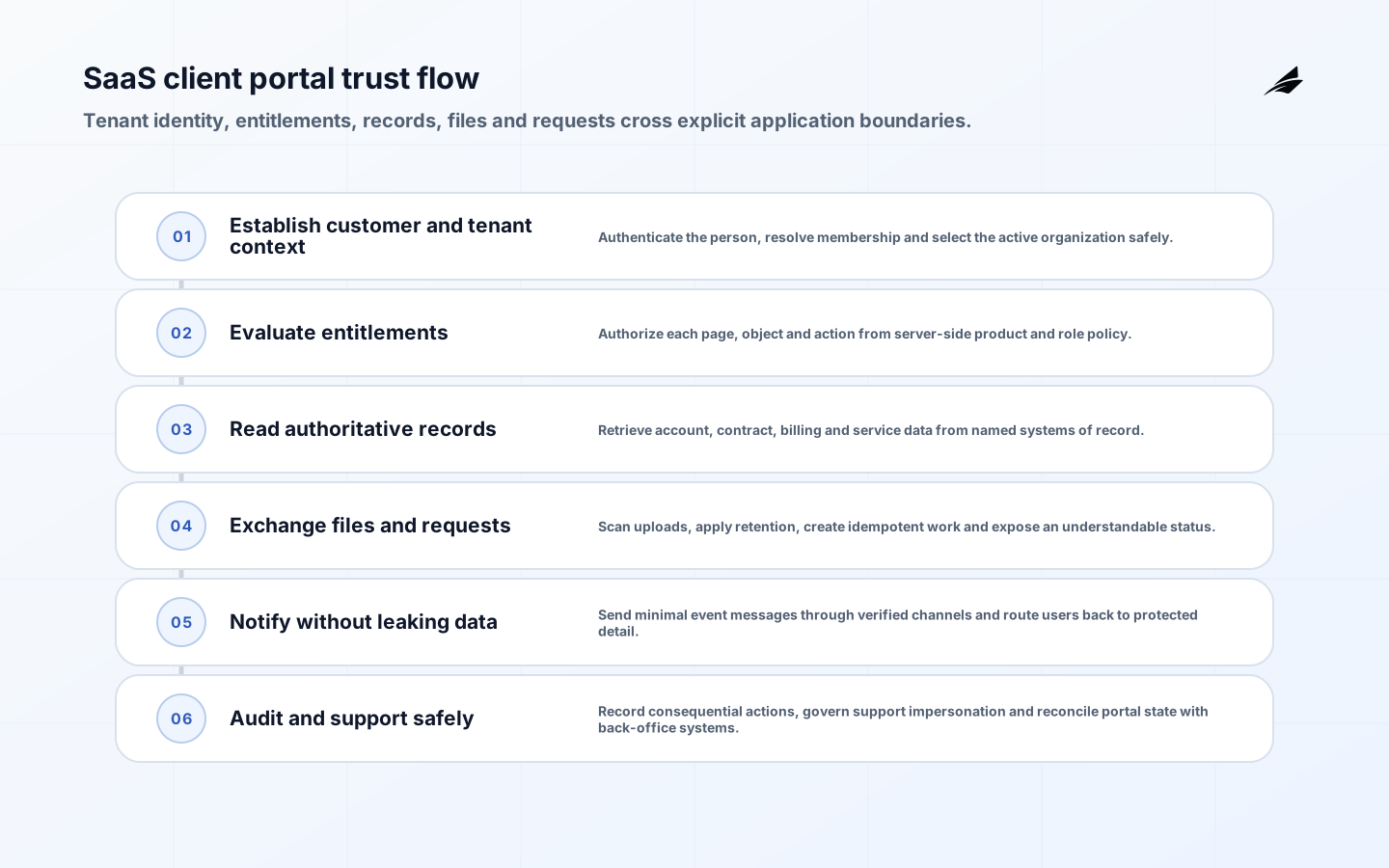
Client portal development for SaaS companies turns internal product and account capabilities into customer-controlled workflows. The portal may expose usage, users, invoices, files, support, configuration and API credentials. Each convenience expands an authorization boundary, so the product must make organization context, entitlement and irreversible actions unmistakable.
The answers below focus on decisions that determine whether a portal is trustworthy and maintainable. The SaaS client portal practical guide and portal implementation checklist provide companion planning and release detail.
1. What should client portal development for SaaS companies include first?
Begin with a complete, high-value self-service journey: invite a teammate, retrieve an invoice, inspect usage or open a support request. Map the customer’s objective, evidence, authorization, confirmation and recovery. Avoid a dashboard of disconnected links. The first release should reduce a measurable service burden or improve customer control without requiring hidden manual correction.
Publish scope by plan and role. Separate informational views from actions that change service, money, access or data. For every action define prerequisites, idempotency, confirmation, audit and undo where possible. If an operation cannot be reversed, use clear impact language and stronger verification. Do not let the portal promise instant behavior when downstream systems are asynchronous.
| Portal capability | Primary authorization | Safe completion evidence |
|---|---|---|
| Invite user | Organization admin and seat entitlement | Recipient, role, expiry and audit event |
| Download invoice | Billing role for the organization | Invoice identity and access record |
| Create API credential | Privileged technical role with recent authentication | One-time secret display and revocation path |
| Delete data | Verified authority plus policy checks | Scope, delay, receipt and recovery rule |
2. How should tenant isolation and roles work?
Associate each resource with a tenant and enforce that relationship on the server for reads, writes, search, jobs, exports and files. Test guessed identifiers and membership changes. Users belonging to multiple organizations need a visible active context, and links should not perform a privileged action under an unexpected tenant. Administrative support access needs separate controls and audit.
Model roles from customer responsibilities rather than internal database permissions. Keep a small default set, document capabilities and allow least-privilege assignment. NIST Zero Trust Architecture emphasizes policy decisions based on subjects and resources rather than assumed network trust. Re-evaluate access after suspension, plan change, organization transfer and user departure.
3. What identity and account-recovery choices matter?
Choose assurance from the consequence of account takeover. The current NIST Digital Identity Guidelines provide a risk-based structure for identity proofing, authentication and federation. Use established identity components, support strong authenticators, rate-limit abuse and secure sessions. Enterprise federation may be important, but local emergency administration and domain-claim processes need careful design.

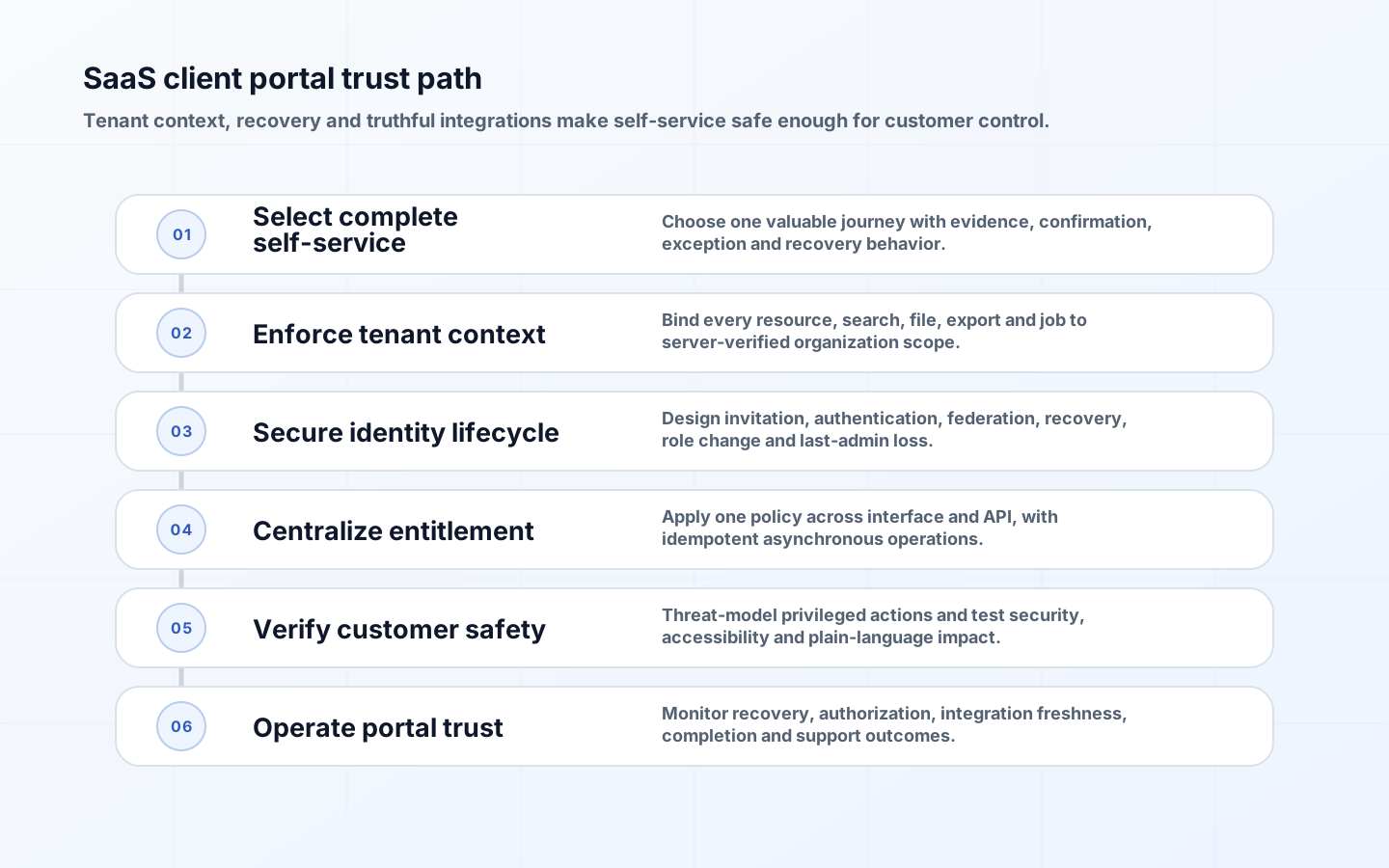
Recovery is part of authentication, not a help-desk afterthought. Define who can recover an owner, what evidence is accepted, how existing sessions are handled and how customers are notified. Avoid security questions and easily forged business documents as sole proof. High-impact recovery should create delay, independent review or notification appropriate to risk. Rehearse loss of the last administrator.
| Lifecycle event | Portal behavior | Control to test |
|---|---|---|
| Invitation | Bound recipient, role and expiration | Token replay and email change |
| Role change | Immediate server-side authorization update | Stale session and cached menu |
| Subscription downgrade | Predictable entitlement transition | Background job and API enforcement |
| Account closure | Export, retention and deletion workflow | Reactivation and audit completeness |
4. How should product, billing and support integrations behave?
Treat the portal as a client of authoritative domain services. It may display billing, usage and support data, but ownership should remain explicit. Define contracts, timestamps, pagination, rate limits, retries and error semantics. For changes, use idempotency keys and expose pending state. A successful interface response should mean the business operation was accepted, not merely that a button fired.
Keep entitlement logic centralized and test it across interface and API. Webhooks require signature verification, replay defense and reconciliation. Files need content validation, storage isolation and download authorization. Customer-generated names and messages are untrusted output as well as input. Avoid leaking internal identifiers, stack traces, vendor errors or data from another tenant in failure screens.
5. How is the portal built, verified and made accessible?
Use NIST’s SSDF to shape protected development, secure production and vulnerability response. Select a testable control baseline from the OWASP ASVS. Threat-model tenant isolation, impersonation, account recovery, exports, billing and credentials. Automate dependency, secret and code checks, then add manual authorization and business-logic testing.
Accessibility is necessary for self-service. Support keyboard navigation, visible focus, semantic names, useful error summaries, adequate contrast and zoom. Test screen readers on important journeys and do not rely on color or transient toast messages for confirmation. Plain language improves security: customers should understand which organization, resource and consequence an action affects before confirming it.
6. How should the portal be launched and operated?
Pilot with customers representing different plans, organization sizes and identity setups. Migrate invitations, roles and preferences carefully, and provide a verified support route. Instrument completion, abandonment, permission denials, integration failure and support contact after self-service. High containment is not success if customers abandon tasks or perform unsafe workarounds.
Assign ownership for product journeys, identity, entitlement, billing data and incidents. Monitor authorization anomalies, failed recovery, webhook backlog, stale usage, file scanning and critical action errors. Maintain status communication and a read-only or support fallback for dependency outages. Review audit events and customer feedback after material role or billing changes.
7. Design privacy, audit and customer-facing evidence
Give customers understandable controls for profile data, communications, connected applications and exports. Explain which records an organization administrator can see and which remain personal. Apply retention to messages, files, audit events, analytics and abandoned invitations. Deletion needs dependency-aware orchestration, status and exception handling; deleting a primary row while leaving search indexes or object storage untouched is not completion.
Audit material actions such as recovery, role change, federation configuration, credential creation, export, billing update and deletion. Record actor, tenant, target, time, channel and result without copying unnecessary secrets or content. Offer customer-visible history where it improves control, while retaining protected security telemetry separately. Synchronize clocks and preserve correlation identifiers across downstream services so incidents can be reconstructed.
Create receipts for consequential self-service. After a plan, access or data change, show what changed, when it takes effect, pending steps, expected billing impact and how to seek help. Send notifications through verified channels according to risk. Receipts reduce support ambiguity and let customers detect unauthorized behavior. Test localization and timezone presentation so evidence remains clear for global organizations.
Design delegated administration for the customer's real operating model. Large organizations may require several billing, security and technical owners, approval separation or temporary contractor access. Avoid forcing credential sharing because the role model is too coarse. Provide membership reviews and expiring access where appropriate. Explain the effect of removing the last person in a critical role and require succession before the action completes.
Test subscription transitions, not only steady-state plans. Trials ending, invoices failing, contracts renewing and organizations downgrading can change access while work is active. Define grace periods, read-only states, export rights and communication. Entitlement changes should be atomic or visibly pending, and reconciliation must repair mismatches between billing, product and identity without granting unpurchased capability.
Keep API and portal behavior consistent. Customers may perform the same operation through either surface, so authorization, validation, idempotency and audit should come from shared domain services. Publish version and rate-limit behavior where relevant. A portal shortcut that bypasses the product contract creates contradictory states and unsafe future automation. Run contract tests for interactive and programmatic clients.
Provide operational tools that respect customer boundaries. Staff need tenant-aware search, safe diagnostics, controlled repair and visibility into asynchronous state. Separate observation from mutation and require stronger authorization for repair. Every manual correction should create an audit event and, where appropriate, a customer receipt. Hidden database edits undermine trust and later reconciliation.
Set availability objectives around customer journeys and dependency behavior. A portal page can load while billing or identity actions fail, so synthetic checks should complete representative operations in a safe test context. Monitor queue age and stale-data indicators, not only request status. Publish incidents with customer impact and workarounds, then reconcile transactions after recovery. Reliability reporting should describe what customers could accomplish, not just whether servers responded.
Review customer-facing permissions and help content after every major capability release. New objects and actions can create gaps in old roles, audit views and recovery instructions. Include these dependencies in the release checklist rather than discovering them through access complaints.
Key takeaways
- Launch one complete self-service journey with explicit authority and recovery.
- Enforce tenant context in every data path, including jobs and exports.
- Design account recovery to the same risk level as authentication.
- Centralize entitlements and reconcile asynchronous integrations.
- Measure customer completion and safety, not deflection alone.
Frequently asked questions
Does every SaaS portal need single sign-on?
Not every early segment requires federation, but enterprise customers may. Design identity boundaries so federation can be added without bypassing tenant membership and roles. Provide safe break-glass ownership and test deprovisioning from the customer identity provider.
Should support agents impersonate customers?
Prefer read-only diagnostic views and explicit delegated support. If impersonation is necessary, require separate authorization, customer context, prominent indication, limited actions, audit and short duration. Never let it conceal who actually performed a material change.
Does a portal need a separate mobile application?
Usually a responsive accessible web service is the better first scope. Build a native application when device capabilities, offline work or repeated mobile use provide clear value. A second client also multiplies authorization, release and support obligations.
Conclusion
A SaaS client portal is a trust boundary presented as self-service. Clear tenant context, robust recovery, centralized entitlement and truthful integration states let customers act confidently. When those foundations are verified and operated well, convenience strengthens the product instead of expanding hidden risk.