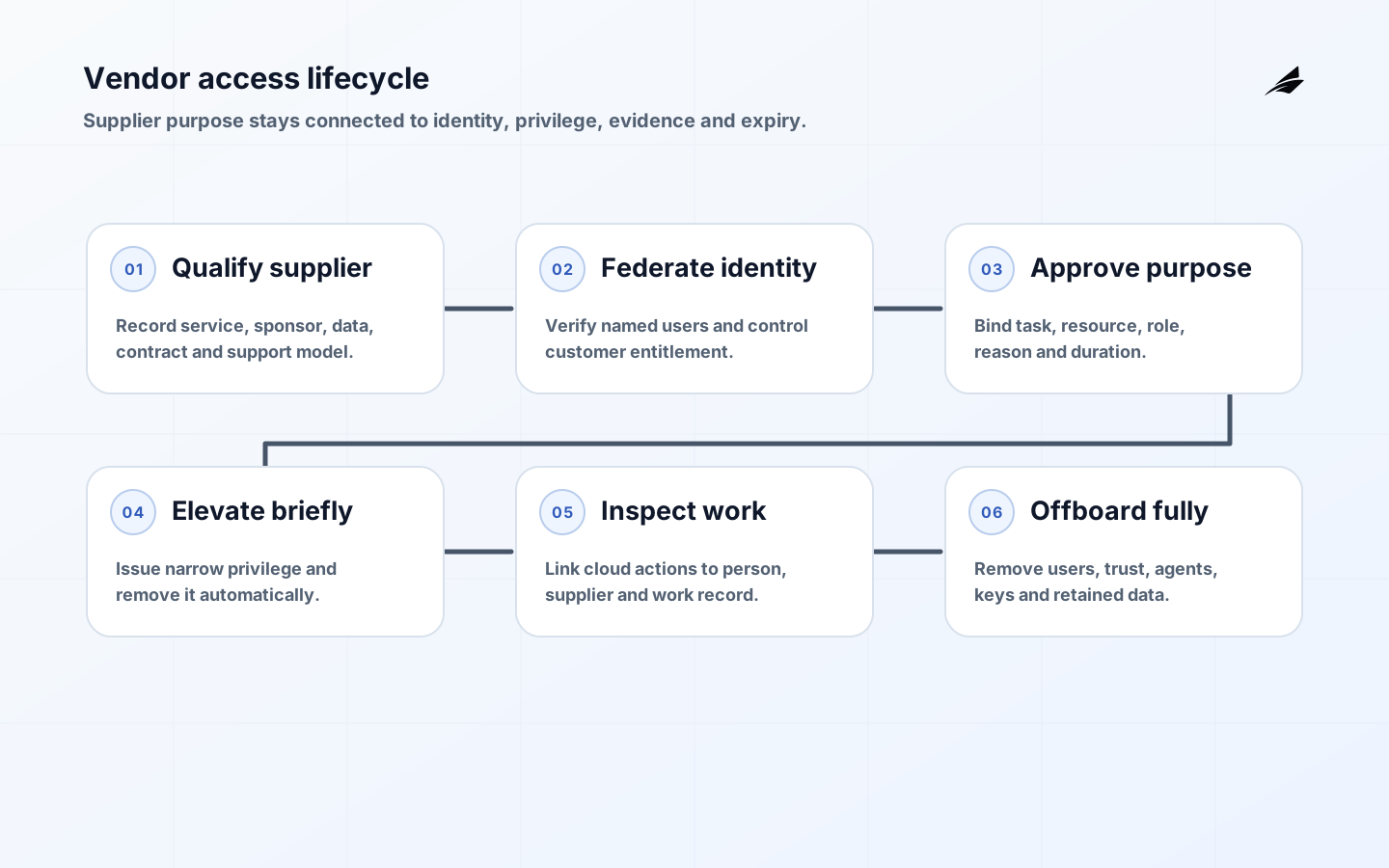
Vendor access management for cloud systems is the lifecycle that connects a contracted purpose to a verified person, bounded cloud permissions, monitored activity and prompt removal. It should not be a permanent administrator account created because support may need it later. Suppliers, consultants and managed-service staff often require consequential access, but their identities, employment changes, devices and subcontractors sit outside the customer’s direct workforce controls. The design must preserve accountability without making urgent support impossible.
Zero trust guidance rejects implicit trust based on network location and emphasizes resource-focused, continuously evaluated access. Apply that principle practically: every vendor session should answer who is acting, for which supplier, under what approved task, from what assurance context, against which resource and until when. NIST supply-chain guidance adds due diligence and continuing supplier risk. Contracts, identity and technical policy must describe the same operating model.
Inventory vendor relationships and access paths
Build a register of suppliers, services, sponsors, contract dates, data access, systems, support model, locations, subprocessors and exit obligations. Discover direct cloud users, guest identities, support portals, API keys, VPN accounts, shared secrets, service accounts and remote-management tools. Compare the identity provider, cloud audit logs and procurement records to find unmanaged paths. A contract register without technical identity evidence will miss access created during incidents or projects.
Classify access by consequence: read-only diagnostics, configuration change, production deployment, data export, identity administration or emergency containment. Document expected frequency and hours. Challenge broad access justified by convenience. A vendor that operates backups may need job and restore permissions but not billing or directory administration. Map every privilege to a cataloged task and accountable internal sponsor.
| Access type | Preferred pattern | Approval | Maximum evidence |
|---|---|---|---|
| Routine support | Federated named account with narrow role | Sponsor and resource owner | Session, ticket and cloud audit link |
| Privileged change | Just-in-time elevation | Change or incident authority | Command/action and validation record |
| Automation | Workload identity with scoped API role | Service owner and security | Keyless or rotated credential usage |
| Emergency | Break-glass role with alerting | Predefined incident authority | Immediate review and revocation |
| Data transfer | Purpose-specific export path | Data owner | Dataset, destination and deletion evidence |
Put identity and evidence requirements in the agreement
Require named accounts, prohibited sharing, strong authentication, least privilege, approved locations where relevant, incident notification, subcontractor control and cooperation with investigations. Define joiner, mover and leaver notifications and maximum removal time. State who owns accounts, logs, configurations and automation. Require the supplier to disclose material changes to support delivery and to return or delete customer data and credentials at exit. The contract should allow evidence proportionate to risk without promising impossible unrestricted audits.
Align service targets with customer actions. If just-in-time access requires approval, name available approvers and emergency rules. If the vendor must respond within minutes, ensure federation and elevation work out of hours. Assign consequences for unsupported access paths and stale accounts. NIST SP 800-161 Rev. 1 provides a broader framework for integrating supplier risk into enterprise governance; access is one control within continuing relationship management, not a one-time questionnaire.
Prefer federation and contextual, time-bound privilege
Federate from an approved identity source where possible so supplier identity remains current while the customer controls resource entitlement. Map supplier groups to customer roles deliberately; do not trust arbitrary claims. Require authentication assurance appropriate to consequence and protect recovery. Avoid local cloud users unless a documented limitation requires them. If local accounts exist, put them in a separate inventory with expiration and stronger review.
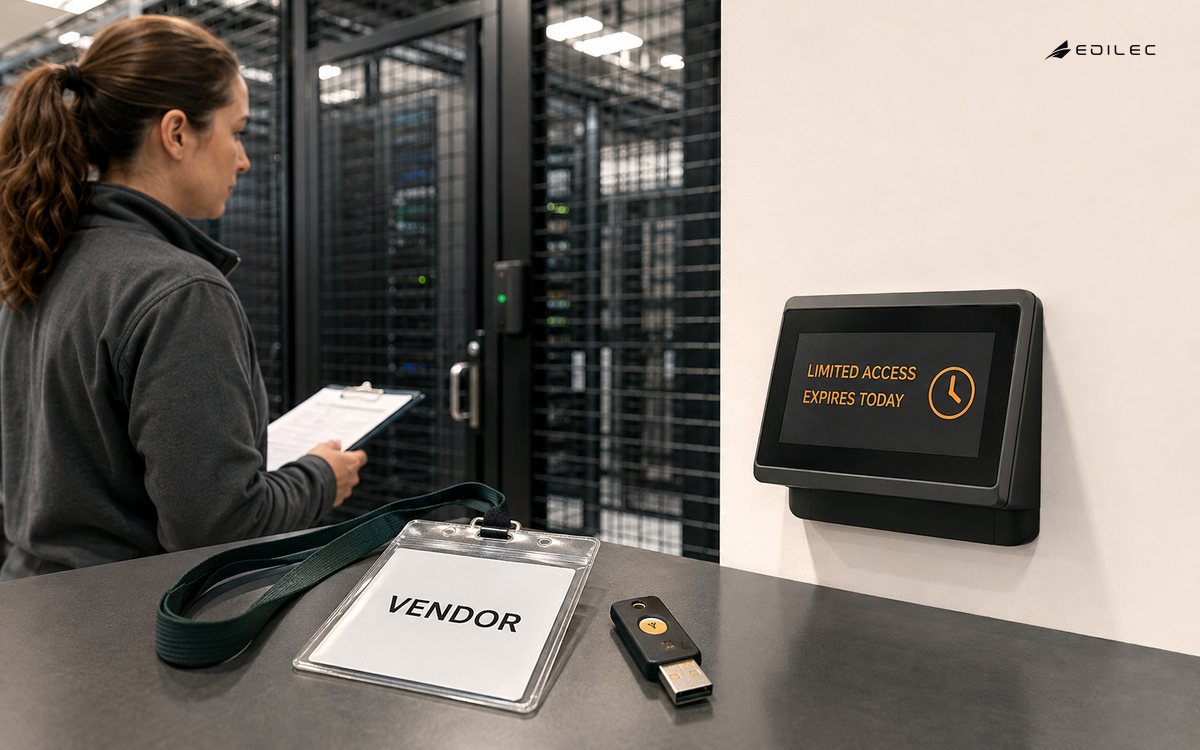
Use just-in-time elevation for privileged work. The request should reference a ticket or incident, resources, role, reason and duration. Approval must be meaningful but not ceremonial. Enforce maximum duration and remove privilege automatically. Separate standing ability to request from current authority to act. Conditional signals such as managed device, location and risk can inform policy, but high-risk work still needs resource authorization and should fail safely when the signal service is unavailable.
Control vendor automation and non-human identities
Supplier agents and integrations often outlive human accounts. Inventory every service identity with owner, purpose, permissions, credential type, environment and rotation or federation method. Prefer workload federation or short-lived credentials over exported long-lived keys. Restrict network and API paths and prevent automation identities from interactive login. Store configuration and deployment source in a customer-visible repository so the identity can be rebuilt or removed.
Plan credential rotation without service interruption and test revocation. A secret stored in a vendor ticket or engineer laptop remains outside the intended control plane. Monitor unusual volume, geography, new APIs and privilege changes for service identities as well as people. At contract exit, remove trust relationships, agents, application registrations, certificates and webhook credentials; disabling human guests alone is incomplete.
Link vendor activity to work and detect misuse
Centralize identity, elevation, cloud control-plane, data and support-tool logs with synchronized time and stable identifiers. A reviewer should move from a cloud action to the person, supplier, approved task and resulting validation. Alert on dormant-account use, elevation without ticket, access outside expected resources, new credential creation, disabled logging and large exports. Protect the audit path from the same roles it monitors.
Review samples of normal work, not only alerts. Confirm the vendor used the narrow role, documented the result and left the resource in an approved state. During an incident, preserve evidence and coordinate containment; instantly disabling a supplier may also remove the only recovery capability. Define pre-authorized actions and alternative internal access. Rehearse a compromised vendor identity and verify that affected resources can be identified and privilege revoked without disabling unrelated suppliers.
| Lifecycle gate | Required proof | Failure signal |
|---|---|---|
| Onboard | Sponsor, contract, identity and role match | Access requested before due diligence |
| Elevate | Task, approval, duration and resource are recorded | Standing administrator role |
| Operate | Actions link to identity and work record | Shared account or missing control-plane logs |
| Review | Entitlement and actual use are sampled | Dormant or unexplained permissions |
| Offboard | Human and service trust are removed and verified | Keys, agents or guest accounts remain |
Review entitlement and exercise offboarding
Review high-impact access more frequently and after sponsor, scope, supplier or platform change. Ask resource owners to attest to specific permissions and recent use, not merely a list of group names. Remove dormant access instead of recertifying it by default. Track exceptions with expiry. Review supplier security and contractual status alongside entitlement so a technically valid account does not survive an ended agreement.
Exercise offboarding before the contract ends. Export customer-owned configuration and case history, transfer service identities, revoke federation, remove guests and roles, rotate shared dependencies, uninstall agents and verify data return or deletion. Monitor attempted use afterward. Maintain emergency internal procedures so commercial disputes do not become availability incidents. Exit readiness is a recurring resilience control.
Implement vendor access in four controlled increments
First, discover identities and trust paths and suspend creation of unmanaged shared accounts. Second, establish federation, sponsors, role catalog and expiration for one high-value cloud scope. Third, add just-in-time elevation, work-record linkage and monitoring. Fourth, migrate service identities and exercise incident response and offboarding. Keep the legacy path visible with an owner and retirement date while migration proceeds. Removing access before an alternative is tested can interrupt critical support; leaving both paths indefinitely doubles exposure.
Acceptance should use an end-to-end supplier scenario. Onboard a named engineer, approve a narrow production task, elevate access, perform and validate the change, investigate the logs, revoke the identity and remove a test automation credential. Confirm that the supplier and customer records agree. Repeat after a sponsor or contract change. Automate routine evidence, but retain accountable review for high-consequence privileges and exceptions.
Publish a small role catalog that describes permitted tasks in language understood by resource owners. Map it to cloud permissions through version-controlled policy and test both allowed and denied actions. Review role changes like application code because one broad wildcard can invalidate an otherwise careful approval flow. Keep old versions and migration notes so investigators can determine what a vendor could do at the time of an event.
Measure stale access, percentage of privilege issued just in time, unexplained actions, revocation time, dormant service identities and offboarding completion. Counts alone are not enough: sample high-impact sessions for purpose and result. Report supplier dependencies that prevent improvement. The target is less standing authority and faster accountable support, not simply more access requests.
Include failed access attempts and denied elevations in review; they can reveal stale procedures or misuse before a successful action occurs.
Key takeaways
- Bind each vendor identity and privilege to a contracted purpose and sponsor.
- Prefer federation, named accounts and short-lived elevation.
- Treat service identities, agents and API keys as part of the same lifecycle.
- Link cloud activity to approved work and preserve customer-visible evidence.
- Test compromised-identity response and complete offboarding before exit.
Frequently asked questions
Can a managed provider keep permanent cloud administrator access?
It should be exceptional. Most work can use narrow standing access plus time-bound elevation. If permanent privilege is necessary, document the reason, constrain its use, monitor every action and review frequently.
Should vendor users be created in the customer directory?
Federated guest identities are often preferable, but design depends on platform and assurance needs. The customer must control entitlement, expiration and audit regardless of where authentication occurs. Avoid unmanaged local accounts.
How long should vendor access logs be retained?
Set retention from investigation, contractual, regulatory and operational needs. Preserve enough context to understand consequential actions while minimizing unnecessary personal data. Protect integrity and test retrieval.
Conclusion
Vendor access is trustworthy when purpose, identity, privilege, activity and expiry remain connected. Implement the lifecycle as a cloud platform capability rather than a quarterly spreadsheet exercise. Before accepting it, onboard a user, elevate a real task, investigate the session, revoke access and remove the supplier’s automation. Any step that depends on memory or a shared credential is unfinished.