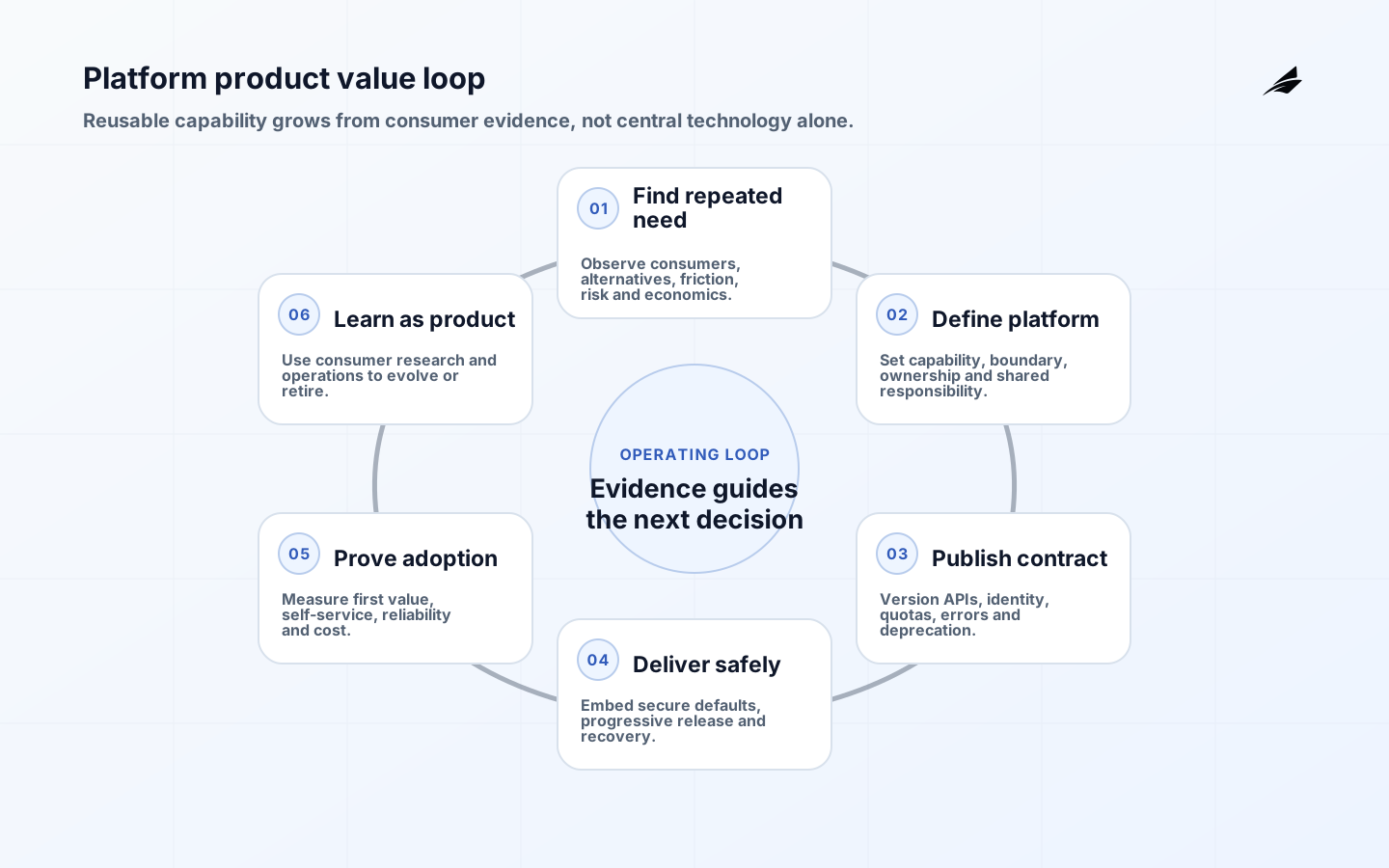
A product solves a problem for a defined market or user group; a platform supplies reusable capabilities that multiple products or teams consume. Both need product thinking: named users, outcomes, ownership, roadmap, service quality and feedback. Confusion begins when a shared component is called a platform to justify central control, or when every customer deployment is called a product despite having no repeatable proposition. This FAQ helps leaders choose boundaries and an operating model.
Use it with the products and platforms practical guide, the implementation checklist and, for regulated connected products, the medical device platforms guide.
What is the practical difference between a product and a platform?
A customer-facing product creates value through an end-to-end experience and business outcome. A platform creates leverage by making a curated capability easier, safer or cheaper for multiple consuming teams. Platforms may be external ecosystems, data platforms, commerce foundations or internal developer platforms. The CNCF Platforms White Paper describes internal platforms as curated capabilities and experiences. A pile of cloud accounts, CI tools or APIs is not automatically a coherent platform.
Define the platform’s consumers and the job it improves: deploy a compliant service, publish governed data, integrate payments or manage identities. Name what remains a consumer responsibility. The platform should reduce cognitive load without hiding consequential choices. A paved path can encode safe defaults and still allow a documented route for workloads with different needs. Measure whether users succeed, not how many tools the platform team installs.
| Dimension | Product | Platform |
|---|---|---|
| Primary user | Customer or operational user | Product team, developer, partner or system |
| Value | Outcome from an end-to-end experience | Reusable leverage and reduced friction |
| Boundary | Workflow and proposition | Capabilities, contracts and responsibility |
| Roadmap input | Market, users and business strategy | Consumer needs, standards and shared economics |
| Failure impact | Direct user or revenue harm | Potential impact across many consuming products |
When should a shared capability become a platform?

Look for repeated demand, expensive inconsistency, specialist knowledge and a capability that can be expressed through a stable contract. Identity, deployment, observability and event delivery are common candidates. Do not centralize solely because duplication exists; local variation may reflect different risk or product needs. Estimate the cost of building and operating the platform, consumer migration and support against avoided effort and improved control.
Start with two or three willing consumers and a thin end-to-end path. Discover their workflow, constraints and current alternatives. Build the minimum reusable service plus documentation, onboarding and support. The CNCF Platform Engineering Maturity Model emphasizes intentional reflection and outcomes. Maturity is not the number of portals or Kubernetes clusters; it is the organization’s ability to deliver useful platform experiences and improve them.
How do you manage a platform as a product?
Assign a product manager, engineering owner and service owner. Maintain consumer research, a roadmap, service objectives, support model and deprecation policy. Segment users because a data scientist, mobile team and regulated service may need different paths. Publish capabilities, constraints, costs, ownership and examples. Provide fast feedback during onboarding. A self-service portal is useful only if the underlying process actually completes without hidden tickets and specialist intervention.
Prioritize from consumer value, risk reduction, reliability and total economics. Avoid accepting every request into a universal abstraction. Some needs belong in extensions or consumer applications. Use product discovery before broad construction and review whether each capability has enough demand to justify ongoing support. A platform with mandatory adoption but no feedback mechanism can report high use while causing widespread workarounds.
What makes a reliable platform contract?
Define APIs, events, schemas, identity, quotas, error behavior, support, service objectives, change notice and deprecation. Version material contract changes and supply conformance tests or sandboxes. Make idempotency and retry behavior explicit. For data platforms, name semantic and quality owners. For developer platforms, identify which controls are inherited and what consumers must still implement. Documentation and examples are part of the contract, not optional marketing.
Prefer compatibility and migration support over permanent stagnation. Announce changes with impact, alternatives, dates and tooling. Track consumers and confirm migration; a broadcast message is not deprecation evidence. Maintain escape hatches for unsupported cases, but require ownership and prevent accidental fragmentation. Contract testing in consumer and platform pipelines catches breakage earlier than integration testing after release.
How should security work across products and platforms?
Platforms can centralize strong defaults for identity, secrets, logging, dependencies and deployment, but their blast radius makes platform compromise consequential. Threat-model control planes, tenant isolation, build systems, plugin ecosystems and privileged support. The NIST SSDF supplies secure development practices across preparation, software protection, secure production and vulnerability response. Require artifact provenance and constrain platform administration.
CISA Secure by Design encourages manufacturers to make customer security a core requirement. For platforms, secure defaults should be the easiest path and essential controls should not be premium add-ons. State the shared responsibility boundary in user documentation. Test whether a consumer can accidentally disable logging, expose data or deploy an untrusted artifact. Preserve independent security evidence when the same platform both enforces and reports a control.
How do platforms manage reliability and change risk?
Map critical consumers and failure modes. Set service objectives based on their needs, with dependency and maintenance assumptions. Use staged rollout, compatibility testing, canaries and rollback. A platform incident can affect many products simultaneously, so segment blast radius and avoid global changes without progressive evidence. Exercise loss of identity, registry, deployment, network or data capability and define consumer fallbacks.
Track deployment frequency, lead time, change failure and recovery as useful software-delivery signals. The DORA metrics guide explains these measures, but platform teams should not use them as isolated targets. Pair delivery metrics with consumer task success, reliability and quality. Faster platform releases that force emergency consumer changes are not improved performance.
| Platform measure | Defensible definition | Behavior to avoid |
|---|---|---|
| Adoption | Eligible teams completing real work through the path | Counting logins or mandated accounts |
| Time to first value | Request to successful production use | Stopping at portal submission |
| Self-service completion | Journeys finished without manual platform action | Hiding tickets behind automation |
| Consumer reliability | Successful platform-dependent operations | Reporting only platform process uptime |
| Unit economics | Platform cost per useful transaction or team | Ignoring consumer migration and support cost |
How should a platform be funded and governed?
Fund foundational capacity as a product with a multi-period roadmap, not a temporary project expected to become maintenance-free. Make consumption cost visible and decide whether showback, chargeback or central funding supports desired adoption. Excessive per-use charges can drive unsafe alternatives, while free unlimited use can hide waste. Review total economics across platform and consumer teams.
Govern through clear decision rights and consumer representation. Platform owners decide shared contracts and reliability; domain owners decide product behavior and data meaning; security sets risk requirements with accountable exceptions. Use an architecture forum for consequential cross-platform changes, but keep routine decisions within teams. Publish decisions and provide an appeal path. Retire capabilities when value no longer covers operating and migration cost.
Should teams build or buy platform capability?
Buy commodity capability when a provider meets requirements and switching risk is manageable. Build where workflow, policy, integration or experience creates meaningful advantage. Most platforms compose vendor services with organization-specific contracts and interfaces. Evaluate portability, data access, identity, extensibility, operating evidence, support and exit. Avoid recreating a vendor product with a small internal team merely to claim control.
Run a proof using representative consumers and failure scenarios, not a polished demo. Include migration, security, observability, cost and staff skills. Contract for change notice, export and vulnerability response. Keep the abstraction thin enough that teams can understand underlying constraints. A platform cannot make a provider outage or quota disappear; it can make the dependency visible and provide a consistent fallback.
Key takeaways
Review platform health with consumers in the room. Combine telemetry with journey observation, support themes and abandoned onboarding attempts. A team that built its own workaround may disappear from the platform dashboard while supplying the clearest evidence that the contract, reliability or support model does not meet the real need.
What does a thin platform release look like?
Consider a deployment platform for internal service teams. The first release might create a repository from an approved template, provision a non-production environment, apply identity and logging defaults, deploy through a guarded pipeline and expose health and ownership. Two consumer teams should complete the path with ordinary support. Measure elapsed time, manual intervention, failed steps and understanding of their remaining responsibility. Do not begin by building a broad portal that fronts incomplete workflows.
The second release should respond to evidence: perhaps teams need a clearer error, an approved database option or faster access review. Add capability only when it can be operated and supported. Test upgrade, rollback and consumer notification. This sequence demonstrates the platform’s value loop and gives security and operations real usage to assess before mandatory adoption increases the blast radius.
- Define a platform through consumer value and reusable capability, not centralized technology.
- Treat onboarding, documentation, support, reliability and deprecation as product features.
- Publish contracts and shared responsibility with safe defaults and tested escape paths.
- Measure completed consumer work, reliability and total economics alongside delivery speed.
- Fund continuous ownership and preserve portability for strategic dependencies.
More products and platforms questions
Should platform adoption be mandatory?
Mandate only controls or capabilities that have a justified organization-wide requirement and a usable path. Earn broader adoption through value. Provide reviewed exceptions for needs the platform cannot meet and use those cases as product research.
Conclusion
Products create outcomes; platforms create leverage for products and teams. Both require close attention to users, evidence and operation. A platform deserves the name when it provides a coherent, reliable path that consumers choose or can confidently depend on, while leaving responsibility and change visible.