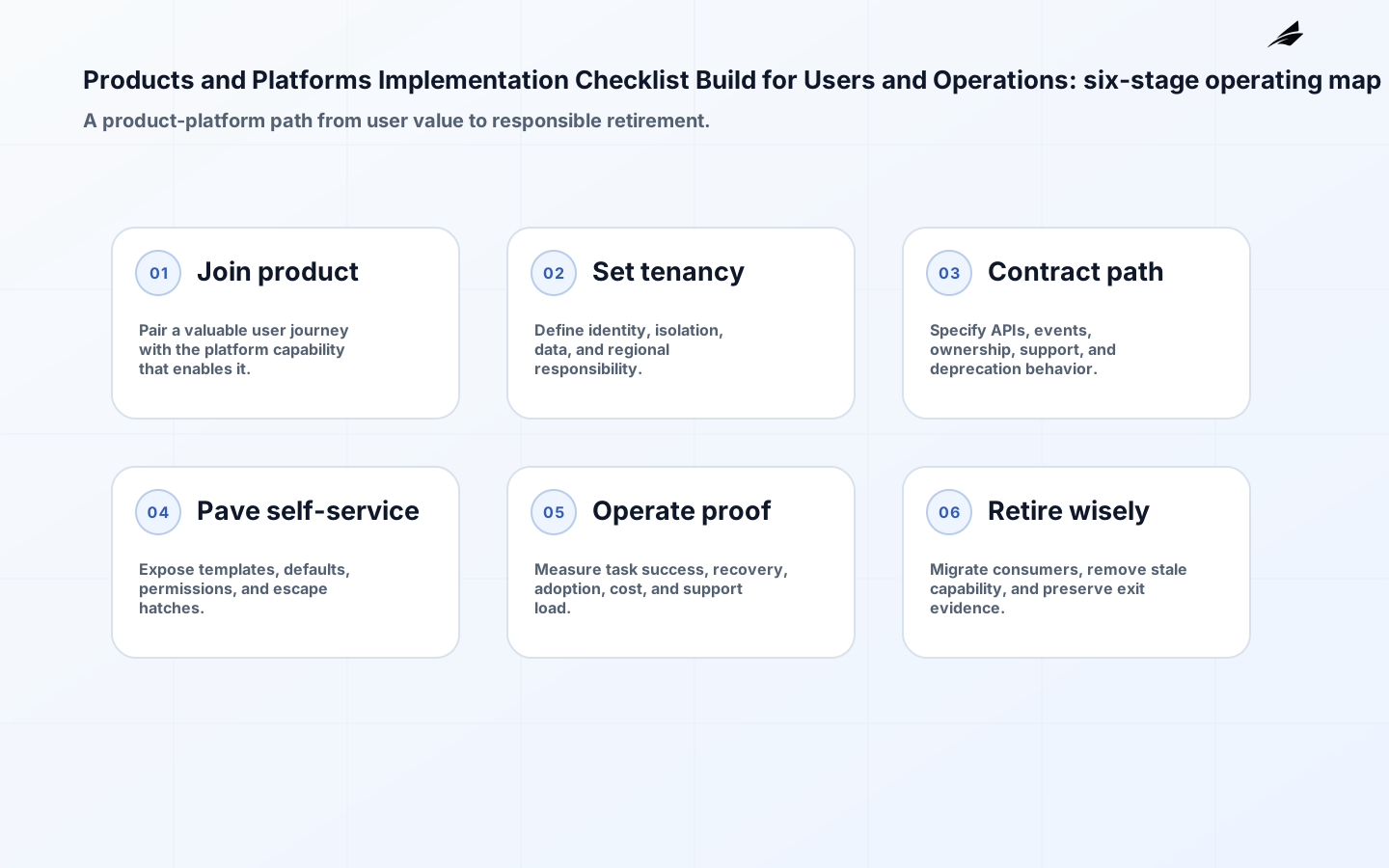
Use the products and platforms practical guide and products and platforms FAQ for portfolio decisions. Teams in regulated contexts can compare the medical device platform guide. Platform-side, begin with a named user and workflow; shared capability should emerge from repeated, evidenced needs rather than a desire to standardize everything.
1. Define the user outcome and platform customer
For a market product, specify the user, job, current alternative, pain, target behavior and buyer. Observe complete journeys including onboarding, normal work, exception, support, billing and exit. For an internal platform, developers or operational teams are customers. Identify their tasks, constraints and present waiting time. CNCF guidance describes platform engineering as building self-service development platforms and emphasizes treating the platform as a product.
Write measurable outcomes before a feature backlog. Product measures may include successful activation, completed work, retention and support burden. Platform measures may include time to first deployment, lead time for an approved environment, adoption by eligible teams and reduction in repeated toil. Add guardrails for reliability, security, accessibility and cost. Assign a product manager with authority to decline requests that dilute the outcome.
| Question | Product evidence | Platform evidence |
|---|---|---|
| Who is the user? | Segment, role, journey and buyer | Eligible developer or operator teams |
| What improves? | Behavior and outcome baseline | Workflow time, cognitive load or reliability |
| What is shared? | Reusable domain capability | Golden path, service or policy control |
| What stays optional? | Configuration and integration choices | Escape hatch with owned risk |
| What ends support? | Lifecycle and migration policy | Deprecation, replacement and consumer plan |
2. Set product, platform and tenancy boundaries
Define domain ownership and stable interfaces. A platform should standardize recurring undifferentiated needs such as identity integration, deployment, secrets, telemetry or approved data access, while product teams retain domain decisions. Avoid a universal layer that becomes a ticket queue and common failure point. Publish service tiers, consumers, dependencies, quotas, support and deprecation. Give teams an exception path with explicit ownership rather than forcing unsafe workarounds.
For SaaS, choose tenancy boundaries for identity, data, compute, configuration, encryption and observability according to isolation risk and economics. Enforce tenant context at every request and background job; test cross-tenant access and export. Separate control plane from data plane where it improves security and operations. Define regional placement, backup, deletion and customer-managed keys only when the team can operate those promises through failure and migration.
3. Approve evolvable architecture and contracts
Document system context, components, data authority, trust boundaries and critical dependencies. Prefer modular boundaries supported by team ownership and change patterns, not fashionable decomposition. APIs need schema, authentication, authorization, idempotency, error, timeout, retry, version and rate-limit behavior. Events need identity, ordering assumptions, replay and consumer compatibility. Record architecture decisions and conditions for revisiting them. Test the highest-risk integration before committing the release plan.
Treat migration and backward compatibility as product capabilities. Version database and API changes, support mixed deployments during rollout, and define deprecation communication and telemetry. Provide consumer contract tests. Infrastructure should be reproducible and environments should differ by configuration rather than manual construction. Set budgets and scaling limits. Architecture is credible when the team can explain degradation, data recovery and how a consumer moves away from a capability.
4. Build security, accessibility and supply-chain evidence
Map the NIST SSDF to delivery evidence: protected repositories, reviewed changes, secure build, dependency management, vulnerability response and release provenance. Apply threat modeling and least privilege. Protect administrative and tenant operations with strong authentication and authorization. Track dependencies and attest build provenance where risk warrants it; SLSA 1.2 provides a specification that producers and consumers can use to reason about software supply-chain trust.
Design accessibility into components and complete workflows. WCAG 2.2 covers perceivable, operable, understandable and robust web content and requires complete pages and processes for conformance. Test keyboard use, focus, zoom, errors, authentication and assistive technology. A design system can reduce repeated defects but only if products use components correctly and test composed experiences. Include security and accessibility defects in release decisions rather than separate post-launch queues.
| Release evidence | Minimum proof | Owner |
|---|---|---|
| User value | Observed journey and acceptance scenario | Product manager |
| Architecture | Decision records, contracts and failure tests | Technical owner |
| Security | Threat model, access tests and supply-chain record | Security owner |
| Accessibility | Automated and human complete-journey tests | Product and accessibility owners |
| Operations | Service objectives, telemetry, recovery and support | Service owner |
5. Deliver self-service with safe defaults
A platform golden path should turn a common intent into a supported outcome: create a service, obtain an environment, deploy, observe and recover. Provide templates, documentation, examples and policy automation, but expose what the path creates. Measure completion and failure, then observe users attempting real tasks. Self-service that requires private chat assistance or unexplained configuration has moved the queue rather than removed it.
Use progressive disclosure and sensible defaults. Allow advanced teams to leave the path through documented interfaces and accept the resulting ownership. Avoid abstracting critical behavior so completely that teams cannot diagnose production. Provide a service catalog with owner, status, support, dependencies, objectives and lifecycle. Build feedback into the workflow and publish roadmap decisions. Platform teams should prioritize recurring friction across consumers instead of becoming bespoke implementation teams.
6. Release, observe and recover
Release to bounded cohorts with feature controls, compatibility checks and rollback criteria. Migrate data through repeatable jobs with reconciliation and resumability. Define service-level objectives around user journeys and platform capabilities, not only component uptime. Instrument traces, metrics and logs with consistent context; OpenTelemetry signals provide a vendor-neutral model for these telemetry categories. Protect telemetry and control sensitive attributes.
Rehearse dependency outage, bad deployment, capacity exhaustion, region loss and data restoration. Confirm support can correlate customer impact with technical state. Review incidents without treating every failure as an individual mistake; improve design, tests and controls. Preserve manual fallbacks where essential. Operational readiness includes staffing, escalation, status communication, vendor contacts and cost alerts. A launch is a transfer into ongoing ownership, not the finish line.
7. Measure product value and platform leverage
For products, use activation and retention only when they represent realized value; pair them with completed workflows, quality, support and commercial outcomes. For platforms, define eligible users before reporting adoption. Measure time and success for core tasks, reuse, reliability, support load, consumer satisfaction and cost per useful outcome. Avoid counting API calls or provisioned services as value. Segment measures so a few heavy consumers do not mask widespread friction.
Review whether shared capability accelerates teams without creating lock-in or concentrated risk. Track exceptions, custom forks, deprecations and consumer upgrade lag. Interview non-adopters and teams that left the golden path. Remove low-value features and reduce choices that create no meaningful benefit. A platform earns expansion through demonstrated leverage; a product earns investment through user and business outcomes. Neither deserves permanence because it was expensive to build.
Sequence a product and platform roadmap
Start with product outcomes and identify friction repeated across teams. Prioritize shared capability when at least several consumers need comparable behavior and central ownership can improve safety, speed or cost. Deliver the thinnest end-to-end path, onboard willing teams and measure their completed tasks. Do not migrate every product at once. Early consumers should represent meaningful complexity while retaining enough capacity to collaborate on gaps.
Fund the platform as an ongoing product with engineering, product management, documentation, support and reliability. Publish adoption costs and migration assistance. Maintain a dependency map so platform roadmap changes account for consumer release commitments. Capacity should include maintenance and deprecation, not only new golden paths. A shared capability that cannot support and retire versions will eventually slow more teams than it helps.
Review build-versus-buy per capability. Managed products can reduce undifferentiated operation, but examine tenancy, regional support, APIs, observability, security evidence, pricing at scale and exit. Run a portability exercise for critical configuration and data. Keep the business abstraction owned internally even when a vendor implements it; otherwise vendor terminology and limits become the organization's architecture without an explicit decision.
Retire platform capabilities with the same product care used to launch them. Identify consumers, publish dates, supply migration tools, monitor remaining use and preserve support through the agreed window. Remove credentials and infrastructure only after consumers confirm transition and recovery evidence is retained.
Connect product value to platform reliability
A products-and-platforms implementation succeeds when a user can complete a valuable task and the teams behind it can operate the supporting system. Begin with two linked maps: the user journey and the platform capability that enables each step. If a platform service has no clear consumer or a product feature depends on an unowned capability, the gap will appear later as delay, inconsistent controls, or support work.
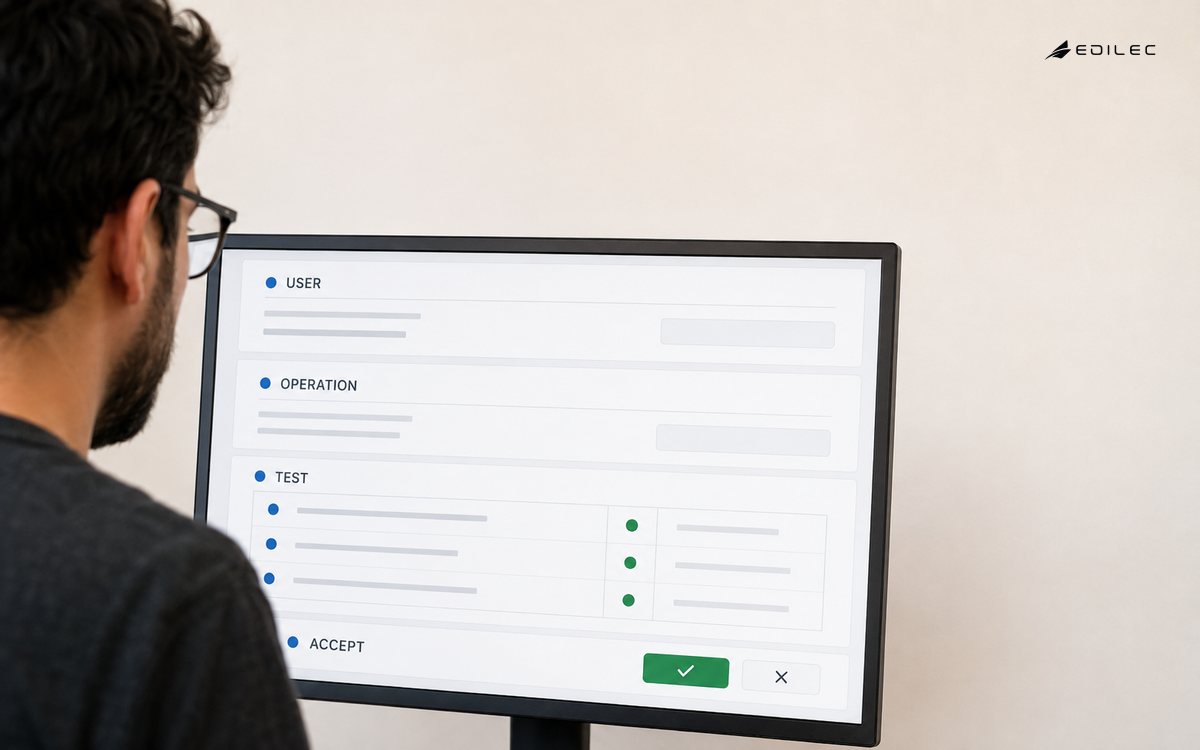
Set platform boundaries around repeatable capabilities such as identity, deployment, observability, data access, or messaging. A platform should offer a paved path with a clear contract, not force every product team to understand its internals. Publish ownership, support hours, failure modes, and escape hatches. Adoption is earned when the platform reduces cognitive load without hiding decisions that affect risk or cost.
Use a thin slice to validate the whole operating model. A team should be able to create a service, receive the right permissions, deploy a change, see health signals, recover from a failed release, and find help. Test the slice with a real product team rather than only platform maintainers. Their friction is product evidence, especially when a “self-service” action still requires a private request or manual fix.
Governance should be proportional and automated where possible. Policy checks can enforce ownership metadata, secret handling, dependency support, and deployment safeguards; humans should review exceptions and changes with meaningful blast radius. Record the decision and expiration for an exception so it cannot become a permanent bypass. The platform team owns the guardrail’s usability as well as its enforcement.
Measure outcomes in both product and platform terms: lead time to a safe change, recovery time, failed-change rate, adoption of supported paths, developer effort, and user task completion. Segment by team and workflow so a strong average does not conceal one painful path. Quarterly reviews should retire unused capabilities, fund reliability work, and update the platform promise when product needs change.
| Area | Evidence | Decision |
|---|---|---|
| User value | Task completion and support signal | Keep, redesign, or retire feature |
| Developer path | Time to first safe deploy | Remove friction or document trade-off |
| Reliability | Failed-change and recovery data | Invest in guardrail or resilience |
| Governance | Exceptions with owner and expiry | Approve, automate, or close gap |
Implementation takeaways
- Platform-side, name the product user and platform customer, then baseline their complete workflow.
- Standardize repeated capability while preserving domain ownership and safe exceptions.
- Design tenancy, contracts, compatibility and migration as first-class concerns.
- Make security, supply-chain and accessibility evidence part of release acceptance.
- Provide observable self-service with supported defaults and honest escape hatches.
- Platform-side, measure realized value and leverage, then deprecate capability that does not earn use.
Frequently asked questions
Is a developer portal an internal platform?
Not by itself. A portal can expose documentation, ownership and workflows, but a platform also needs supported capabilities, automation, interfaces, reliability and a team operating it as a product. Evaluate completed developer tasks, not the presence of a catalog.
Does a scalable platform require microservices?
No. Scalability includes organizational change, reliability and cost, not service count. Use modular boundaries appropriate to load, ownership and release needs. A well-structured monolith may be safer and faster until evidence supports separation.
Conclusion
Products and platforms work together when each has a clear customer, boundary and operating promise. Validate outcomes, standardize only proven repetition, protect contracts and tenants, and make release evidence visible. Continuous user and operational learning then guides what to expand, change or retire, keeping the architecture in service of people rather than the reverse.
For a related decision, compare this approach with Products and Platforms: A Practical Guide for Business Teams, Products and Platforms FAQ: Strategy, Engineering and Operating Model, Medical Device Platforms: Product, Quality and Cybersecurity Delivery Guide. Platform-side, each adjacent article treats a different boundary; use the links to test whether the same ownership, evidence, and recovery expectations hold in the surrounding system.
Products and Platforms Implementation Checklist: Build for Users and Operations FAQ
What is the first decision for products and platforms implementation checklist: build for users and operations?
For products and platforms implementation checklist: build for users and operations, begin by naming the user or operational outcome, the accountable owner, and the evidence that will show whether the outcome is safe. Platform-side, that boundary determines the smallest useful first implementation and gives the team a shared test for scope.
How should a team handle failure in products and platforms implementation checklist: build for users and operations?
In products and platforms implementation checklist: build for users and operations, classify each failure by its next safe action: correct, retry, reconcile, escalate, or stop. Platform-side, preserve state and a correlation record so a person does not guess whether the first attempt took effect, especially when the boundary can create an external side effect.
When is the implementation ready to expand?
Expand products and platforms implementation checklist: build for users and operations after a representative path works with realistic data, known exceptions, observable ownership, and a rehearsed recovery. Platform-side, a larger rollout should add confidence, not conceal unresolved ambiguity in a wider queue.
Conclusion: operate products and platforms implementation checklist: build for users and operations with evidence
The durable version of products and platforms implementation checklist: build for users and operations is not the one with the most components. Platform-side, it is the one whose promise is explicit, whose boundaries are understandable, whose failure states preserve a safe next action, and whose evidence reaches the people responsible for the result. Platform-side, start with one complete path, measure what users and operators actually experience, and let observed risk decide where the next investment belongs.