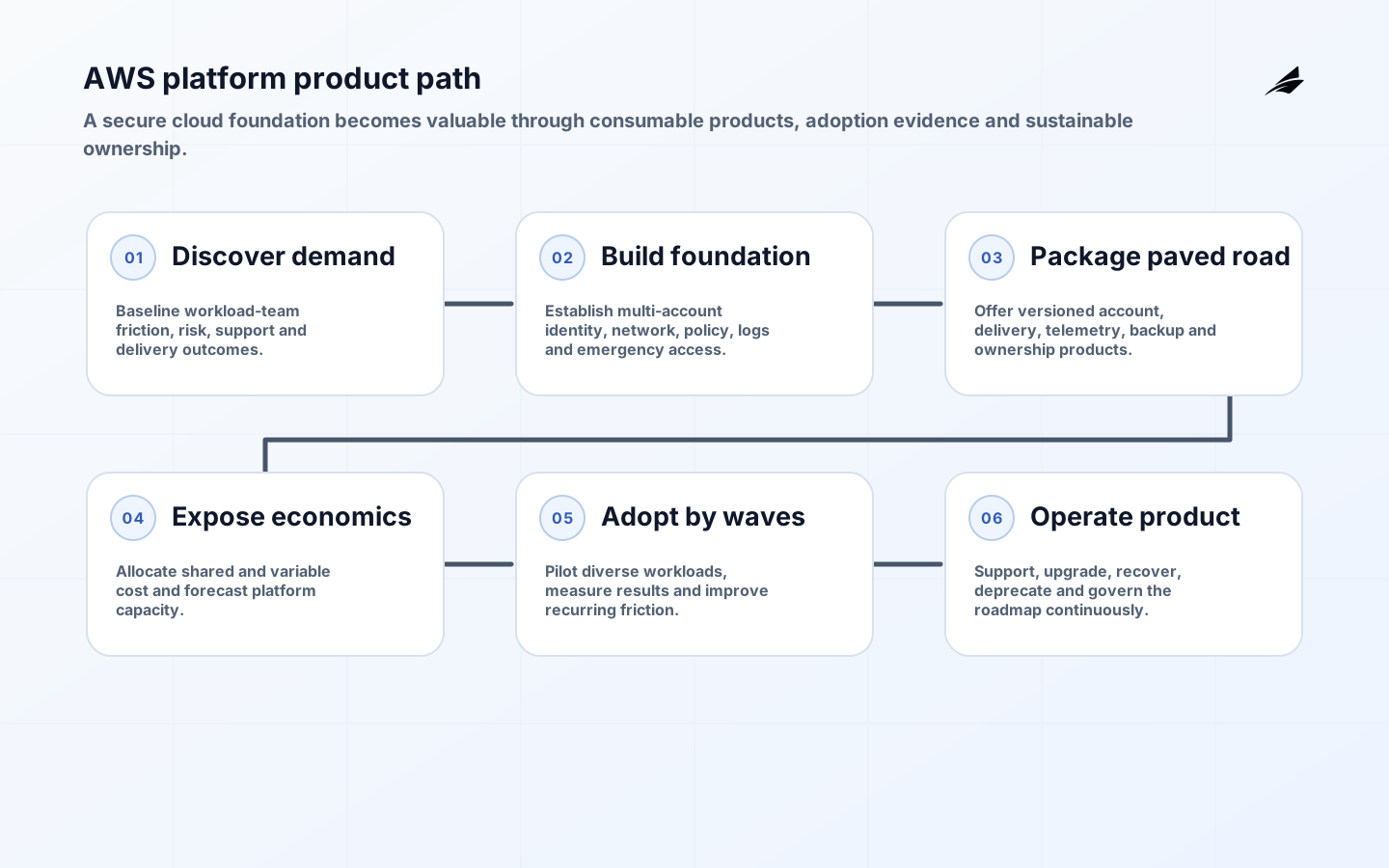
An AWS platform service is an internal product that gives workload teams a supported route to provision accounts, deploy software, observe service behavior and meet organizational controls. It is larger than a landing zone and smaller than an attempt to standardize every application choice. The platform creates leverage when its paved roads remove repeated identity, network, delivery, security, recovery and cost work while preserving clear workload ownership and an escape process for legitimate exceptions.
Use this plan with the AWS platform checklist, the AWS platform FAQ, the finance SaaS product planning guide and the ecommerce SaaS delivery guide. Establish a platform product owner, technical lead, security owner, cloud finance partner and representatives from consuming teams before fixing a roadmap.
Define platform customers and outcomes
Interview teams across product maturity and risk. Baseline account lead time, deployment friction, duplicated controls, incidents, recovery evidence, policy exceptions and unattributed cost. Define supported workload classes and explicit non-goals. Choose outcomes such as faster first production deployment, fewer privileged paths, higher restore coverage or lower toil. Build a service catalog around customer jobs, not AWS service names. Publish ownership, support, compatibility and deprecation expectations for every offered capability.
| Platform capability | Platform owns | Workload team owns |
|---|---|---|
| Account vending | Organization placement, baseline controls and lifecycle | Business owner, requested data class and application resources |
| Identity | Federation and approved role patterns | Application authorization and service identities |
| Delivery | Reference pipeline, artifact and policy gates | Tests, release decision and rollback |
| Observability | Telemetry path and baseline dashboards | User indicators, alerts and response |
| Recovery | Backup primitives and policy evidence | Data selection, restore validation and resumption |
| Cost | Allocation standards and central reporting | Architecture demand and budget response |
Scope the AWS foundation
Design AWS Organizations and organizational units, account lifecycle, IAM Identity Center federation, emergency access, network and DNS boundaries, logging, configuration evidence, security services, backup, regions and tagging. AWS Control Tower can establish a managed landing zone, but organization-specific networking, access, data and workload controls remain. Express configuration as reviewed code and test preventive and detective controls. Keep production, security, log archive and shared capabilities appropriately isolated, and avoid one administrator role that silently bypasses every boundary.
Build paved roads as products
Start with one representative workload and a thin path from repository to observable production. Package account request, infrastructure modules, CI/CD, secrets, telemetry, backup, runbook and ownership metadata. Version interfaces, publish examples and test upgrades against real consumers. Provide feedback in minutes where possible and explain policy failures in actionable language. Let teams request exceptions with rationale, risk owner, expiry and migration plan. A paved road succeeds through voluntary adoption and outcome improvement, not by counting how many templates exist.

Model platform cost and funding
Estimate foundation services, security and observability ingestion, network transfer, backups, build capacity, support tooling, platform engineering and consumer migration. Separate fixed shared cost, variable usage and workload-specific spend. Define cost-allocation tags and account ownership before scale. Forecast ranges from measured demand, and delay Savings Plans or other commitments until stable usage supports them. AWS cloud financial management guidance combines planning, measurement and optimization; assign finance and engineering owners to budgets, anomaly response, rightsizing and commitment decisions.
| Cost area | Driver | Product decision |
|---|---|---|
| Shared foundation | Accounts, regions, logs and security services | Fund centrally and review value |
| Delivery | Build minutes, artifacts and environments | Set defaults and retention |
| Observability | Signal volume and storage | Tier by operational need |
| Network | Topology and data movement | Expose architecture cost early |
| People | Roadmap, support and enablement | Plan product capacity, not a project burst |
| Migration | Consumer differences and legacy coupling | Fund by adoption wave |
Control principal risks
Track over-centralization, platform team bottlenecks, bypass routes, shared failure domains, module supply chain, breaking upgrades, runaway telemetry cost, weak workload ownership and vendor concentration. Threat-model control-plane privileges and CI/CD credentials. Define provider and internal incidents, service objectives, tested restore and regional or service failure responses based on workload needs. Keep an exit path for platform components and export operational records. Review the platform itself against AWS Well-Architected pillars and remediate high-risk findings before expanding adoption.
Deliver in adoption waves
Pilot with teams willing to provide detailed feedback, then include a legacy and higher-control workload before declaring the platform general-purpose. Measure time to first deployment, successful changes, support contacts, exception age, restore evidence, policy compliance, developer satisfaction and unit cost. Pair platform engineers with consumers, turn recurring questions into product improvements and remove unused capabilities. Use progressive module and policy releases with compatibility tests and rollback or forward repair. Do not force migration until the paved road demonstrably satisfies the workload.
Accept sustainable ownership
Before transition from initial program funding, verify roadmap governance, on-call ownership, documentation tests, dependency updates, vulnerability response, capacity, cost review, deprecation and consumer communications. Have a workload team onboard without private assistance, deploy and recover a change, investigate an alert, explain cost and close its account. Preserve architecture decisions and known limitations. Platform value is demonstrated when teams deliver and operate safer services with less repeated effort, not when central infrastructure becomes larger.
Prove the first AWS platform product end to end
Start with one customer journey: a workload team requests an account, receives approved access, deploys a small service, observes it, restores it and closes it. Interview several teams to baseline elapsed time, handoffs, repeated configuration, incidents and unresolved cost ownership in the current path. Write a versioned product contract that separates platform guarantees from workload duties. The platform may provide account placement, identity federation, baseline controls, centralized logs, deployment templates and budget notifications; the workload team still owns application authorization, data classification, service objectives, dependency behavior and business recovery unless another agreement says otherwise.
Configure the landing zone through reviewed automation and record consequential setup choices. AWS Control Tower can orchestrate a governed multi-account environment, but home Region, organization structure, shared accounts, identity integration, log retention, network connectivity and control selection still require organizational decisions. Keep the management account free of ordinary workloads, restrict emergency administration and test access when federation is unavailable. Detect drift in managed resources and define how teams request exceptions without editing protected infrastructure manually. An account should arrive with an owner, environment, cost center, data classification, expiry or review date and routes for security and operational alerts.
Use a representative pilot service to exercise the paved road. Deploy an immutable artifact through the same pipeline intended for consumers, confirm secrets and runtime identities are separate from human and CI identities, and verify resource-level authorization. Generate a controlled failure, inspect correlated telemetry, invoke a runbook and restore data into isolation. Trigger a budget anomaly and show that finance and engineering can trace shared and variable cost. Then upgrade a platform module and prove compatibility or forward repair. Record every private message or platform-team intervention needed by the pilot; recurring assistance belongs in documentation, automation or a clearly funded support offer.
Acceptance requires a consumer team to repeat the journey without privileged help. Measure request-to-ready time, first successful deployment, policy exceptions, support contacts, change failure, restore success, telemetry cost and account-close reconciliation. Include a legacy workload or higher-control case before claiming the product serves the whole portfolio. Prioritize the roadmap from repeated friction and risk reduction, not from the number of AWS services that could be added. At closure, revoke identities, export required records, delete resources, release addresses and reservations and reconcile billing. This complete lifecycle shows whether the platform reduces organizational work rather than moving it to a central queue.
Publish version support and deprecation rules for every consumed module. A network, account or observability change can affect many teams even when its interface looks stable. Announce impact, provide test environments and migration instructions, define a compatibility window and observe adoption before removing the old path. Track exceptions with owners and expiry. Emergency changes still need preserved rationale and retrospective testing. This discipline keeps the platform from becoming a source of synchronized failure and gives workload teams enough information to plan changes within their own service obligations. Measure the age and consumer count of supported versions so maintenance demand is visible. Deprecation is complete only when old modules, permissions, pipelines and support instructions are removed.
- Baseline a real workload-team journey and publish the platform responsibility contract.
- Automate landing-zone decisions while preserving owners, exceptions and drift evidence.
- Prove deployment, authorization, observability, restore, cost response and upgrade.
- Count undocumented assistance as product friction requiring an explicit response.
- Test with both a cooperative pilot and a materially different workload.
- Close an account completely and reconcile access, records, resources and charges.
Key takeaways
- Run the AWS platform as a product for identifiable workload teams.
- Define the contract between platform controls and workload responsibility.
- Prove a thin path with real production behavior before broad catalog expansion.
- Expose shared, variable and migration costs with accountable owners.
- Measure adoption outcomes and operate upgrades, support and retirement continuously.
Frequently asked questions
Is AWS Control Tower the platform?
No. It can establish and govern a landing zone. The platform product also includes delivery, observability, support, cost, recovery and consumer experience.
Must the platform use Kubernetes?
No. Choose runtime products from workload demand and team capability. Kubernetes adds an operating surface that must earn its cost.
Should shared cost be charged back?
Start with accurate allocation and showback. Choose chargeback according to financial policy without creating incentives to bypass essential shared controls.
How large should the platform team be?
Size it from roadmap, support load, reliability and consumer count. Begin with a cross-functional team and expand only when measured demand justifies capacity.
Conclusion
A useful AWS platform service turns secure cloud foundations into a consumable path from account request to operated workload. Product ownership, clear contracts, measured cost, progressive adoption and sustainable operations are what convert AWS building blocks into durable organizational capability.