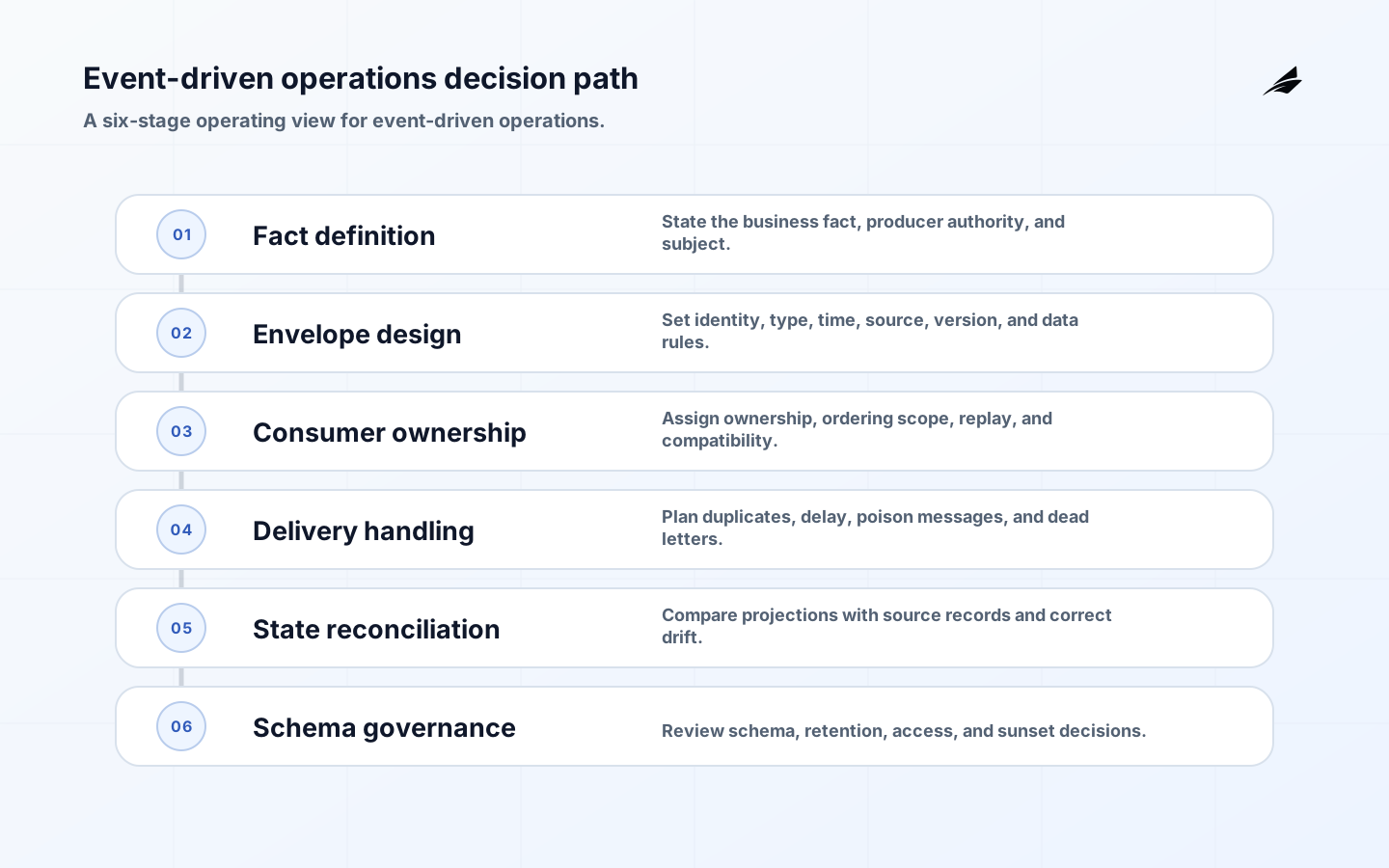
Event-driven systems create leverage by separating work in time, but that separation also creates new ways for meaning to drift. A production design needs explicit event identity, schema ownership, ordering assumptions, retry policy, dead-letter handling, and a way to reconcile what happened. This guide focuses on those decisions and the evidence that keeps them trustworthy.
Set the operating boundary for event-driven systems for event-driven operations
Production event-driven behavior is an agreement about the business fact an event represents, producer authority, consumer duties, ordering scope, delivery expectation, and correction path. A local implementation can appear complete while a customer experiences an ambiguous state, a new team interprets the behavior differently, or an operator cannot safely correct an exception. Write the boundary in ordinary language: who is included, what action is allowed, when a result is final, and what evidence proves that result. A narrow first boundary is valuable because it makes disagreement inspectable and lets the team deliver one path that can be understood from start to finish. During fact definition for event-driven operations, this event-driven systems review keeps the decision and its operating evidence together.

| Boundary element | Decision | Evidence |
|---|---|---|
| Purpose | Which decision does this support? | Named user and success condition. |
| Unit | What is a reviewable event-driven systems unit? | Identifier, version, state. |
| Authority | Who can override? | Role and audit record. |
| Exception | What stops progress? | Reason and next owner. |
Write a reviewable event-driven systems contract for event-driven operations
Event-driven systems need an explicit contract covering event schema, event ID, producer, subject, timestamp, ordering key, version, retention, replay rules, and consumer ownership. During fact definition for event-driven operations, the contract should describe normal input, a boundary case, an invalid case, and a compatible change. Keep it near the implementation but readable by the person who uses the outcome. A version is required when a change alters a consumer or operator interpretation. This discipline prevents screenshots and remembered intent from becoming the only source of truth, and it gives reviewers a concrete promise to challenge before the system reaches production. During envelope design for event-driven operations, this event-driven systems review keeps the decision and its operating evidence together.
Build one complete event-driven systems path for event-driven operations
During fact definition for event-driven operations, start with a path that can be initiated, validated, observed, interrupted, and resolved. Exercise a late dependency, an invalid request, a changed permission, and a human correction before widening scope. During fact definition for event-driven operations, these cases expose missing identifiers and unclear ownership earlier than broad delivery. During fact definition for event-driven operations, the Node API production guide is useful background where this work crosses services. During fact definition for event-driven operations, the goal is not a broad feature; it is a recoverable outcome for one important decision. During consumer ownership for event-driven operations, this event-driven systems review keeps the decision and its operating evidence together.
| Moment | Control | Signal |
|---|---|---|
| Start | Validate actor and state. | Rejected requests. |
| Change | Apply contract. | Latency and failure class. |
| Handoff | Show status and owner. | Stalled work. |
| Correct | Keep before-and-after context. | Correction age. |
Measure event-driven systems with production evidence for event-driven operations
Select signals that change an action. For event-driven systems, monitor consumer lag, duplicate suppression, rejected schema versions, replay volume, poison messages, late events, and end-to-end latency. Break them down by workflow and release, then decide who investigates, what is contained, and when affected people are informed. Traces, metrics, and logs should serve different investigation needs rather than duplicate each other. An operational view is successful when a person can locate affected scope, identify the current owner, and choose a safe next step without reconstructing the situation from source code or private conversation. During delivery handling for event-driven operations, this event-driven systems review keeps the decision and its operating evidence together.
Design event-driven systems for exceptions for event-driven operations
Happy paths hide the assumptions that matter. During fact definition for event-driven operations, decide which failures halt work, which may continue with a visible qualifier, who can override a control, and what evidence closes the exception. The CloudEvents specification defines the event envelope; its HTTP protocol binding clarifies transport behavior. Pair that contract with the NIST SSDF and OpenTelemetry signals guidance when setting operational controls. Local policy must still match the cost of a wrong outcome. Review repeated exceptions by cause: a pattern can expose missing validation, an unclear contract, or a legitimate case that deserves a supported workflow instead of an invisible workaround. During state reconciliation for event-driven operations, this event-driven systems review keeps the decision and its operating evidence together.
Keep event-driven systems ownership and change visible for event-driven operations
Event-driven systems change as consumers, teams, and risks change. Name the owner of the boundary, documentation, and operating dashboard. During fact definition for event-driven operations, review changes for compatibility, permissions, data retention, and a rollback or correction path. A recorded decision for exceptions should include why the normal path did not fit and when the deviation will be revisited. That record makes change manageable for future maintainers and prevents temporary decisions from silently becoming the product’s real policy. During schema governance for event-driven operations, this event-driven systems review keeps the decision and its operating evidence together.
Event-driven systems takeaways
- Anchor event-driven systems to a real decision and owner.
- Make the contract concrete enough to test and migrate.
- Build a recoverable path before widening scope.
- Measure status, failure, and recovery work.
- Turn recurrence into a clearer rule or supported flow.
What should be defined first? Define the decision and consequence of getting it wrong. How much evidence is enough? Enough to reconstruct an important result and choose a safe action. Should every edge case be automated? During fact definition for event-driven operations, automate stable, repeated, consequential work, and keep uncommon judgment calls visible and assigned. Review the design after a release, incident, new consumer, or recurring exception changes its assumptions. During fact definition for event-driven operations, review 7, this event-driven systems review keeps the decision and its operating evidence together.
An event-driven system becomes dependable when its promises survive hand-offs, failures, and change. Start with a defined boundary, write the contract, exercise recovery, and use real evidence to guide improvement. That is how a system becomes easier to operate without surprising the people who depend on it. During envelope design for event-driven operations, review 8, this event-driven systems review keeps the decision and its operating evidence together.
A serious event-driven systems review starts with a real case. During fact definition for event-driven operations, bring the triggering request, visible outcome, information available to the decision maker, and a case where the normal path failed. Compare identity, timing, permissions, dependency state, version, and policy. Decide which facts must become part of the contract and which remain implementation detail. This prevents an all-too-common production failure: a plausible rule is built, yet no one can later explain why it produced a particular outcome. Durable evidence lets support resolve a case, engineering reproduce it, and product decide whether the behavior still serves the intended user.
Change management must be part of event-driven systems. During fact definition for event-driven operations, before rollout, identify systems and people relying on the current behavior, choose a compatibility window where needed, and prepare a correction path. During rollout, watch signals that reveal a broken assumption instead of waiting for a broad report. After rollout, compare intended results with observed cases and preserve decisions that should guide the next release. This is practical delivery discipline: it keeps a small change from becoming an untraceable operational surprise after several dependencies and owners have accumulated.
Access and data handling are part of event-driven systems, even where the feature appears technical. Use the least information necessary to complete the workflow, make privileged actions attributable, and distinguish diagnostics from material a broad audience can see. Review who can alter the contract, who can see exception detail, and how long records remain available. The strongest result is not a longer policy document. It is an operating path where the permitted action, its reason, and its result can be understood by the people accountable for delivery.
Feedback is an input to event-driven systems design. During fact definition for event-driven operations, a support pattern, near miss, failed correction, or confusing hand-off can reveal a missing state or ambiguous term. Capture the case without blame, identify the smallest durable improvement, and verify that the next person sees the new rule at the moment it matters. Some improvements belong in validation, others in documentation, tests, observability, or interface language. The choice should follow the failure mechanism. Over time, this loop keeps system rules legible as original authors, integrations, and delivery cadence change.
- Before approving a event-driven systems change, identify the affected users, consumers, and operations owner, then document the outcome they must be able to trust.
- Run a representative failure scenario for event-driven systems with current permissions and realistic timing; note whether recovery is clear without informal knowledge.
- Review event-driven systems evidence after the release with engineering, product, and support, and turn a repeated question into a documented control.
- Retire stale event-driven systems guidance, alerts, and exceptions so the visible workflow continues to represent the service that actually exists.
For event-driven systems, close each review by recording the decision, the evidence considered, the remaining uncertainty, and the date or signal that will trigger reconsideration. This modest record keeps future work grounded when people, dependencies, or customer needs change.
This event-driven systems decision should be reviewed with the affected operator after a real release, because observed behavior is the test of whether the written rule is usable.
Practical decisions for event-driven operations
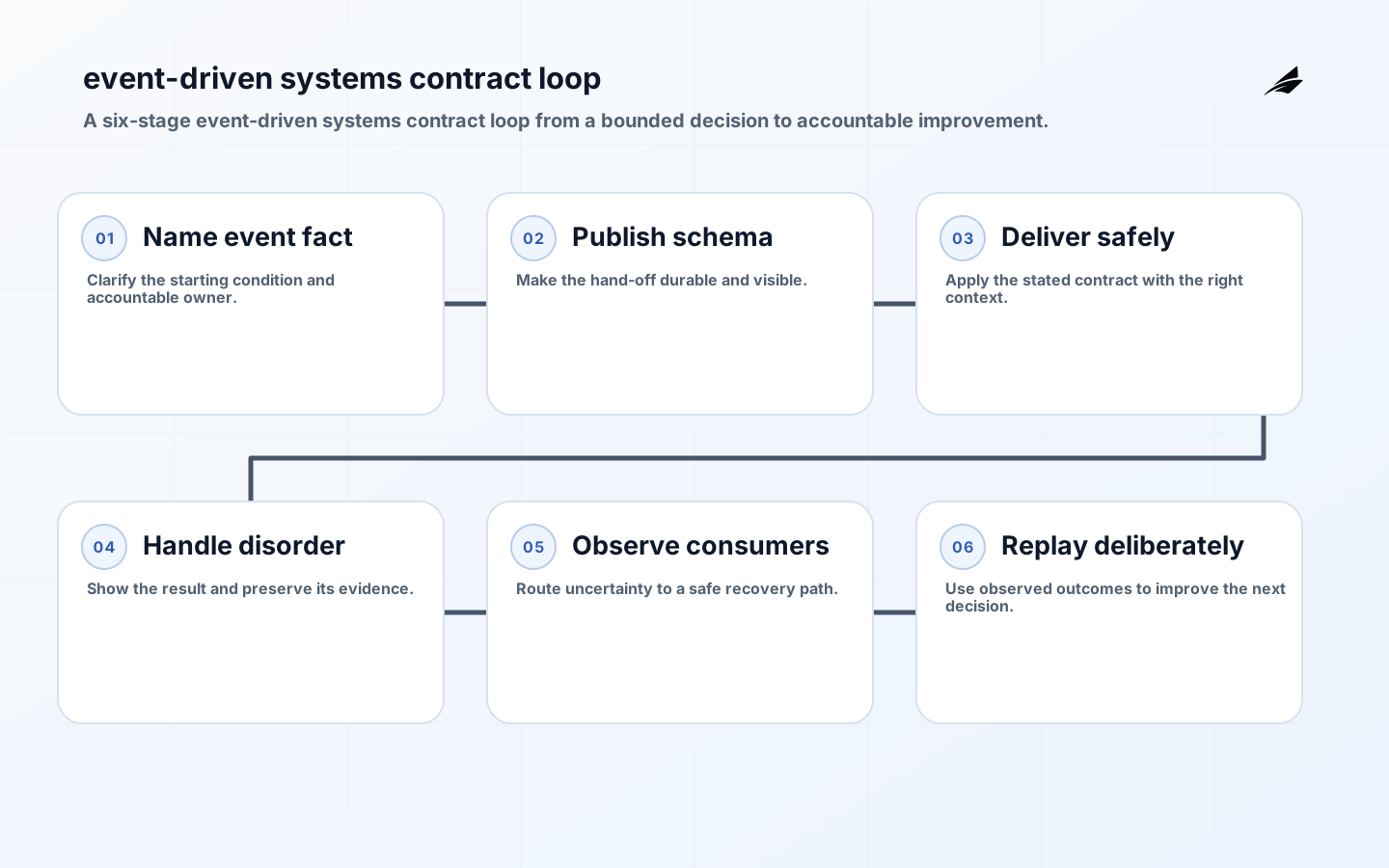
Make an event tell one coherent story. Give it stable identity, subject, type, occurrence time, schema version, and producer ownership. At-least-once delivery makes duplicates normal, while out-of-order delivery requires a version, sequence, or reconciliation rule. Keep replay from repeating irreversible side effects. Sample authoritative records, emitted events, consumer offsets, and projections to find missing, late, duplicate, and rejected cases. A poison-message quarantine and approved repair path turn asynchronous architecture into something an operator can actually recover.
Related reading for event-driven operations
Compare this guide with What Changes When Rest API Contracts Move into Production, What Changes When Database Schema Design Moves into Production, Background Jobs in Production: Delivery, Retries, and Recovery. During fact definition for event-driven operations, these adjacent articles help connect the implementation choice to ownership, delivery, and operations.
Event-Driven Systems in Production: A Guide to Contracts and Recovery FAQ
How are duplicate events handled?
Consumers should deduplicate by event identity or make their state transition idempotent, then reconcile any uncertain result with the authoritative record.
What is the practical starting point?
Define event identity, producer authority, consumer idempotency, and replay evidence for one business fact before introducing a wider event mesh.
When should the team scale the approach?
Scale after replay, poison-message handling, schema compatibility, and reconciliation are observable to the operators who own the affected workflow.
Conclusion: event-driven operations
Event-driven systems become trustworthy when a business fact remains recognizable across transport, retries, consumers, and correction. Treat identity, delivery behavior, reconciliation, and schema evolution as one operating contract rather than separate platform concerns.