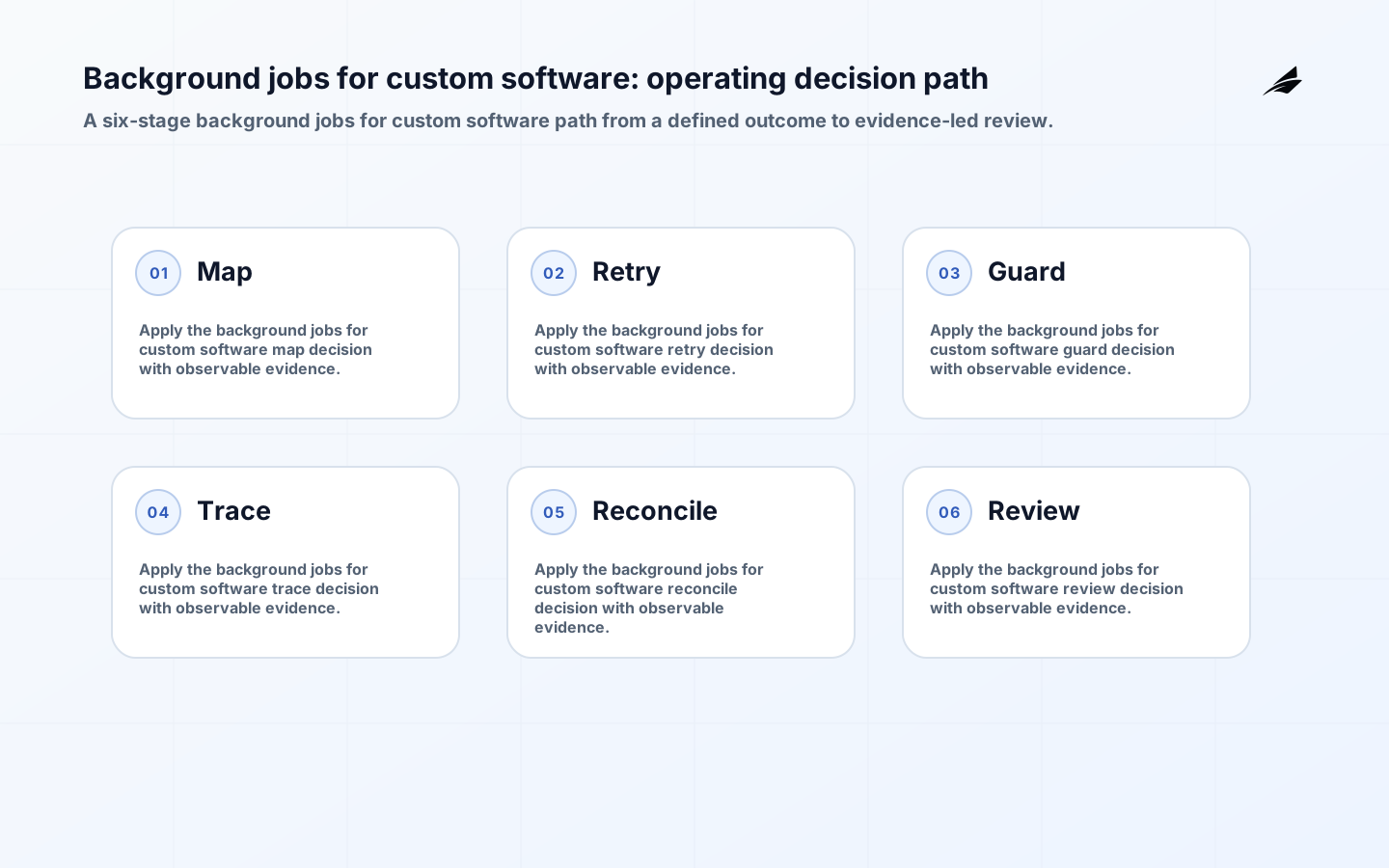
This background jobs for custom software case requires a distinct owner, evidence trail, and correction route. Sources and related decisions: schema design contract thinking delivery checklist. Context sources: RFC 9110: HTTP Semantics RFC 9457: Problem Details for HTTP APIs OWASP Web Security Testing Guide Web Content Accessibility Guidelines 2.2.
Separate transaction and delivery boundaries
| Decision area | Question to settle | Evidence to retain |
|---|---|---|
| For an accepted action, trace identity, timestamp, and input through durable storage. | an accepted action | Initiator, time, and input identity |
| Durable state | a job record keyed to the business operation | Stable identifier and transition history |
| For an override, name the role, reason, and decision record that authorizes the change. | Who may change or override it? | Role and decision record |
| Define completion as a visible outcome with a reconciliation rule, not merely a successful enqueue. | What counts as done? | Visible outcome and reconciliation rule |

Set retry ownership and limits
Guard external side effects
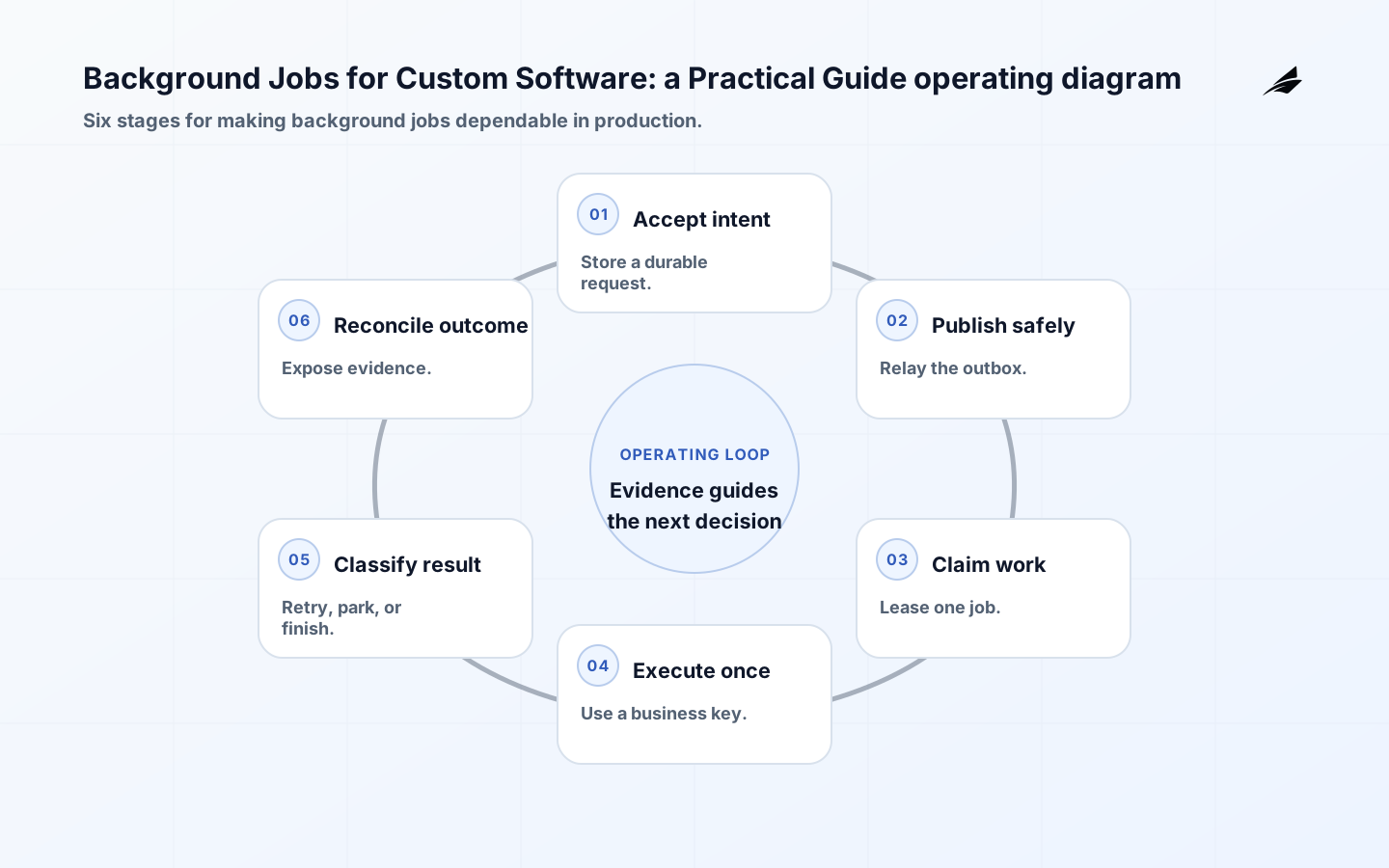
Trace every attempt
- Prove one ordinary background jobs outcome with representative data.
- Exercise a duplicate, delay, or stale-state path before broad rollout.
- Give the first responder a correlation identifier and bounded correction action.
- Evaluate release evidence against the promised customer or business outcome.
Reconcile partial completion
| Signal | What it may reveal | First response |
|---|---|---|
| Outcome delay | The path no longer meets its promise | Inspect the affected cohort and dependency |
| When callers distrust state, expose the last confirmed status and the evidence needed to reconcile it. | A caller may not trust state | Check idempotency and displayed status |
| Unknown failure | The taxonomy is incomplete | Preserve context and classify the case |
| Manual workaround | The designed path is insufficient | Review the rule, interface, and ownership |
Background jobs for custom software: operating evidence
Takeaways
- Anchor background jobs in a named outcome and durable evidence.
- Design late, duplicate, and corrective paths before broad adoption.
- Anchor the custom workflow in a named outcome, durable evidence, and an owner for late results.
- Design duplicate, delayed, and corrective paths before broad adoption of the worker flow.
FAQ
Conclusion
Background jobs for custom software: operating evidence
For Background jobs for custom software, For Background Jobs for Custom Software: A Practical Recovery Guide, keep the decision boundary visible in the runbook and connect each exception to an owner, evidence trail, and recovery action. For background jobs for custom software, Review the result with the people who use the workflow, then change scope only when the measured outcome supports it.
Decision 1 for background jobs for custom software should identify the actor, trusted input, observable state, and intervention point. Keep the decision bounded, inspectable, and easy to revise. For this evaluation, name the accountable owner, supporting evidence, exception route, and next measurable check.
Decision 2 for background jobs for custom software should identify the actor, trusted input, observable state, and intervention point. Keep the decision bounded, inspectable, and easy to revise. Within this evaluation, name the accountable owner, supporting evidence, exception route, and next measurable check.
Decision 3 for background jobs for custom software should identify the actor, trusted input, observable state, and intervention point. Keep the decision bounded, inspectable, and easy to revise. When implementing this evaluation, name the accountable owner, supporting evidence, exception route, and next measurable check.
Decision 4 for background jobs for custom software should identify the actor, trusted input, observable state, and intervention point. Keep the decision bounded, inspectable, and easy to revise. Before releasing this evaluation, name the accountable owner, supporting evidence, exception route, and next measurable check.
Decision 5 for background jobs for custom software should identify the actor, trusted input, observable state, and intervention point. Keep the decision bounded, inspectable, and easy to revise. While operating this evaluation, name the accountable owner, supporting evidence, exception route, and next measurable check.
Decision 6 for background jobs for custom software should identify the actor, trusted input, observable state, and intervention point. Keep the decision bounded, inspectable, and easy to revise. When changing this evaluation, name the accountable owner, supporting evidence, exception route, and next measurable check.
Decision 7 for background jobs for custom software should identify the actor, trusted input, observable state, and intervention point. Keep the decision bounded, inspectable, and easy to revise. During support for this evaluation, name the accountable owner, supporting evidence, exception route, and next measurable check.
Decision 8 for background jobs for custom software should identify the actor, trusted input, observable state, and intervention point. Keep the decision bounded, inspectable, and easy to revise. To validate this evaluation, name the accountable owner, supporting evidence, exception route, and next measurable check.
Decision 9 for background jobs for custom software should identify the actor, trusted input, observable state, and intervention point. Keep the decision bounded, inspectable, and easy to revise. To govern this evaluation, name the accountable owner, supporting evidence, exception route, and next measurable check.
Decision 10 for background jobs for custom software should identify the actor, trusted input, observable state, and intervention point. Keep the decision bounded, inspectable, and easy to revise. When explaining this evaluation, name the accountable owner, supporting evidence, exception route, and next measurable check.
Decision 11 for background jobs for custom software should identify the actor, trusted input, observable state, and intervention point. Keep the decision bounded, inspectable, and easy to revise. For this evaluation, test one expected case, one ambiguous case, and one failure with a documented recovery action.
Decision 12 for background jobs for custom software should identify the actor, trusted input, observable state, and intervention point. Keep the decision bounded, inspectable, and easy to revise. Within this evaluation, test one expected case, one ambiguous case, and one failure with a documented recovery action.
Decision 13 for background jobs for custom software should identify the actor, trusted input, observable state, and intervention point. Keep the decision bounded, inspectable, and easy to revise. When implementing this evaluation, test one expected case, one ambiguous case, and one failure with a documented recovery action.
Decision 14 for background jobs for custom software should identify the actor, trusted input, observable state, and intervention point. Keep the decision bounded, inspectable, and easy to revise. Before releasing this evaluation, test one expected case, one ambiguous case, and one failure with a documented recovery action.
Decision 15 for background jobs for custom software should identify the actor, trusted input, observable state, and intervention point. Keep the decision bounded, inspectable, and easy to revise. While operating this evaluation, test one expected case, one ambiguous case, and one failure with a documented recovery action.
Decision 16 for background jobs for custom software should identify the actor, trusted input, observable state, and intervention point. Keep the decision bounded, inspectable, and easy to revise. When changing this evaluation, test one expected case, one ambiguous case, and one failure with a documented recovery action.
Decision 17 for background jobs for custom software should identify the actor, trusted input, observable state, and intervention point. Keep the decision bounded, inspectable, and easy to revise. During support for this evaluation, test one expected case, one ambiguous case, and one failure with a documented recovery action.
Decision 18 for background jobs for custom software should identify the actor, trusted input, observable state, and intervention point. Keep the decision bounded, inspectable, and easy to revise. To validate this evaluation, test one expected case, one ambiguous case, and one failure with a documented recovery action.
Decision 19 for background jobs for custom software should identify the actor, trusted input, observable state, and intervention point. Keep the decision bounded, inspectable, and easy to revise. To govern this evaluation, test one expected case, one ambiguous case, and one failure with a documented recovery action.
Decision 20 for background jobs for custom software should identify the actor, trusted input, observable state, and intervention point. Keep the decision bounded, inspectable, and easy to revise. When explaining this evaluation, test one expected case, one ambiguous case, and one failure with a documented recovery action.
Decision 21 for background jobs for custom software should identify the actor, trusted input, observable state, and intervention point. Keep the decision bounded, inspectable, and easy to revise. For this evaluation, state the accepted outcome, retained evidence, and authority to stop or reverse the change.
Decision 22 for background jobs for custom software should identify the actor, trusted input, observable state, and intervention point. Keep the decision bounded, inspectable, and easy to revise. Within this evaluation, state the accepted outcome, retained evidence, and authority to stop or reverse the change.
Decision 23 for background jobs for custom software should identify the actor, trusted input, observable state, and intervention point. Keep the decision bounded, inspectable, and easy to revise. When implementing this evaluation, state the accepted outcome, retained evidence, and authority to stop or reverse the change.
Decision 24 for background jobs for custom software should identify the actor, trusted input, observable state, and intervention point. Keep the decision bounded, inspectable, and easy to revise. Before releasing this evaluation, state the accepted outcome, retained evidence, and authority to stop or reverse the change.
Decision 25 for background jobs for custom software should identify the actor, trusted input, observable state, and intervention point. Keep the decision bounded, inspectable, and easy to revise. While operating this evaluation, state the accepted outcome, retained evidence, and authority to stop or reverse the change.
Background jobs for custom software: operating evidence