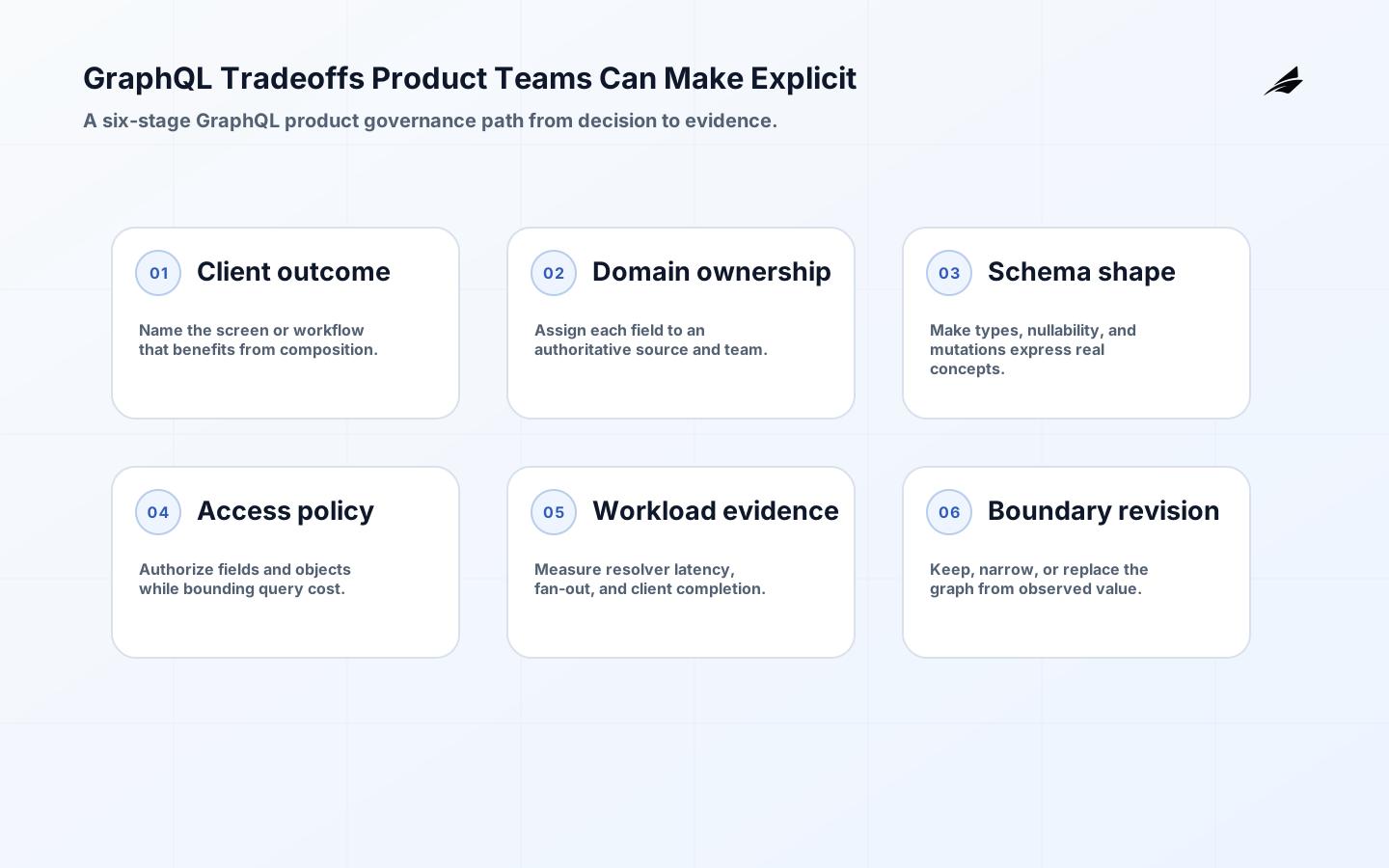
Turn GraphQL tradeoffs into a product decision. Compare the cost of a graph with the cost of the current product problem. If a screen needs data from several owned domains and its shape changes frequently, field selection and typed validation may reduce client coordination. If the main problem is a stable write workflow or a single high-volume resource, a REST endpoint may be simpler to secure, cache, and operate. Make the decision with a representative query, not a platform diagram.
GraphQL tradeoffs matters when a product team wants a single mobile screen to combine account, order, and support data, but the proposed GraphQL endpoint could expose expensive nested queries and unclear ownership. This guide is for product teams who need to choose GraphQL where its typed query model improves a real product boundary and manage the cost of a flexible execution surface. The planning unit is a user query or mutation with a schema owner, authorization policy, cost limit, data-source plan, and observable result. GraphQL product design needs a bounded decision, an accountable owner, and evidence for the next change; this case records checkpoint 1 for that topic.
Start with the product query or mutation
GraphQL tradeoffs become clear when a product team begins with a screen or workflow instead of an API preference. A composed customer view may benefit from selecting exactly the fields it needs across several domains. But a query language also makes it easier to ask for too much, cross ownership boundaries, or conceal expensive fan-out. Define the user decision, the source of each fact, and the response-time expectation before designing a graph.
| Question | Working rule | Evidence to collect |
|---|---|---|
| Outcome | Name the decision or task that must improve. | a product team wants a single mobile screen to combine account, order, and support data, but the proposed GraphQL endpoint could expose expensive nested queries and unclear ownership |
| Authority | Identify who owns the fact and who may change it. | a user query or mutation with a schema owner, authorization policy, cost limit, data-source plan, and observable result |
| Risk | Describe the costly failure before selecting technology. | adding GraphQL as a universal data layer without deciding how query breadth, caching, authorization, and schema change will be governed |
| Measure | Choose a signal that can change the next investment decision. | field-level latency, resolver error rate, query complexity rejected, N+1 indicators, schema deprecation use, and mobile screen completion time |
Map GraphQL fields to domain owners
A GraphQL schema is a product contract. The GraphQL specification defines a typed system for describing capabilities and validating documents; use those types to describe stable business concepts rather than mirroring tables. A Customer field should have a clear source and authorization rule. A vague metadata escape hatch may feel flexible but makes discovery, validation, and evolution difficult for clients and maintainers.
GraphQL product design needs a bounded decision, an accountable owner, and evidence for the next change; this case records checkpoint 2 for that topic. GraphQL product design needs a bounded decision, an accountable owner, and evidence for the next change; this case records checkpoint 3 for that topic. For adjacent implementation concerns, read What Changes When GraphQL Tradeoffs Moves into Production, What Changes When Authentication Flows Moves into Production, and What Changes When API Versioning Moves into Production. GraphQL product design needs a bounded decision, an accountable owner, and evidence for the next change; this case records checkpoint 4 for that topic.
| Boundary | Decision to make | Operational check |
|---|---|---|
| Input | Define identity, required fields, and validation responsibility. | Can an invalid GraphQL tradeoffs request be rejected with a useful reason? |
| Authority | State the source of truth and who can override it. | Can a reviewer explain which record or rule produced the GraphQL tradeoffs result? |
| Change | Version behavior that clients, users, or operators rely on. | Can the team deploy a compatible change and observe its effect? |
| Recovery | Give failures an owner, reference, and safe next action. | Can support resolve a disputed case without an unsafe workaround? |
Shape the first typed client slice
Schema ownership needs a named model. One team can own a gateway without owning every field’s meaning. Record which domain maintains a field, which service supplies it, who approves a breaking semantic change, and how incident triage works when a query spans several dependencies. This is especially important when different products share a graph; a single endpoint does not remove the need for boundaries.
Authorization must be applied to the resolved capability, not only to the top-level route. Field-level decisions, tenant scoping, and indirect object references can otherwise disclose data through a carefully shaped query. The OWASP GraphQL guidance emphasizes input validation and query limits. Put depth, breadth, timeout, and cost controls in place before a complex query becomes a production incident.
- Write one GraphQL tradeoffs decision record with owner, boundary, and success condition.
- Collect ordinary, invalid, delayed, and contradictory GraphQL operations before estimating scope.
- Assign a resolver owner for authorization exceptions and a named escalation path.
- Add operation and field references that connect the client result to source records.
- Test resolver denial, timeout, and partial-data recovery as deliberately as success.
- Review field-level latency, resolver error rate, query complexity rejected, N+1 indicators, schema deprecation use, and mobile screen completion time after the first release before expanding the design.
Bound query cost and resolver exposure
Plan for resolver behavior. A nested list can amplify a small query into hundreds of downstream calls if loading is not batched or data is not shaped deliberately. Track per-field latency and error rates, capture sanitized query signatures, and test representative high-cost selections. Caching can help, but cache keys must include identity and authorization context where the result is personalized. A fast shared cache that returns another tenant’s data is not an optimization.
Translate GraphQL guidance into local controls
For GraphQL product, the owner reviews the contract before release. In GraphQL product design, this evidence is tied to checkpoint 1 and a named recovery owner. Useful references include GraphQL specification, GraphQL best practices, OWASP GraphQL Cheat Sheet, Apollo GraphQL security guide. For GraphQL product, support receives the recovery reference before rollout. In GraphQL product design, this evidence is tied to checkpoint 2 and a named recovery owner. In this GraphQL tradeoffs context, turn the guidance into concrete configuration, review evidence, and runbooks that a team can use during a release or incident.
Measure resolver cost and client value
GraphQL does not eliminate versioning; it changes the migration style. Add fields, document them, deprecate old fields with a replacement, and measure which client operations still use the old surface. Avoid changing the meaning of a field under an unchanged name. Product teams should budget for client migration when a workflow changes, rather than assuming the graph makes that cost disappear.
Compare GraphQL with alternatives against the actual work. A focused REST endpoint may be clearer for a stable command, a backend-for-frontend may protect a specific channel, and a graph may shine where several clients compose changing reads. The valuable choice is the one that makes ownership, authorization, performance, and evolution easier to operate for the team that will live with it.
Key takeaways
- GraphQL tradeoffs should begin with a real operational decision, not an abstract technology preference.
- Use a user query or mutation with a schema owner, authorization policy, cost limit, data-source plan, and observable result as the unit of planning and review.
- Make field authority, schema evolution, and resolver recovery visible before scaling.
- Use GraphQL guidance as an input, then validate controls with representative local operations.
- Let field-level latency, resolver error rate, query complexity rejected, N+1 indicators, schema deprecation use, and mobile screen completion time determine whether the next increment is justified.
GraphQL is a useful fit when a product journey needs coordinated data from several owned domains and the team can govern the resulting execution path. Before publishing a field, name its source of truth, authorization rule, freshness expectation, and deprecation owner. A resolver that joins five services may shorten frontend code while increasing tail latency and failure combinations; measure that tradeoff with representative queries rather than a toy benchmark. Treat the schema as a product contract whose value is proven by completed customer work, not by the number of types it contains.
A product team should evaluate a graph against a real screen, workflow, or decision rather than against schema elegance. Map each field to a domain owner, freshness rule, authorization boundary, and failure representation. Then measure the complete journey: client completion, resolver fan-out, downstream latency, cache behavior, and the support effort required when one field is unavailable. If the graph makes composition easier but hides ownership or creates unpredictable cost, narrow the boundary. The right outcome may be a hybrid in which GraphQL serves a read journey while commands remain explicit elsewhere.
The graph should earn complexity through a measurable improvement in the chosen product journey.
Before approving a graph, ask which client journey justifies composition and which domain team can own each field. Record nullability, freshness, authorization, resolver cost, and the support response when one source is unavailable. A small measured slice is stronger evidence than a broad schema with no operating owner.
Frequently asked questions
What is the smallest useful scope for GraphQL tradeoffs? For GraphQL product, operators can identify the next safe action. GraphQL product design needs a bounded decision, an accountable owner, and evidence for the next change; this case records checkpoint 6 for that topic. It does not need to centralize every adjacent process.
When should a person intervene? A schema owner should review GraphQL queries that create high cost, cross a sensitive domain boundary, or reveal a disagreement about field meaning. The resulting decision should change field policy, limits, or documentation rather than rely on an informal exception.
GraphQL product tradeoff check
Budget query complexity before adoption
| Decision | Concrete test | Owner evidence |
|---|---|---|
| Scope | Name one journey and its non-goal. | Approved outcome and boundary |
| Authority | Identify the source of truth and correction route. | Owner, identifier, and audit record |
| Failure | Exercise timeout, duplicate, stale, and denied cases. | Observed response and recovery step |
| Change | State what can evolve without surprising a consumer. | Compatibility note and review date |
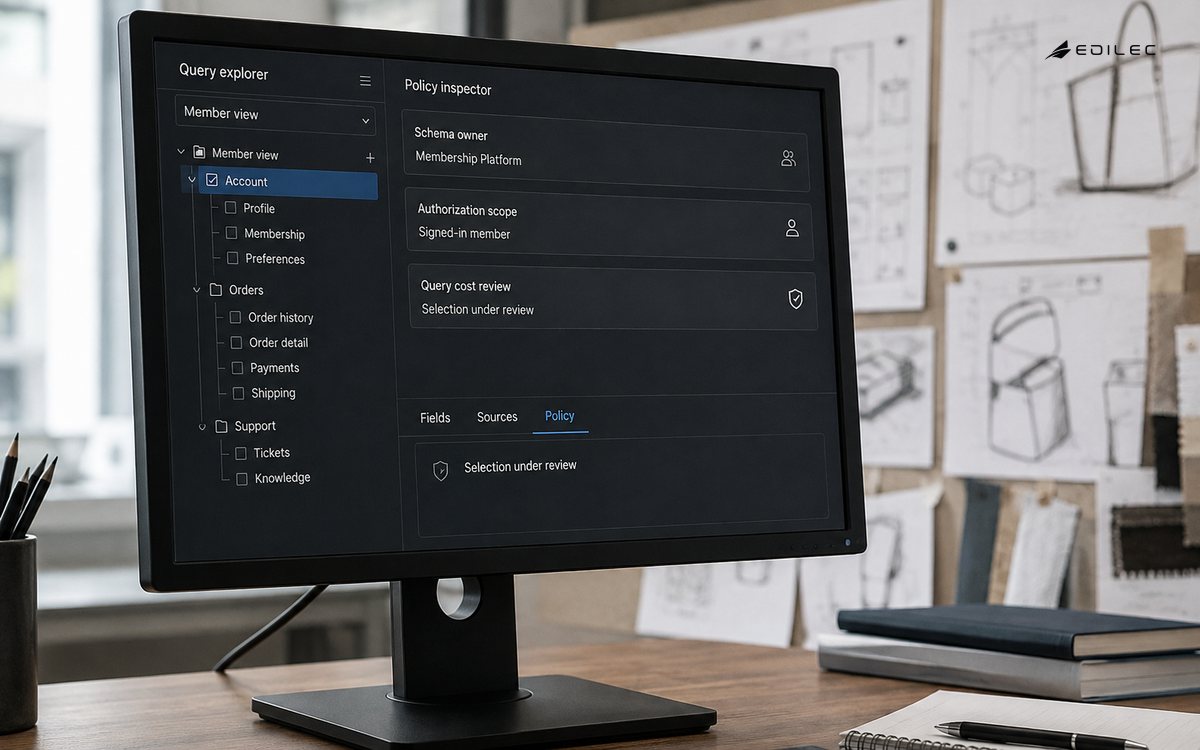
Define depth, field cost, list-size limits, timeout behavior, and persisted-operation policy before the first broad client. Resolve authorization at the field or resolver boundary where the business rule lives, and instrument downstream calls so a fast-looking GraphQL response cannot hide a fan-out incident. Keep schema ownership explicit: the gateway can coordinate, but a domain team should own the meaning and lifecycle of its fields.
How do we know the design is ready to expand? Grow the graph after costly queries are bounded, field authorization is tested, and schema ownership works across a real release. More client selections should not obscure more downstream work.
Conclusion
GraphQL tradeoffs become a durable advantage when the team designs the decision, authority, evidence, and recovery path together. Begin with a product team that wants a single mobile screen to combine account, order, and support data, but keep the first change narrow enough to observe when the proposed GraphQL endpoint could expose expensive nested queries and unclear ownership. Use real operating signals to guide the next investment.
Frequently asked questions
For GraphQL tradeoffs, begin with a product screen or workflow and compare flexibility against query cost, field ownership, authorization, and observability. What should a team decide first? GraphQL product design needs a bounded decision, an accountable owner, and evidence for the next change; this case records checkpoint 7 for that topic. How much design is enough? GraphQL product design needs a bounded decision, an accountable owner, and evidence for the next change; this case records checkpoint 8 for that topic. Can the work be iterative? GraphQL product design needs a bounded decision, an accountable owner, and evidence for the next change; this case records checkpoint 9 for that topic. Which evidence matters after launch? GraphQL product design needs a bounded decision, an accountable owner, and evidence for the next change; this case records checkpoint 10 for that topic. GraphQL product design needs a bounded decision, an accountable owner, and evidence for the next change; this case records checkpoint 11 for that topic.