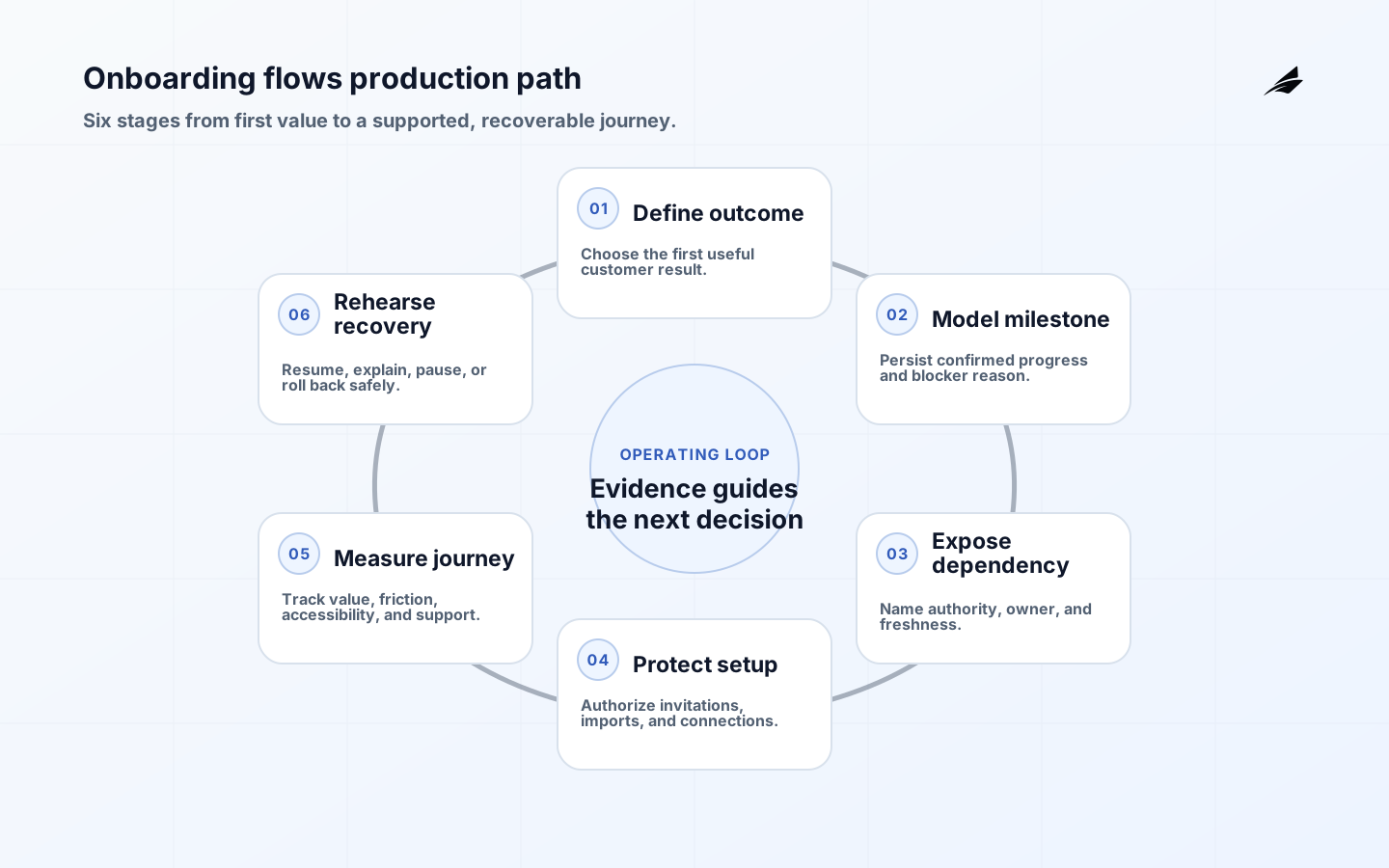
What Changes When Onboarding Flows Moves into Production
Onboarding flows become production work when new users arrive with different roles, invitations, devices, permissions, data states, and reasons for stopping halfway through. A polished checklist cannot compensate for a missing prerequisite, delayed provisioning job, inaccessible control, or instruction that assumes one kind of user. The production question is whether a person can reach a valuable first outcome and recover honestly when the path is interrupted. This guide covers the progress model, dependencies, accessibility, authorization, observation, and rollout decisions that turn onboarding from a launch screen into a supported product journey.
Define the first valuable outcome
Name the result that proves a new customer can begin using the product. For a team product, it might be inviting a collaborator and completing a shared task; for an analytics product, it might be connecting a source and reading a trusted report. A welcome screen, profile completion, or tutorial view may help, but it is not the outcome by itself. Define the roles, resources, permissions, and dependencies needed to reach the result. Then decide what the user should see when a prerequisite is pending, unavailable, or controlled by an administrator.

| Journey question | Decision | Evidence |
|---|---|---|
| Outcome | What useful result should the user reach? | Completed task or value signal |
| Milestone | What confirmed state lets the journey continue? | Source record and timestamp |
| Dependency | Which identity, workspace, billing, or integration fact is required? | Owner, freshness, and blocker reason |
| Recovery | What can the user or operator do next? | Retry, alternate route, or support path |
Model progress as confirmed milestones
Avoid a single percentage that hides why a person is blocked. Model milestones such as account verified, workspace joined, role confirmed, source connected, sample data accepted, and first result viewed. Each milestone can be complete, pending, blocked with reason, skipped with a recorded explanation, or no longer applicable. Confirm completion from the responsible service, not only from a client callback. A new device, administrator action, or support correction should read the same state. Persist progress with a durable identifier and version so a user can resume after a refresh, invite change, or deployment.
Make dependencies and authority visible
Onboarding often crosses identity, workspace membership, billing, import, integration, and policy services. Assign an owner to every prerequisite and define freshness and failure behavior. If an administrator must connect an account, say so before the user completes a form. If payment status controls a feature, show the reason and a permitted route instead of letting a user discover the constraint after submission. The client may orchestrate the presentation, but the responsible service should remain the source of truth for its milestone. This reduces mismatches when setup continues in another device or through support.
| Dependency | Common interruption | Production response |
|---|---|---|
| Invitation | Expired, forwarded, or already used | Explain state and provide a valid invite route |
| Import | Late validation or partial failure | Show progress, rejected items, and resume action |
| Integration | Consent or token expires | Request reauthorization without losing safe work |
| Role or billing | Policy changes during setup | Re-evaluate eligibility and explain next step |
Design the flow for varied users and devices
Apply WCAG 2. 2 to labels, focus order, keyboard operation, contrast, timing, error identification, and status announcements. An onboarding flow should not require a pointer gesture, a wide screen, or a user who can see a transient toast. Preserve entered work when safe, associate errors with fields, and announce long-running progress. Test invited collaborators, administrators, returning users, mobile users, keyboard users, and people who arrive through a deep link. Accessibility also improves support because a clear state and next action reduce ambiguous reports.
Protect setup actions and partial state
Invitations, integration connections, role changes, and data imports can change account access or expose customer information. Apply server-side authorization to every action and recheck the current workspace or tenant context when a user resumes. The OWASP Authorization Cheat Sheet supports deny-by-default and least-privilege thinking. Make tokens single-use or bounded, separate preview from commit, and record actor, target, purpose, and result. A half-completed flow should not grant a capability simply because the client displayed a completed step.
Measure the journey end to end
Track time to first valuable outcome, milestone completion, blocker age, validation failure, retry success, support contact, accessibility feedback, and later value signals. The GOV. UK Service Manual guidance on measuring success is a useful reminder to measure the service outcome rather than only exposure to a page. Connect client steps, server commands, provisioning jobs, and source state with a correlation ID; OpenTelemetry can provide a shared structure for traces, metrics, and logs. Mark data incomplete when a dependency is unavailable so a drop-off is not mistaken for user reluctance.
Roll out with recovery and support ready
Start with a bounded cohort whose roles, dependencies, and support route are understood. Rehearse an expired invitation, role removal during a form, network loss after submission, deep-link return, delayed import, and administrator completion of a prerequisite. Prepare support with the same milestone evidence and a narrow correction path; avoid a universal “mark complete” control that destroys the reason for a blocker. Expand after real users reach the intended outcome, operators can investigate interruptions, and the team knows when to pause or roll back. Keep a short decision record with outcome, severe failures, cohort, unresolved controls, and owner.
Review onboarding as a service journey
Ask a new user, an invited collaborator, and an administrator to complete the journey from their actual starting states. Record which milestone they believe they reached, which state the responsible service recorded, and what support could see. Differences reveal where the product uses the same word for different states or assumes that every user owns the next action.
Test interruption at every asynchronous boundary. Disconnect after submission, refresh during provisioning, expire an invitation, remove a role, and return through a deep link. The flow should preserve safe work, state what is pending, and offer a useful next step. If a user must start over, explain why and retain enough evidence to prevent repeated support questions.
Review accessibility with the same scenarios. Check whether a keyboard user can reach every action, whether status changes are announced, whether errors identify the field and remedy, and whether timing can be extended. Then ask whether a support operator can describe the same state in plain language. Accessibility and support clarity reinforce each other because both depend on explicit state.
Decide what evidence allows expansion. Include time to outcome, blocked milestone age, severe failure cases, support burden, authorization results, and user feedback by role or device. Set a pause condition before the cohort grows. A production onboarding flow is ready to expand when the team can explain both progress and interruption without relying on a hidden manual workaround.
Do not use reminders to compensate for an unclear state. If users repeatedly return to a milestone, determine whether the prerequisite is late, the instruction is inaccessible, the user lacks authority, or the system failed to confirm completion. The remedy may be a service fix, a permission explanation, or a different route rather than another notification.
Keep the first outcome visible after onboarding ends. A person who completes setup but cannot find the next useful action has technically finished the flow while still lacking value. Connect the final milestone to a product state, a shared task, or a report the user can use, and observe whether that transition actually happens.
Keep a state dictionary for onboarding terms such as complete, active, connected, available, verified, and ready. Product, engineering, support, and customer-facing copy should use the same definitions. Ambiguous status language creates false completion and repeated retries, especially when a dependency is eventually consistent or an administrator must finish the next step.
Keep a concise onboarding decision record for each cohort: intended outcome, entry roles, dependencies, milestone definitions, pause condition, and observed evidence. This makes it possible to compare cohorts without forgetting that a new invitation path or billing rule changed the starting state. It also gives support a reliable explanation when a customer’s journey differs from the default.
Key takeaways
- Define onboarding by the first valuable customer outcome, not by the number of screens.
- Model confirmed milestones with visible blockers, owners, and recovery actions.
- Keep authority in the responsible service and protect every setup action with current authorization.
- Treat accessibility, asynchronous work, and support correction as production paths.
- For related journeys, See onboarding flows for SaaS product engineering, self-serve onboarding, and in-app guidance.
Frequently asked questions
What is the first production outcome?
Choose a result that delivers real value, such as completing a shared task, viewing a trusted first report, or connecting a required source. A welcome screen or checklist completion can support the journey, but it should not become the definition of success if the customer still cannot use the product.
How should an interrupted flow recover?
Persist confirmed milestones, show the blocker and its owner, and offer a retry, alternate route, or support path. Never show an unconfirmed success state simply because a client request was sent. When the dependency changes, re-evaluate the milestone and preserve enough history to explain the new result.
Which Onboarding Flows Production signal matters most?
Use time to first valuable outcome as an anchor, then pair it with milestone completion, blocker age, retry success, support contact, accessibility feedback, and later value. Segment by role, entry route, plan, device, and dependency so an average does not hide a broken path for invited collaborators or administrators.
Conclusion: make onboarding a recoverable journey
Production onboarding is a supported path to value. Clear milestones, authoritative state, accessible actions, protected setup, and honest recovery let teams learn from real friction without mistaking broken prerequisites for user reluctance. Start with one outcome, test the interruptions, and expand only when both customers and operators can tell what happens next.
Before widening onboarding flows in production, run a small rehearsal with normal, denied, delayed, and corrected cases. Use onboarding flows in production support evidence to decide whether the workflow is ready.
The measurement plan for onboarding flows in production should pair an outcome with a reason to investigate it. Give onboarding flows in production a named owner and a review date for moves into production.
A durable operating note for onboarding flows in production records the assumptions that made the decision safe: the authoritative source, effective time, permitted actor, protected resource, and recovery route. Treat onboarding flows in production exceptions as evidence for the next decision.
For onboarding flows in production, a good handoff ends with observable evidence rather than a verbal promise. Explain onboarding flows in production pending and denied states before expansion.
This decision also connects to Onboarding Flows for SaaS Product Engineering, Self-serve Onboarding for SaaS Product Engineering: A Practical Guide, In-app Guidance for SaaS Product Engineering: Help at the Right Moment. Review those boundaries together when onboarding flows in production shares identity, data, billing, or support evidence with another workflow.
Evidence for “Onboarding Flows in Production: A Practical Guide for Product Teams” is grounded in Web Content Accessibility Guidelines 2.2, Measuring success - Service Manual, OpenTelemetry Observability Primer, Authorization Cheat Sheet; each source informs a specific decision, test, or operating trade-off described in this guide.