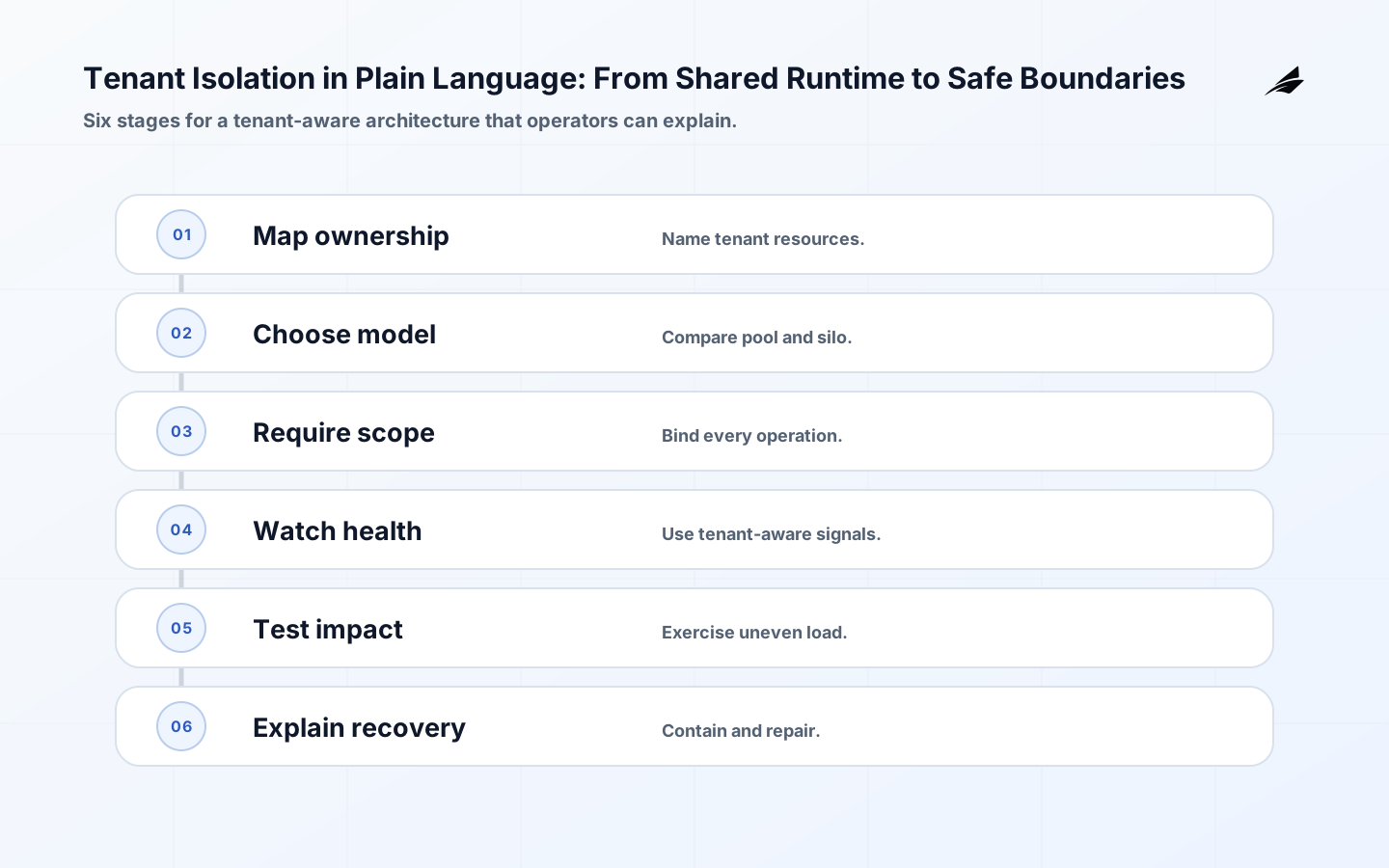
Tenant isolation sounds like a specialist infrastructure concern until a shared SaaS product has to explain why one workspace saw another workspace's result, why one customer consumed a queue, or why an operator could repair the wrong record. The plain-language version is straightforward: every resource needs a tenant owner, every action needs a trusted scope, and every failure needs a safe response. The architecture may be pooled, siloed, or mixed, but the promise must remain understandable to product, support, security, and finance. For a more implementation-focused companion, see Tenant Isolation for SaaS Product Engineering: A Practical Guide.
Define the tenant isolation architecture in business terms
List the things a tenant owns or can influence: users, workspaces, files, API keys, jobs, reports, usage, invoices, and support cases. Then describe an allowed action without infrastructure jargon. “A member of workspace A can download file A-17, but cannot discover, read, or delete file B-22” is an acceptance rule that can be implemented in several architectures. Add harm scenarios such as data exposure, unfair capacity consumption, corrupted derived data, and an operator mistake. AWS frames multi-tenant reliability around preventing one tenant's workload from damaging another tenant's experience; the same boundary is useful for security and availability reviews.
| Plain-language question | Architecture implication | Owner to involve |
|---|---|---|
| Can customers share a runtime? | Need policy enforcement and fair capacity | Platform and security |
| Must data be physically separated? | Consider silo or a selective bridge | Compliance and architecture |
| Can one tenant create burst load? | Throttle, queue, or reserve capacity | Reliability and product |
| Can support cross the boundary? | Separate permissions and expiring elevation | Operations and privacy |
Compare pool, silo, and bridge models honestly
A pool shares underlying resources and can align capacity with aggregate demand, but it raises the importance of logical enforcement, workload fairness, and cost attribution. A silo isolates more of the footprint for a tenant, which can reduce blast radius or meet a contract, but it increases provisioning, upgrade, and observability work. A bridge places high-sensitivity or high-load parts in a silo while keeping lower-risk services pooled. Make the comparison on the resource path that matters, not on a diagram of the whole platform. An account, database, or VPC boundary can be valuable, yet an export service, cache, or admin script can still cross it if its own rules are vague.
Make the scope enforceable outside feature code
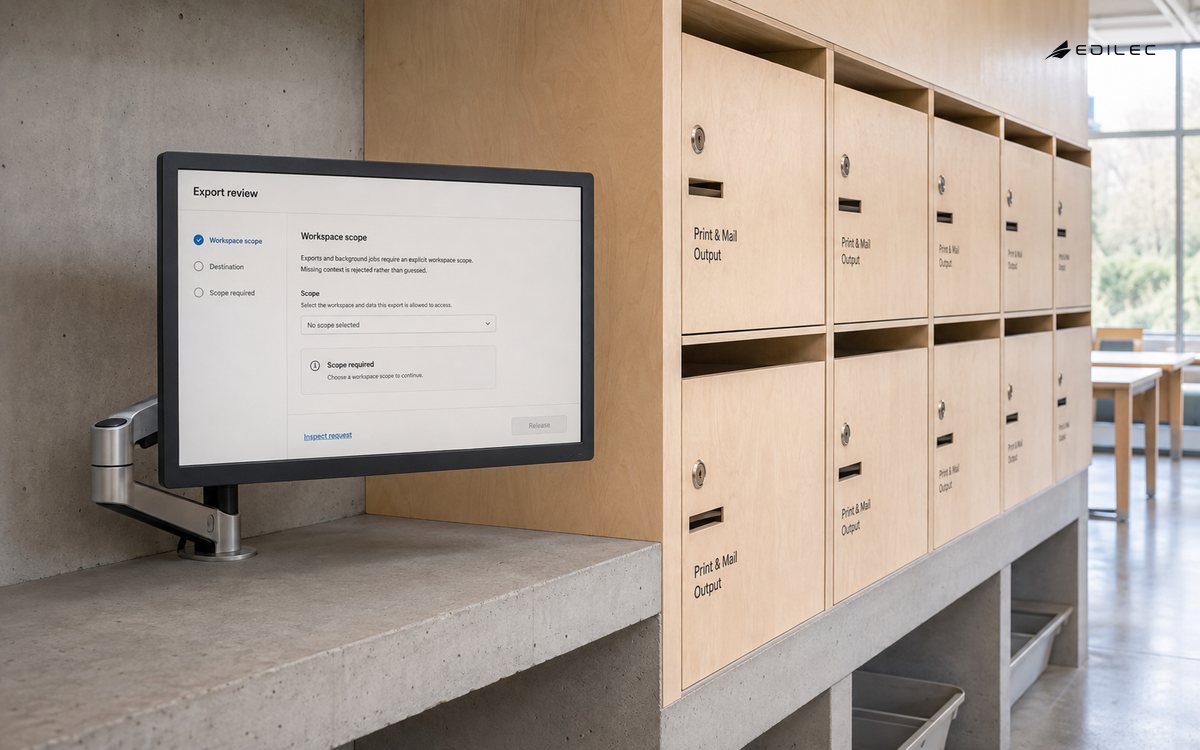
An IT manager should be able to ask where the boundary is applied and get more than “the application checks it. ” Require tenant scope in service interfaces, repositories, event envelopes, object keys, and repair commands. Reject missing context instead of guessing from a mutable display name. Keep authorization server-side; a client can hide a menu but cannot protect a resource. Shared components should make the safe path easy for developers and the unsafe path obvious in review. If a job runs without an interactive user, give it a service identity and a declared tenant scope with the same accountability as a request.
Use observability to see tenant health and impact
OpenTelemetry's observability primer separates signals such as traces, metrics, and logs while emphasising the need to understand system behaviour from evidence. Apply that idea with restrained tenant context. Track latency, error rate, queue age, consumption, and rejected policy decisions by tenant or tier only where the dimension is operationally justified. A health view should identify a tenant-specific problem before it becomes a platform-wide incident, but it should not expose customer content to every person who can open a dashboard. Keep correlation identifiers consistent and document which fields are safe for support, engineering, or security audiences.
| Signal | Question it answers | Guardrail |
|---|---|---|
| Tenant-aware latency | Is one tenant or tier receiving degraded service? | Aggregate by route and sensitivity |
| Queue age by scope | Is work stalled for one boundary? | Do not expose payload content |
| Rejected access | Are policy failures increasing or being probed? | Record reason, not secret data |
| Consumption share | Is a tenant creating unfair load? | Use product-approved capacity policy |
Make blocked and pending states understandable
Isolation often appears to a customer as a denial, a pending job, or a missing result. WCAG 2.2 treats accessibility as a set of testable recommendations that make content and interfaces more usable across abilities and devices. Apply that discipline to operational states: identify the affected action in text, explain whether the user lacks permission or the system is still checking scope, preserve keyboard access to the next safe action, and avoid using colour alone to distinguish a blocked record. A useful message does not reveal another tenant; it tells the current user what they can do, what will happen next, and how to contact the right owner.
Test isolation as a reliability property
Testing should cover more than a security scan or a single API request. Exercise two tenants through signup, import, search, report generation, export, billing status, user removal, and support recovery. Add uneven load profiles so a busy tenant competes with quiet tenants. AWS recommends tenant-aware workload, onboarding, throttling, distribution, and isolation tests because scale and cost failures can arise from the shape of tenant activity. Store the scenario, expected boundary, observed signals, and teardown result. A test that cannot identify what it would have caught is an expensive ritual rather than useful assurance.
- Use stable synthetic tenants with different tiers and data sizes.
- Attempt direct access with a valid session and a foreign resource identifier.
- Replay a job after tenant membership changes and inspect every side effect.
- Push one tenant above its normal load while measuring another tenant's latency.
- Run an export and download test through the same authorization path as the interface.
- Include an operator correction with an expiry and verify that the old evidence remains available.
Prepare a recovery path that limits blast radius
When isolation is uncertain, the first action is containment, not a broad data rewrite. Pause the affected job or delivery path, identify the resource class and time window, preserve logs and policy versions, and restrict investigation access to the people who need it. Then decide whether to reprocess, revoke, quarantine, or restore. Keep the original decision and correction linked so customer support can explain what changed without inventing a story. A recovery command should require scope, reason, approver, and an expiry for elevated access. Practise the command with an incomplete record and a queue backlog; those are common places where a clean rollback plan becomes ambiguous.
Turn isolation into an operating agreement
Record a small set of durable statements: what the tenant owns, which system supplies context, which service enforces scope, what is logged, who can correct a disputed result, and when the model is reviewed. Link changes in storage, routing, search, and support tooling to that agreement. NIST's SSDF provides a common vocabulary for integrating secure development into an SDLC; the practical translation is to make isolation part of design, implementation, testing, release, and response rather than a separate security ceremony. Review real denials and near misses, not only aggregate compliance percentages.
Use a tenant-aware operating example
Consider a workspace that submits a large report export while another workspace is waiting for an onboarding job. In a pool model, the important question is not simply whether the export belongs to the first tenant; it is whether its queue, storage, and retry behaviour can delay the second tenant. Define a per-tenant request identity, an export budget, a queue policy, and a visible pending state. Record the decision and measure both work completion and neighbour impact. If the export is moved to an isolated worker, preserve the same scope and audit events so the customer experience remains coherent. This example shows why tenant isolation crosses confidentiality, availability, and operations. The boundary must follow the work as it changes service, queue, and storage, while the capacity policy must make the trade-off visible to the product owner who promised the experience.
When a tenant moves between pooled and isolated capacity, show the transition as an operational state rather than hiding it behind a maintenance window. Define whether writes pause, whether reads remain available, how duplicate processing is prevented, and what verification allows cutover. Support should have a plain-language explanation and an expected completion condition. The same state model protects the customer and helps the platform team measure whether the migration actually reduced the intended risk or only moved it to another service.
Key takeaways
- Describe tenant isolation as a resource and action boundary that people outside engineering can challenge.
- Choose pool, silo, or bridge based on compliance, blast radius, workload, cost, and operating evidence.
- Make tenant scope required in requests, jobs, storage, exports, and operator commands.
- Use tenant-aware observability and accessible state messages without widening data access.
- Test uneven load, foreign identifiers, asynchronous work, and recovery—not just the normal interface.
- Related reading: workspace models implementation checklist and roadmap systems security review.
Frequently asked questions
Can a shared database be safe?
It can be appropriate when tenant scope is enforced consistently at data access and surrounding paths, and when the workload and compliance model accept shared infrastructure. Prove the assumption with negative tests, capacity controls, and reviewable evidence.
Where should tenant context come from?
Use a trusted session or service identity plus a server-side relationship to the resource. Treat route parameters, client fields, and display names as inputs to validate, not as authority by themselves.
What is a useful tenant health review?
Review workload, latency, errors, queue age, policy failures, capacity consumption, and unresolved repairs for representative tenants. Pair the chart with sampled cases so the team can distinguish customer behaviour from a measurement or routing defect.
Conclusion: make shared infrastructure accountable
Tenant isolation is not a claim that a diagram can make on its own. It is a set of enforceable relationships that remain true across request paths, background work, storage, operations, and recovery. Explain the model in business terms, choose the smallest control that protects the consequence, and then collect evidence that the control holds under uneven load and change. That is how a shared SaaS platform earns the right to scale without turning one tenant's convenience into another tenant's risk.
Ownership is clearer when tenant isolation in plain language for saas separates the promise from the mechanism. Explain tenant isolation in plain language for saas pending and denied states before expansion.
Before widening tenant isolation in plain language for saas, run a small rehearsal with normal, denied, delayed, and corrected cases. Keep tenant isolation observable, owned, and recoverable through the next review.
The measurement plan for tenant isolation in plain language for saas should pair an outcome with a reason to investigate it. Treat tenant isolation in plain language for saas exceptions as evidence for the next decision.
A durable operating note for tenant isolation in plain language for saas records the assumptions that made the decision safe: the authoritative source, effective time, permitted actor, protected resource, and recovery route. Reconcile tenant isolation in plain language for saas changes against the original record.
This decision also connects to The Plain-language Guide to Trial Conversion, Workspace Models: Implementation Checklist, Roadmap Systems Security Review for SaaS Teams. Review those boundaries together when tenant isolation in plain language for saas shares identity, data, billing, or support evidence with another workflow.
Give product, engineering, and support teams a shared evidence record to review.
Evidence for “Tenant Isolation in Plain Language for SaaS” is grounded in Secure Software Development Framework (SSDF) Version 1.1, Observability primer, Web Content Accessibility Guidelines (WCAG) 2.2, SaaS Lens foundations, SaaS Tenant Isolation Strategies; each source informs a specific decision, test, or operating trade-off described in this guide.