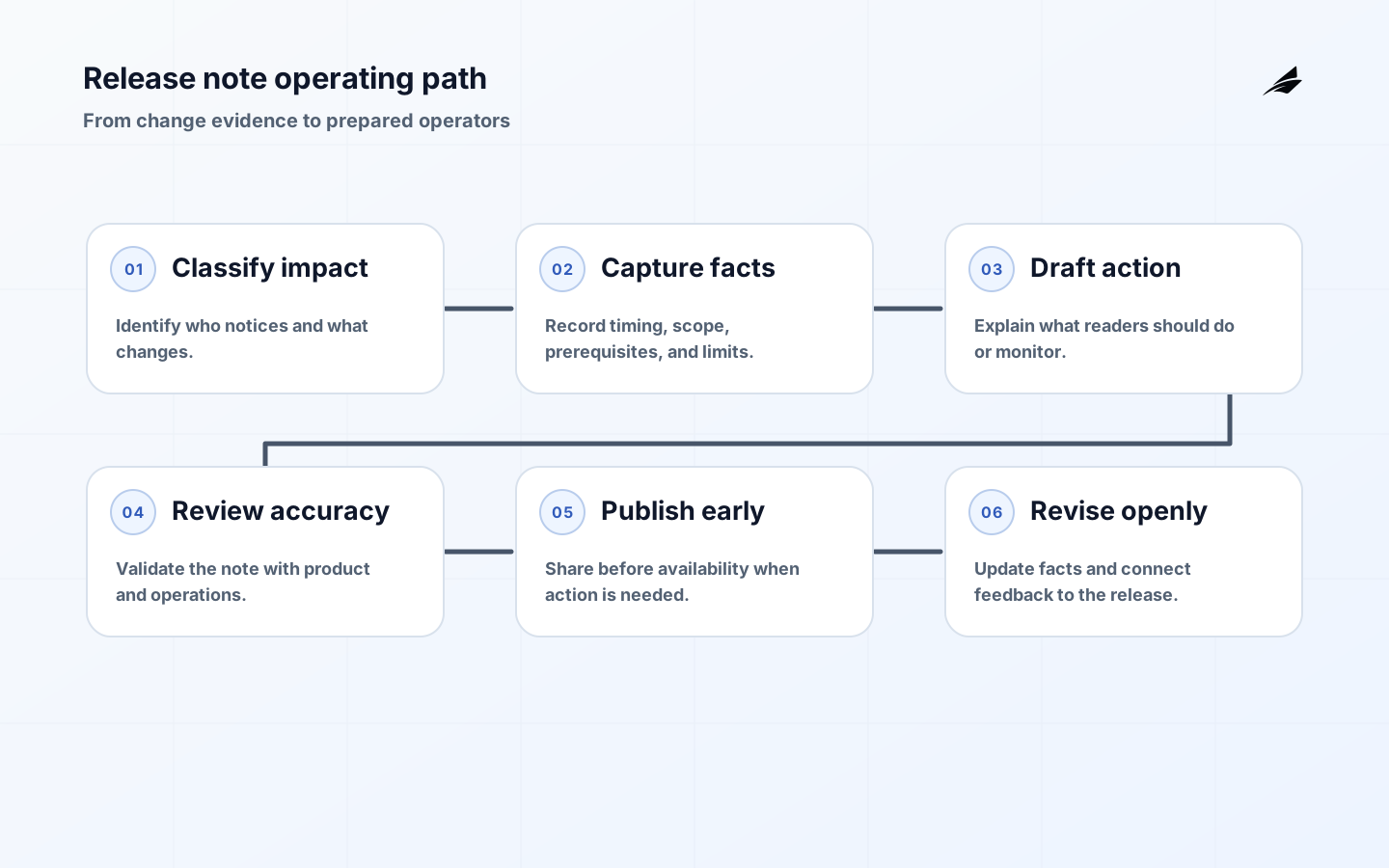
Release notes is a product-engineering concern because it shapes what a customer can trust in the product, what an operator can explain, and what a delivery team can change safely. For operations leaders, the work is not to collect more tooling or policy language. It is to make one important decision visible: what state is authoritative, who owns it, which controls enforce it, and how the team learns when reality differs from the plan.
Why Release notes Matters
Release notes are often written after a deployment, when the people who understood the tradeoff have already moved on. Operations then learns about a change from a support ticket, an altered export, or a customer asking why a familiar workflow disappeared. A changelog that merely repeats ticket titles creates the appearance of communication while leaving administrators unable to prepare, approve, or recover from change. The useful unit is the operational effect, not the engineering artifact.
Classify a release by what a reader must do: learn, configure, approve, monitor, or recover. A small visual adjustment may need no operational note. A permission change, API behavior change, data migration, retirement, or billing-impacting release needs a specific audience, timing, prerequisites, and rollback implication. This comparison is more valuable than a single long chronological feed because it helps an operations leader find the changes that can disrupt a real process.
Build the Operating Model
A dependable release-note system starts from structured release evidence. Link a deployable change to a customer-facing summary, affected capabilities, audience, availability date, compatibility rule, documentation update, owner, and known limitation. Keep internal incident details out of the public note, but do not hide consequential behavior behind vague language. When the facts change, revise the note and mark the revision. Readers need a stable record, not a marketing announcement.

| Change type | Release-note expectation | Why it matters |
|---|---|---|
| New optional capability | Audience, availability, and first-use path | Teams can decide whether to adopt it now. |
| Permission or role change | Affected roles and required administrator action | Prevents access surprises at launch. |
| API or integration change | Compatibility, migration steps, and deadline | Gives technical customers time to test. |
| Retirement or data change | Timeline, recovery path, and support contact | Allows operations to protect critical workflows. |
For each note, answer five questions in plain language: what changes, who notices, what they need to do, when it takes effect, and how to get help. Use examples where a configuration or API behavior changes. Distinguish general availability from a controlled rollout. If a change is irreversible, say so. If a customer can defer it, explain the deadline and the consequence. Accessibility matters here too: headings, concise labels, and predictable structure make urgent information easier to scan.
Design the Architecture and Controls
Treat notes as a release artifact with ownership, not a manually copied web page. A release workflow can require a note category and impact statement before production promotion, then publish from a reviewed content record. Integrate the record with support and status communications so the same release identifier appears across teams. This does not mean exposing every pull request. It means ensuring that customer-impacting changes leave a trace that survives team turnover and deployment tooling changes.
The most common failures are omissions and ambiguity. 'Improvements' tells an operator nothing. A note that announces a migration after it begins removes the chance to plan. A date without a timezone creates avoidable disputes. A note that says a feature is available but ignores role, region, or plan requirements sends support work downstream. Include known limitations honestly, then update them when fixed. Trust grows when release communication is precise even when the change is imperfect.
Roll Out with Evidence
Start with the releases that currently create the most support load: permission changes, exports, integrations, data imports, and billing behavior. Build a short editorial checklist into their release process. Trial it with a customer-facing operations team: ask them to use the note to prepare a test workspace, answer a customer question, and identify a rollback contact. Their gaps are the useful backlog. Add automation only after the required facts are consistently captured.
| Signal | What it can reveal | First response |
|---|---|---|
| Support questions on release day | The note omitted a practical next step | Add an example and link the owning guide. |
| Late corrections | Facts entered the workflow too late | Require impact review before promotion. |
| High contacts from one role | Audience targeting was too broad | Segment notes by administrator, user, and developer. |
| Migration deadline misses | The required action was not observable | Add pre-deadline reminders and completion signals. |
Operate and Measure
Track the proportion of customer-impacting releases with a published note before availability, support contacts tied to undocumented changes, corrections made after publication, time from release decision to communication, and documentation click-through from notes. Review qualitative feedback as well: an operator who can tell you exactly what changed and what they must do has received a successful note. A high open rate is not enough when readers still cannot take the next safe action.
- Write for the operator who must act, not the team that shipped.
- State scope, timing, prerequisites, and recovery plainly.
- Publish meaningful notes before availability where possible.
- Revise a note transparently when facts change.
- Use release identifiers to connect support, status, and documentation.
Implementation Detail
A concrete release-note example is a change to role defaults. The note should say which existing and new workspaces are affected, whether current roles change automatically, how an administrator can review memberships, the exact availability date and timezone, and what to do if a critical user loses access. 'Improved permissions' communicates none of that. The operational note does not need to expose internal implementation detail; it needs to make the external behavior and required preparation unambiguous.
For integrations, publish compatibility facts as testable statements. Name the API version, field behavior, deprecation date, error change, and migration path. Give customers a way to validate readiness in a nonproduction workspace when possible. When a migration cannot be reversed, explain the recovery alternative rather than implying it is risk-free. Treat this information as an input to a customer's own change management. The extra precision costs less than the support and trust lost when an integration fails after an undocumented release.
Review Before Scaling
Review notes against the deployment plan before approval. If a release has a feature flag, regional rollout, data backfill, or error-budget condition, the note should not claim universal immediate availability. If support has a special remediation command, decide whether customers need an action or simply a contact path. If the release is paused, update the status rather than leaving an old date visible. This review connects communication with actual release governance and prevents a polished note from becoming stale at the moment it matters.
Give teams feedback on note quality using real reader tasks. Ask an administrator to identify whether they are affected, a support specialist to resolve a related customer question, and an engineer to find the associated release evidence. Their answers expose missing audience labels, unsupported claims, or unclear terms. Over time, maintain a compact set of examples for recurring changes such as retirements, permission updates, integrations, and urgent fixes. Consistency helps readers scan quickly without forcing every release into boilerplate.
Release communication becomes more reliable when the author can verify every statement against a named source: a configuration record, test result, migration plan, or product owner. Keep those sources alongside the note during review. If a reader asks why a date or prerequisite was stated, the team can answer quickly and correct the source if needed, rather than debating a memory after release. Review this evidence with the owner of release notes, the people who operate the surrounding workflow, and the team responsible for customer communication. Agree on one change, one measure, and one follow-up date. That closed loop keeps local fixes from becoming unexamined policy and makes the next decision easier to defend.
Key Takeaways
- Make release notes a named operating decision rather than an implicit implementation detail.
- Keep customer impact, evidence, and recovery visible to the team that owns the workflow.
- Start with a narrow path, learn from real outcomes, and expand only after the controls hold.
Frequently Asked Questions
Where should a team start with release notes? Start where an incorrect decision would create meaningful customer, commercial, or operational harm. Map the current state, the owner, the boundary, and the evidence available during failure. How much process is enough? Use the smallest process that makes the decision repeatable, reviewable, and recoverable. Add rigor when the data, action, or customer consequence makes a shortcut unsafe.
Conclusion
Strong release notes work is not a one-time project. It is a durable agreement between product, engineering, and operations about how the system behaves under ordinary and difficult conditions. When the contract, controls, telemetry, and recovery path agree, operations leaders can improve the product without turning each release or customer exception into a new source of uncertainty.
The practical continuity test for release notes is whether a qualified teammate who did not design the workflow can inspect the current state, understand the relevant decision and its limits, and take the next safe action without improvised access or tribal knowledge. Keep the owner, evidence location, escalation route, and recovery rule visible. That discipline makes routine operations calmer and gives the organization a reliable starting point when a customer, release, or incident exposes a new edge case.
Sources
The implementation advice in this release notes guide is grounded in GitHub release note guidance, Semantic Versioning, Google SRE error budget policy, Web Content Accessibility Guidelines 2.2. These references are useful for checking platform-specific controls and terminology during delivery; the decisions here still need to be applied to the product's data, risk, and customer context.