How IT Managers Should Think About Role-Based Operations
Role-based operations explains how a team can make role-based operations dependable before the work becomes difficult to reverse. Role-based operations uses a decision with a named owner, bounded action, visible state, and inspectable evidence.
Define the role-based operations decision
Role-based operations is ready for a controlled release when the team can state what is authoritative, which context permits action, what must be retained, and how an exception reaches a responsible person. Role-based operations uses a provisional state when evidence is incomplete; Role-based operations never turns an unanswered question into a silent default.
How IT Managers Should Think About Role-Based Operations
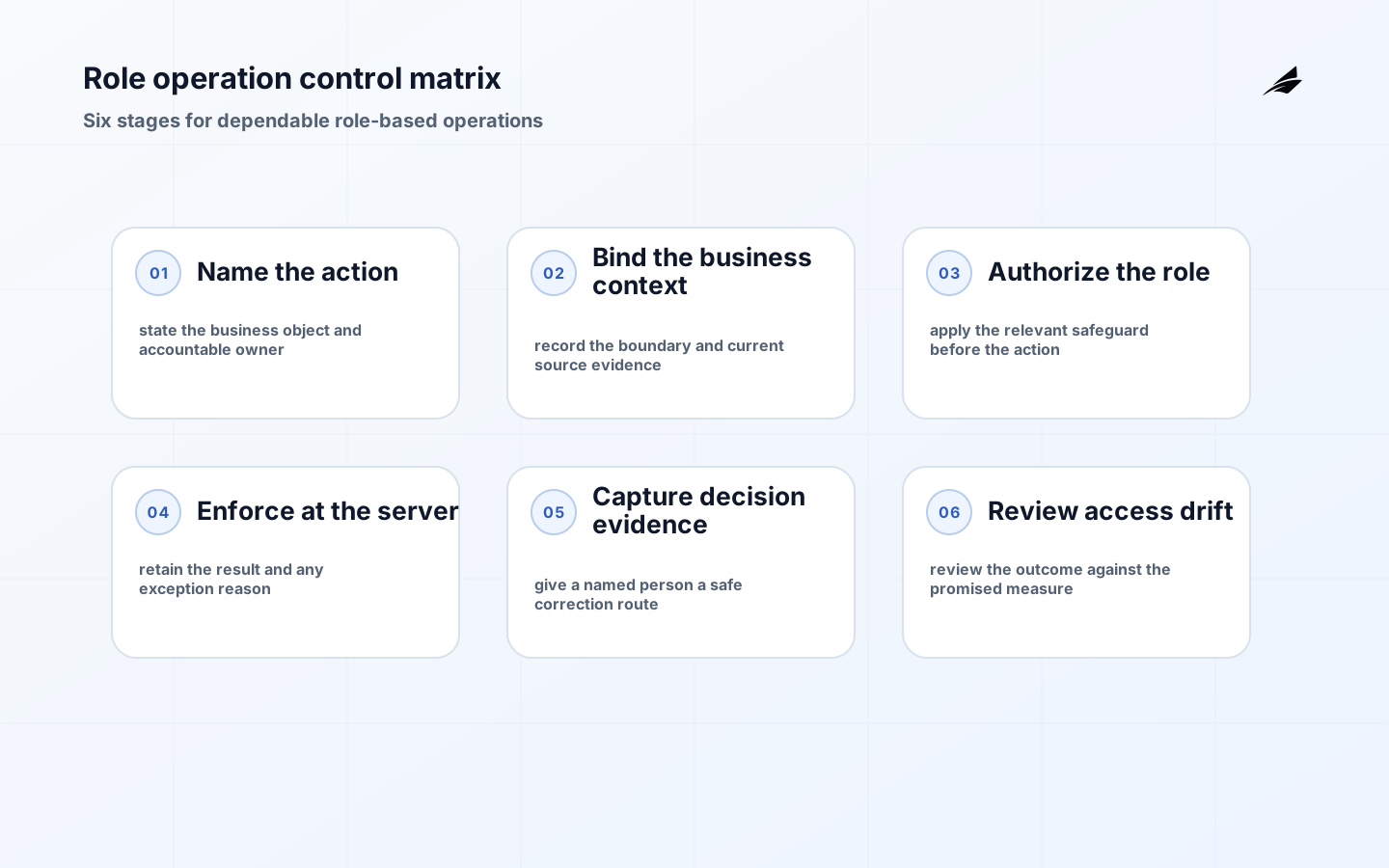
- For role-based operations, frame one consequential business object and one accountable owner.
- For role-based operations, capture authorization context at the boundary where a request becomes an approved operational action.
- For role-based operations, test the access review route with missing, late, duplicate, denied, and corrected inputs.
- For role-based operations, review downstream impact before a change reaches a reader, customer, employee, supplier, or device.
- For role-based operations, approve a bounded correction with a named resolver, deadline, and retained reason.
- For role-based operations, verify the released result against the promised measure and record what remains uncertain.
Controls and evidence for Role-based operations
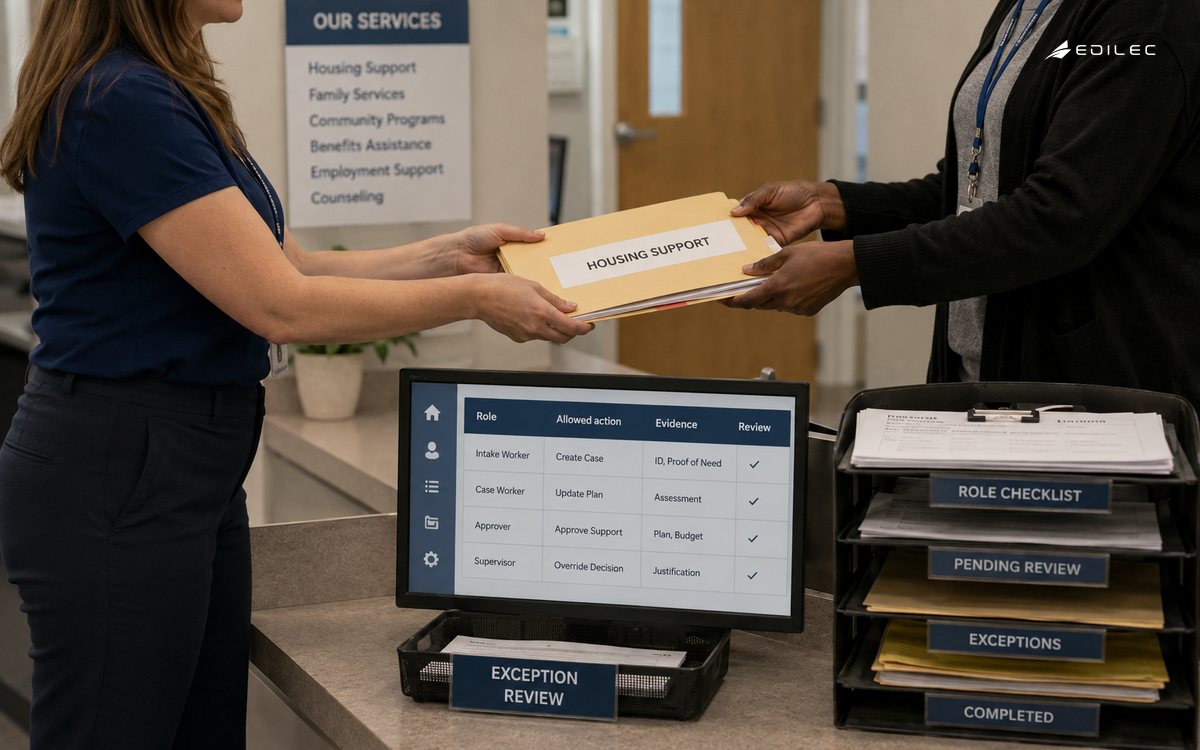
An authorization decision should be reproducible from the request context and the policy that was evaluated. Retain the subject or service identity, relevant role or attributes, target resource, requested operation, applicable environment conditions, policy version, decision, timestamp, and responsible owner. NIST SP 800-162 describes attribute-based access control as evaluating subject, object, operation, and sometimes environment attributes against policy, rules, or relationships; those inputs define what an evidence record must explain. Apply deny-by-default behavior when no rule authorizes the request, and validate permission at every request boundary, including APIs, background work, and resource delivery. A denied or indeterminate result should show the failed condition and safe next step without exposing protected data. When policy changes, preserve the prior decision context and effective time so an access review can distinguish a historical decision from a current rule. The record should support investigation, correction, and accountable approval rather than merely showing that a role exists.
| Decision point | Evidence to retain | Owner response |
|---|---|---|
| Normal case | The input, rule, actor, timestamp, and outcome for a role-sensitive operational action. | Confirm the result and publish its status. |
| Exception | The failed check, affected scope, safe options, deadline, and disposition. | Route the case to the operations manager without overwriting history. |
| Change | The previous behavior, new definition, approval, effective time, and rollback point. | Reconcile the affected records before expanding scope. |
Test Role-based operations before rollout
- For role-based operations, trace one case from intake through the final decision and observable outcome.
- For role-based operations, replay a normal case and an exception case while preserving authorization context and the responsible actor.
- For role-based operations, ask an operator outside the build team to explain the access review route without private context.
- For role-based operations, measure completion quality, exception age, recovery time, and evidence completeness by owner.
- For role-based operations, check that a correction reaches every affected consumer without rewriting the original event.
- For role-based operations, record the next review date, escalation route, and condition for safely expanding scope.
Test role-based operations at every enforcement point that can expose or change a resource. Exercise the normal path through the user interface and API, then repeat it with missing attributes, an expired role, an unauthorized object, a forged identifier, a denied operation, and a dependency that cannot supply policy context. Include background jobs, exports, static resources, and administrative tools where they share the same data. Verify that permission is checked on each request rather than inherited from an earlier screen or trusted client signal. Add unit and integration cases for allow, deny, and indeterminate outcomes, and confirm that failure exits without leaking protected information. Record the request context, decision, policy version, and operator-visible explanation for each important scenario. Finally, test the recovery route: a reviewer should be able to correct a role or attribute, re-evaluate the request, and reconcile any affected records without rewriting the original denial. A passing result demonstrates both enforcement and explainability.
Implementation notes for Role-based operations
Start implementation with a policy model that names the subject, target resource, requested action, and conditions under which the action is permitted. A role can be one input, but an IT manager should also identify resource ownership, relationship, environment, and other attributes that affect the decision. NIST SP 800-162 provides the vocabulary for evaluating those attributes against policy. Where a policy must express a target, action, assigner, assignee, constraint, or duty, the W3C ODRL model offers a precise way to describe the rule and its preconditions. Translate that policy into a single enforceable decision point and make the default outcome explicit. Document which system is authoritative for each attribute, how stale or conflicting values are handled, and which owner approves a change. Keep the policy definition separate from application presentation so every request surface receives the same decision. Implementation is ready for review when an operator can trace a permitted and denied action back to the rule and evidence that produced it.
Make access review and policy change a controlled operating cycle. For each role, permission, attribute, or relationship, identify the owner, intended scope, approving authority, evidence to retain, and next review condition. Review both grants and denials: a grant that is broader than the business need increases exposure, while a denial that blocks legitimate work may require a documented correction rather than an informal bypass. When a policy or attribute source changes, record the previous definition, new definition, effective time, affected resources, approval, and rollback route. Re-run authorization tests at the request boundaries that depend on the change, including integrations and scheduled work. Log the decision with enough context for an auditor or incident responder to reconstruct it, while excluding secrets and unnecessary sensitive values. If an ODRL permission carries a constraint or duty, verify that the precondition is satisfied before allowing the action. Close the review only when ownership, evidence, and correction responsibility are clear.
Use the evidence record to manage role-based operations over time. Review completion quality, exception age, recovery time, evidence completeness, and the number of actions requiring manual intervention, then interpret each measure by owner, resource scope, policy version, and request surface. A high allow rate is not proof of sound authorization, and a high deny rate is not proof of strong control; the review must show whether decisions match intended policy and whether operators can correct legitimate exceptions. Examine failed checks for recurring stale attributes, missing relationships, overly broad permissions, or inconsistent enforcement locations. When an access change affects users or downstream systems, reconcile the affected records and confirm that the new result is visible without erasing prior history. Feed findings into the next review date, test set, and approval decision. The operating rule is simple: every permission should have a reason, every exception should have an owner, and every material change should leave evidence that supports challenge, correction, and accountability.
| Operational question | Evidence to retain | Owner response |
|---|---|---|
| What proves role-based operations is ready? | For role-based operations, a dated authorization context decision record connects the input, rule, actor, result, and review. | Confirm the evidence before widening scope. |
| What happens when role-based operations is uncertain? | For role-based operations, the system marks the state, limits the action, names the resolver, and preserves prior context. | Route the exception without erasing history. |
| How is role-based operations corrected? | For role-based operations, the correction names the changed fact, affected readers, approval, effective time, and verification result. | Reconcile consumers and close the case. |
| Which measure protects role-based operations? | For role-based operations, track completion quality, exception age, recovery time, and evidence completeness by owner. | Review the trend with the accountable operator. |
| What should be rehearsed for role-based operations? | For role-based operations, test normal completion, missing data, duplicate input, denied access, delayed dependency, and reversal. | Record the scenario outcome and remaining risk. |
| When may role-based operations expand? | For role-based operations, expand only after representative normal and exceptional cases pass with a usable correction route. | Approve the next bounded use explicitly. |
Key takeaways for Role-based operations
For role-based operations, keep the owner, authoritative state, permitted action, evidence boundary, and recovery route visible. For role-based operations, pause the normal path when proof is missing and show how a corrected result reaches each affected reader.
Role-based operations FAQ
For role-based operations, what should a team settle first? Role-based operations teams should start with the accountable owner, authoritative state, permitted action, evidence boundary, and recovery route. For role-based operations, ask which operator can pause the normal path, what proof they need, and how correction reaches each affected reader.
A dependable role-based operations operating rule
For role-based operations, keep the first release narrow, measurable, and owned. For role-based operations, a result earns its next use only when it can be explained, challenged, corrected, and reviewed by the right person.
For role-based operations, consult these official references for the operating choices in this guide: OWASP Authorization Cheat Sheet; NIST SP 800-162: Guide to Attribute Based Access Control; NIST SP 800-53 Rev. 5; W3C ODRL Information Model. role-based operations related guide 1; role-based operations related guide 2; role-based operations related guide 3