CRM Automation Architecture: Guardrails, Ownership, and Recovery
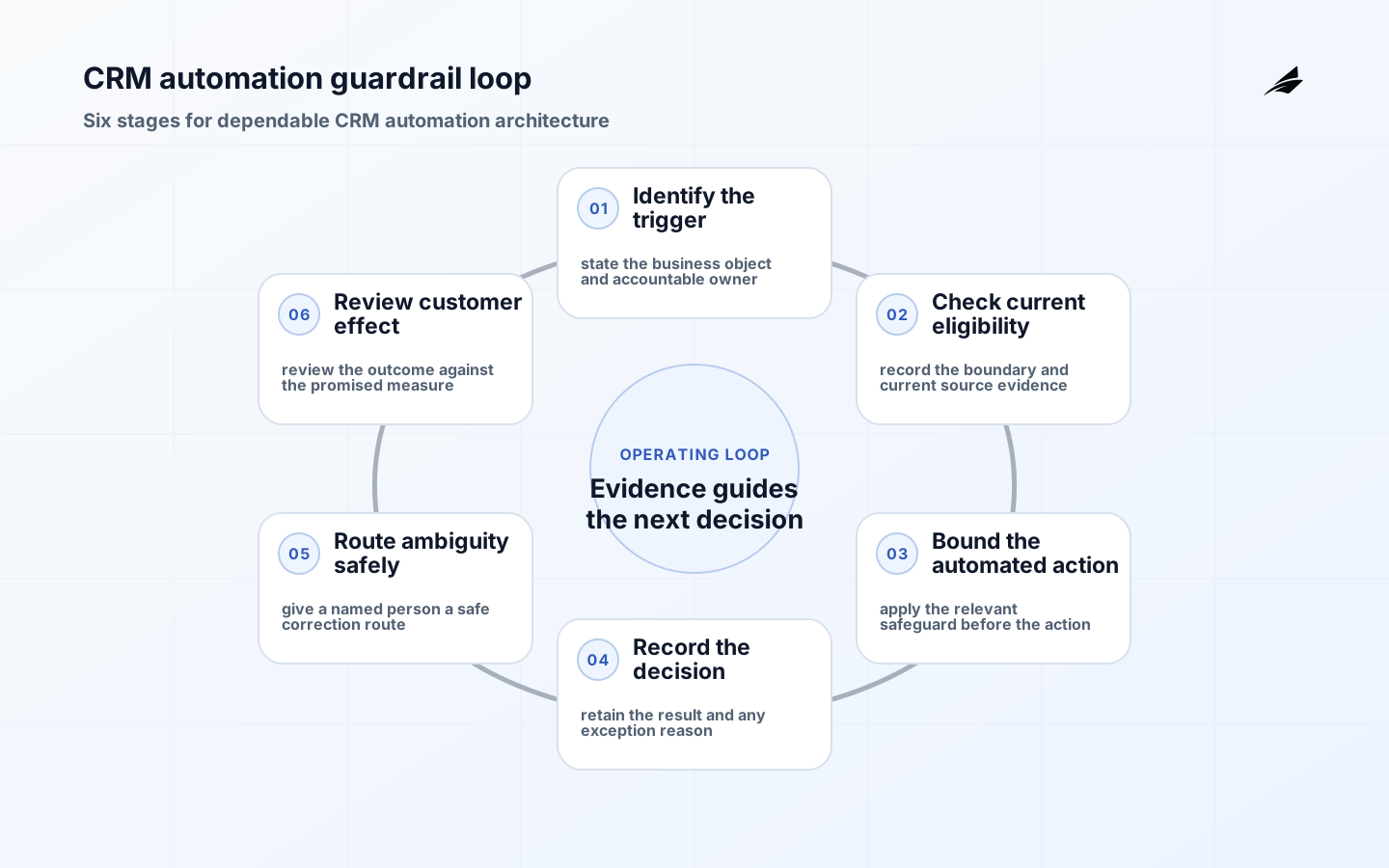
CRM automation explains how a team can make CRM automation dependable before the work becomes difficult to reverse. CRM automation uses a decision with a named owner, bounded action, visible state, and inspectable evidence.
Define the CRM automation decision
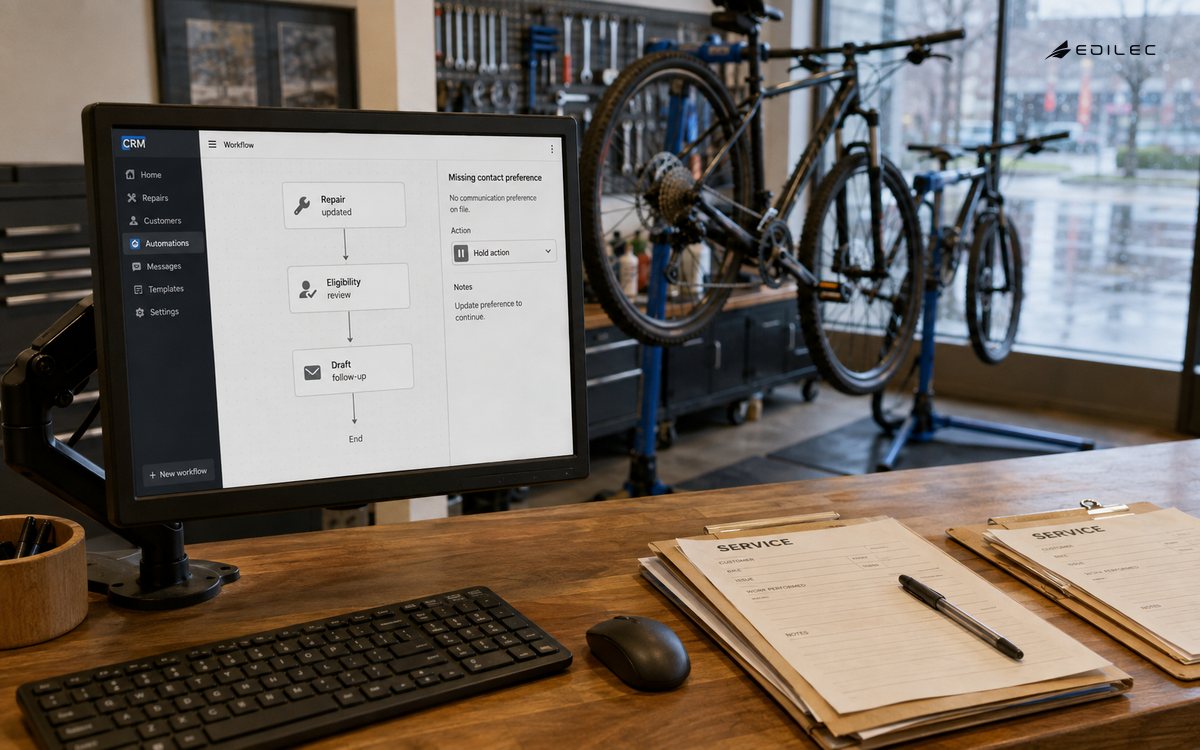
CRM automation is ready for a controlled release when the team can state what is authoritative, which context permits action, what must be retained, and how an exception reaches a responsible person. CRM automation uses a provisional state when evidence is incomplete; CRM automation never turns an unanswered question into a silent default.
CRM Automation Architecture: Guardrails, Ownership, and Recovery
- For CRM automation, frame one consequential business object and one accountable owner.
- For CRM automation, capture customer eligibility at the boundary where a request becomes an approved operational action.
- For CRM automation, test the bounded actions route with missing, late, duplicate, denied, and corrected inputs.
- For CRM automation, review downstream impact before a change reaches a reader, customer, employee, supplier, or device.
- For CRM automation, approve a bounded correction with a named resolver, deadline, and retained reason.
- For CRM automation, verify the released result against the promised measure and record what remains uncertain.
Controls and evidence for CRM automation
Treat each CRM automation decision as a traceable chain from customer data to business outcome. Retain the source record or event, the trigger condition, the eligibility context, the rule or journey version, the permitted action, the acting identity, the timestamp, and the resulting state. A normal case should show why the action was allowed and whether the expected result was published. An exception should identify the failed condition, affected records, safe disposition, resolver, and deadline without overwriting the original event. When a journey changes, preserve the previous definition, approval, effective time, and rollback point so operators can distinguish old and new behavior. Microsoft documentation describes trigger-based and segment-based journeys, Dataverse conditions, and explicit journey states; those distinctions belong in the evidence model. Salesforce workflow guidance also supports keeping approval context visible. The record should make a later review possible without relying on private knowledge.
| Decision point | Evidence to retain | Owner response |
|---|---|---|
| Normal case | The input, rule, actor, timestamp, and outcome for an automated customer action. | Confirm the result and publish its status. |
| Exception | The failed check, affected scope, safe options, deadline, and disposition. | Route the case to the CRM automation owner without overwriting history. |
| Change | The previous behavior, new definition, approval, effective time, and rollback point. | Reconcile the affected records before expanding scope. |
Test CRM automation before rollout
- For CRM automation, trace one case from intake through the final decision and observable outcome.
- For CRM automation, replay a normal case and an exception case while preserving customer eligibility and the responsible actor.
- For CRM automation, ask an operator outside the build team to explain the bounded actions route without private context.
- For CRM automation, measure completion quality, exception age, recovery time, and evidence completeness by owner.
- For CRM automation, check that a correction reaches every affected consumer without rewriting the original event.
- For CRM automation, record the next review date, escalation route, and condition for safely expanding scope.
Before rollout, test the meaning of the automation as well as its technical execution. Follow a representative Dataverse record from the qualifying change through the journey entry, condition, message or action, and observable outcome. Confirm that the selected audience attribute and changed columns identify the intended customer, and that a filter such as a resolved status does not fire on an intermediate update. Exercise missing, late, duplicate, denied, and corrected inputs, then verify the operator can see the state and reach the named resolver. Test pause, stop, completion, and published-version behavior so the team understands what happens to existing participants and new entrants. Review the business goal separately from journey completion: the goal should have a defined trigger or metric, an explicit target when appropriate, and a stated review window. Record failed cases, evidence gaps, and the condition for expanding scope. A test is complete only when an operator outside the build team can explain the result and correction path.
Implementation notes for CRM automation
Implementation should begin at the boundary where a CRM event becomes an eligible operational action. Name the authoritative Dataverse table or other source, the audience attribute, the fields that can trigger evaluation, and the conditions that distinguish a meaningful state change from incidental editing. Keep eligibility evaluation separate from the action that sends a message, updates a record, or starts a downstream process. Represent unresolved data explicitly so an absent or ambiguous value cannot silently qualify a customer. Maintain a draft definition until its conditions, ownership, approval, and evidence requirements are reviewable; publish only the bounded version that has passed those checks. When a live journey needs a change, create and verify the new version while preserving the behavior of participants already in the existing version. The implementation record should connect configuration to an accountable owner and state how the team will stop, complete, or roll back the flow. This makes later corrections understandable to both operators and reviewers.
Design the exception route before enabling the normal route. If customer eligibility is missing, contradictory, stale, or denied, the automation should preserve the observed state, limit the action, and identify the person or team responsible for resolution. The exception record should capture the failed condition, affected audience or records, permitted safe options, urgency, decision, and reason. A resolver may correct the underlying data or approve a bounded alternative, but the correction should be recorded as a new event rather than replacing the original evidence. For customer-facing actions, assess whether a message, offer, task, or status change has already reached a consumer and record the required reconciliation. Provide an operator control to pause or stop the relevant journey version when continuing would widen the impact. Close the exception only after the corrected result is verified against the intended rule and any affected records are reconciled. This path gives CRM automation a recoverable operating state instead of a silent failure.
Measure CRM automation as an operating service, not only as a completed workflow. Track the quality of the intended outcome, the age and volume of exceptions, recovery time, evidence completeness, and the share of cases that require manual intervention. Relate each measure to an owner and to the journey version or trigger definition that produced it. A business goal should describe the customer action that matters and use a count or percentage target when that target clarifies success; a journey reaching its final state is not automatically the same as the customer achieving the goal. Review attribution and audience rules so repeated participation or suppression does not make results appear more comparable than they are. Use the review to decide whether to keep the scope, revise the eligibility condition, improve the correction route, or stop the journey. Record the decision, supporting evidence, and next review date. This creates a feedback loop in which outcome data can improve CRM automation without weakening its controls.
| Operational question | Evidence to retain | Owner response |
|---|---|---|
| What proves CRM automation is ready? | For CRM automation, a dated customer eligibility decision record connects the input, rule, actor, result, and review. | Confirm the evidence before widening scope. |
| What happens when CRM automation is uncertain? | For CRM automation, the system marks the state, limits the action, names the resolver, and preserves prior context. | Route the exception without erasing history. |
| How is CRM automation corrected? | For CRM automation, the correction names the changed fact, affected readers, approval, effective time, and verification result. | Reconcile consumers and close the case. |
| Which measure protects CRM automation? | For CRM automation, track completion quality, exception age, recovery time, and evidence completeness by owner. | Review the trend with the accountable operator. |
| What should be rehearsed for CRM automation? | For CRM automation, test normal completion, missing data, duplicate input, denied access, delayed dependency, and reversal. | Record the scenario outcome and remaining risk. |
| When may CRM automation expand? | For CRM automation, expand only after representative normal and exceptional cases pass with a usable correction route. | Approve the next bounded use explicitly. |
Key takeaways for CRM automation
For CRM automation, keep the owner, authoritative state, permitted action, evidence boundary, and recovery route visible. For CRM automation, pause the normal path when proof is missing and show how a corrected result reaches each affected reader.
CRM automation architecture FAQ
For CRM automation, what should a team settle first? CRM automation teams should start with the accountable owner, authoritative state, permitted action, evidence boundary, and recovery route. For CRM automation, ask which operator can pause the normal path, what proof they need, and how correction reaches each affected reader.
A dependable CRM automation architecture operating rule
For CRM automation, keep the first release narrow, measurable, and owned. For CRM automation, a result earns its next use only when it can be explained, challenged, corrected, and reviewed by the right person.
For CRM automation, consult these official references for the operating choices in this guide: Journeys overview; Trigger a journey based on a Dataverse record change; Set a business goal and measure progress through a journey; CMS Workflows and Approvals. CRM automation related guide 1; CRM automation related guide 2; CRM automation related guide 3