Procurement Software Selection: Controls, Ownership, and Safe Rollout
Procurement software explains how a team can make procurement software dependable before the work becomes difficult to reverse. Procurement software uses a decision with a named owner, bounded action, visible state, and inspectable evidence.
Define the procurement software decision
Procurement software is ready for a controlled release when the team can state what is authoritative, which context permits action, what must be retained, and how an exception reaches a responsible person. Procurement software uses a provisional state when evidence is incomplete; Procurement software never turns an unanswered question into a silent default.
Procurement control path
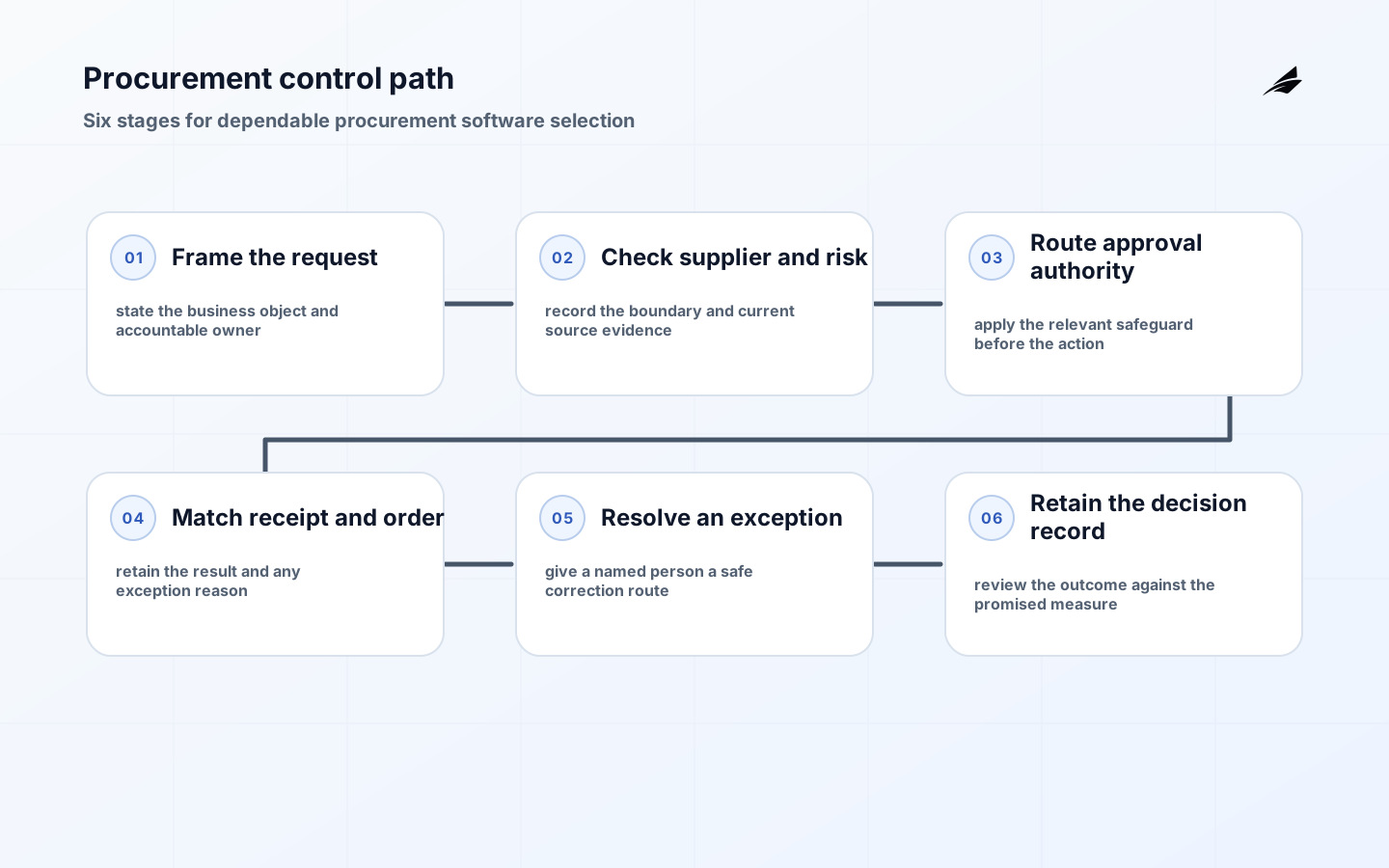
- For procurement software, frame one consequential business object and one accountable owner.
- For procurement software, capture approval authority at the boundary where a request becomes an approved operational action.
- For procurement software, test the supplier evidence route with missing, late, duplicate, denied, and corrected inputs.
- For procurement software, review downstream impact before a change reaches a reader, customer, employee, supplier, or device.
- For procurement software, approve a bounded correction with a named resolver, deadline, and retained reason.
- For procurement software, verify the released result against the promised measure and record what remains uncertain.
Controls and evidence for Procurement software
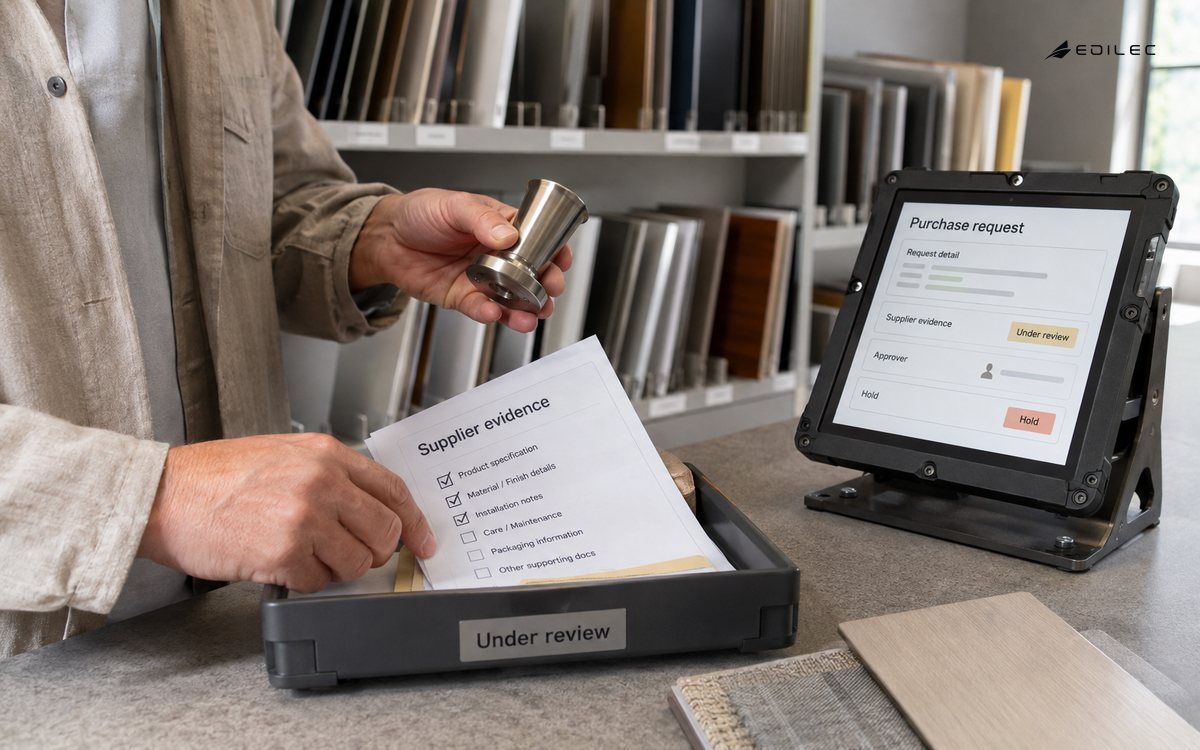
Approval authority should be represented as a durable record, not inferred from a user's role or a current screen. For each purchase request, retain the requester, supplier or item scope, applicable threshold or policy, approver, decision time, decision state, and supporting supplier evidence. Separate who submits, evaluates, approves, and fulfills when the risk or policy requires it; record an exception when that separation cannot be maintained. Supplier evidence should have an owner, source, freshness or review date, and a handling rule for missing or conflicting documents. NIST SP 800-161 frames supplier risk as part of the wider supply chain, while NIST SP 800-53 provides control families for access, audit, configuration, and contingency concerns. Together they support a selection record that can be inspected after a handoff, challenged when facts change, and used to route a controlled correction without rewriting the original decision.
| Decision point | Evidence to retain | Owner response |
|---|---|---|
| Normal case | The input, rule, actor, timestamp, and outcome for a purchase request. | Confirm the result and publish its status. |
| Exception | The failed check, affected scope, safe options, deadline, and disposition. | Route the case to the procurement process owner without overwriting history. |
| Change | The previous behavior, new definition, approval, effective time, and rollback point. | Reconcile the affected records before expanding scope. |
Test Procurement software before rollout
- For procurement software, trace one case from intake through the final decision and observable outcome.
- For procurement software, replay a normal case and an exception case while preserving approval authority and the responsible actor.
- For procurement software, ask an operator outside the build team to explain the supplier evidence route without private context.
- For procurement software, measure completion quality, exception age, recovery time, and evidence completeness by owner.
- For procurement software, check that a correction reaches every affected consumer without rewriting the original event.
- For procurement software, record the next review date, escalation route, and condition for safely expanding scope.
Test the procurement workflow with representative cases before treating a control as effective. Replay a normal request, an approval at a policy threshold, incomplete supplier evidence, a duplicate submission, denied access, a late dependency, and a corrected record. For each case, verify that the system preserves the original request, applies the intended approval rule, records the responsible actor and decision time, and exposes a clear status to the operator. An exception test is incomplete if it only proves that processing stopped; it must also show who receives the case, what safe options are available, and how the final disposition is recorded. Exercise recovery by repeating a failed operation and confirming that the retry does not create a second purchase or overwrite approval history. Review the traces with an operator outside the build team, then record unresolved evidence gaps before rollout.
Implementation notes for Procurement software
Implement the first release around explicit procurement states rather than a single approved flag. A request should move through named stages such as submitted, evidence pending, under review, approved, rejected, fulfilled, or exception, with permitted transitions and an accountable owner for each one. Store the approval context and supplier evidence reference alongside the state change, and keep prior events available for audit and reconciliation. A correction should identify the changed fact, affected records, effective time, approving authority, and verification result; it should not silently rewrite the original decision. Enforce authorization at the service boundary so a user interface cannot grant a capability that the backend does not allow. Keep thresholds, supplier evidence requirements, and exception routes in versioned configuration, with change review and a defined rollback point before expanding scope.
Treat supplier evidence, approval decisions, and downstream updates as separate integration boundaries. A purchase request may be approved in one service while receipt matching, purchase-order creation, or supplier-status updates occur elsewhere. Carry a stable request identifier and the relevant version of the approval policy across those exchanges, and make each consumer's acknowledgement observable. Retries must be idempotent: repeating a message should reconcile the same business action rather than create a duplicate order or approval. When a dependency is unavailable, preserve the pending state, expose the owning queue or operator, and define whether the safe response is retry, hold, or cancellation. Use reconciliation to compare the source decision with downstream records after recovery. NIST SP 800-34 and SP 800-61 support planning for service disruption and incident handling; apply that discipline to procurement integrations without discarding the evidence needed to explain what happened.
Make the operating model as explicit as the software. Name the procurement process owner, the approver for policy changes, the resolver for supplier-evidence exceptions, and the operator who can pause a release or workflow. Monitor completion quality, exception age, recovery time, evidence completeness, and reconciliation failures by owner; define the source and review cadence for each measure. A runbook should explain how to suspend new actions, preserve records, constrain a faulty integration, restore the last known correct behavior, and communicate affected requests. After an incident, distinguish restoring service from correcting the underlying control gap, such as an overbroad permission, stale supplier record, or untested transition. NIST SP 800-34 and SP 800-61 provide useful reference points for contingency and incident practices. Expand only when these responsibilities and recovery steps work in a bounded release.
| Operational question | Evidence to retain | Owner response |
|---|---|---|
| What proves procurement software is ready? | For procurement software, a dated approval authority decision record connects the input, rule, actor, result, and review. | Confirm the evidence before widening scope. |
| What happens when procurement software is uncertain? | For procurement software, the system marks the state, limits the action, names the resolver, and preserves prior context. | Route the exception without erasing history. |
| How is procurement software corrected? | For procurement software, the correction names the changed fact, affected readers, approval, effective time, and verification result. | Reconcile consumers and close the case. |
| Which measure protects procurement software? | For procurement software, track completion quality, exception age, recovery time, and evidence completeness by owner. | Review the trend with the accountable operator. |
| What should be rehearsed for procurement software? | For procurement software, test normal completion, missing data, duplicate input, denied access, delayed dependency, and reversal. | Record the scenario outcome and remaining risk. |
| When may procurement software expand? | For procurement software, expand only after representative normal and exceptional cases pass with a usable correction route. | Approve the next bounded use explicitly. |
Preserve selection evidence beyond the demo
The procurement decision record should survive vendor demonstrations and contract negotiation. Retain the evaluated workflows, roles, approval thresholds, integration assumptions, data-residency constraints, support obligations, exit requirements, and the evidence used to accept each material claim. Mark capabilities that depend on configuration, customization, a partner product, or a future roadmap item. Before signature, rehearse one ordinary purchase and one exception such as a budget override, supplier block, partial receipt, or disputed invoice. The resulting record gives implementation teams a defensible scope and gives commercial owners a way to test whether the delivered service matches the basis on which it was selected.
Key takeaways for Procurement software
For procurement software, keep the owner, authoritative state, permitted action, evidence boundary, and recovery route visible. For procurement software, pause the normal path when proof is missing and show how a corrected result reaches each affected reader.
Procurement software selection FAQ
For procurement software, what should a team settle first? Procurement software teams should start with the accountable owner, authoritative state, permitted action, evidence boundary, and recovery route. For procurement software, ask which operator can pause the normal path, what proof they need, and how correction reaches each affected reader.
A dependable procurement software selection operating rule
For procurement software, keep the first release narrow, measurable, and owned. For procurement software, a result earns its next use only when it can be explained, challenged, corrected, and reviewed by the right person.
For procurement software, consult these official references for the operating choices in this guide: NIST SP 800-161 Rev. 1: Cybersecurity Supply Chain Risk Management Practices; NIST SP 800-53 Rev. 5: Security and Privacy Controls; NIST SP 800-34 Rev. 1: Contingency Planning Guide; NIST SP 800-61 Rev. 2: Computer Security Incident Handling Guide. procurement software related guide 1; procurement software related guide 2; procurement software related guide 3