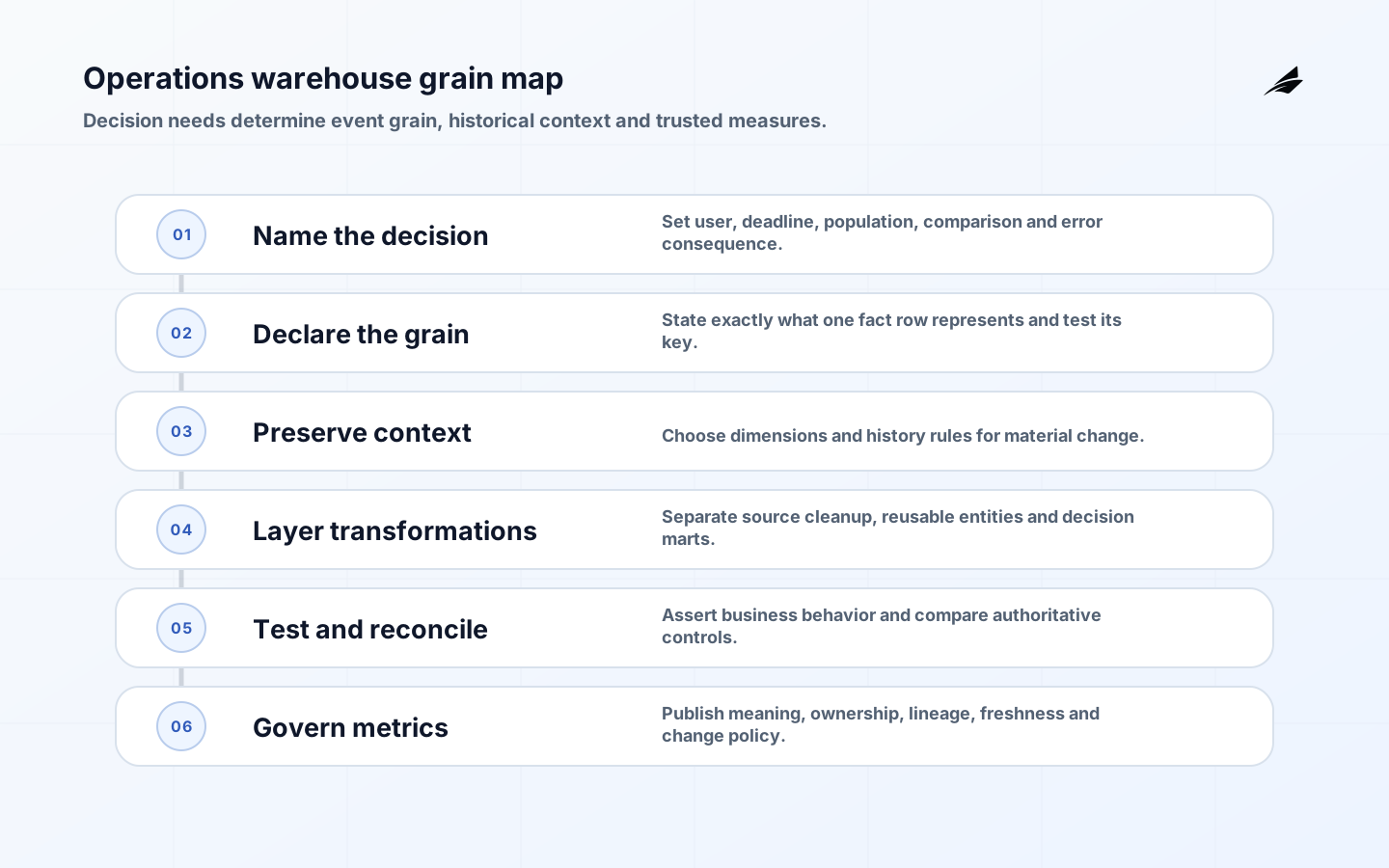
Warehouse modeling for operations leaders is the work of turning process events into stable, explainable evidence. A model should answer questions such as how many orders entered a queue, how long each waited, which definition of completion applies and what was known at the time. Choosing tables is part of that work, but the decisive choices are business grain, history, ownership and how corrections propagate.
Operations leaders do not need to author every SQL model, yet they must own meaning and acceptance. Use the data pipeline guide for CTOs for upstream reliability, the semantic layer planning guide for shared measures and the dbt models guide for product teams for transformation delivery.
Start with operational decisions, not source tables
List recurring decisions: add a shift, expedite a case, change reorder point, investigate a supplier, forecast capacity or report a control. For each, identify the actor, deadline, population, comparison, required freshness and consequence of error. Then define the business event that supplies evidence. “Orders table” is a source description; “one row per accepted order line at the time it enters fulfilment” is a candidate analytical grain.
Record terms in plain language with owners and examples. What counts as received, started, complete, cancelled, reopened, late or in backlog? Which timezone defines the business day? Are test, duplicate and internal records excluded? Resolve definitions at the process boundary before building dashboards. Where legitimate views differ, name them explicitly rather than forcing one ambiguous metric. The model should preserve enough detail to reproduce each approved view.
| Decision | Useful grain | Critical dimensions |
|---|---|---|
| Staff next shift | One work item state transition | Queue, skill, site, priority and time |
| Expedite fulfilment | One accepted order line | Customer promise, product, route and exception |
| Control inventory | One stock movement | Item, location, reason, lot and actor |
| Review supplier | One received purchase line | Supplier, item, facility, expected and actual dates |
| Analyze downtime | One equipment state interval | Asset, location, cause and maintenance event |
| Measure service | One completed case episode | Channel, issue, customer segment and resolution |
Declare grain before facts and dimensions
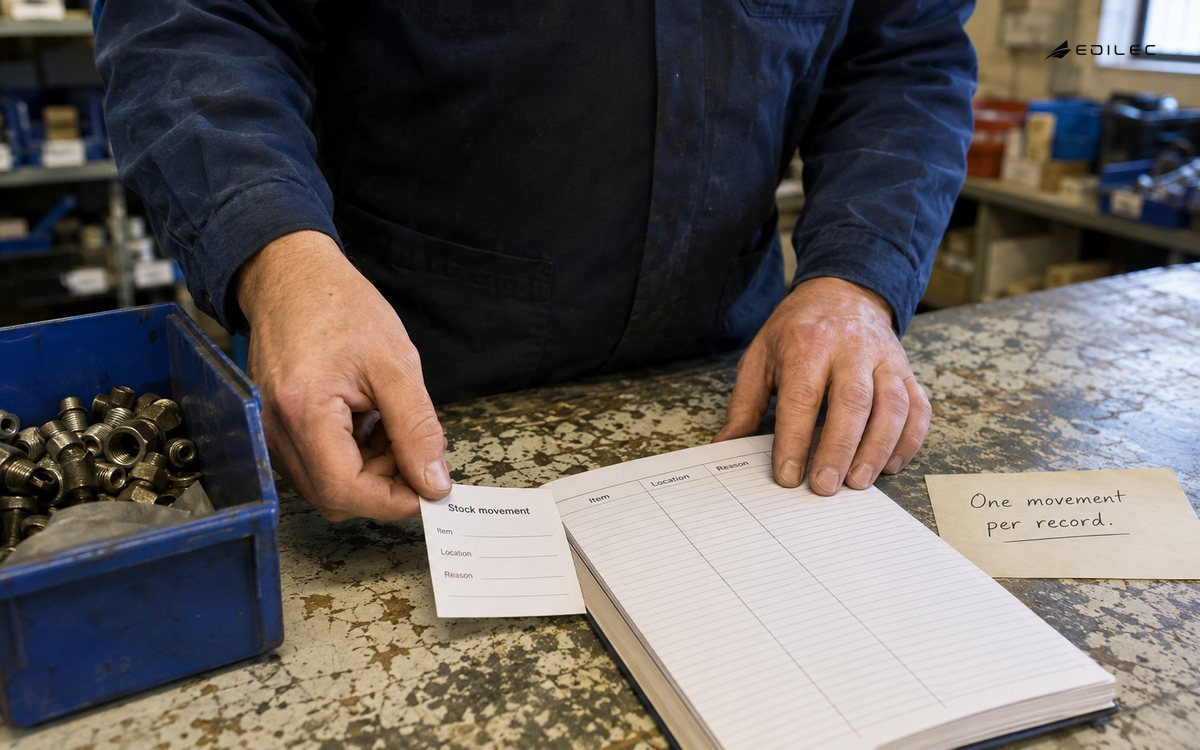
Grain states exactly what one fact row represents. Declare it in the model description and test keys that should be unique at that grain. Do not mix order headers, lines and payments in one fact table; joins can multiply amounts and counts. Separate event facts, periodic snapshots and accumulating process snapshots when they answer different questions. A factless fact table can represent an occurrence or relationship even when there is no additive numeric amount.
Microsoft’s star-schema guidance distinguishes dimensions used for filtering and grouping from facts used for summarization, and explains that fact dimension keys determine dimensionality while their values determine granularity. This structure is useful beyond Power BI because it keeps operational events separate from descriptive context. Denormalize a dimension for usability deliberately; do not flatten the whole process until grain becomes invisible.
Model changing context and process history
Operations questions often ask what was true when an event occurred. A customer changes region, an item changes category, a route changes owner and a service target changes. Decide which attributes need current-state correction and which need historical versions. Type 1 handling overwrites prior context; Type 2 creates dated versions and surrogate keys. Apply the choice by attribute and decision. Preserving every typo as history creates noise, while overwriting material assignment changes rewrites performance.
Where source systems update records in place, dbt snapshots can record changes over time using timestamp or check strategies. Snapshot behavior still needs a business design: unique key, effective timing, hard-delete treatment and late correction. For process duration, preserve event occurrence and ingestion timestamps. Define how reopened cases, partial completion and cancellation form episodes so cycle time is not silently reset.
Layer transformations for audit and reuse
Separate source-aligned staging from reusable business entities and decision-facing marts. Staging standardizes names, types and source quirks without redefining the process. Intermediate models resolve keys, deduplicate, derive events and conform dimensions. Marts expose facts and dimensions at documented grain. The dbt SQL model documentation describes models as select statements materialized according to configuration; version control and dependency graphs make review and rebuild practical.
Keep business rules inspectable. A backlog model should show eligible population, state logic, cutoff and exclusions, not hide them inside a dashboard expression. Use stable identifiers, document unknown-member handling and avoid joining on mutable names. Make incremental processing produce the same result as a full rebuild for affected periods. Define replay windows for late events. Record code, source versions and run context so a reported value can be traced.
Test business behavior, not only pipelines
Test uniqueness at declared grain, required values, accepted states, relationships and business invariants. The dbt data-tests guide treats assertions as SQL queries that return failing rows. Add tests such as completed timestamp cannot precede accepted timestamp, stock movement must balance by transaction, or active ownership intervals cannot overlap. Route failures by consequence: quarantine, warn, block publication or open an operational exception.
Reconcile warehouse outputs to authoritative controls. Compare order counts and amounts by business date, ledger totals, inventory balances and sampled records. Explain tolerated differences such as timing or exclusions. Test late, duplicate, corrected and deleted source records. Validate with frontline users using known difficult cases. A technically valid model can still misrepresent policy if it has never been compared with the process people actually run.
| Control | Example assertion | Response |
|---|---|---|
| Grain | Business key is unique for the modeled event | Block affected publication |
| Completeness | All in-scope source records reach a terminal disposition | Quarantine and assign exceptions |
| Validity | Status and reason combinations follow process rules | Reject or map through approved policy |
| History | Effective intervals do not overlap for one entity | Stop historical mart build |
| Reconciliation | Counts and amounts match controls within tolerance | Hold metric certification |
| Freshness | Priority model completes before decision deadline | Alert owner and display stale state |
Publish governed metrics above the model
A metric needs name, purpose, owner, numerator, denominator, eligible population, dimensions, time basis, freshness and known limitations. Distinguish flow measures from stock measures: throughput during a day is not the same as backlog at day end. Define whether averages weight items or time, and publish percentiles for skewed duration. dbt metrics documentation supports centrally defined metric metadata; the governance principle applies regardless of tool.
Keep semantic definitions close to governed facts, then expose them consistently to dashboards, notebooks and applications. Certify only metrics with reconciliation, quality and ownership. Allow local exploration without presenting every calculation as an enterprise measure. When a definition changes, assess downstream use, version material changes and preserve prior reporting where legal or operational comparison requires it. Communicate effective dates and restatement behavior.
Operate the warehouse model as a product
Assign business owners for meaning and technical owners for delivery. Publish lineage, freshness, quality status, support route and change policy. The W3C PROV overview organizes provenance around entities, activities and agents, a useful conceptual basis for explaining what data was produced, by which process and under whose responsibility. Lineage should help impact analysis and incident diagnosis, not exist only as decorative metadata.
Review adoption and decision value. Track active consumers, query and dashboard use, recurring disputes, quality incidents, manual reconciliations and time from source change to model update. Retire duplicate marts and unused fields through a communicated process. Capacity and cost should follow workload value: partition and cluster around real access patterns, preserve needed history and archive detail that no approved decision requires. Do not optimize by deleting audit evidence casually.
Run an operations-led model review
Before certifying a mart, ask the process owner and frontline representatives to walk through normal, boundary and exception cases. Show the declared grain, source events, history policy, exclusions, unknown-member handling and reconciliation. Trace one familiar record from source through metric. Capture whether the model answers the intended decision at the required time, not merely whether the SQL produces rows.
Review cases such as an item received after midnight, a reopened service ticket, a reassigned employee, a partial shipment, a backdated correction and a deleted source record. Confirm that each creates the intended fact and dimension behavior. Record accepted ambiguities and route process defects upstream. Repeat the review when policy, source workflow or metric meaning changes materially.
- Use real anonymized examples from both routine and exception work.
- Have the owner restate the grain and metric in operational language.
- Trace keys, timestamps, versions and exclusions through each layer.
- Compare totals and selected records with an authoritative control.
- Document ambiguity rather than encoding an unowned assumption.
- Require a new review when process meaning changes, even if schema does not.
Key takeaways
- Begin with operational decisions and owned definitions, then select the event grain.
- Separate facts at distinct grains and use dimensions to preserve explainable context.
- Choose current-state correction versus historical versioning attribute by attribute.
- Test business invariants and reconcile to authoritative controls before certifying metrics.
- Operate models with lineage, ownership, adoption and change policy as durable data products.
Frequently asked questions
Is one big table easier for operations teams?
It can be convenient for a bounded use case, but it often mixes grains and duplicates measures when reused. Build governed facts and dimensions first, then publish a wide view with documented grain for specific consumers. Test that joins cannot multiply operational totals.
How much history should the warehouse keep?
Keep enough to support approved decisions, legal retention, audit, forecasting and seasonal comparison. Decide by data class and grain. Longer retention has storage, privacy and query consequences; archive or aggregate deliberately while preserving required provenance.
What happens when source systems disagree?
Do not silently choose the easiest source. Define authority by field and business event, preserve conflicting evidence where needed, assign exceptions and expose confidence or unresolved state. Feed corrections to the operational process instead of repeatedly repairing them downstream.
Conclusion
Warehouse modeling gives operations a durable account of events, context and decisions. Declare grain, preserve material history, layer inspectable transformations and certify metrics through business tests and reconciliation. When leaders own meaning and engineers own reliable delivery, the warehouse becomes an operating record rather than another source of debate.