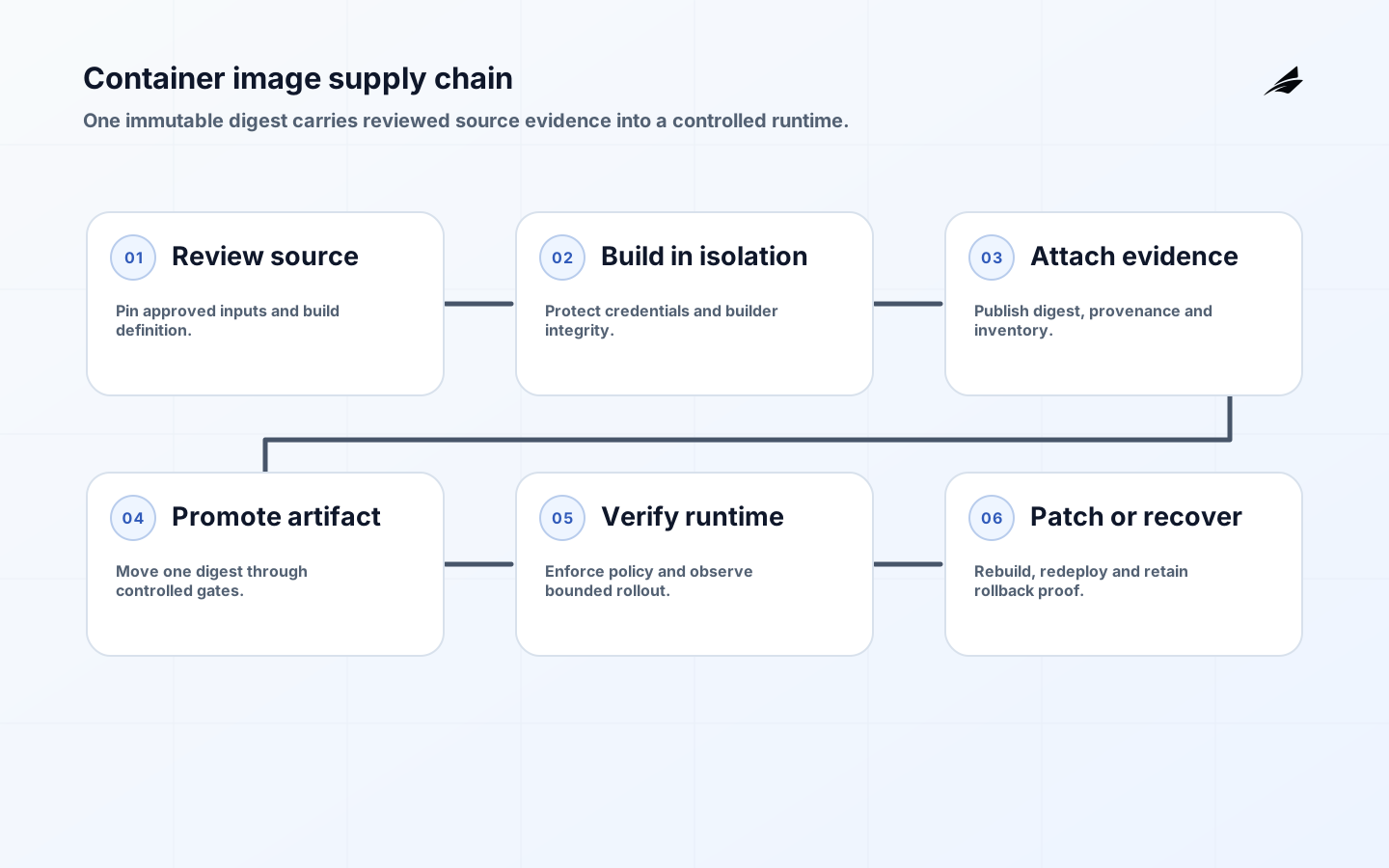
Docker images for operations leaders are release artifacts, not convenient boxes that become someone else's concern after a build. An image connects source, dependencies, base layers, build infrastructure, registry controls, deployment policy and the running workload. Leaders need evidence that approved source produced a known digest, vulnerabilities have an owner, and a rollout can be stopped or reversed.
Use the Docker images architecture guide, container security engineering notes, and the CI/CD pipeline guide. The Kubernetes deployments guide places the artifact in its release system.
Primary references include Docker build best practices, the OCI Image Format Specification, NIST SP 800-190, and the SLSA specification. They cover build choices, interoperability, container risk and supply-chain provenance.
Exercise the patch decision before a critical advisory
Simulate a critical base-layer vulnerability. Inventory must identify every deployed digest, owner and environment without relying on a mutable tag. Rebuild from reviewed source, produce fresh provenance and component inventory, run gates, promote the same digest and observe a bounded rollout. Record why any affected workload is deferred.
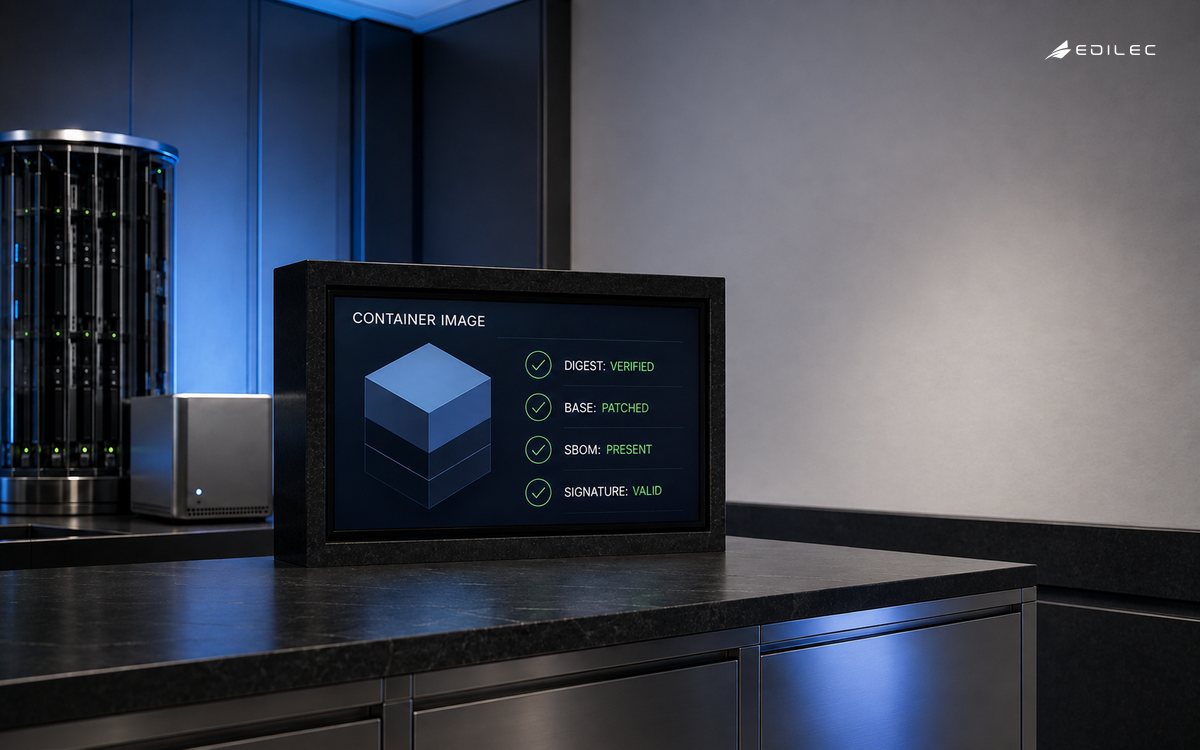
If a payment API requires an older native library, replacing the base may make a scanner green while breaking startup. Record exploitability and compensating controls, assign an expiry, test a compatible rebuild, and keep the prior digest for rollback. Avoid direct production fixes that destroy artifact evidence.
- Production workloads resolve to immutable digests and owners.
- Builds use reviewed source and isolated infrastructure.
- Provenance and component inventory travel with artifacts.
- Registries restrict overwrite, promotion and deletion.
- Patch policy considers exposure, compatibility and deadline.
- Deployment verifies evidence and rehearses rollback.
Key takeaways
- Make Docker images for operations leaders answer a concrete service decision, not a tool-adoption question.
- Document the boundary, owner, and recovery action before broad production use.
- Use evidence from customer outcomes and technical signals together.
- Start with a bounded implementation, then standardize what survives a real exercise.
Set the purpose and boundary for Docker images for operations leaders
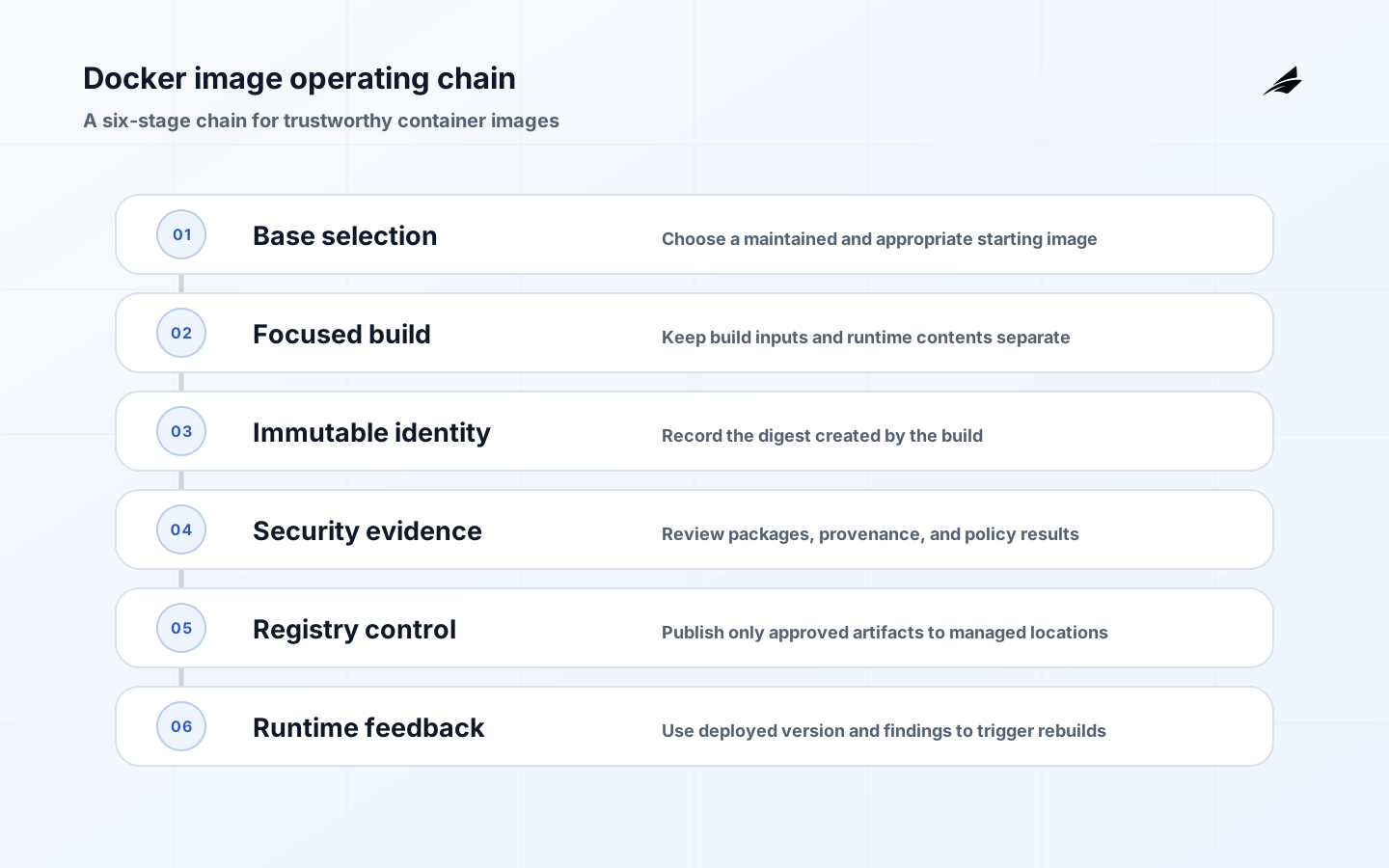
Set an operations policy for the artifact from build through retirement. Distinguish compilers and package managers used during build from the libraries and processes required at runtime. Identify an image by digest in deployment records while keeping tags as readable release labels. Treat registry repositories, replication, retention, signing or attestation storage, and access logs as production dependencies with owners. The policy should answer who may publish, how an artifact is promoted without rebuilding, how an emergency replacement is announced, and how responders find every deployed copy. A concise boundary helps operations teams decide what they control directly and when application, platform, registry, or security owners must join a release or incident.
Define unacceptable image states in operational terms: an untraceable digest, missing build provenance, embedded credential, unsupported base, critical exposure without disposition, or runtime that violates the service's platform contract. These conditions give release managers a consistent basis for holding promotion and give incident leaders a clear trigger for inventory and rebuild work.
| Image decision | Operational consequence | Evidence to retain |
|---|---|---|
| Base image | Defines inherited packages and support cadence | Publisher, version, digest, rebuild date |
| Build context | Can leak files or invalidate cache | Reviewed .dockerignore and build inputs |
| Deployment reference | Determines repeatability during incident work | Immutable digest and release record |
Build an operating model for Docker images for operations leaders
Give operations a standard path and an explicit exception path. Platform owners maintain approved base images and build controls; service owners remain accountable for application compatibility and redeployment; security defines vulnerability response expectations; release operators verify promotion evidence. Build from minimized contexts, exclude secrets, use non-root runtime identities where feasible, and attach component and vulnerability results to the digest. A scanner finding needs exploitability context, an owner, and a due date rather than an unexplained permanent waiver or automatic indefinite block. Exceptions should identify affected service, digest, reason, compensating controls, approver, expiry, and repair plan. This makes urgent restoration possible without replacing traceable governance with an undocumented production workaround.
Use proportionate controls and retained evidence
Map each control to a question an operator must answer. Provenance answers which source and builder produced a digest. A component inventory supports exposure analysis. Registry policy limits who can introduce artifacts. Admission rules can reject unapproved sources or missing evidence. Runtime settings constrain privilege after deployment. Preserve the digest, source revision, build identity, policy result, environment, rollout cohort, exception decision, and rollback artifact in one searchable release trail. During an incident, that trail distinguishes a known deployment from an unexplained runtime change and tells responders which artifact can be restored. The container security notes add detail on release containment and runtime controls.
| Finding or event | First response | Durable improvement |
|---|---|---|
| Critical dependency update | Identify deployed digests and rebuild | Set base-image refresh ownership |
| Registry publish failure | Hold promotion and verify artifact | Review publisher permissions |
| Unexpected runtime behavior | Compare image, config, and platform | Add startup or compatibility check |
Measure the service outcome and operating health
Operate the image estate with measures that lead to decisions. Track production digests without a current owner, age since approved base refresh, workloads deployed by mutable tag, rebuild success, time from a remediated critical dependency to redeployment, unresolved exceptions, pull failures, and startup regressions after promotion. Segment by service tier and environment. A security measure should connect to service restoration: rebuilding quickly is insufficient if the new artifact repeatedly fails health checks. Define who investigates each threshold and what action follows, such as inventory verification, promotion hold, accelerated rebuild, or rollback. Remove dashboards that cannot direct work, and review the measures after an actual vulnerability response or failed rollout.
Adopt Docker images for operations leaders in deliberate increments
Begin standardization with an inventory of artifacts that actually run, including owners, registries, bases, architectures, deployment references, and rebuild paths. Select one representative service to prove a reference flow from reviewed source to deployed digest. Document approved bases, build context, dependency pinning, provenance, scanning, registry permissions, promotion, and rebuild cadence. Publish the working implementation and the criteria for requesting an exception; do not require every legacy image to change before the reference has survived production use. Prioritize migrations by service consequence and inability to rebuild. Revisit the standard after a vulnerability event, recovery exercise, new runtime architecture, or registry change so it remains an operational tool rather than a static platform mandate.
Worked operating scenario
Exercise a disclosed vulnerability in a common base layer. The component inventory should identify candidate digests, and deployment records should show which candidates are active in each environment. Service owners assess exposure while the platform team publishes a corrected base. Rebuild from reviewed source, issue new provenance, run compatibility tests, and promote the same digest through environments. Use progressive rollout and customer signals to catch runtime regressions, with the prior digest retained for rollback. Workloads using floating tags require an extra discovery step to prove what was running; measure that delay as operational debt. The exercise tests whether engineering, platform, security, and incident roles can move from advisory to verified service recovery without sacrificing artifact evidence.
Run a readiness review for Docker images for operations leaders
A readiness review turns Docker images for operations leaders from a proposed design into a demonstrated operating capability. Review one production image from base selection to running workload. Ask which digest is deployed, which packages it contains, when its base was last refreshed, and whether an operator can rebuild it with the original inputs. Include a deliberately rejected registry publication or known finding so the escalation and exception path are tested before it matters. Capture the result as a small decision record: the scenario, participants, observed evidence, elapsed time, unresolved assumptions, and the owner for each correction. Repeat after a material architecture or ownership change. This is deliberately practical work. It shows whether instructions, permissions, telemetry, and decision rights still line up when a team must protect a real service rather than explain an ideal workflow.
Frequently asked questions about Docker images for operations leaders
Should an unchanged app be rebuilt for a base update?
Yes. The rebuilt artifact has a different composition and needs the same tests and promotion evidence.
Can scanning prove safety?
No. Combine scanning with provenance, configuration, exposure analysis, tests and monitored deployment.
Are small Docker images always safer?
A smaller runtime often removes unused packages, but byte size is only a proxy. Operations still need supported libraries, timely rebuilds, known provenance, compatible startup behavior, constrained privileges, and appropriate network policy. Choose the smallest maintained image that satisfies the service contract and can be recovered under pressure.
Should production use image tags or digests?
Deploy by digest when operators must reproduce or inventory exact content. Keep a tag as a human-readable release label if it helps, but record its resolved digest at promotion and deployment because registry tags can move and cannot prove which bytes a workload started.
What evidence should leaders ask for?
Ask for evidence that the stated boundary, controls, and recovery path work in the environment that matters. For Docker images for operations leaders, that normally includes a named owner, a current revision or configuration record, service and customer signals, and the result of a relevant test or exercise. Prefer a small set of evidence tied to a decision over a large inventory that nobody uses under pressure.
Conclusion
Docker images for operations leaders are most useful when they make production work more understandable and recoverable. Start with one service promise and one bounded path, assign ownership, collect only the evidence that supports a decision, and practice the recovery action. The resulting discipline gives teams room to move faster without losing track of what customers experience.