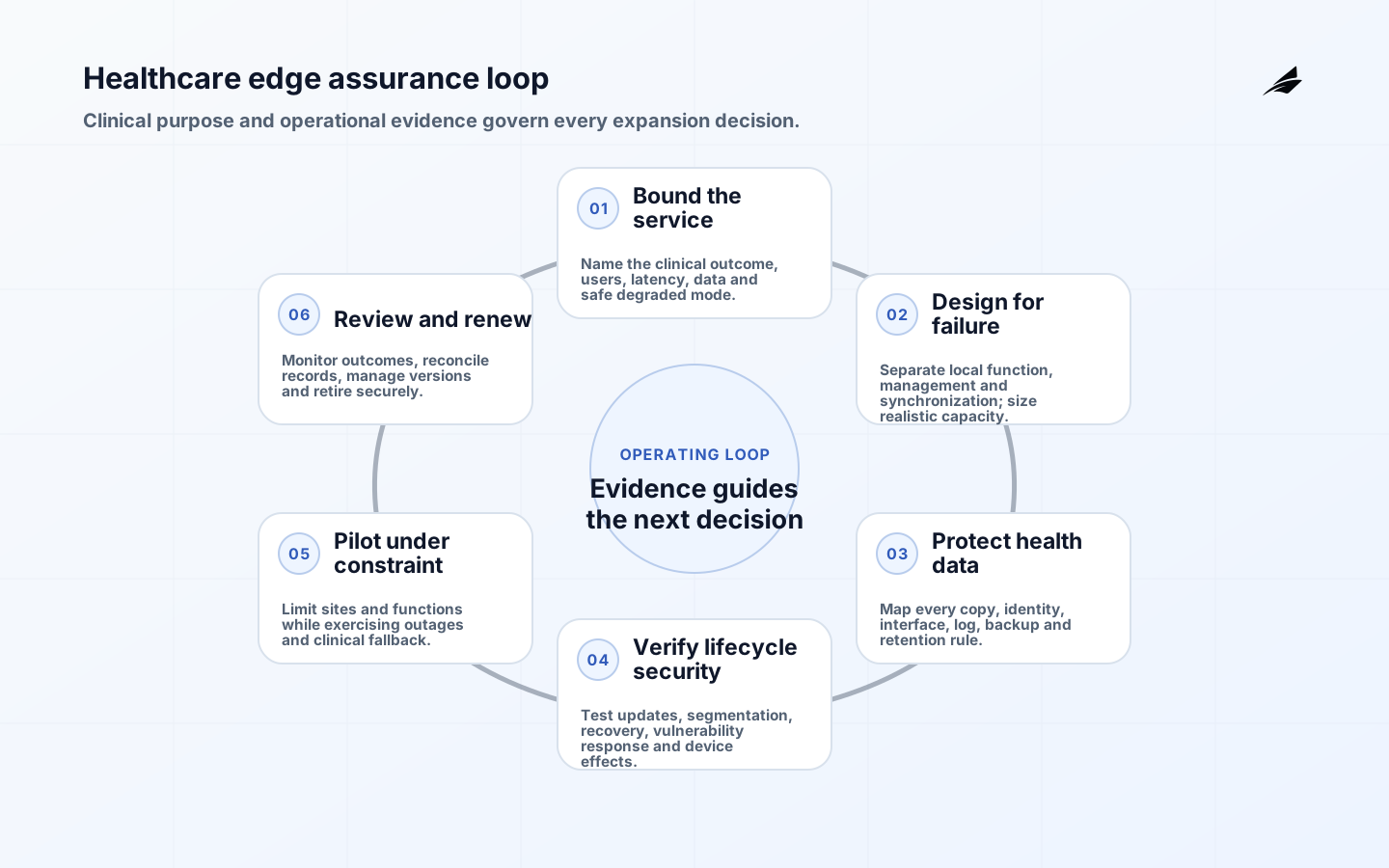
Healthcare edge providers place compute, storage or decision logic close to clinical devices, facilities and care teams. That proximity can reduce latency and keep selected workflows available during a wide-area network interruption, but it also creates distributed assets that must be patched, inventoried and governed. A sound selection starts with a clinical service and its failure consequences, not a generic promise that processing data locally will make every workload faster or safer.
Business teams should treat the provider as one component in a care-delivery system. The questions below complement Edilec's healthcare edge implementation checklist, healthcare edge FAQ and healthcare automation delivery plan. Together they move evaluation from a feature comparison to an evidence-based operating decision.
Define the clinical outcome and edge boundary
Write the use case as an observable care or operating outcome: preserve bedside telemetry during a link outage, process imaging closer to acquisition, monitor cold-chain equipment, or coordinate devices in a clinic with limited connectivity. Identify who acts on an output, the maximum useful latency and the harm from a missed, delayed or incorrect result. A workload that tolerates minutes may not justify new infrastructure at every site; a time-sensitive alarm may.
Draw a boundary around data collection, local processing, retained records, cloud synchronization and downstream systems. Classify whether the edge node merely relays data, transforms it, stores protected health information, or influences a medical-device function. This distinction changes validation, privacy, availability and procurement requirements. Keep the first deployment narrow enough that the team can prove one end-to-end path, including degraded operation, without confusing a broad technology trial with clinical validation.
| Decision | Evidence to request | Warning sign |
|---|---|---|
| Clinical fit | Named workflow, user, latency target and baseline | A platform demonstration has no care-process owner |
| Data boundary | Field-level flow and retention map | The proposal says data stays local but omits logs and backups |
| Availability | Offline behavior, recovery objective and tested capacity | Resilience depends on an untested manual workaround |
| Device role | Documented interface and regulatory responsibility | The provider cannot explain whether software affects device behavior |
Choose an architecture that can fail safely
Separate the clinical application, edge management plane and device network. A central control plane may distribute policy and software while local nodes continue an approved subset of functions. Define what happens when identity, time synchronization, DNS, certificate validation, a model endpoint or the management plane is unavailable. The safest degraded mode is use-case specific: buffer data, use a verified local rule, alert staff, or stop an automated action while preserving manual care.
Capacity calculations should include peak device count, message rate, local retention, encryption overhead and backlog after reconnection. Test thermal, power and physical constraints in the intended location rather than a data-center laboratory. Redundant hardware does not guarantee service if both nodes share power, networking or a faulty software release. Ask the provider to demonstrate rolling updates, rollback, backup restoration and reconciliation after records arrive out of order.
Protect health data and preserve interoperability
The HIPAA Security Rule requires appropriate administrative, physical and technical safeguards for electronic protected health information. Translate that obligation into the edge estate: unique identities, least privilege, encryption, audit records, facility controls, media disposal, contingency procedures and accountable ownership. Confirm which party is a business associate, where support personnel operate and how subcontractors, remote diagnostics and telemetry are covered contractually.
Perform risk analysis on the deployed system, not only the provider's product. HHS risk-analysis guidance emphasizes identifying where electronic protected health information is created, received, maintained or transmitted and assessing threats and vulnerabilities. Inventory every node, software component, certificate and data flow; include stolen hardware, unsupported devices, insecure local services, malicious updates, clock drift and accidental configuration changes.
Interoperability claims need versioned examples. Require the exact FHIR resources, profiles, terminology bindings, DICOM services, device protocols and event semantics supported. Current national interoperability work is visible through the ONC Standards Bulletin; however, naming a standard is not enough. Validate identifiers, units, timestamps, provenance and consent-related handling with representative messages from each sending and receiving system.
Assess device and software lifecycle security
Ask for secure-boot and update mechanisms, hardware root-of-trust options, vulnerability intake, software bills of materials, component support periods and signed release evidence. The FDA's current medical-device cybersecurity guidance frames cybersecurity as lifecycle risk management. Even when an edge gateway is not itself a regulated device, its interfaces can affect the safety and availability of connected devices, so responsibilities cannot be left implicit.
Segment device, user, management and guest traffic; authenticate service-to-service communication; and restrict outbound destinations. Centralize security-relevant logs without making local function depend on log delivery. Align incident preparation with the NIST Cybersecurity Framework 2.0: govern ownership, identify assets, protect services, detect abnormal behavior, respond with clinical coordination and recover verified configurations. A security event in a care environment requires patient-safety leadership as well as technical containment.
| Control layer | Acceptance test | Operational owner |
|---|---|---|
| Identity | Expired, revoked and unauthorized credentials are rejected locally | Identity and access team |
| Network | A compromised device cannot reach management or unrelated clinical zones | Network security |
| Software | Signed update, interrupted update and rollback are demonstrated | Platform engineering |
| Data | Local cache, backup, log and disposal controls match classification | Privacy and records owners |
| Response | Isolation preserves an agreed clinical fallback | Clinical operations and security |
Structure provider due diligence and the pilot
Score providers against mandatory evidence before price. Review architecture, security testing, quality processes, service locations, support coverage, component provenance, vulnerability disclosure, breach obligations, insurance and financial continuity. Obtain named exceptions to standard service terms. The contract should preserve access to data and logs, set notification windows, define update responsibility, restrict secondary data use and specify secure return or deletion when a site or service closes.
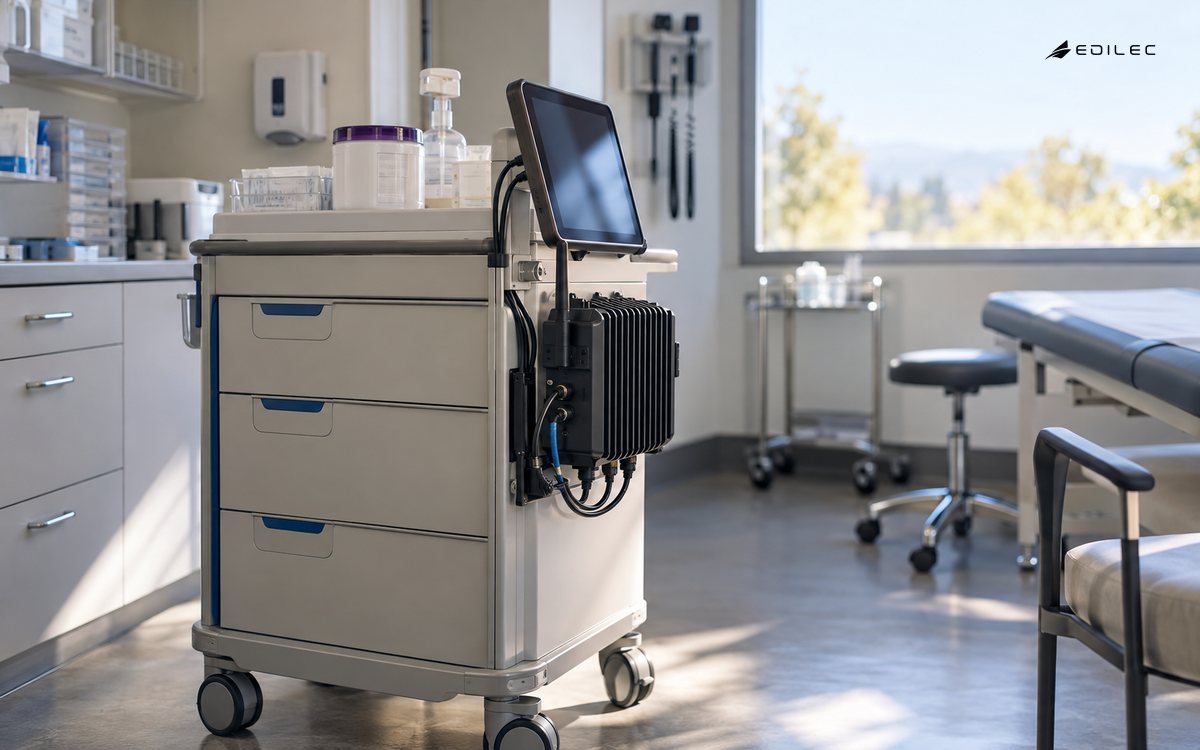
A credible pilot uses production-like identities, devices, network conditions and support, but limits patients, sites or functions. Establish entry criteria, clinical safety review, change approval and stop conditions. Measure latency distributions rather than averages, disconnection duration, data reconciliation errors, false or missed alerts, staff workload and recovery time. Run scheduled power, network and control-plane disruptions. Record whether staff recognized degraded mode and followed the fallback without improvisation.
Work through a bedside monitoring example
Consider a hospital that wants local processing to preserve selected bedside alerts when its external connection fails. Discovery should identify the device messages, clinical thresholds, unit workflow, maximum outage, local retention and authoritative patient association. The design might keep a verified ruleset on redundant local nodes, buffer signed events and synchronize them after reconnection. It should not silently introduce a new diagnostic claim. Clinical engineering, nursing, security and infrastructure owners approve the exact boundary and fallback.
Acceptance then goes beyond normal throughput. Disconnect the wide-area network, expire a service certificate, interrupt an update, restart a node and restore from the documented configuration. Confirm alert timing, duplicates, missing events, staff notification and post-recovery reconciliation. Inspect whether audit records identify device, patient context, software version and action. Run the scenario during representative workload with an authorized safety observer and a stop mechanism. Evidence from this exercise is more valuable than a generic provider benchmark.
The go-live record should state approved units, devices, versions, alert classes, retention, support coverage and conditions that require suspension. During early operation, review every degraded-mode event and any discrepancy between edge and central records. If an interface or device firmware changes, repeat the relevant validation before broad deployment. This concrete pattern shows why edge procurement, clinical assurance and operations cannot be split into unrelated workstreams.
Operate the edge estate as a clinical service
Create one service record connecting business owner, clinical owner, data steward, device inventory, architecture, risk assessment, provider contacts, approved versions and recovery procedures. Monitor node health, storage, certificate expiry, update compliance, message quality, synchronization backlog and clinical service indicators. Alerts need thresholds and responders; a central dashboard without site-level escalation authority will reveal problems without resolving them.
Review the service after significant workflow, device, model, interface or vendor changes and on a fixed cadence. Revalidate representative interfaces after upgrades. Track exceptions and retirement dates for unsupported components. Exit planning should include export formats, replacement enrollment, credential revocation, local media sanitization and evidence that downstream feeds have moved. Distributed infrastructure becomes manageable when every asset has an owner and every dependency has a tested alternative.
Healthcare edge provider takeaways
- Start with one clinical outcome, latency requirement and safe degraded mode.
- Map every location where protected health information is processed, cached, logged or backed up.
- Validate actual interoperability profiles and message semantics with representative systems.
- Require lifecycle security evidence, not a point-in-time certification alone.
- Use controlled disruption tests and clinical measures before expanding a pilot.
- Contract for support, change notice, data portability and secure retirement.
Frequently asked questions
Does healthcare edge computing replace the cloud?
Usually not. Edge and cloud components divide responsibilities according to latency, connectivity, data, scale and operating needs. Local processing may sustain a bounded workflow while cloud services provide fleet management, longer-term analytics or cross-site coordination. The design must state which functions remain available independently and how records reconcile after reconnection.
What proof should a provider supply before a pilot?
Request a deployment-specific data-flow diagram, threat model, supported interface matrix, software component inventory, update and vulnerability process, offline behavior, recovery evidence, support model and contract terms. Then verify the highest-risk claims through hands-on tests using the intended devices, identities and network constraints.
Conclusion
Healthcare edge providers can support resilient, responsive clinical services when the organization makes the whole system governable. Select against a bounded outcome, prove safe failure and interoperability, protect every copy of health data, and assign lifecycle ownership before scale. The decisive evidence is not that a node performs quickly in a demonstration; it is that care teams can operate, recover and challenge the service under real conditions.