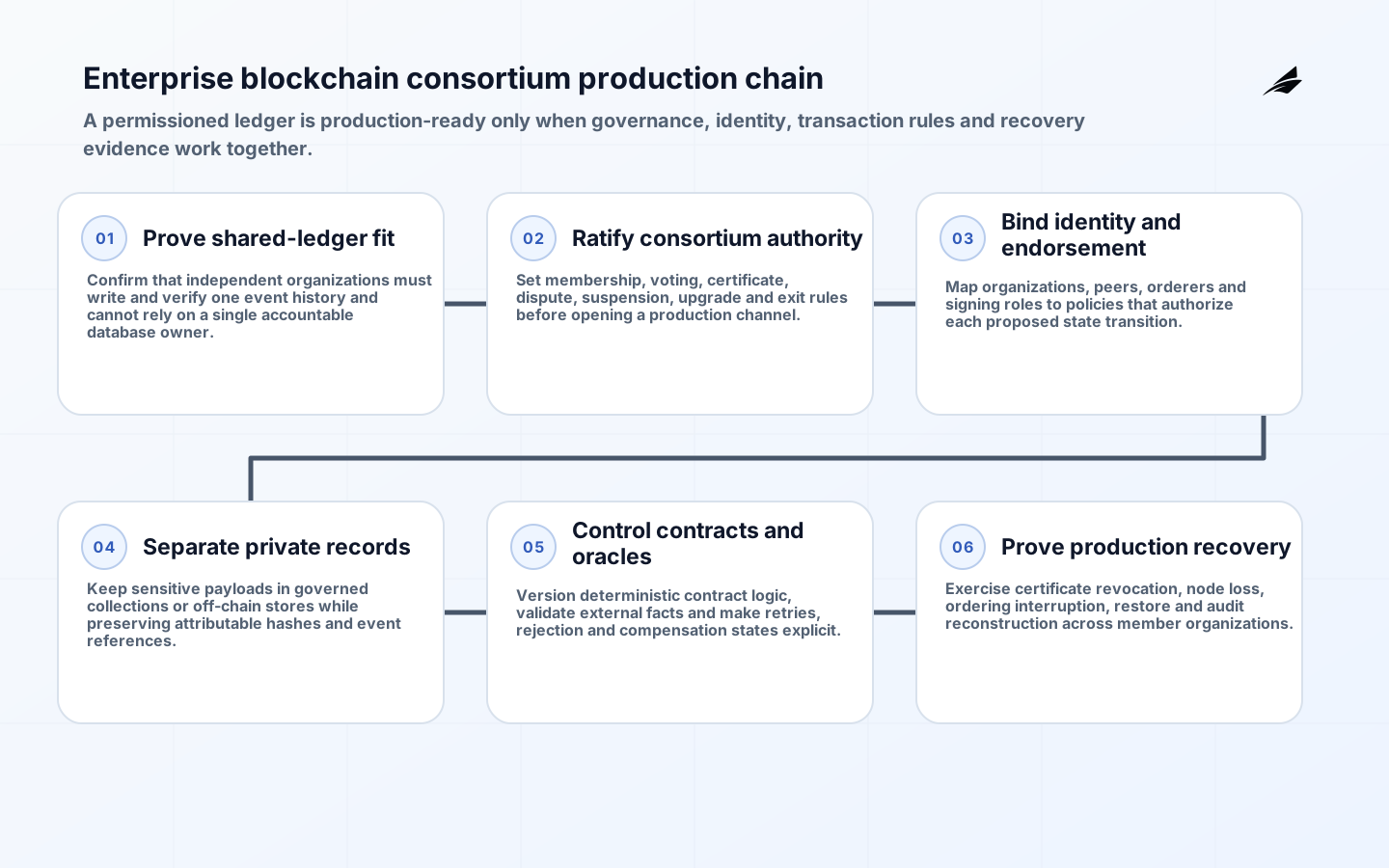
Enterprise Blockchain Implementation Checklist: From Business Case to Production requires more than a feature backlog. It needs a named outcome, evidence about current work, explicit trust boundaries, and controls that remain effective after launch. This guide turns enterprise blockchain implementation checklist into a staged review for product, engineering, security, operations, compliance, finance, and business owners. The aim is a useful, supportable system whose scope, cost, risk, and value can be challenged before production rather than explained after an incident.
Use the checklist as a working review, not a certification shortcut. Adapt legal, contractual, regulatory, and technical analysis to the organization and jurisdiction. Related planning appears in Enterprise Blockchain Solutions: Scope, Cost, Risks and Delivery Plan, Enterprise Blockchain Solutions FAQ, Application Services Blockchain: Scope, Cost, Risks and Delivery Plan, Application Services Blockchain Implementation Checklist. This article concentrates on implementation evidence: what should be observed, documented, tested, approved, monitored, and reconsidered when operating conditions change.
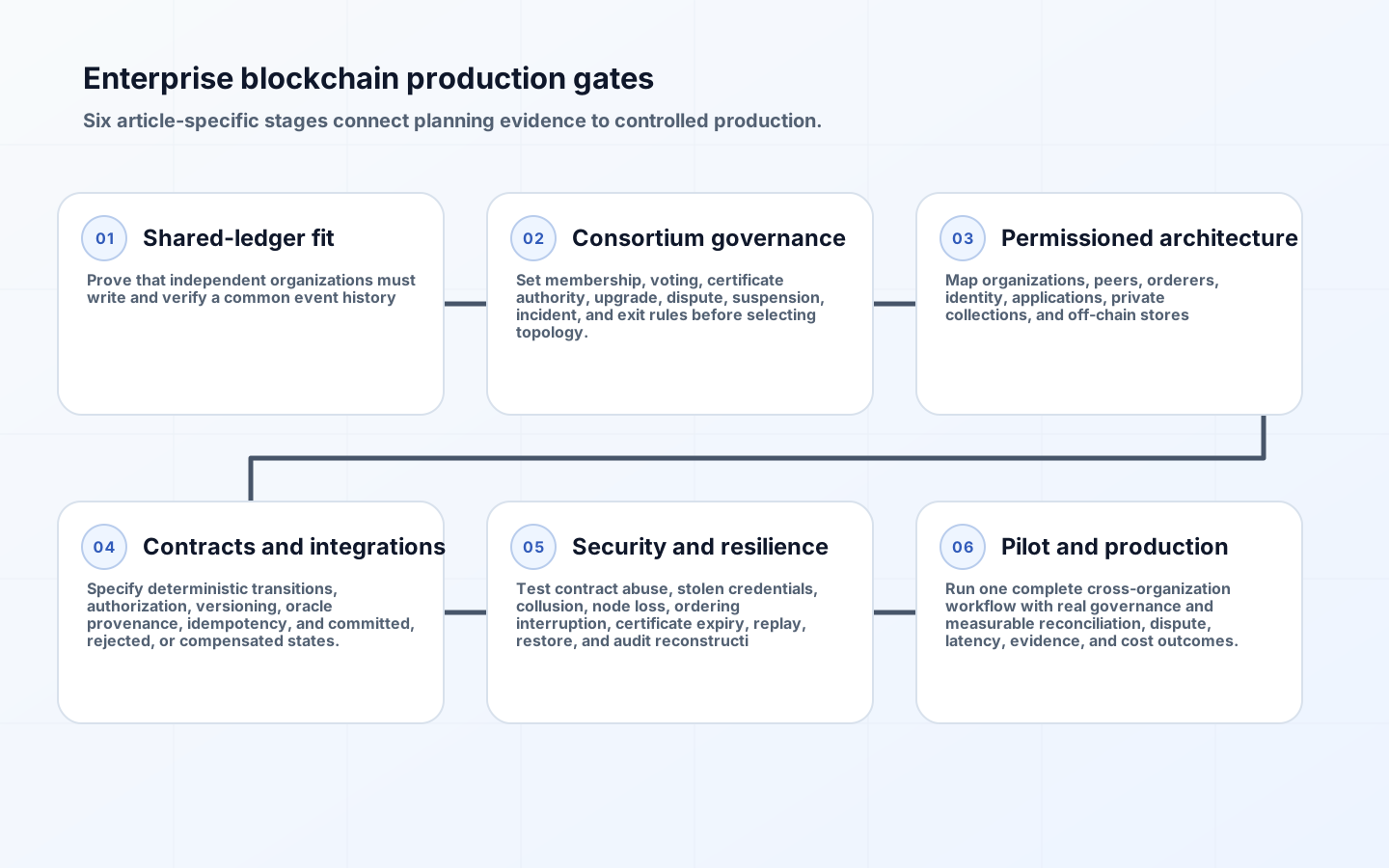
Shared-ledger fit
At this stage, prove that independent organizations must write and verify a common event history; define finality, correction, retention, throughput, privacy, and loss ownership. For this part of the system, name the accountable owner, supporting evidence, exception route, and next measurable check.
Controls should account for this constraint: A conventional database is preferable when one accountable authority can own the record; blockchains cannot prove off-chain facts. Within this part of the system, name the accountable owner, supporting evidence, exception route, and next measurable check.
Consortium governance
At this stage, set membership, voting, certificate authority, upgrade, dispute, suspension, incident, and exit rules before selecting topology. When implementing this part of the system, name the accountable owner, supporting evidence, exception route, and next measurable check.
Controls should account for this constraint: Technical consensus cannot compensate for members that cannot make or enforce joint operating decisions. Before releasing this part of the system, name the accountable owner, supporting evidence, exception route, and next measurable check.
| Stage | Decision | Evidence |
|---|---|---|
| Shared-ledger fit | Prove that independent organizations must write and verify a common event history; define finality, correction, retention, throughput, privacy, and loss ownership. | A conventional database is preferable when one accountable authority can own the record; blockchains cannot prove off-chain facts. |
| Consortium governance | Set membership, voting, certificate authority, upgrade, dispute, suspension, incident, and exit rules before selecting topology. | Technical consensus cannot compensate for members that cannot make or enforce joint operating decisions. |
| Permissioned architecture | Map organizations, peers, orderers, identity, applications, private collections, and off-chain stores; minimize replicated sensitive data. | Metadata leakage, overbroad endorsement, and unmanaged signing keys can defeat a permissioned design. |
Permissioned architecture

At this stage, map organizations, peers, orderers, identity, applications, private collections, and off-chain stores; minimize replicated sensitive data. While operating this design choice, name the accountable owner, supporting evidence, exception route, and next measurable check.
Controls should account for this constraint: Metadata leakage, overbroad endorsement, and unmanaged signing keys can defeat a permissioned design. When changing this design choice, name the accountable owner, supporting evidence, exception route, and next measurable check.
Contracts and integrations
At this stage, specify deterministic transitions, authorization, versioning, oracle provenance, idempotency, and committed, rejected, or compensated states. During support for this part of the system, name the accountable owner, supporting evidence, exception route, and next measurable check.
Controls should account for this constraint: Bad source data and integration retries can create consistent but incorrect or duplicate obligations. To validate this part of the system, name the accountable owner, supporting evidence, exception route, and next measurable check.
| Stage | Primary risk | Production control |
|---|---|---|
| Contracts and integrations | Bad source data and integration retries can create consistent but incorrect or duplicate obligations. | |
| Security and resilience | Private-data features must be tested against the exact confidentiality and recovery requirement. | |
| Pilot and production | A transaction demo is not evidence that the consortium reduces coordination cost or can be supported. |
Security and resilience
At this stage, test contract abuse, stolen credentials, collusion, node loss, ordering interruption, certificate expiry, replay, restore, and audit reconstruction. To govern this control, name the accountable owner, supporting evidence, exception route, and next measurable check.
Controls should account for this constraint: Private-data features must be tested against the exact confidentiality and recovery requirements. When explaining this control, name the accountable owner, supporting evidence, exception route, and next measurable check.
Pilot and production
At this stage, run one complete cross-organization workflow with real governance and measurable reconciliation, dispute, latency, evidence, and cost outcomes. For this operating step, test one expected case, one ambiguous case, and one failure with a documented recovery action.
Controls should account for this constraint: A transaction demo is not evidence that the consortium reduces coordination cost or can be supported. Within this operating step, test one expected case, one ambiguous case, and one failure with a documented recovery action.
Build an approval evidence package
An enterprise blockchain approval record should contain the disputed business event, participating organizations, membership charter, endorsement rules, identity and certificate model, private-data design, off-chain data map, smart-contract state model, oracle controls, capacity results, and node-recovery evidence. The consortium steering group should sign policy decisions; member security administrators should attest key custody and revocation; application owners should approve contract behavior; and operations should own ordering, peer, certificate, and integration service levels.
Run the approval review with representatives from every organization that writes, endorses, audits, or consumes ledger events. Demonstrate a valid transfer, an unauthorized proposal, conflicting endorsements, stale oracle data, a duplicate integration message, certificate revocation, unavailable orderer, member exit, and restoration from backup. Any unresolved privacy, governance, or finality exception needs a named consortium decision, compensating control, and expiry date before a production channel is opened.
Validate enterprise blockchain implementation checklist through a complete operating case
Use this implementation checklist to validate enterprise blockchain implementation checklist with one complete operating case before widening the scope. Delivery teams should trace one business case across intake, validation, approval, system updates, downstream handoffs, and an operator-visible completion state. Begin with the initiating business record, accountable role, approval state, integration handoff, exception reason, and reconciled outcome, cross each policy and dependency boundary, and finish in a durable state that a customer or operator can recognize. Record the expected state at every handoff, who may change it, and which evidence proves that the next step was justified. This walkthrough gives product, engineering, security, and support a shared acceptance case instead of allowing each team to assume that another layer owns the transition. Use representative roles, realistic timing, and the constraints that exist during an ordinary operating day.
The implementation checklist should also test a second enterprise blockchain implementation checklist case that deliberately challenges the design. Include a disputed record, unavailable approver, duplicate handoff, policy exception, or mismatch between systems of record. The purpose is not to demonstrate that every dependency always succeeds; it is to prove that the service can stop safely, preserve useful evidence, and expose the next responsible action. Review record version, approval evidence, queue age, exception owner, reconciliation result, and service outcome together so the team can distinguish a policy refusal from bad input, a software defect, a delayed dependency, or an operator decision. A useful result is specific enough for a support or incident owner to act without reconstructing the entire journey from unrelated logs and messages.
Turn both cases into release evidence for enterprise blockchain implementation checklist. Keep the input conditions, expected states, observed result, decision owner, and unresolved exceptions in one reviewable record. Define the recovery action in advance: protect the authoritative record, isolate the disagreement, assign the exception, reconcile affected systems, and document the resolution. Re-run the same cases after a material policy, interface, data, model, infrastructure, or entitlement change so that improvements do not silently weaken an earlier control. For this implementation checklist, readiness means that the normal path is usable, the failure path is understandable, and ownership remains visible after launch rather than ending when implementation work is declared complete.
- Choose one representative enterprise blockchain implementation checklist journey and state the customer or operator result in plain language.
- Capture the initiating business record, accountable role, approval state, integration handoff, exception reason, and reconciled outcome as evidence, with a named owner for each consequential handoff.
- Exercise a disputed record, unavailable approver, duplicate handoff, policy exception, or mismatch between systems of record before broader exposure and verify that the safe state is visible.
- Review record version, approval evidence, queue age, exception owner, reconciliation result, and service outcome after release and assign every unresolved exception to a person and date.
Implementation takeaways
- Define the business and operating outcome before selecting technology.
- Assign owners for data, controls, service operation, incidents, changes, and value.
- Test representative exceptions, failure, rollback, and recovery before expanding scope.
- Keep architecture, security, privacy, cost, support, and retirement in one delivery plan.
- Measure downstream outcomes and residual risk, not only technical activity.
Frequently asked questions
| Question | Answer |
|---|---|
| Does blockchain make records true? | No. It makes submissions attributable and tamper-evident; source facts still need validation. |
| Store personal data on-chain? | Usually not; minimize replication and use governed off-chain records. |
| How govern upgrades? | Set thresholds, compatibility, test evidence, rollback, and mixed-version limits. |
| What proves a pilot? | Measured coordination improvement plus governance, privacy, resilience, and support evidence. |
Conclusion
Enterprise Blockchain Implementation Checklist: From Business Case to Production is strongest when each design choice traces to a user outcome, authoritative source, owned control, or tested constraint. That traceability makes scope and cost easier to challenge before release and incidents easier to diagnose afterward. It also distinguishes readiness from a demonstration that works only with curated inputs and expert supervision.
Start production with one governed transaction family and a limited member set. Expand only when reconciliation effort, dispute handling, commit latency, contract upgrades, certificate operations, and support demand remain within agreed thresholds. New members and transaction types should repeat the privacy, endorsement, capacity, and recovery review rather than inherit approval automatically. If shared-ledger operation does not outperform the existing coordination process, the consortium should pause expansion and reconsider the architecture.
Before final blockchain approval, inspect production certificate authorities, HSM or key stores, peer and ordering topology, private collections, off-chain databases, event consumers, and monitoring under actual organizational roles. Rehearse key compromise, certificate expiry, node loss, ordering interruption, contract defect, oracle outage, and compensating transaction. Confirm that audit records connect a client proposal to endorsements, ordering, commit status, integration outcomes, and member notifications without revealing restricted payloads.