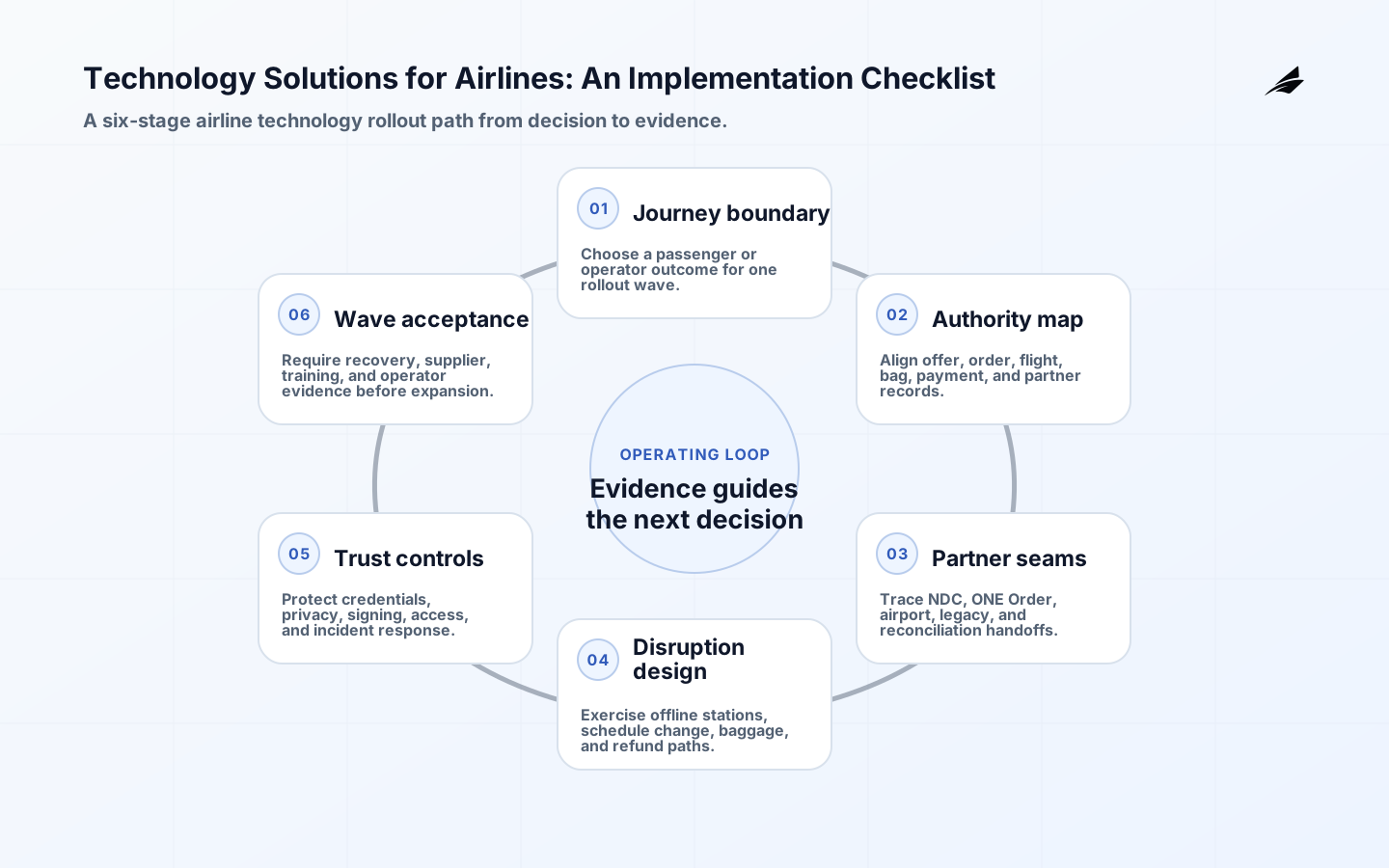
Choose one airline journey as the implementation boundary. A credible airline program starts with a journey such as disruption reaccommodation, baggage custody, order servicing, airport turnaround, or offer distribution. Name the passenger or operator outcome, the authoritative record, the partner handoffs, and the exception owner. Then test the journey across codeshare, interline, time-zone, payment, accessibility, and connectivity variations. This prevents a new channel from masking contradictory state in reservations, orders, baggage, or flight operations.
Airline technology decisions are judged during an operating day, not in an architecture review. A disruption workflow, baggage handoff, or order-service change must keep passenger identity, eligibility, inventory, payment, airport actions, and partner acknowledgements aligned while schedules move. Scope the work around the operational decision and its evidence: who may act, which record is authoritative, how a stale message is handled, and what an agent sees when automation stops. That makes modernization accountable to the people keeping flights and customers moving.
Airline retailing is moving toward Offer and Order models. IATA's NDC program supports richer offer distribution, while ONE Order aims to simplify reservation, ticket and ancillary records into an order-centric lifecycle. IATA's baggage tracking guidance and ICAO's aviation cybersecurity strategy and Global Cyber Risk Considerations add operational and risk obligations that cannot be separated from digital experience. This guide shows how to establish authoritative state and deliver in stages without a dangerous all-at-once replacement.
Pair this checklist with Edilec's airline technology scope and delivery plan, airline technology architecture FAQ and retail and travel systems checklist. They help teams distinguish an airline-specific operating boundary from reusable offer, order, payment and service patterns.
Choose the airline journey that anchors the rollout
Choose a decision that flight operations must make repeatedly and define its evidence. In a disruption-control article, that might be whether a proposed reaccommodation is valid for a passenger, route, seat, payment status, and onward connection. In a baggage workflow, it might be whether custody evidence is complete enough to trigger an exception task. Name the latency budget, the human override, and the record that closes the loop. A measurable operational decision is a better boundary than a promise to improve the passenger experience in general.
For each airline decision, draw the handoff rather than merely listing systems. Mark where the operating control centre, airport, ground handler, travel seller, interline carrier, payment service, and customer-support team can change the outcome. Give every message a flight, passenger, order, bag, or disruption correlation key and retain the source event time. Then define which authority wins when records disagree. The useful design question is not who integrates with whom, but who is allowed to correct the state that another participant depends on.
| Domain | Core state | Example acceptance evidence |
|---|---|---|
| Retailing | Offer, price and conditions | Channel receives consistent, time-bounded offer |
| Order | Customer commitment and servicing history | Change reconciles across payment and delivery |
| Operations | Flight, resource and disruption state | Decision uses current authoritative event |
| Baggage | Bag identity and custody events | Required handoffs are captured and shared |
| Customer | Identity, preference and consent | Communication is authorized and traceable |
| Finance | Payment, refund and accounting result | Order and settlement totals reconcile |
Keep offer, order, and custody authority visible
Keep the airline operating model visible behind each channel. A mobile rebooking screen may assemble options quickly, but it should read flight availability, customer eligibility, payment result, and order state from owned authorities rather than creating a competing truth. Publish event schemas that carry source and effective time, expose freshness to operators, and make replay safe. Read models are useful for search and triage; they become dangerous when no reconciliation process can explain why their itinerary or bag status differs from the authoritative record.
Standards adoption needs a conversation-level test pack. For an airline retailing change, trace offer creation through order creation, ancillary servicing, payment, schedule change, refund, and partner acknowledgement. Record which NDC profile or ONE Order interpretation is supported, which optional values are required locally, and how an incomplete conversation is repaired. A schema validator can confirm syntax while missing a commercial failure such as an accepted change with no ticketing or accounting result. Keep golden journeys and rerun them after every partner release.
Sequence partner seams and legacy coexistence
Inventory the seams that can interrupt an airline day: schedule feeds, airport files, host messages, partner APIs, queues, screen automation, and manual spreadsheets. For each seam, record the business event it carries, the maximum safe delay, the transformation rule, the owner of an unmatched message, and the evidence needed to reconcile it. An adapter is useful when it isolates legacy semantics, but it must have an exit condition and a named team. A dashboard should create a work item with a source record, not just display an alarming count.
Treat coexistence as an airline control period with explicit boundaries. Move one servicing action or station cohort while the incumbent remains authoritative, and prevent two systems from independently issuing a refund, itinerary change, or bag instruction. Define the cutover authority, replay window, rollback trigger, historical-read requirement, and reconciliation owner before traffic moves. Exercise close-of-day settlement and irregular-operations volume. Retire old credentials and routes only after the new path has proved that no passenger, partner, or financial state is stranded.
Design for stations, bags, and irregular operations
Airport and baggage workflows need an explicit truth about connectivity. At a gate, ramp, or sorting point, the user should know whether a scan was accepted, queued locally, rejected, or superseded by a later event. Design identifiers, clock handling, offline retention, duplicate suppression, and missing-event queues around the custody decision rather than around a tracking screen. Resolution 753 is a useful reference point, but delivery still depends on handlers, devices, network recovery, interline exchange, and a reconciliation action when the expected scan never arrives.
A disruption engine should explain why an option was offered and who can approve an exception. Capture the schedule and inventory versions, passenger constraints, payment state, baggage consequence, partner acknowledgement, and communication decision alongside the recommendation. Let an authorised controller override it with a reason and preserve the prior state. Load-test a rolling cancellation wave with changing schedules and degraded partner services; individual rebooking latency says little about whether a thousand partial decisions can be reconciled safely.
Protect passenger and operational trust boundaries
An airline cyber review should follow operational consequences across trust boundaries. Examine how a compromised partner credential could alter availability, how a forged disruption message could trigger mass communication, and how a loyalty or payment attack could be hidden inside normal servicing. Apply ICAO’s cooperation and incident-management principles to access, signing keys, privileged administration, partner segmentation, evidence retention, and restoration. Include operations and airport stakeholders in the exercise because the first safe response may be a procedural fallback rather than a software change.
Separate data needed to operate a flight from data copied for convenience. Define the purpose, residency, retention, sharing, and deletion rule for passenger identity, travel history, payment references, bag events, crew or aircraft context, and communication consent. Mask values in support tools and traces while keeping enough correlation to investigate an incident. Test a security event during a disruption, when pressure encourages unsafe exports and informal overrides. The runbook should name legal, airport, partner, payment, communications, and operational decision owners.
Set recovery gates for each flight journey
Measure the airline journeys that operators can act on. Examples include the percentage of valid disruption options completed, time from baggage custody event to an actionable exception, order-service completion without duplicate payment, or check-in completion under a partner slowdown. Segment by station, channel, partner, journey type, and disruption cohort; use percentile latency and oldest unresolved work, not only averages. Define what a timeout means, where retries stop, and which degraded mode—read-only order access, queued updates, or manual servicing—is safe for each journey.
Set recovery objectives around business records and flight decisions, not just infrastructure. A restored order store is not recovered if payment, ticketing, baggage, or partner state cannot be reconciled. Exercise a regional outage, lost signing credential, malformed schedule feed, duplicate disruption command, and delayed baggage messages. Define who can pause intake, who can authorise manual servicing, and how replay is bounded. Call the service recovered only when the operator can trust the current state and continue the journey without hidden duplicate work.
| Delivery wave | Purpose | Exit gate |
|---|---|---|
| Discovery | Reconcile journeys, records, interfaces and constraints | Owners approve target outcome and unknowns |
| Foundation | Establish identity, event, API and observability patterns | Representative service passes control tests |
| Pilot | Move one bounded route, channel or station cohort | Operational and reconciliation measures pass |
| Expansion | Add partner and disruption complexity | Capacity, support and recovery evidence pass |
| Transition | Move authority and retire duplicate paths | No unexplained state divergence |
| Operate | Improve outcomes and standards adoption | Owned backlog and service review are active |
Evaluate suppliers across the airline lifecycle
Build the airline business case from operating units: flights, passengers, orders, bags, stations, partners, messages, and peak disruption events. Include airport devices and connectivity, integration certification, test data, data migration, training, support, parallel running, supplier onboarding, and the capacity needed during irregular operations. Separate transition cost from recurring cost per order, passenger, bag, or flight. Attribute benefits to observable changes such as fewer manual rebookings, faster bag intervention, lower reconciliation effort, or higher successful self-service—not to a platform launch alone.
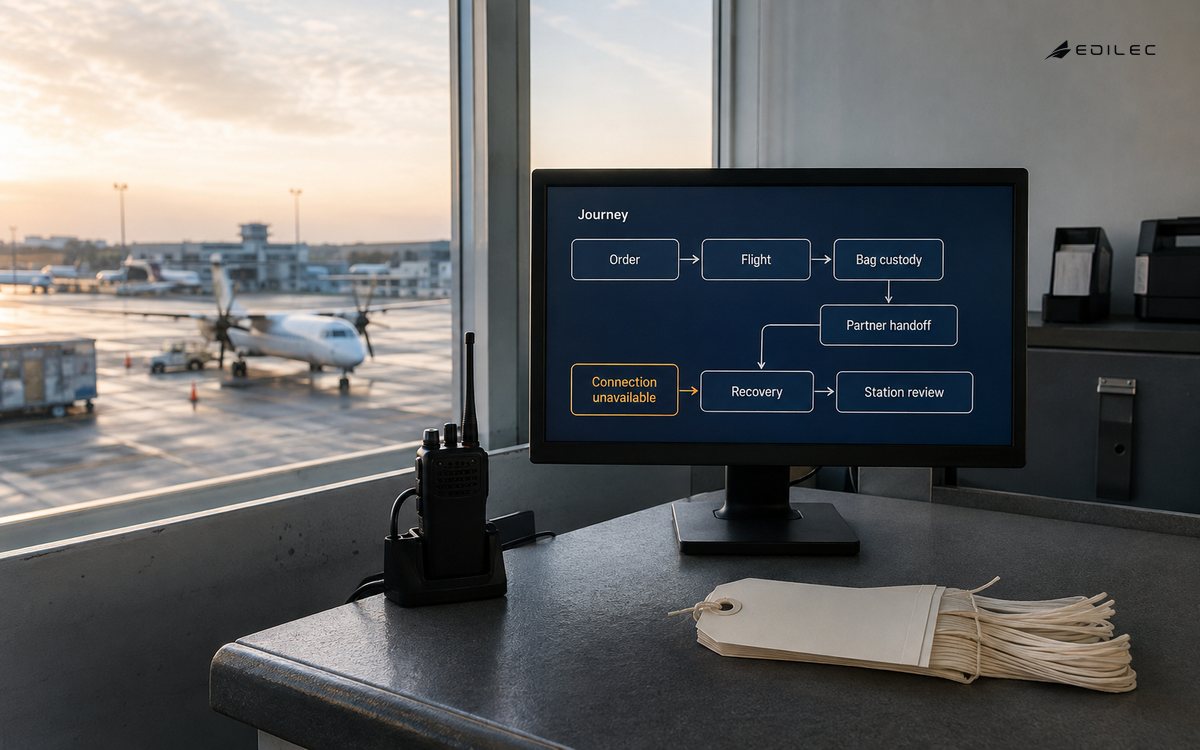
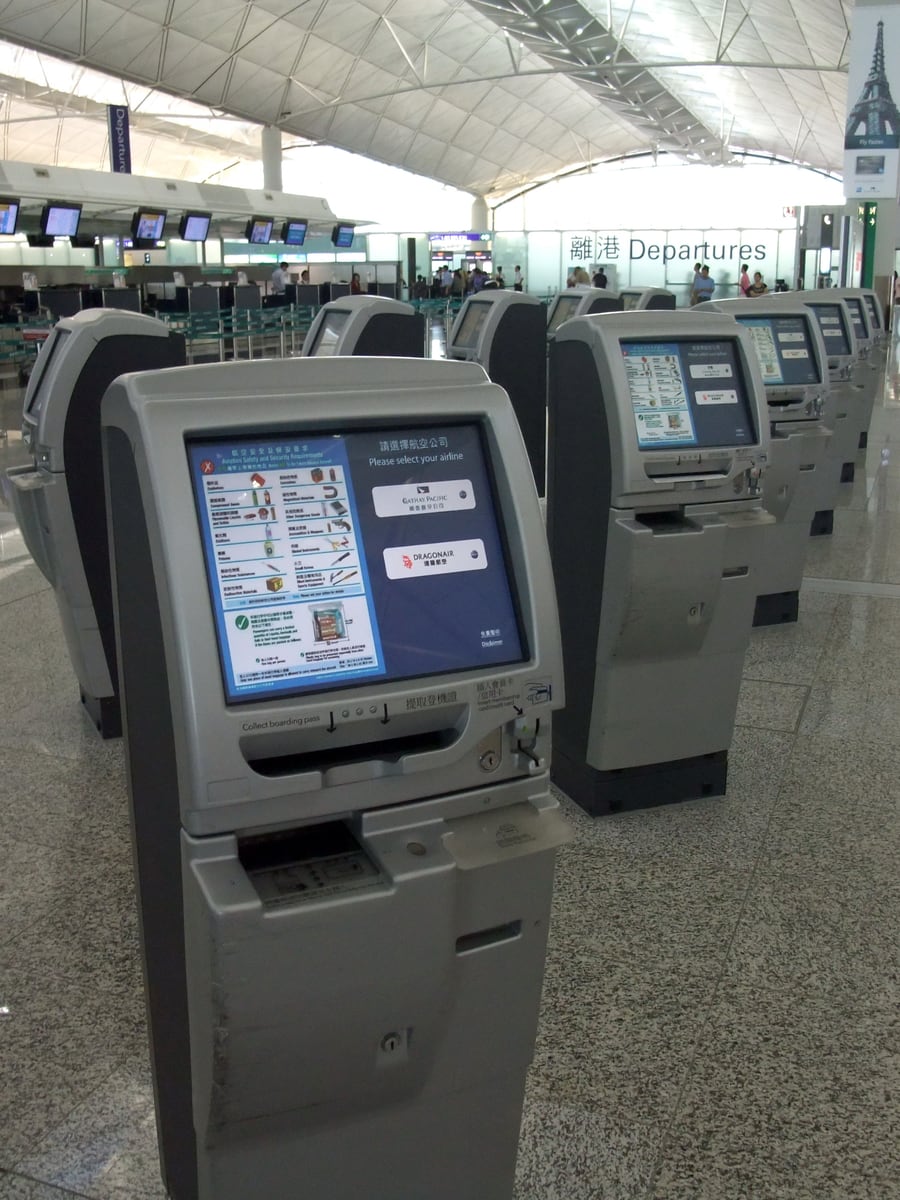
Evaluate suppliers with airline scenarios that expose operational limits: a codeshare change, an ancillary refund, a missing baggage event, a partner timeout, a station going offline, and a mass disruption. Ask for supported standards profiles, peak concurrency, regional operation, subcontractors, incident evidence, release controls, data export, and exit assistance. Require evidence of correction and reconciliation, not only a demonstration. Keep the airline’s ownership of schemas, identifiers, decision policy, and authoritative records so a vendor change does not become an unplanned operating-model change.
Key takeaways
- Anchor modernization in one passenger journey and an observable airline outcome.
- Define which offer, order, flight, bag, and payment records are authoritative.
- Test an end-to-end NDC or ONE Order conversation through legacy coexistence.
- Exercise airport connectivity loss, disruption peaks, and partner failure as routine conditions.
- Accept each rollout wave only with reconciliation, recovery, security, and operator evidence.
An airline technology program should be organized around a journey that must remain trustworthy across airports, partners, aircraft, and disruption. Pick one outcome such as a confirmed offer, a ticketed order, a correctly reconciled bag, or a recovered irregular-operation case. Name the authoritative record, the partner handoffs, the operational fallback, and the evidence that proves completion. Test degraded connectivity, schedule changes, duplicate messages, passenger-data boundaries, and station staff workload before broad rollout. A supplier or platform choice is useful only when it strengthens that end-to-end outcome without hiding who owns correction when systems disagree. See the official reference 1 for the relevant protocol or guidance.
Frequently asked questions
Must an airline replace its passenger service system first?
No. Many programs introduce offer, order or experience capabilities around an existing authority and transition by journey. The coexistence and reconciliation model must be explicit.
Are NDC and ONE Order the same?
No. NDC supports offer and order distribution communications; ONE Order focuses on a simplified order-centric fulfilment record. They are complementary parts of modern airline retailing.
How should airline AI be introduced?
Start with a bounded decision, quality baseline, human authority and fallback. Validate data, bias, operational consequence and monitoring. Do not let a model become an unreviewed source of operational truth.
Data and service testing needs airline variation. Include codeshare and interline journeys, schedule changes across time zones, duplicate passenger names, special-service requests, partial payment, bag rerouting and interrupted servicing. Mask records or generate synthetic data. Keep expected outcomes versioned so vendor and schema upgrades can be compared. Test accessibility and multilingual content in the journey, including disruption and error paths. A passenger who can shop but cannot understand or complete an accessible itinerary has not received an accessible service.
Airline technology rollout check
Use standards as interoperability contracts
| Decision | Concrete test | Owner evidence |
|---|---|---|
| Scope | Name one journey and its non-goal. | Approved outcome and boundary |
| Authority | Identify the source of truth and correction route. | Owner, identifier, and audit record |
| Failure | Exercise timeout, duplicate, stale, and denied cases. | Observed response and recovery step |
| Change | State what can evolve without surprising a consumer. | Compatibility note and review date |
IATA NDC and ONE Order can reduce bespoke distribution and fulfilment mappings, but an airline still needs a supported profile, version policy, partner test pack, error semantics, and reconciliation model. ICAO guidance makes cybersecurity a shared governance and incident-management responsibility. Put those obligations into supplier evaluation, cutover gates, and exercises rather than treating them as a late security review.
Operational readiness also requires role-based training and a cutover command structure. Agents, airport staff, operations controllers, finance, customer support and technical teams need different views and procedures. Publish decision contacts and fallback channels before each wave. During hypercare, record every manual reconciliation and classify whether it is temporary learning or a missing product capability. Exit hypercare only when workload, errors and ownership meet agreed thresholds; otherwise the program transfers hidden labor into normal operations.
Conclusion
The strongest airline technology program leaves an operator with a legible decision path: the passenger promise, the current flight or order state, the partner acknowledgements, and the next safe action are all visible. Use NDC, ONE Order, baggage, and cybersecurity guidance as shared foundations, then define the airline-specific profile, authority, recovery, and acceptance evidence. Deliver one complete journey at a time, prove it under disruption, and remove duplicate paths only after reconciliation shows that the operation—not just the interface—is ready.
Frequently asked questions