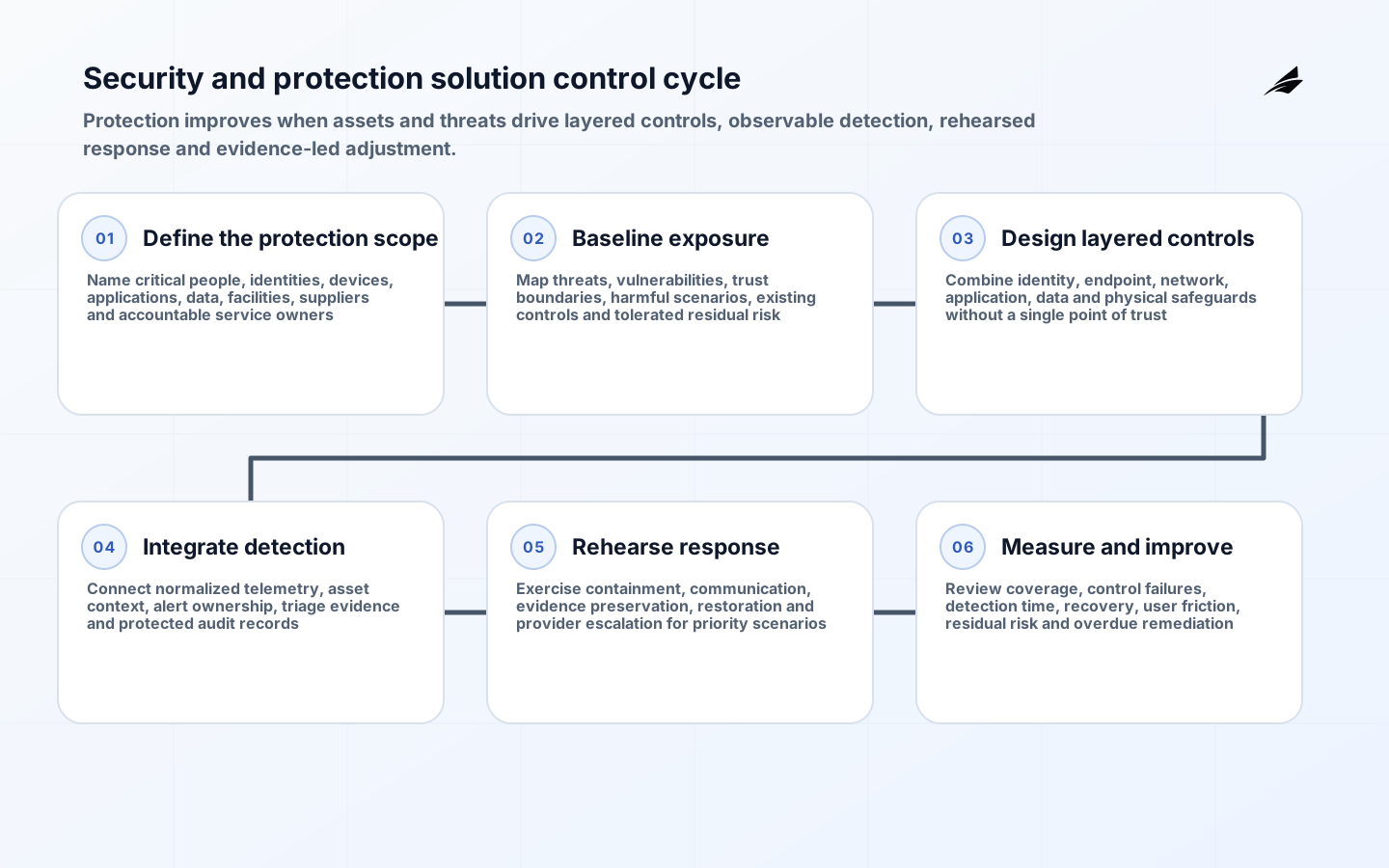
Security and protection solutions are useful only when they reduce a defined risk and remain operable during an attack. Endpoint, identity, network, email, cloud and data products often overlap; buying each market category can create duplicate alerts while important assets remain uncovered. A coherent program starts with business consequences and attack paths, then selects preventive, detective, response and recovery capabilities as a system.
This security and protection solutions FAQ complements the scope and delivery plan and implementation checklist. It explains the decisions behind a portfolio, including ownership, telemetry, response authority, evidence and exit. Product names will change faster than these operating questions.
What counts as a security and protection solution?
The portfolio includes governance and process as well as technology: asset and identity inventory, secure configuration, vulnerability management, access control, data protection, logging, detection engineering, incident response, backups, recovery and supplier oversight. NIST CSF 2.0 organizes outcomes under Govern, Identify, Protect, Detect, Respond and Recover, preventing protection tools from eclipsing preparation and recovery.
Define the boundary in business terms. Identify services whose loss, manipulation or disclosure would create serious harm; the people and third parties with access; and plausible attack paths. Map existing controls and evidence before shopping. A missing owner or unsupported system may create more risk than the absence of a new analytics platform. Include physical, operational and human dependencies where they affect digital service recovery.
| Control objective | Example capability | Proof of effectiveness |
|---|---|---|
| Reduce unauthorized access | Phishing-resistant MFA and conditional authorization | Blocked misuse and recovery tests |
| Limit movement | Segmentation and resource-level policy | Denied cross-boundary paths |
| Detect harmful behavior | Useful logs and tuned detection | Scenario produces timely signal |
| Restore service | Isolated backup and rehearsed recovery | Business transaction restored within objective |
How should controls and products be selected?
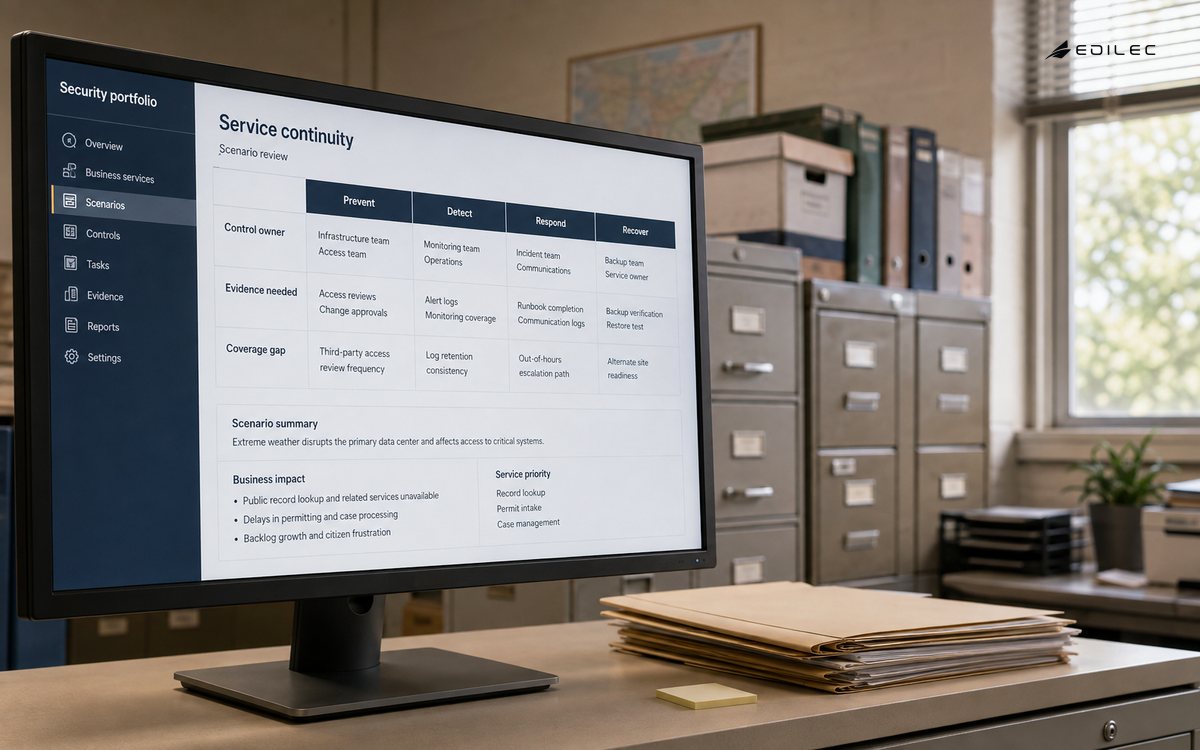
Translate priority risks into control outcomes, then compare current and target coverage. Evaluate whether a candidate prevents, detects, contains or helps recover from the scenario; which assets and identities it actually covers; what telemetry it needs; and who operates it. Run a representative proof rather than accepting a feature matrix. Include failure behavior, export, API limits, regional support and accessibility for analysts.
Score total operating cost: licenses, storage, integration, tuning, on-call, training and replacement. Prefer fewer well-integrated controls when they cover the needed scenarios, but do not consolidate into a single failure domain without analysis. Demand evidence for claims such as autonomous response. A fast automated isolation action needs asset context, authorization, exception handling and reversal so it does not disrupt a critical service unnecessarily.
Does zero trust require a single platform?
No. NIST SP 800-207 describes zero trust architecture around protecting resources and making access decisions without implicit trust from network location. The design can involve multiple products. Start with authoritative identity, device and resource context, explicit policy, least privilege and continuous signals. Verify authorization at the destination rather than assuming a gateway solves every application flaw.
CISA's Zero Trust Maturity Model uses identity, devices, networks, applications and workloads, and data as pillars, with visibility, automation and governance across them. Use maturity as a planning conversation, not a score purchased from a vendor. Advance one consequential access path end to end, including joiner, mover, leaver and emergency behavior.
Which protection areas usually deserve early attention?
Reliable asset and identity knowledge enables nearly every other control. Prioritize administrator and remote access, remove stale accounts, secure recovery, separate privileged work and replace shared credentials. Discover internet-facing assets and unsupported software. Protect email and collaboration because they are common routes to identity compromise, but connect alerts to session revocation and investigation rather than leaving them isolated in a console.
Classify important data and locate uncontrolled copies, exports, shared links and backups. Apply encryption, least privilege and lifecycle rules, but recognize that an authorized account can still exfiltrate information. Monitor unusual access with privacy-conscious governance. Ensure backup administrators and deletion paths are isolated from normal production compromise. CISA's ransomware guide pairs prevention with tested recovery and incident preparation.
How should detection and response work together?
Design detections from scenarios and required decisions. For each, state data sources, logic, expected false positives, triage context, severity, owner and containment authority. Confirm telemetry completeness and clock synchronization. A high-volume alert with no accountable action is not coverage. Test controls by safely reproducing relevant behavior and measuring the path from signal through analysis, authorization, containment and recovery.
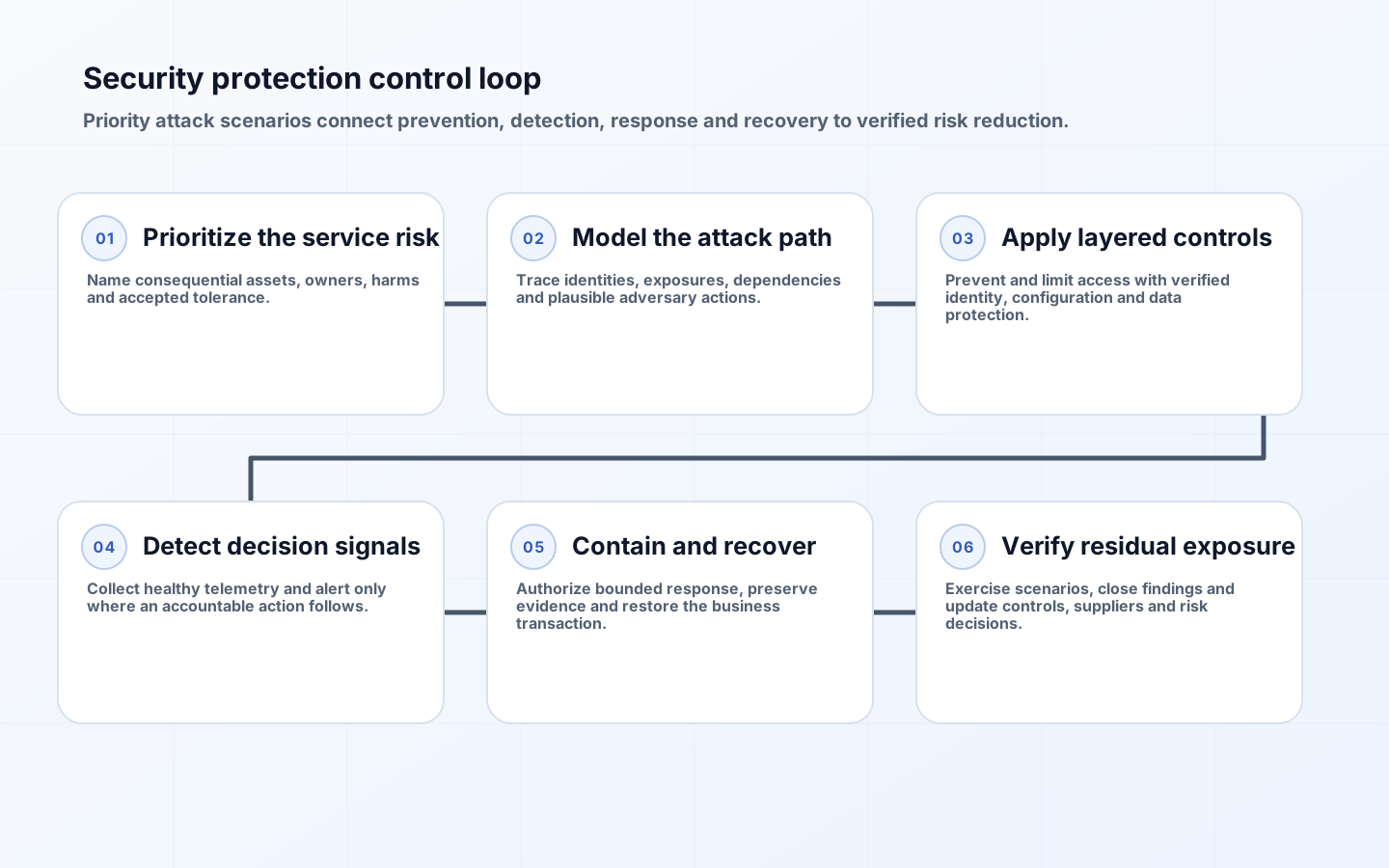
NIST SP 800-61 Rev. 3 places incident response within broader cybersecurity risk management. Define command, legal and communications roles before an event. Maintain one timeline, protect evidence, coordinate suppliers and record decisions under uncertainty. Automated response should be bounded and reversible. Afterward, convert root conditions and response friction into verified improvements across governance, protection, detection and recovery.
When should a managed security provider be used?
A provider can extend monitoring hours, specialist analysis and tooling, but cannot own the customer's business decisions. Define covered assets, telemetry health, severity, response times, escalation, authorized actions, evidence retention, threat hunting, incident support and service improvement. Test the service with exercises before relying on the contract. Ensure the provider can reach an empowered customer contact at all times promised.
Protect the provider connection itself. Use individual, time-bound access, narrow permissions, customer-visible logs and emergency revocation. Understand subcontractors and data locations. Require notification of provider incidents that can affect the customer. Preserve portable detection logic, case history and raw telemetry where proportionate. A managed service that cannot explain why an alert was closed creates operational and assurance debt.
| Service question | Contract evidence | Exercise |
|---|---|---|
| What is monitored? | Asset and log-source coverage with health reporting | Disable a source and observe escalation |
| Who may contain? | Action matrix and approval thresholds | Simulate compromised privileged account |
| How is evidence preserved? | Formats, access, integrity and retention | Export a complete case timeline |
| How does service improve? | Tuning and review commitments | Verify closure of an exercise finding |
How is security effectiveness measured?
Measure exposure and control performance against priority scenarios: asset coverage, privileged MFA, patch or mitigation time, telemetry health, detection validation, containment time, restore success and repeated incident causes. Segment by criticality. Counts of alerts, blocked attacks or vulnerabilities are activity measures and can rise for healthy reasons. Pair them with consequence, coverage and trend to support an actual decision.
Use an assurance calendar with configuration tests, access review, scenario exercises, restore drills and supplier reviews. Sample evidence independently for high-consequence controls. Present residual risk and exceptions to accountable leaders in plain business terms. The goal is not to claim perfect protection; it is to know which failures are plausible, how quickly they become visible and whether the organization can contain and recover.
Lifecycle every product and integration. Track owner, supported version, renewal, configuration baseline, data held, privileged connection and replacement path. Test upgrades against detections and response automation, because a schema or API change can quietly remove coverage. When a tool is retired, preserve required case evidence, revoke service identities, remove collectors and update incident procedures. Security software that is unowned or unsupported becomes part of the attack surface it was purchased to reduce.
Protect analysts as a scarce operational capability. Tune noisy signals, automate context gathering, document escalation and rotate demanding on-call work. Provide structured learning from exercises and incidents. Metrics should not punish analysts for opening complex cases or encourage premature closure. A sustainable team with clear authority and healthy telemetry will outperform an impressive platform that produces more work than people can evaluate.
Maintain privacy and workforce guardrails around monitoring. Collect telemetry for stated security purposes, restrict access, set retention and review high-impact analytical use. Security teams need enough context to investigate without turning every employee action into indefinite surveillance. Clear policy and oversight preserve trust and make genuinely suspicious behavior easier to distinguish from ordinary work.
Security and protection takeaways
- Select controls from consequential scenarios and verified coverage.
- Balance govern, identify, protect, detect, respond and recover capabilities.
- Secure identity and provider access before adding complex analytics.
- Test the complete signal-to-recovery path, not isolated product features.
- Measure control health, scenario performance and residual risk rather than alert volume.
Frequently asked questions
Is one integrated suite always better? No. Integration can reduce operational friction, but concentration, weak components and exit constraints matter. Is artificial intelligence required in a security platform? No. Evaluate whether it improves a defined analyst decision on representative data. Should small organizations build a SOC? Not necessarily; they do need accountable monitoring, escalation, response authority and recovery, which may combine internal and managed capability.
Can cyber insurance replace controls? No. It may transfer defined financial effects but does not restore public trust or essential operations. How often should incident plans be tested? Use a risk-based schedule and test after major architecture, supplier or leadership change. What is the best first metric? Verified coverage of priority services and the organization's ability to restore one of them from a realistic failure.
Conclusion
A security portfolio is a chain of decisions and evidence, not a shelf of products. Begin with the services and harms that matter, map plausible paths, select proportionate controls and exercise them together. The strongest solution is the one teams can operate under pressure, explain to leadership and improve after every test, while preserving viable response and recovery when prevention fails.