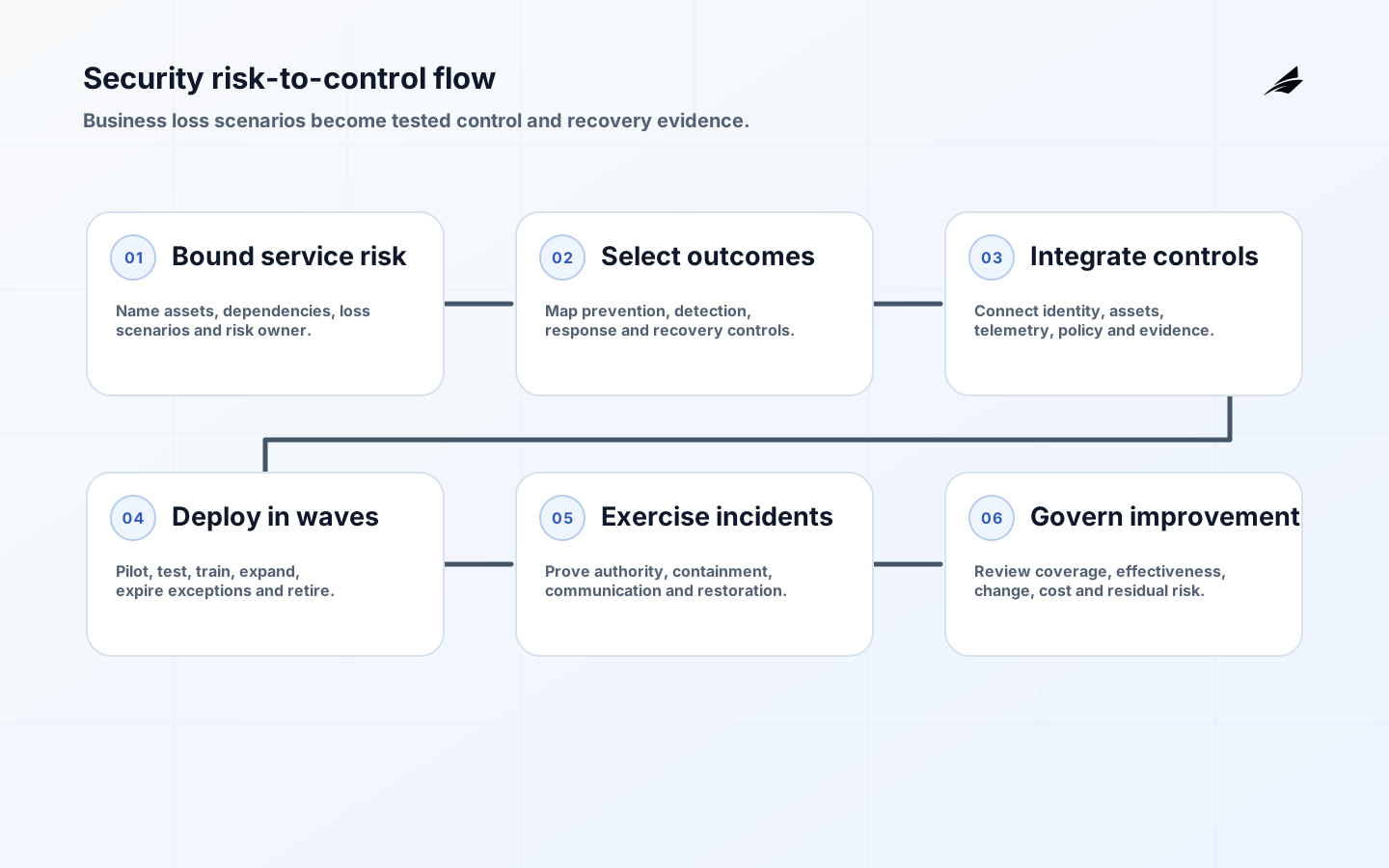
This security and protection solutions is designed for teams moving from research to an accountable delivery decision. Use the security solutions implementation checklist, security solutions FAQ and enterprise cybersecurity delivery plan for adjacent scope, implementation and operating questions. The practical standard here is evidence: named owners, explicit boundaries, representative tests and a route to stop or correct the system when assumptions fail.
Security and protection solutions should reduce defined business risk through controls that can be operated and tested. The NIST Cybersecurity Framework 2.0 organizes outcomes across Govern, Identify, Protect, Detect, Respond and Recover. CISA’s cross-sector performance goals prioritize a limited set of high-impact practices, and CIS Controls v8.1 offers measurable safeguards. None of these sources makes a product purchase equivalent to risk treatment.
Scope critical services, assets and loss scenarios
Begin with mission or business services, users, information, technology and third parties. Describe plausible loss scenarios in operational terms: unauthorized payment, account takeover, sensitive-data disclosure, ransomware interruption, unsafe operational change or supplier compromise. Record consequence, exposure, existing controls, assumptions and accountable risk owner. Build current and target CSF profiles rather than scoring the organization with one maturity number. Inventory identities, endpoints, applications, cloud, networks, data, operational technology and external dependencies at enough depth to support the scenarios. Define legal, contractual and sector obligations with qualified owners. Scope a first wave around a material risk and achievable dependencies. A broad requirement to “improve protection” invites overlapping tools and unowned alerts; a scenario identifies where prevention, detection, response and recovery evidence must connect.
Select controls by risk reduction and feasibility
Map each loss scenario to preventive, detective, responsive and recovery outcomes, then compare current coverage and failure evidence. Use CISA goals and CIS Controls v8.1 to prioritize basics such as asset knowledge, secure configuration, identity protection, vulnerability management, logging, backups and provider oversight. Tailor rather than blindly claiming compliance. For every control, define scope, policy, implementation owner, operator, evidence, test, exception, metric and residual risk. Favor controls that remove classes of exposure or make secure behavior the default. Evaluate people and process dependencies: phishing-resistant authentication fails if recovery bypasses it, and backups fail if restoration is untested. Require risk owners to accept what remains. Control count and alert volume are weak outcomes; tested reduction in likelihood, blast radius or recovery time is stronger.
| Loss scenario | Prevent | Detect | Respond and recover |
|---|---|---|---|
| Account takeover | Strong authentication and recovery | Risky login and privilege change | Revoke, investigate, restore |
| Ransomware | Hardening and segmentation | Execution and backup tamper | Contain and restore journey |
| Data disclosure | Minimize and authorize | Unusual access and export | Stop, assess and notify |
| Supplier compromise | Due diligence and scoped access | Dependency and identity monitoring | Isolate and alternate |
| Unsafe admin change | Least privilege and approval | Configuration audit | Rollback and review |
Design an integrated security architecture
Create trust zones and data flows, then place identity, endpoint, network, application, data and monitoring controls at enforceable boundaries. NIST Zero Trust Architecture removes implicit trust based solely on network location and focuses on resources, identities and policy decisions. Start with high-value journeys, federated identity, strong authentication, device or workload signals, least privilege and protected logs. Segment administrative paths and isolate recovery systems. Integrate tools through stable identifiers, time synchronization and owned data contracts so responders can correlate user, device, workload and asset. Avoid making one dashboard the architecture. NIST’s implementation practice guide demonstrates multiple approaches, reinforcing that zero trust is not one product. Test policy failure, identity-provider outage and emergency access.
Evaluate providers and total cost
Compare exact service boundaries, supported environments, data and telemetry access, detection content, response authority, evidence, integration, availability, vulnerability handling, subcontractors, data location, deletion and exit. Run scenarios with your own architecture and sample telemetry. Clarify who tunes detections, validates findings, patches systems, contains accounts, communicates incidents and accepts risk. Cost includes licenses, implementation, sensors, ingestion, retention, integrations, identity cleanup, endpoint replacement, analysts, training, assessment, incident exercises and exit. Model fixed, per-user, per-asset, per-volume and incident costs under growth and attack conditions. Reduce duplicate collection before buying more. A low platform price can become expensive if logs are unusable, false positives consume staff or essential response remains an excluded professional service.
Deliver controls in evidence-based waves
Sequence foundational dependencies before broad rollout: ownership and inventory, privileged identity, secure configuration, logging and time, protected recovery, vulnerability response, then scenario-specific controls. Pilot on a representative but bounded service. Establish baseline, deploy through versioned configuration, test intended and denied behavior, observe operational load and fix support paths. Expand by service or risk wave with entry and exit criteria, rollback and exception expiry. Protect production from disruptive scanning or policy changes through owner-approved windows and canaries. Train administrators, responders and users in their actual tasks. Retire superseded tools and credentials after telemetry continuity is proven. Report control coverage, effectiveness, age, incidents and exceptions rather than activity. Every wave should leave assets, ownership and evidence more accurate than it found them.
| Cost category | Budget item | Evidence of value | Common omission |
|---|---|---|---|
| Foundation | Inventory, identity and logging | Coverage and control tests | Cleanup labor |
| Technology | License and infrastructure | Scenario performance | Ingestion growth |
| People | Operators and responders | Response and tuning quality | After-hours coverage |
| Assurance | Tests and exercises | Findings closed and recovery | Business participation |
| Exit | Export and transition | Continuity without provider | Data extraction |
Integrate incident response and recovery
NIST finalized SP 800-61 Revision 3 in 2025 to incorporate incident response across CSF 2.0 risk management. Define incident declaration, triage, authority, containment, evidence, legal and external communication, recovery criteria and improvement. Build playbooks around loss scenarios and known dependencies, not vendor alert names. Ensure telemetry is protected, time-aligned, retained and accessible during provider or identity outages. Exercise compromised administrator, ransomware, cloud-key exposure and supplier loss with executives and operators. Recovery should restore a prioritized business journey from trusted assets, rotate exposed credentials, reconcile interrupted transactions and monitor recurrence. Preserve a manual or degraded service where needed. Feed lessons into architecture, controls, contracts and training. A purchased response retainer is not readiness until contacts, access and decision authority work in an exercise.
Govern outcomes, exceptions and change
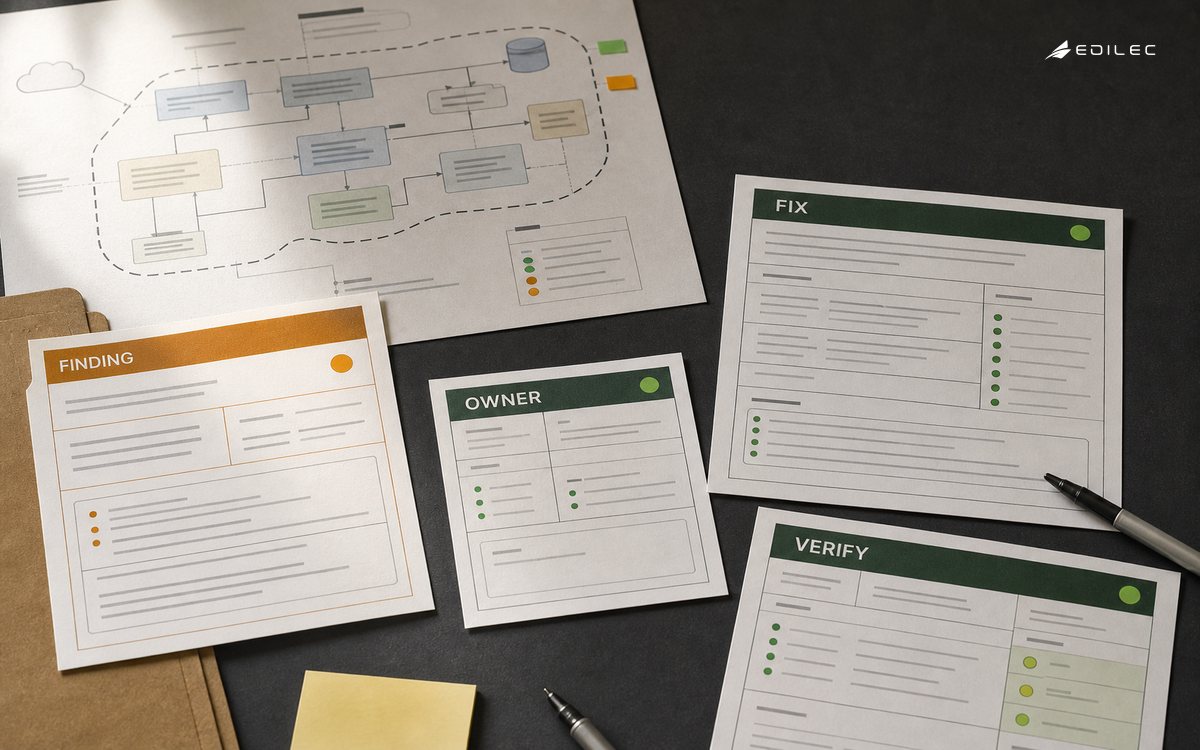
Assign executive risk owners, control owners and operators. Review material incidents, threat and business changes, control test results, vulnerabilities, exceptions, provider performance and recovery evidence. Use metrics with denominators and consequence: privileged accounts protected, critical assets within patch objective, required log sources healthy, high-risk findings aged, restored journeys within objective and repeat incidents. Pair coverage with effectiveness tests. Exceptions need rationale, compensating control, expiry and named acceptance. Update target profiles as services and obligations change. Keep a security architecture and control register that another team can understand. Governance should direct investment and stop ineffective work, not produce a static annual report. The durable program continuously connects risk decisions to deployed controls and operating evidence.
Procure and accept controls through evidence
Translate outcomes into testable procurement requirements: exact coverage, prerequisites, telemetry, integration, administrative roles, secure defaults, updates, service objectives, incident access, data handling, subcontractors and exit formats. Distinguish independent assurance from marketing and verify the purchased configuration. During a pilot, test a representative attack or violation, false-positive handling, evidence export, role separation, dependency loss and support escalation. Measure operator effort. Reject products that cannot produce required operating evidence. Acceptance is not installation. The control owner confirms scope and policy; operators demonstrate administration and exceptions; assurance tests allowed and denied behavior; service owners approve impact; responders use evidence in a scenario; and risk owners accept residual exposure. Verify denominators, time synchronization, routing, retention, privileged access and configuration recovery. Run maintenance and ensure coverage returns. Hold a 30-day review for noise, misses, support load, cost and user friction. Sustainable behavior and an owned improvement backlog are production evidence.
Review the control portfolio against changed services and threats, not a fixed product calendar. Monthly operations can examine coverage, failure, exception age and response workload; quarterly risk review can examine scenario evidence, provider concentration, residual risk and funding; annual exercises can test cross-functional recovery. Trigger immediate reassessment after material architecture change, acquisition, supplier incident, new regulatory duty or repeated bypass. Retire duplicate or ineffective controls only after proving telemetry and response continuity. Preserve configuration, investigation and decision records needed for accountability. Portfolio discipline frees budget and operator attention for controls that demonstrably reduce exposure instead of rewarding permanent tool accumulation.
Key takeaways
- Revisit control evidence after architecture, supplier and business changes, since nominal coverage can remain green while the protected service boundary has moved.
- Scope security around critical services and credible loss scenarios.
- Select controls for measurable risk reduction, not framework completion.
- Integrate identities, assets, telemetry and recovery across products.
- Budget implementation and operations, not only licenses.
- Exercise incident authority and restored business journeys before relying on plans.
Frequently asked questions
Which security solution should be purchased first?
The first investment depends on the loss scenario and current gaps. Many organizations gain more from accurate assets, strong privileged access, secure configuration, protected logs and tested backups than from another advanced detection product.
Does zero trust mean removing all network controls?
No. It removes implicit trust based solely on location and emphasizes resource-focused, continually evaluated access. Segmentation, network controls, identity and device or workload signals can all contribute.
How should security ROI be measured?
Use control coverage and effectiveness, reduced exposure, incident frequency and impact, recovery performance and avoided manual work. Avoid claiming precise prevented-loss figures without defensible assumptions.
Conclusion
Security and protection solutions deliver value when they form an operated control system around real business risk. Bound scenarios, choose measurable safeguards, integrate architecture, price the full lifecycle, deploy in tested waves and exercise response and recovery. The result is not more security tooling; it is evidence that critical services are harder to compromise and faster to restore.