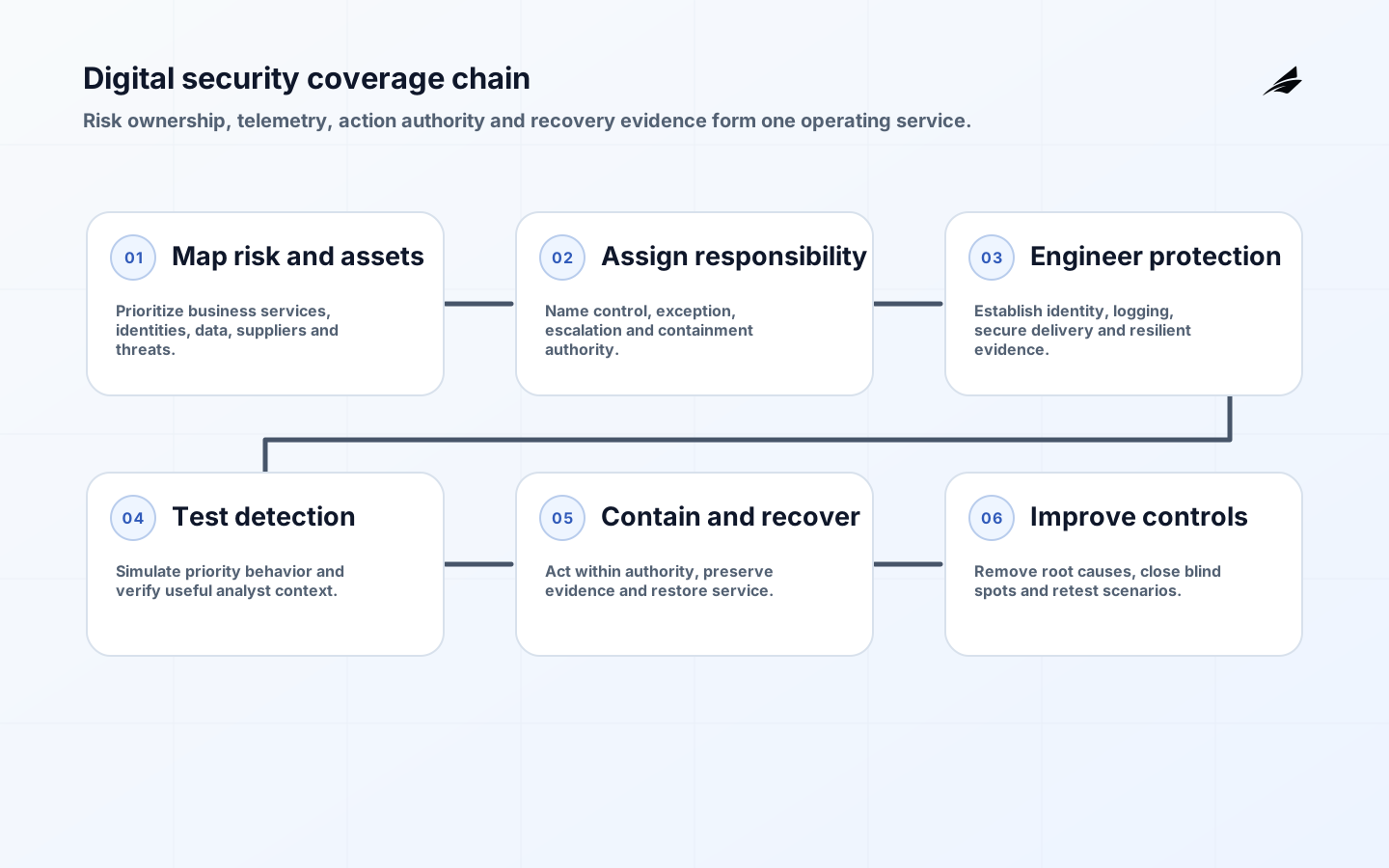
Digital security services are external or shared capabilities that help an organization govern cyber risk, protect identities and assets, detect harmful activity, respond to incidents and recover operations. The service may include assessment, engineering, managed detection and response, vulnerability management, cloud posture, application security, incident retainers or a virtual security leadership function. Buying a bundle of tools without coverage, authority and outcome definitions is not a security service plan.
This guide explains how to scope, price and deliver digital security services. Use it with the digital security implementation checklist, the digital security services FAQ, the security managed cloud services guide and the broader cybersecurity services plan. The aim is a defensible operating capability, not a promise that incidents can be eliminated.
Define digital security services by risk outcome and coverage
Begin with business services, critical data, identities, suppliers and plausible adverse events. Map what must continue, what harm matters, and which teams already own controls. The six concurrent functions in NIST Cybersecurity Framework 2.0 - Govern, Identify, Protect, Detect, Respond and Recover - provide a useful outcome structure. A proposal should state which outcomes it supports and which remain with the client or another provider.
Coverage must be measurable. List tenants, accounts, endpoints, servers, cloud subscriptions, applications, repositories, network zones, identities and log sources. State excluded regions, legacy assets and operating hours. Define service boundaries for employees, contractors, subsidiaries and acquired companies. Unknown assets should enter a discovery and onboarding queue rather than silently falling outside reports.
| Service component | Useful scope measure | Evidence of operation |
|---|---|---|
| Identity protection | Workforce, privileged and service identities covered | Enrollment, access review and risky-sign-in handling |
| Exposure management | Assets and repositories scanned on schedule | Findings aged by exploitability, owner and exception |
| Detection and response | Required telemetry and staffed hours | Tested detections, triage records and containment time |
| Application security | Products, pipelines and release stages covered | Requirements, test results and remediation trace |
| Recovery | Critical services and dependencies in exercises | Restore evidence, recovery time and unresolved gaps |
Build a shared-responsibility and authority matrix
For every control, identify who configures, monitors, approves exceptions, investigates, contains, communicates and restores. A managed provider may alert on a compromised account but lack authority to disable it. The client may expect containment while the provider is waiting for written approval. Define pre-authorized actions by severity, protected accounts, evidence preservation and how to reach business owners at any hour.
Include dependencies on IT operations, human resources, legal, privacy, communications, physical security and vendors. Security teams do not independently decide employment action, breach notification or materiality. Create contact and escalation paths, then exercise them. Contracts should distinguish advice, operation and decision authority, and should prohibit the provider from making high-impact business or legal determinations outside its role.
Set architecture and engineering requirements
Centralize identity where practical, enforce phishing-resistant authentication for high-risk access, separate administrative identities, and manage service credentials through a lifecycle. NIST SP 800-207 explains that zero trust removes implicit trust based solely on network location and focuses on resources. That does not mean purchasing one product; policy needs user, device, service and context signals with least-privilege enforcement.
Protect logging and security administration from the environments they monitor. Define time synchronization, event fields, retention, privacy filters and outage behavior. Use infrastructure and policy as code for repeatable baselines where feasible. For product engineering, integrate secure practices into the delivery lifecycle using the NIST SSDF. A service should help teams remove root causes, not only produce recurring vulnerability reports.
Design detection, response and recovery as one system
Prioritize detections by adversary behavior and business consequence. For each high-value detection, verify required telemetry, analytic logic, triage question, false-positive handling and containment option. Test with safe simulations and record whether the event reached the right analyst with enough context. Volume, alert count or generic threat-feed matches do not demonstrate that a critical path is covered.
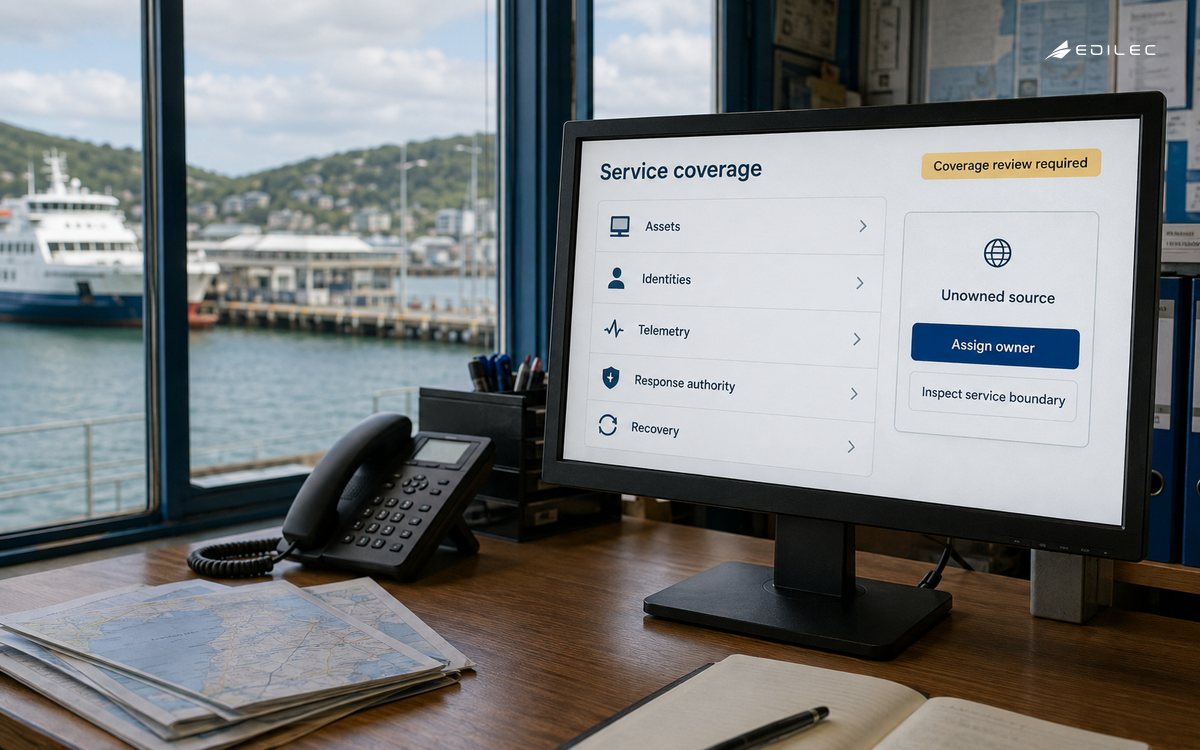
NIST SP 800-61 Revision 3 integrates incident response across CSF 2.0 rather than treating it as a detached phase. Build incident roles, evidence handling, communication, restoration and improvement into ordinary operations. Recovery needs known-good backups, isolated restore capability and dependency-aware exercises. Closing an alert is not the same as restoring the business service or remedying affected people.
| Severity question | Pre-authorized action | Client decision |
|---|---|---|
| Suspicious user session | Revoke session and preserve sign-in evidence | Account disablement and user contact |
| Malicious endpoint behavior | Isolate standard endpoint | Operational exception for critical device |
| Exposed cloud credential | Disable key and block known use | Application continuity and replacement release |
| Possible regulated-data access | Preserve logs and restrict further access | Legal assessment, notification and remedy |
| Destructive activity | Invoke containment and recovery bridge | Business continuity priorities and public communication |
Estimate cost and compare commercial models
Cost drivers include asset and identity count, log volume, data retention, cloud accounts, applications, geographic coverage, response hours, engineering effort, regulatory assurance and transition complexity. Separate recurring monitoring from project work such as onboarding, architecture changes, penetration tests and incident response. Include client labor for remediation, evidence review and decision-making; an inexpensive monitoring contract can fail if nobody funds fixes.
Per-user or per-endpoint pricing is predictable but may exclude cloud services and machine identities. Consumption pricing aligns with telemetry but can punish useful logging. Retainers buy readiness and defined response access, not guaranteed incident resolution. Fixed projects fit bounded assessments or implementations. Compare proposals on normalized coverage, service levels, staff qualifications, subcontractors, data handling, tooling rights, exit support and scenario costs rather than headline monthly price.
Deliver in evidence-backed stages
Start with discovery and a reconciled coverage baseline. Then stabilize identity, logging, emergency access and critical vulnerabilities before optimizing advanced detections. Onboard in waves, each with telemetry verification, role testing, a containment exercise and an operating handoff. The NIST zero trust implementation guide documents 19 example implementations, illustrating that architecture is assembled across interoperating capabilities rather than copied as one universal blueprint.
Define acceptance for each wave: assets visible, logs complete, clock and fields correct, detections exercised, contacts reachable, actions authorized, evidence retained, dashboards reconciled and exceptions owned. Run parallel operations where replacing an incumbent provider. Preserve access to historical investigations and rule logic. At exit, revoke provider identities, transfer cases and configurations, return or delete data, and verify continuity of alerts and response.
Manage provider and service risks
A security provider becomes a privileged dependency and attractive target. Assess its identity controls, segregation, secure development, vulnerability disclosure, incident history, subcontractors, data locations, encryption, analyst access and continuity. Require timely notice of incidents affecting the service and evidence, but avoid contract language that pressures premature certainty. Limit provider access by task and time, monitor it, and retain emergency revocation.
Other risks include blind spots, alert fatigue, unowned remediation, vendor lock-in, duplicated tools and metrics that reward case closure over harm reduction. Maintain an internal security owner with architecture and risk context. CISA's Cloud Security Technical Reference Architecture highlights shared services, secure cloud migration and posture management; use such references to test design, while tailoring controls to the organization's actual services and obligations.
Use a scenario to accept the service
Select a scenario tied to a priority service, such as a stolen administrator session followed by attempted cloud persistence. Seed only safe indicators. Verify that identity, cloud and endpoint events arrive with correct time and ownership; the analytic triggers; the analyst gathers the expected context; escalation reaches authorized responders; containment stays within its boundary; evidence is preserved; and the business owner receives a clear status. Measure each interval but also grade decision quality and communication.
Continue through recovery and improvement. Restore affected configuration from a known-good source, reconcile unauthorized changes, rotate exposed credentials and confirm the service is usable. Produce an incident record that distinguishes facts, hypotheses and decisions. Then update the detection, runbook, architecture or training that allowed the path. Acceptance fails if the provider can demonstrate an alert but cannot reach the customer, act within authority, preserve evidence or support restoration. Repeat scenarios after material architecture, provider or staffing changes.
Score the scenario against predefined objectives and retain the raw timeline. Note which information was unavailable, which approval caused delay, whether containment created business harm and whether responders used unsupported side channels. Assign every improvement to the team that can change it and set a retest date. This converts an exercise from a presentation into assurance evidence and helps commercial reviews focus on service capability rather than the number of alerts processed.
Key takeaways
- Scope services by business risk, asset and identity coverage, and explicit exclusions.
- Define decision authority and pre-authorized containment before an incident.
- Test detections, communications, restoration and evidence handling end to end.
- Compare total operating and remediation cost, not only provider subscription price.
- Retain internal ownership, provider oversight and a rehearsed transition path.
Frequently asked questions
Is an MSSP the same as digital security services?
An MSSP is one delivery model, often focused on managed tools or monitoring. Digital security services can also include strategy, engineering, application security, incident response and recovery. Evaluate the exact outcomes, coverage and authority rather than relying on the provider category.
Does every organization need 24/7 monitoring?
The required coverage follows risk, operating hours and time-to-harm. Internet-facing, identity and cloud attacks may progress outside office hours, but a full internal operation is not the only answer. Define which events need continuous detection and containment, then choose internal, provider or hybrid staffing that can act.
Conclusion
Digital security services create value when they make risk ownership, control coverage and response capability more reliable. A sound plan connects governance, architecture, detection, containment, recovery and improvement with measurable evidence. It also acknowledges what remains with the client. That clarity makes procurement comparable and turns security activity into an operating capability the organization can exercise and trust.