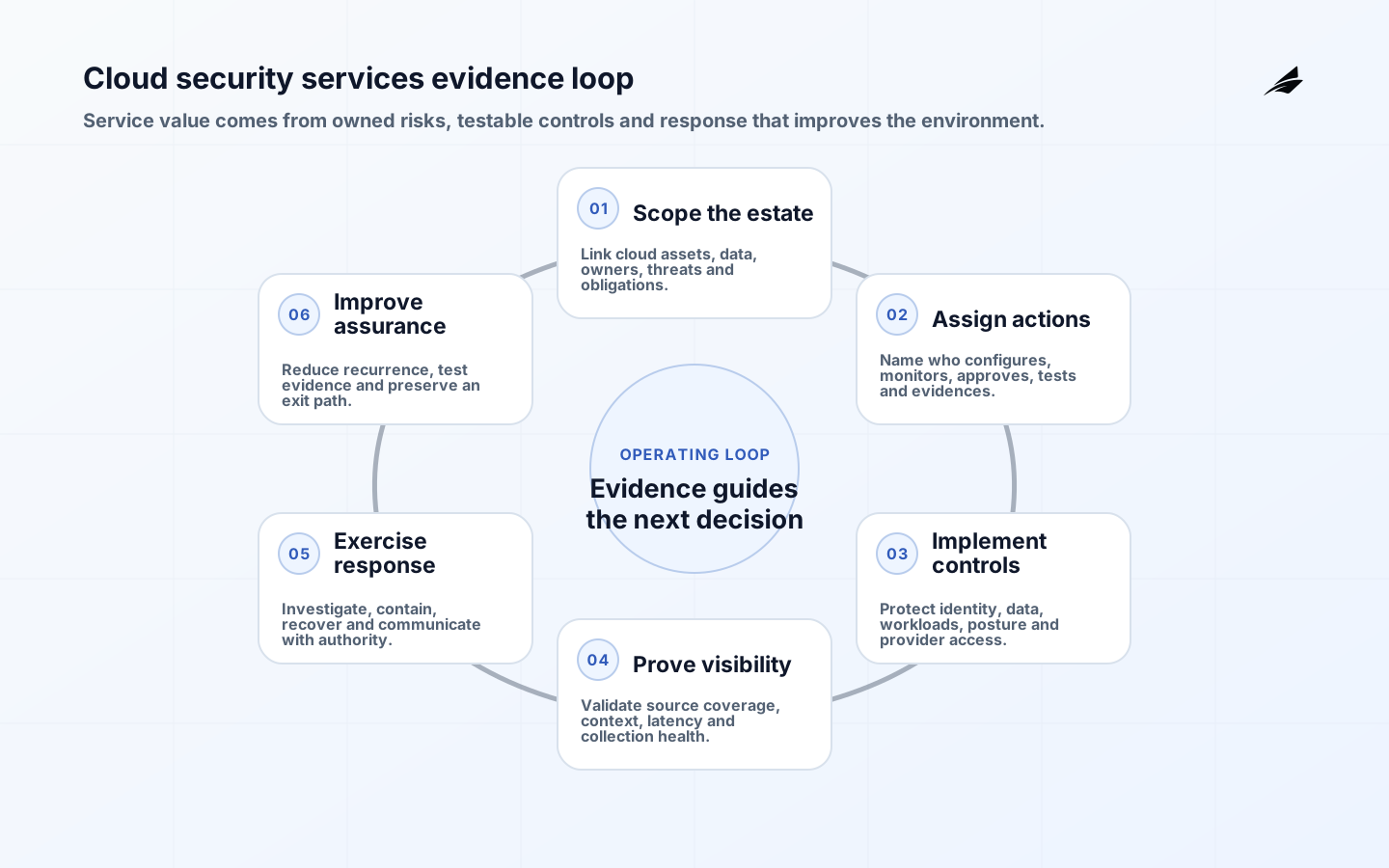
This cloud security services FAQ helps organizations define what they are buying, what remains theirs to do and what evidence should prove the service works. Cloud security may include architecture, identity engineering, posture management, workload protection, data controls, detection, incident response and assurance. No provider can absorb accountability for business risk or repair an undefined ownership boundary. Scope must follow assets, threats, obligations and cloud service models.
Use the cloud security scope guide to frame the engagement and the cloud security implementation checklist for delivery. The managed cloud security FAQ compares continuing operations. These services overlap, but a one-time architecture review, a managed detection service and full security operations have different staffing, access and evidence requirements.
What do cloud security services include?
A complete scope may cover governance, cloud inventory, account or subscription foundations, identity, network, workload, application, data, keys, logging, vulnerability management, detection, incident response, resilience and supplier assurance. Select only what addresses the target environment, but record excluded responsibilities. The NIST Cybersecurity Framework 2.0 provides outcome language across Govern, Identify, Protect, Detect, Respond and Recover, allowing buyers to describe needed outcomes without dictating one vendor tool.
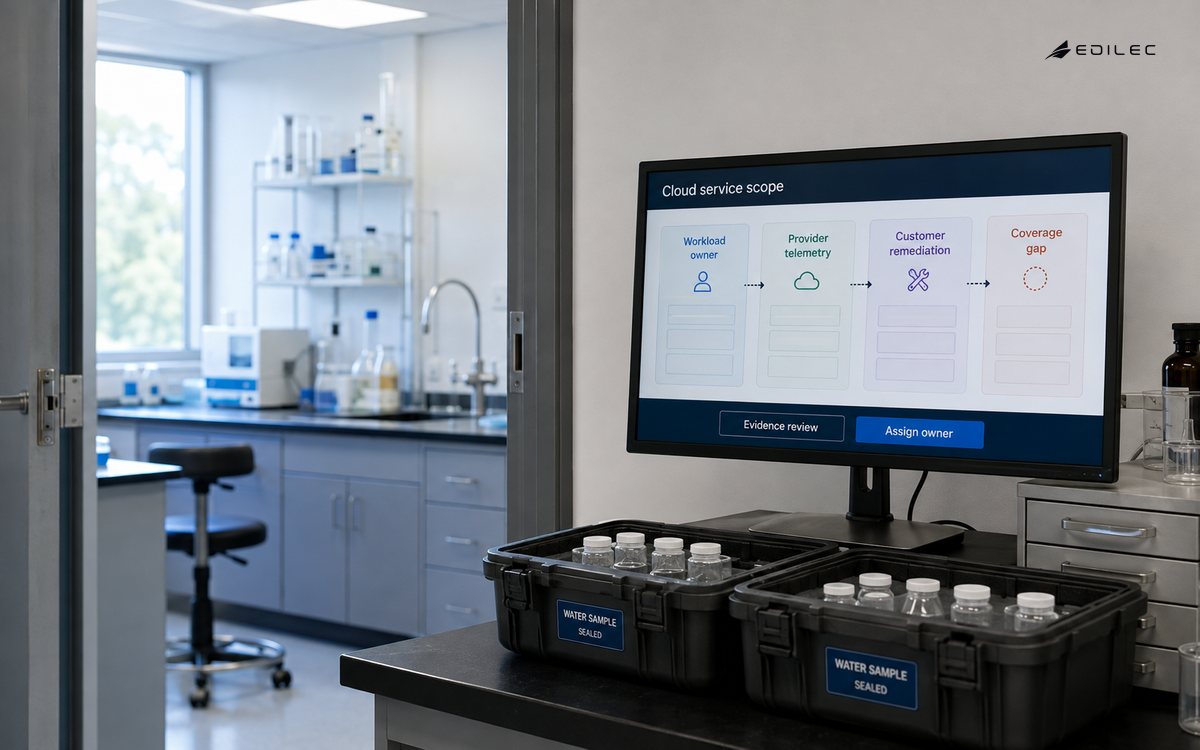
Start with a service inventory tied to business owners and data. Include infrastructure, managed databases, serverless functions, SaaS tenants, pipelines, identities, external integrations and security tooling. Classify consequence and regulatory scope. Security work on an unowned inventory becomes dashboard maintenance: findings accumulate while nobody has authority to change the workload. Require a route from every high-priority signal to a named remediation or risk-acceptance owner.
| Service component | Provider deliverable | Customer decision |
|---|---|---|
| Architecture | Target patterns and threat model | Risk tolerance and approved exceptions |
| Posture | Inventory, policy checks and findings | Remediation ownership and deadline |
| Detection | Use cases, telemetry and triage | Business context and escalation authority |
| Response | Containment support and evidence | Legal, operational and communication decisions |
| Assurance | Control tests and reports | Acceptance, treatment and residual risk |
How does shared responsibility affect the service?
Responsibility changes by IaaS, PaaS and SaaS and by provider feature. Build a matrix at the control-action level: who configures, who monitors, who approves, who tests and who retains evidence. The Cloud Security Alliance's current CCM introductory guidance explains cloud-specific controls and provider/customer ownership. It is a useful starting point, but the actual contract and service configuration determine the boundary.
A managed provider becomes another actor, not a replacement for the cloud provider or customer. Define who can change production, disable identities, access content, rotate keys and contact the cloud vendor. Separate advisory access from operational authority. Require time-bound privileged access, strong authentication, customer-owned logging and emergency revocation. If the service uses its own SaaS platform, assess where telemetry is processed, who can see it, how long it is retained and how it is exported at termination.
What identity controls matter most?
Federate workforce access, minimize long-lived credentials and use workload identities instead of embedded secrets. Design roles around tasks and environments, constrain high-impact permissions and review both direct and inherited access. Protect root or break-glass identities separately and test recovery. NIST's Zero Trust Architecture rejects implicit trust based solely on network location; each access decision should consider identity, resource, policy and relevant context.
Cloud permissions are graph problems. A nominally read-only principal may pass a role, alter automation or retrieve a secret that grants broader access. The service should analyze effective paths and risky combinations, then help owners remove them without breaking delivery. Measure privileged identities, stale accounts, standing access, key age and time to revoke. Do not reward a provider for closing low-risk findings while toxic access paths remain.
What is cloud security posture management?
Posture management continuously inventories cloud resources and evaluates configuration against policy. It can reveal public storage, weak encryption settings, exposed management interfaces, missing logs, vulnerable images or broad identities. Findings require context: an internet endpoint may be intended but poorly protected, while a private resource may expose sensitive data through an overprivileged role. Prioritize exploit path, asset value, exposure, compensating controls and change safety rather than severity label alone.
Prevent known-dangerous states through organization policy, infrastructure tests and approved modules where feasible. Detect drift after deployment and preserve exception owner, rationale and expiry. CISA's Cloud Security Technical Reference Architecture discusses shared services, posture management and visibility across cloud migration. A posture service should show reduction in meaningful exposure and recurrence, not only the number of checks it can run.
| Measure | Useful interpretation | Misleading use |
|---|---|---|
| Coverage | Percent of known accounts and services sending required evidence | Claiming protection when inventory is incomplete |
| Critical exposure age | Time a reachable high-impact path remains open | Averaging it with low-risk findings |
| Detection quality | Validated useful alerts by threat scenario | Counting every rule firing |
| Containment time | Time from confirmation to bounded impact | Ignoring approval or evidence loss |
| Recurrence | Reappearance of the same control failure | Closing tickets without fixing the source |
How should cloud detection and response work?
Select telemetry from threat scenarios and investigation needs: control-plane activity, identity, network, workload, data access, key use, security findings and application events. Centralize protected copies, normalize identity and resource context, synchronize time and monitor collection health. CISA's ScubaGear assessment project implements checks against Secure Cloud Business Applications baselines for supported Microsoft 365 services, illustrating the value of testable configuration rather than generic policy prose.
Write detections with purpose, data dependency, severity logic, investigation steps, owner and test cases. Exercise compromised credentials, suspicious role assumption, public exposure, data exfiltration and disabled logging. Automation can enrich and contain, but destructive actions require guardrails and rollback. Preserve original evidence. Agree when the provider may disable a user or isolate a workload without customer approval, and how business continuity is protected during containment.
How should a cloud security provider be assessed?
Evaluate relevant cloud expertise, service boundaries, staffing locations, background controls, secure development, subcontractors, certifications, incident history and customer references. Ask for a demonstration using a representative scenario. Inspect ticket evidence, investigation notes, escalation timing and platform audit logs. Certifications can support assurance but do not prove that your environment is in scope or that the service can handle your threat and recovery requirements.
Contract for onboarding, telemetry ownership, service levels, severity, change notice, vulnerability response, breach notice, investigation cooperation, audit rights, data location, retention, return, deletion and exit. Define cost drivers such as accounts, assets, log volume, data retention, cases and response hours. Avoid incentives based mainly on alert count. Include transition assistance and machine-readable export so the organization is not trapped by its own security history.
Practical example: protecting a multi-account analytics estate
A manufacturer asks a cloud security provider to cover forty cloud accounts supporting analytics and factory reporting. Initial discovery finds thirty-six in the organization inventory, two separately funded experiments and two acquired accounts with unknown owners. The customer classifies production data pipelines and operational dashboards as critical, assigns business and technical owners, and postpones acceptance until all accounts have a disposition. This prevents an attractive coverage percentage from masking the riskiest unknown estate.
The provider receives federated read access and time-bound response roles. Control-plane, identity, network, storage and workload telemetry flow to both the provider platform and a protected customer archive. Joint tests create a risky public policy, unusual role assumption, logging change and large data read. Analysts must identify the account, effective identity path, affected dataset, likely impact and recommended containment. The customer approves disruptive action because factory reporting cannot be isolated casually during production hours.
Posture findings are ranked by attack path and data consequence. A public test bucket is closed quickly, but a broad automation role receives priority because it can reach production data even though it has no public endpoint. Engineering replaces the role through an approved module, and recurrence monitoring confirms that new accounts inherit the boundary. Service reporting shows critical exposure age, telemetry health, useful detections, containment exercise time and overdue customer actions rather than a raw alert count.
Before annual renewal, the manufacturer exports cases, evidence, effective policies and open risks, tests provider-user revocation and compares unit cost with internal operation. The provider is retained because investigations improved and recurring identity paths declined, not because every finding disappeared. The example demonstrates an evidence loop in which inventory, responsibility, visibility and response produce an owned security decision and preserve leverage if the provider later changes. Remaining findings stay linked to asset owners, treatment dates and accepted business consequences rather than disappearing from a provider scorecard.
The customer also samples closed cases against raw evidence and interviews workload owners about remediation quality. This catches technically correct alerts that arrive without enough context to support a safe change and keeps assurance connected to the people who own production.
Key takeaways
- Scope services from owned assets, threats and obligations.
- Translate shared responsibility into control-level actions and evidence.
- Protect provider access and keep customer-controlled audit records.
- Prioritize effective attack paths, not raw configuration counts.
- Test detections and containment with representative cloud scenarios.
- Measure risk reduction, recurrence and response quality, then improve controls.
Frequently asked questions
Do native cloud security tools remove the need for a service provider?
Not necessarily. Native tools provide valuable telemetry and controls, but people must architect, configure, investigate and improve them. An organization with sufficient capability may operate directly; others may use a provider for selected gaps.
Can cloud security services guarantee compliance?
No. A provider can implement and test controls and produce evidence, but compliance depends on legal scope, business processes, customer responsibilities and assessor or regulator judgment. Contracts should avoid absolute guarantees.
Conclusion
Cloud security services are effective when they turn a known cloud estate into tested controls, useful detection and accountable response. Define the boundary, retain visibility, constrain provider authority and measure whether meaningful exposure declines. That evidence supports a deliberate decision to expand, change or exit the service instead of renewing an opaque stream of alerts.