Security managed cloud services supply people, process and tooling to operate defined cloud controls. The provider may maintain secure configuration, monitor identities and workloads, triage alerts, coordinate incidents, track vulnerabilities and produce assurance evidence. The customer still owns business risk, data decisions, legal obligations and supplier oversight. A sound buying plan therefore specifies control work and decision rights rather than purchasing a broad promise to “manage cloud security.”
This guide sets scope, cost drivers, risks and delivery gates. Use the managed cloud implementation checklist during transition, the security managed cloud FAQ for stakeholder questions and the worldwide managed cloud plan when jurisdiction and follow-the-sun operations matter.
Define the business service and cloud estate
Inventory providers, organizations, tenants, accounts, regions, workloads, data classes, identities, networks, clusters, pipelines, SaaS dependencies and existing security tools. Map critical business services and recovery objectives to those resources. Specify whether new resources enter scope automatically and how unknown ownership is resolved. Exclusions need a reason, compensating control, risk owner and expiry. Scope should distinguish production, non-production, acquisitions, sandboxes and partner-managed accounts because their operating authority may differ.
Define service modules precisely: landing-zone governance, cloud posture, identity, vulnerability, workload protection, logging, detection and response, data protection, backup assurance, compliance evidence and cost controls. The CISA cloud reference architecture links shared services, migration and posture management. Use that dependency view to avoid buying isolated scanning while identity, software delivery or recovery remains unowned.
| Scope module | Included activity | Explicit boundary |
|---|---|---|
| Cloud posture | Policy evaluation, triage and approved remediation | Application-specific risk acceptance |
| Identity | Privileged monitoring and access operations | Workforce authority and role design |
| Detection | Telemetry, rule maintenance and alert triage | Business incident command and notification |
| Vulnerability | Discovery, prioritization and workflow | Code ownership and approved downtime |
| Resilience | Backup monitoring and restore execution | Recovery objectives and business validation |
Allocate responsibility and authority
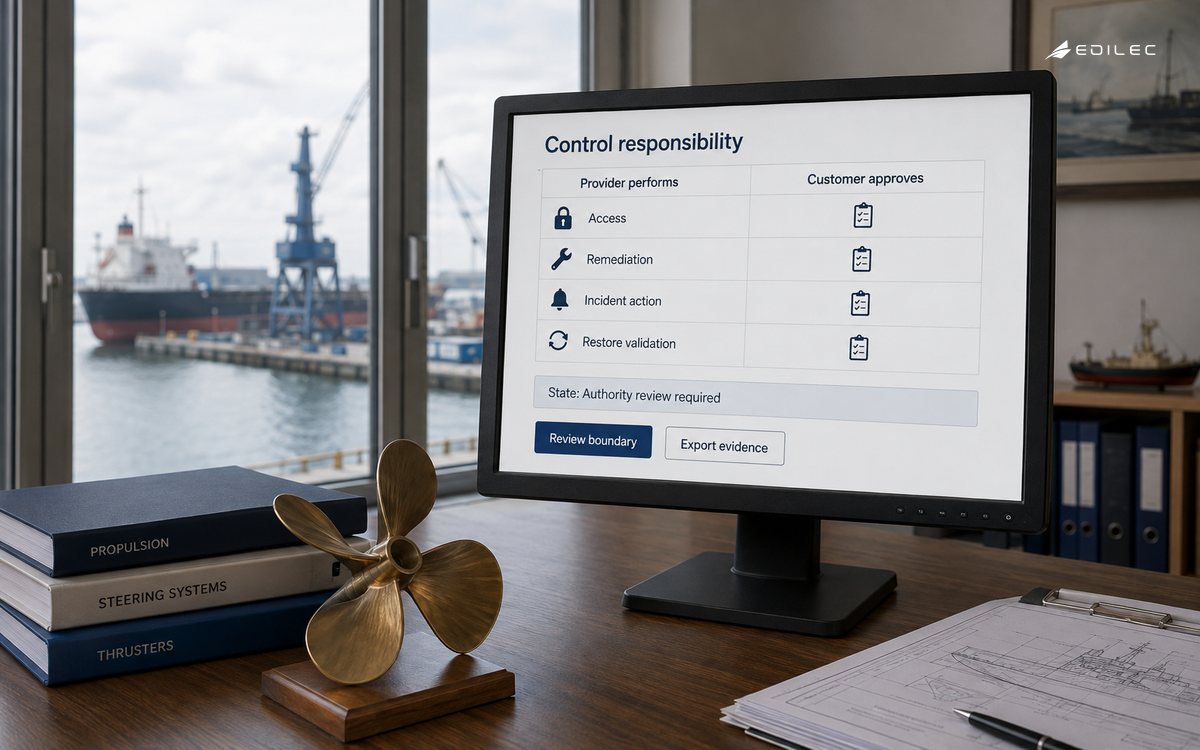
Cloud shared responsibility already divides work between provider and customer; a managed provider creates a third operational party. Use the Cloud Controls Matrix to organize domains, then write resource-level responsibility. For each control record performer, approver, evidence, cadence, service level, escalation and exception authority. Do not use “shared” as the final owner. Include cloud-provider escalation for platform incidents.
Provider access should be federated, attributable, least-privileged and time-bounded. NIST zero trust guidance supports evaluating access based on identity and context rather than network location. Define which containment actions the provider may take without waiting, such as revoking its compromised identity, and which require customer command because they could interrupt service or affect evidence. Test revocation and emergency access before go-live.
Model cost and commercial units
Common price drivers include accounts, resources, identities, endpoints, clusters, data volume, log ingestion and retention, regions, support hours, compliance obligations, integrations, incident retainer and remediation authority. Ask every bidder to price the same reference estate and show unit assumptions, bands, minimums and overages. Separate discovery and transition from recurring operations, projects and major incident work. Identify cloud consumption and tool licenses that remain customer charges.
Cost allocation depends on resource ownership and metadata. The FinOps allocation capability describes mechanisms for associating cloud cost with accountable structures. Require the security provider to preserve owner and service context in findings, including the cost of security services themselves. Cheap scanning can become expensive when every remediation is a separately billed change or raw evidence requires premium retention.
Evaluate providers with evidence
Use scenarios, not only questionnaires. Give providers an unknown public resource, disabled logging, risky privileged change, vulnerable workload, backup failure and suspected data exfiltration. Ask them to show discovery, context, triage, action, communication and evidence. Inspect supported cloud services and regions, rule ownership, integration methods, automation safeguards, staff qualifications, subcontractors, data locations and customer access to raw records. Request a sample monthly report populated with realistic exceptions.
Certifications and assurance reports are inputs, not proof that your controls will operate. Map their scope and period to the proposed service. Review material exceptions and complementary customer controls. Ask how the provider detects its own tooling failure, separates customers, secures support access and responds to a compromise of its platform. Evaluate financial health and concentration: one provider may depend on the same cloud and identity services as the customer.
Deliver through six acceptance gates
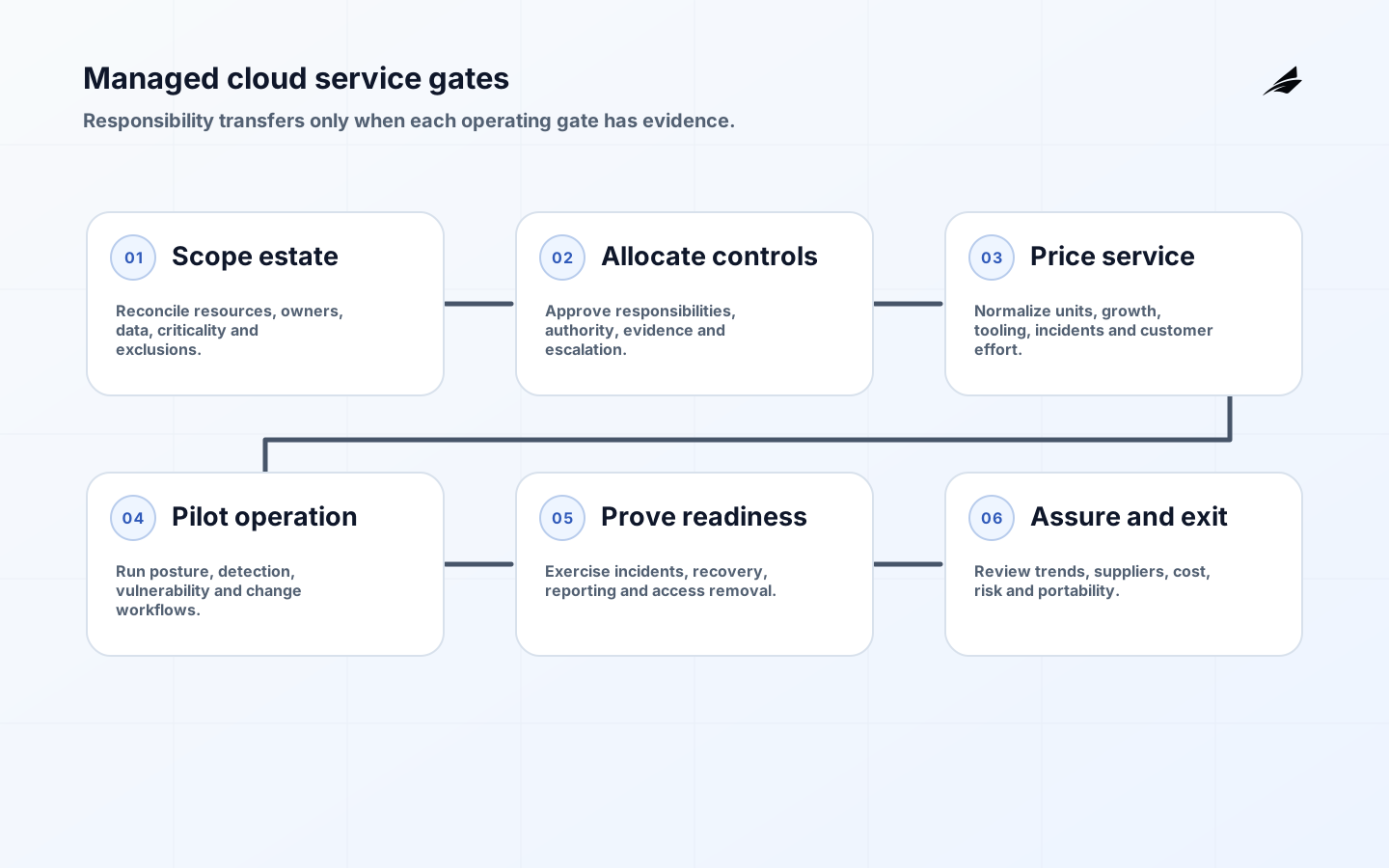
Gate one accepts reconciled inventory and criticality. Gate two approves responsibility and authority. Gate three establishes federated access, baselines, logs, retention and integrations. Gate four pilots posture, detection, vulnerability and change workflows. Gate five exercises incident and restore scenarios. Gate six accepts reporting, residual gaps and steady governance. Each gate needs evidence, approvers and entry criteria; a calendar date alone should not transfer responsibility.
During onboarding, compare applicable secure configuration with current state. Use relevant CIS Benchmarks as technical inputs, not automatic policy. Triage inherited gaps into immediate remediation, accepted exception or dated backlog. Run old and new monitoring in parallel long enough to compare visibility, but define duplicate case handling. Verify that telemetry timestamps, identities and resource context survive ingestion.
Set service levels and reporting
Measure provider-controlled work: inventory discovery, telemetry freshness, alert triage, authorized containment, policy evaluation, evidence delivery and restore execution. Define severity, clock start, pauses, exclusions and source. Avoid using cloud uptime as the managed security provider’s primary SLA. Pair speed with quality, such as triage time with reclassification and recurrence. Require a corrective plan when a target fails repeatedly; credits alone do not restore control.
| Measure | Definition | Buyer question |
|---|---|---|
| Estate coverage | Observed in-scope resources divided by reconciled inventory | Can the service see its promised scope? |
| Telemetry freshness | Required sources arriving within approved delay | Would responders see current activity? |
| Triage quality | Severity decisions upheld after review | Is rapid triage also accurate? |
| Remediation age | Open risk by criticality and approved due date | Are findings becoming safer? |
| Restore proof | Representative service restored and reconciled | Can recovery meet the business objective? |
Control the major delivery risks
The largest risks are incomplete scope, excessive provider privilege, alert noise, missing evidence, unsafe automation, vendor lock-in and unclear incident command. Control them with reconciliation, time-bounded access, coverage metrics, sampled evidence, staged automation and tested exports. Track subcontractor and platform changes. An automated remediation should have applicability checks, change records, rollback and a stop mechanism; a scanner finding alone is insufficient authority to alter production.
Align incidents with the customer program. NIST SP 800-61 Revision 3 integrates response across cybersecurity risk management. Rehearse cloud identity compromise, public data and destructive change. Decide who preserves evidence, contacts the cloud provider, approves interruption, communicates externally and validates recovery. Include supplier breach notification and cooperation in the agreement.
Govern operation and preserve exit
Run operational reviews for coverage, incidents, exceptions, vulnerabilities, access and cost, with periodic executive review of residual risk and concentration. The customer needs retained cloud and security competence to challenge results. Review rules and baselines after architecture changes. Track provider-caused incidents and near misses openly. Use sampled resources to verify dashboard claims and maintain independent access to critical evidence.
Contract for export of inventory, policies, exceptions, rules, cases, logs and reports in usable formats. Keep customer ownership of tenants and keys where feasible. Test export and provider access removal during normal service. Define transition assistance, overlap, deletion evidence and unresolved-case transfer. Exit readiness protects against poor performance, supplier failure and strategic change; it should be reviewed before renewal, not after termination.
Key takeaways
Before final signature, run a tabletop involving the buyer, provider and one critical application owner. Follow a compromised privileged identity through detection, authority, containment, business impact, evidence and recovery. Record every unanswered handoff as a contractual or transition action rather than assuming operations will resolve it later.
Normalize a proposal with a worked example
Assume an estate has 40 accounts, 900 virtual machines, 60 clusters, 8,000 workforce identities, three regions, 12 terabytes of security logs per month and twenty-four-hour critical alert coverage. Ask each provider to calculate recurring service, tool, ingestion, retention and overage charges for that exact profile. Then add a twenty-percent resource increase, a doubled log month and one major incident. This reveals whether apparently fixed pricing depends on low data volume, narrow response hours or excluded containment.
Apply the same normalization to staffing and obligations. How many named service roles are included? Which languages and jurisdictions are covered? Are cloud-provider cases, vulnerability remediation, application telemetry and recovery exercises included? What customer effort is assumed? Request invoices for the base, growth and incident scenarios. A transparent high price can be more controllable than a low headline fee with volatile units and mandatory professional services.
Plan timeline by evidence, not calendar
A bounded pilot may transition in weeks, while a fragmented multi-cloud estate can take months. Sequence critical services after foundations but before the team loses access to incumbent knowledge. Set target dates for discovery, responsibility approval, integration, pilot, exercises and acceptance, then attach exit criteria to each. Track assumptions such as customer access, data retention approval and application-owner participation. When one is late, expose its effect on coverage rather than keeping a nominal go-live date.
- Buy named control activities for a reconciled estate, not a general security promise.
- Price the same reference scope and expose units, overages and excluded remediation.
- Transfer responsibility only through evidence-based transition gates.
- Measure coverage, quality and recovery alongside response speed.
- Retain customer authority, independent evidence and a tested exit route.
Security managed cloud services FAQ
Can a managed service replace the internal cloud security team?
It can reduce operational load and supply specialist coverage. The customer still needs owners for policy, architecture, data, incident authority, legal decisions, risk acceptance and supplier assurance. The retained team can be lean, but it must be competent and empowered.
Conclusion
Security managed cloud services work when the provider’s operating reach and the customer’s governing authority are both explicit. Scope the estate, test the handoffs, price the real workload and preserve evidence. That creates a service that can improve cloud protection without obscuring accountability.