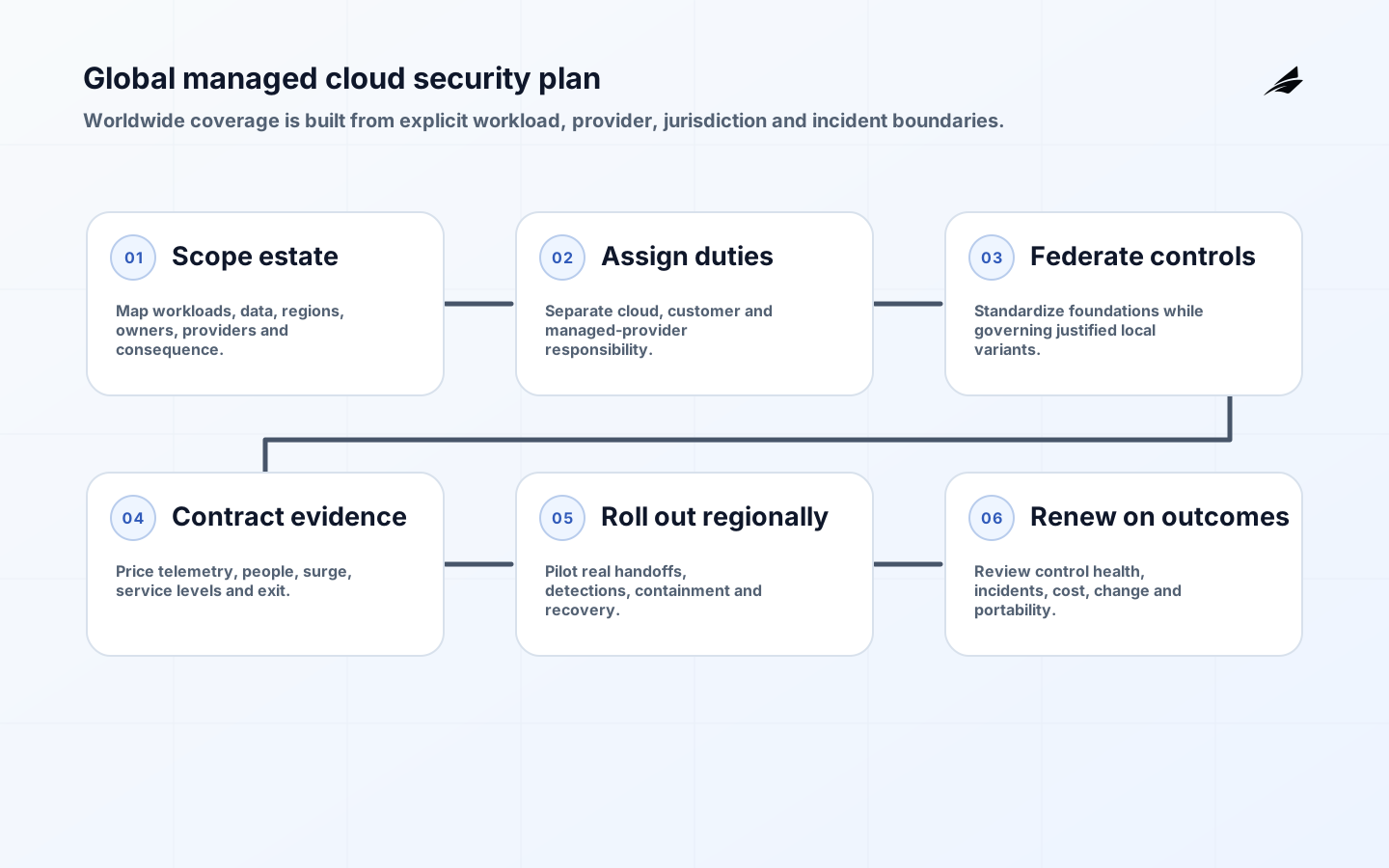
Worldwide managed cloud security is the continuing governance, engineering, monitoring and response used to protect cloud workloads across countries, business units and providers. A global contract does not create a uniform risk environment: laws, available services, data locations, support coverage and incident-notification duties vary. This scope, cost, risks and delivery plan helps buyers define a service that remains accountable at those boundaries.
Delivery teams can pair this plan with the worldwide managed cloud security implementation checklist and worldwide managed cloud security FAQ. Buyers comparing narrower arrangements should also review the managed cloud security scope guide. Begin with the workload and consequence inventory, not a promise of universal tool coverage.
Define the worldwide managed cloud security scope
Inventory organizations, accounts, subscriptions, projects, regions, workloads, identities, data classes, internet exposure, pipelines and providers. Link each production service to a business owner, recovery objective, legal jurisdiction and support team. Mark acquisitions, laboratories and partner-managed environments whose visibility is incomplete. Scope should state whether the provider advises, configures, monitors, contains, recovers or accepts a combination of duties. Verbs such as oversee and manage are too ambiguous for incident conditions.
Build current and target profiles using the NIST Cybersecurity Framework, which organizes outcomes under Govern, Identify, Protect, Detect, Respond and Recover. Tailor outcomes to cloud architecture and business impact; the framework does not prescribe a product stack. Prioritize crown-jewel services, privileged identities, exposed data paths, software delivery and recovery. Record exclusions and compensating controls, including the date and authority for each accepted residual risk.
Map provider, customer and managed-service responsibility
Cloud service models change the division of labor. AWS's shared responsibility model, Microsoft's cloud responsibility guidance, and Google Cloud's shared responsibility and shared fate guidance describe their respective boundaries. None assigns duties between a customer and its security provider. Create a workload-level responsibility matrix covering prevention, evidence, approval and incident action, then test it in exercises.
For every control, identify the resource owner, policy owner, platform operator, managed provider, cloud provider and incident decision maker. Include SaaS configuration, customer-managed encryption keys, identity federation, endpoints, code repositories, third-party marketplaces and backup. A provider may alert on a risky policy while lacking authority to change it. Conversely, standing remediation authority can increase blast radius. Define bounded automation, approval thresholds, emergency action and retrospective review.
| Service element | Managed provider duty | Customer evidence | Boundary test |
|---|---|---|---|
| Posture | Detect and triage configured misalignment | Approved policy and asset owner | Known bad configuration appears |
| Identity | Monitor privilege and risky sign-in | Joiner, mover, leaver authority | Leaver access is revoked |
| Detection | Maintain rules and investigate signals | Workload context and log delivery | Simulated technique creates case |
| Response | Coordinate and perform authorized action | Incident commander and legal route | Compromised key is contained |
| Recovery | Support clean restoration and validation | Business priority and accepted restore | Regional or account loss exercise |
Choose a federated security architecture
Standardize identity federation, account vending, organization policy, network patterns, logging, key management, vulnerability handling, workload onboarding and evidence export where doing so reduces risk. Preserve local variants required by law, latency, provider capability or operational ownership. Central policy should declare minimum outcomes and exception process; regional teams should retain enough authority to operate and respond. One central console without reliable asset ownership or regional action is visibility, not control.
CISA's Cloud Security Technical Reference Architecture describes shared services, secure cloud migration and cloud security posture management in a federal context. Its architecture is a useful source of control questions, but private and non-US organizations must tailor it. Design telemetry paths for provider outages and region restrictions. Preserve original provider logs and normalized fields so investigators can validate what a cross-cloud platform interpreted.
Calculate complete global service cost
Model baseline engineering, onboarding, licenses, cloud-native services, log ingestion and retention, data transfer, threat intelligence, scanning, case management, automation, 24-hour staffing, language coverage, regional entities, audits, exercises, travel, provider support and exit. Price demand units such as accounts, resources, identities, events, gigabytes, cases and investigations. Volume discounts can hide architectural waste; retaining every debug event in a premium analytics tier may consume more budget than targeted detection engineering.
Compare insourced, co-managed and fully managed scenarios using the same duties and service levels. Include customer effort: policy decisions, remediation, application context, legal assessment and recovery cannot all be outsourced. Model growth, currency and supplier price change. A low monthly rate with narrow log allowance and expensive overage may be unsuitable for incident bursts. Require transparent usage reports and a route to tune collection without deleting evidence needed by law or investigation.
Contract service levels and evidence
Specify supported providers, regions, languages, hours, severity, alert acknowledgment, investigation, notification, containment authority, evidence preservation, recovery support and reporting. Distinguish the provider's service objective from the customer's regulatory deadline. Contract for named subcontractor categories, location of service data, breach cooperation, secure development, vulnerability handling, audit evidence, continuity, data return and verified deletion. Confirm how conflicts between local law and central instruction are escalated.
Detection service levels need a starting event. Time from provider receipt is different from time from malicious activity, especially when logging is disabled or delayed. Measure source coverage and pipeline health alongside investigation time. Include change notice for parsers, analytics, automation and service locations. Preserve the ability to export rules, cases, timelines and evidence in usable formats. Transition assistance should be exercised before contract end, not discovered during a dispute.
| Cost or risk driver | Planning question | Contract or design response |
|---|---|---|
| Telemetry growth | Which sources and retention support named detections? | Tier data and expose unit usage |
| Regional coverage | Where must analysts and evidence reside? | Named delivery locations and alternates |
| Automation authority | What can change without approval? | Guardrails, limits and rollback |
| Provider concentration | What fails with one console or identity plane? | Native evidence and independent access |
| Incident surge | How many concurrent cases are supported? | Surge capacity and prioritization rule |
| Exit | Can history and logic move? | Tested formats, deletion and transition plan |
Deliver worldwide managed cloud security in waves
Pilot one representative region and a small portfolio containing identity, network, compute, data and a delivery pipeline. Establish inventory, policy, telemetry, cases, contacts and safe remediation. Test benign attack simulations, lost logging, unavailable analysts, compromised credentials and local notification. Record baseline detection and recovery. A pilot that covers only clean greenfield accounts will not expose ownership, inherited policy and unsupported-service problems found in the wider estate.
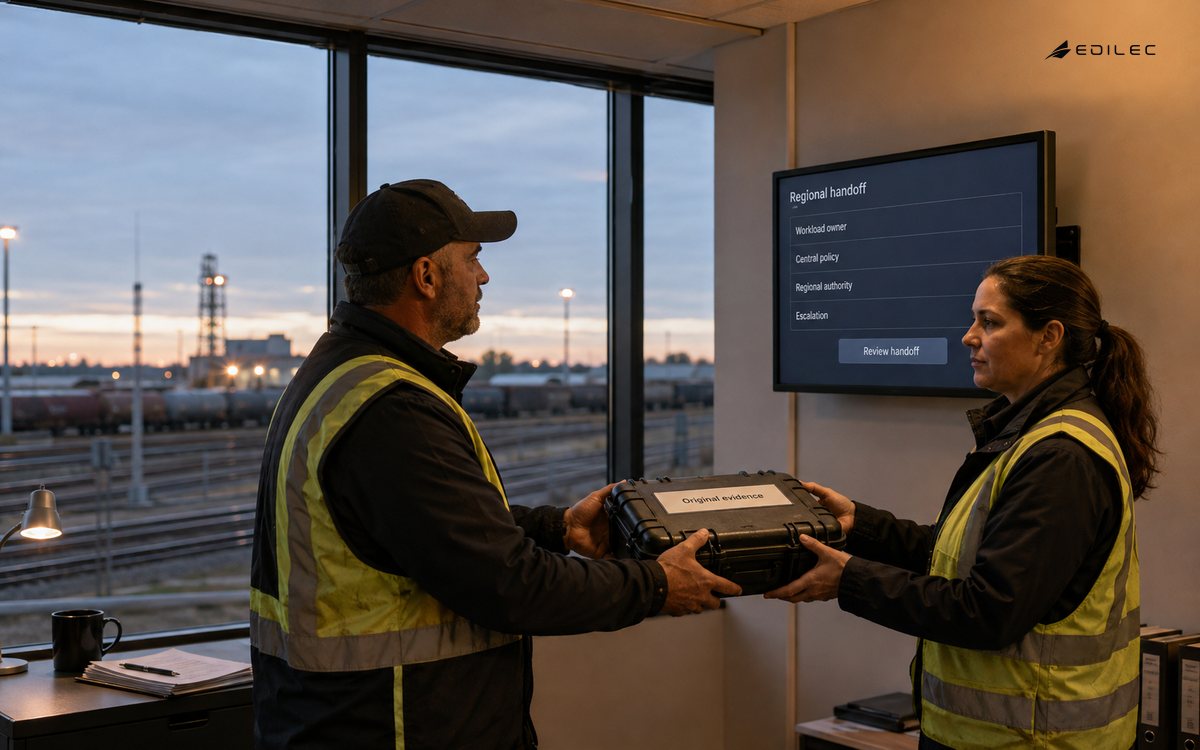
Expand by risk and dependency, not account count alone. Each wave needs an owner, data-flow review, log-quality tests, rule validation, runbook, exercise and acceptance. Keep prior monitoring active until coverage is reconciled. Close temporary access and duplicate routes after cutover. Use regional champions and follow-the-sun handoffs with one incident vocabulary. Review lessons after every wave and change the standard when evidence shows it is impractical or incomplete.
Measure security outcomes and renew the design
Track inventory coverage, policy drift, privileged access age, log source health, detection validation, case quality, time across the full incident path, containment success, recovery evidence, repeat findings, exception age and unit cost. Segment by provider, region and service criticality. Alert volume and blocked events are workload measures, not direct proof of risk reduction. Sample closed cases for reasoning, evidence and missed escalation. Ask application teams whether controls reduce or merely relocate unsafe work.
Quarterly, review threats, architecture changes, provider services, jurisdictions, subcontractors, demand and unresolved risks. Annually, exercise a provider transition and a major cross-region incident. Re-authorize automation and standing privilege. Retire duplicate tools only after their useful evidence and detections are mapped. Worldwide operation is sustained by explicit local accountability and shared evidence, not by assuming a central contract resolves every boundary.
Example: onboard a regional payments workload
A payments service operating in three regions should enter the managed service as one business workload, not three unrelated cloud accounts. Document settlement and customer-data paths, jurisdictional access, critical identities, provider services and the maximum tolerable interruption. The managed provider can monitor configuration and identity events globally while regional incident commanders retain authority over customer notification and traffic movement. A pilot should disable one log source, expose a nonproduction storage endpoint, use a test credential from an unusual location and simulate regional control-plane loss. Acceptance requires cases to reach the correct queue, responders to obtain original evidence, containment to respect payment continuity and restored processing to reconcile transaction totals.
Expansion should then include the production environment with an approved maintenance window and rollback. Compare native and central findings, verify that cross-border log transfer follows the approved design, and measure investigation from event occurrence rather than console receipt alone. The contract owner should confirm that surge retention and investigation do not trigger unplanned overage. This workload-centered exercise reveals responsibility and evidence gaps that an estate-wide posture scan cannot show.
Key takeaways
- Scope workloads, jurisdictions and incident verbs precisely.
- Map cloud, customer and managed-provider duties at workload level.
- Federate standards while preserving justified regional operation.
- Price telemetry, people, customer effort, surge and exit together.
- Scale only after control, handoff, response and recovery exercises pass.
Frequently asked questions
Does a global SOC create worldwide managed cloud security?
No. A SOC may centralize monitoring and coordination, but asset ownership, lawful action, provider configuration and recovery remain distributed. The service needs tested regional decision and escalation paths.
Should native cloud security tools be replaced?
Not automatically. Native tools often provide the earliest configuration context and durable fallback. Integrate or replace them only after comparing detection, evidence, cost, response and outage behavior for each workload.
Conclusion
Worldwide managed cloud security succeeds when responsibility remains clear across every provider and jurisdiction. Define outcomes, architecture, authority, complete cost and service evidence; pilot the real boundaries; then expand through tested waves. The durable product is not a global dashboard but a governable ability to prevent, detect, contain and recover wherever the business operates.