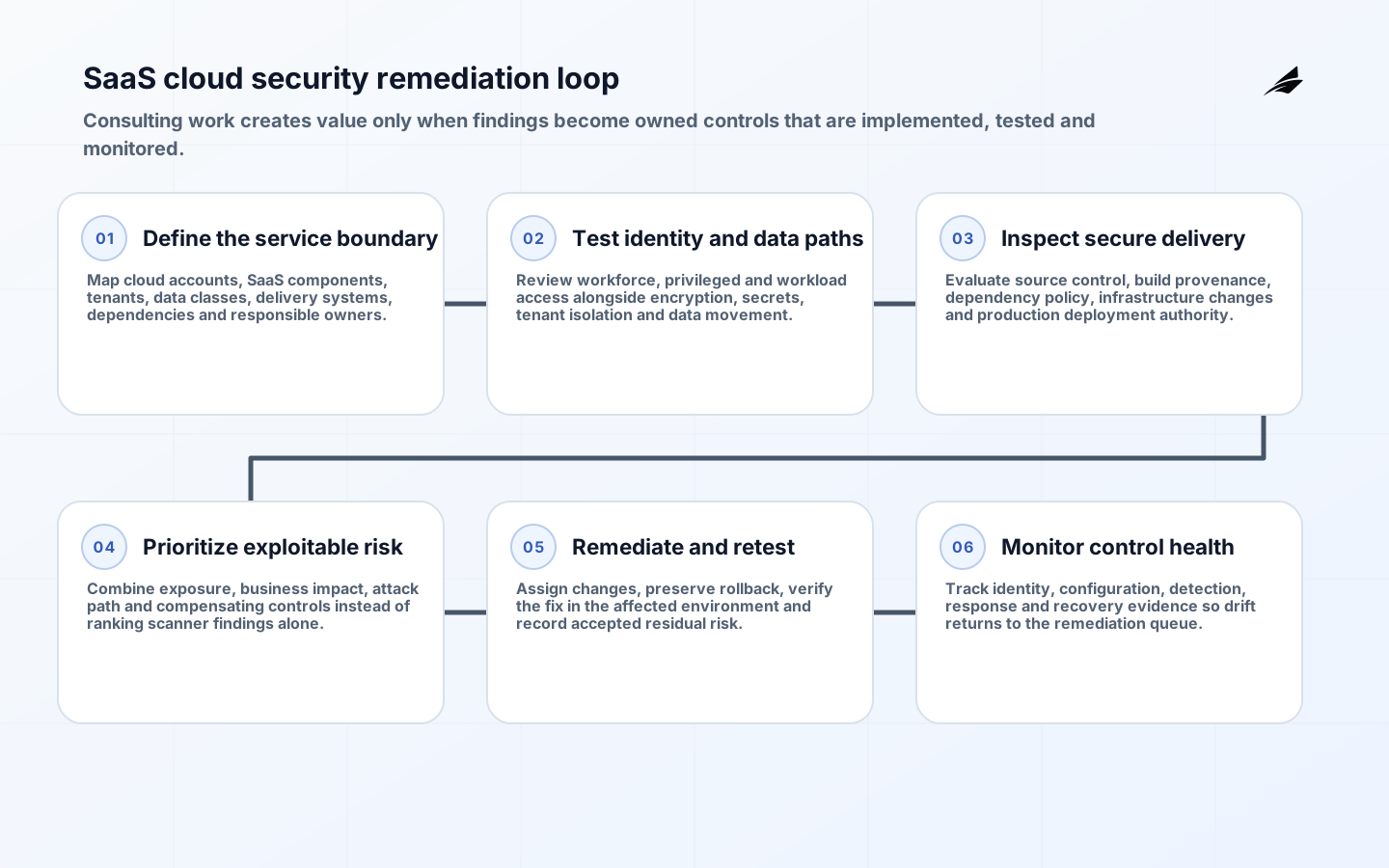
Cloud cybersecurity consulting for a SaaS company should improve the security of a running product, not end with a generic maturity score. The engagement needs to connect cloud accounts, identities, tenant data, application design, software delivery, detection, incident response and customer assurance. It should identify a small number of credible risk scenarios, verify how current controls behave, and produce changes the product and platform teams can own.
This guide explains how to scope, cost and sequence that work. The SaaS cloud security implementation checklist and SaaS cloud security FAQ provide follow-on detail. Teams that need a broader assessment-to-roadmap method can use the cloud security consulting guide.
Define the engagement outcome and risk scenarios
Choose outcomes such as reducing tenant data exposure risk, constraining privileged access, improving release integrity, proving recovery or making customer assurance evidence reliable. Avoid a scope that simply lists every security domain. Write credible scenarios: a compromised support identity accesses another tenant, a build credential modifies production, an exposed storage policy leaks exports, or an attacker persists because audit data is incomplete. Scenarios make architecture and control testing concrete.
Identify product, platform, security, privacy, legal and support stakeholders. Name the executive risk owner and the people who can change cloud configuration, application code and operating process. Define environments, cloud organizations and regions in scope, along with exclusions and access limits. Agree how urgent findings will be communicated before waiting for a final report.
| Workstream | Questions | Deliverable |
|---|---|---|
| Architecture | Where are trust, tenant and internet boundaries? | Current-state diagrams and material risk paths. |
| Identity | Who can change production or access customer data? | Privilege model, toxic combinations and remediation. |
| Data | What is collected, encrypted, retained, exported and deleted? | Data-flow and lifecycle control assessment. |
| Delivery | Can source, build or deployment be tampered with? | Pipeline threat model and release evidence plan. |
| Operations | Can the team detect, contain and recover? | Telemetry gaps, runbooks and exercise results. |
| Assurance | Which claims must be supported for customers? | Evidence map with owners and refresh cadence. |
Map shared responsibility to the actual SaaS architecture
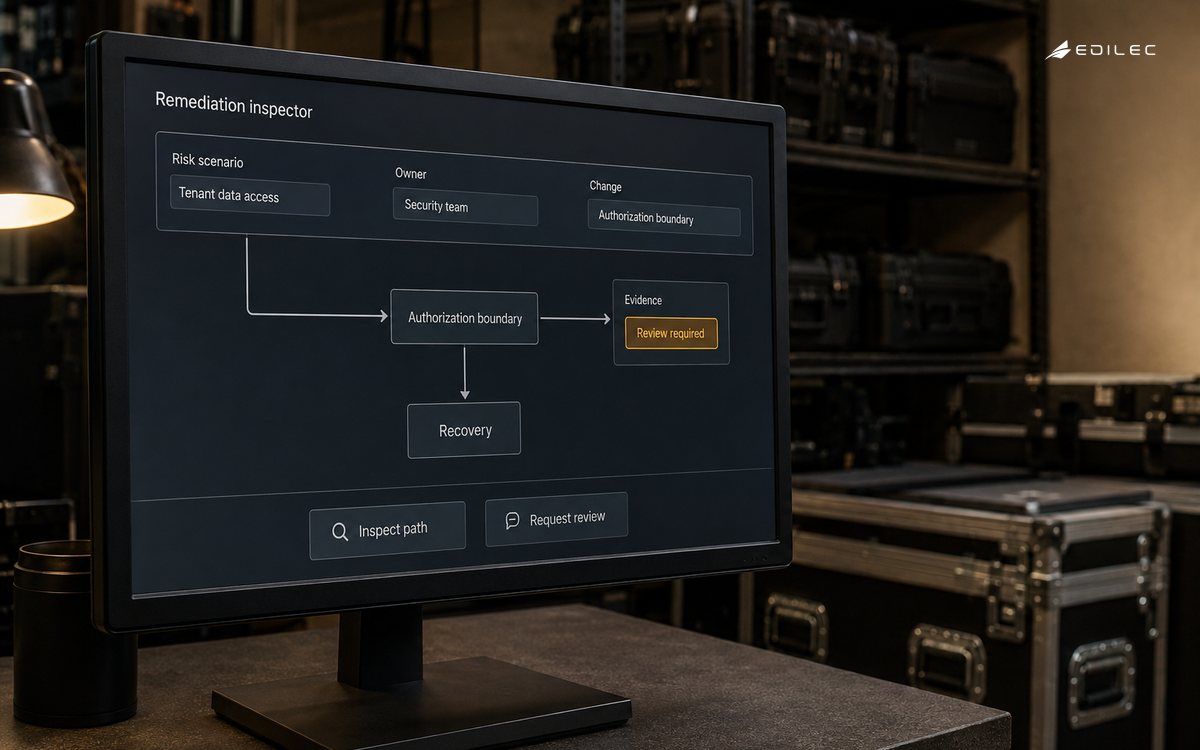
Cloud provider responsibility does not decide tenant authorization, application logic, data purpose, identity design or secure configuration. Map each material service to provider, SaaS company and third-party responsibilities. Review organization policies, accounts, networks, workloads, managed services, SaaS dependencies and endpoints. Identify where a managed service reduces operational work but leaves configuration and data choices with the customer.
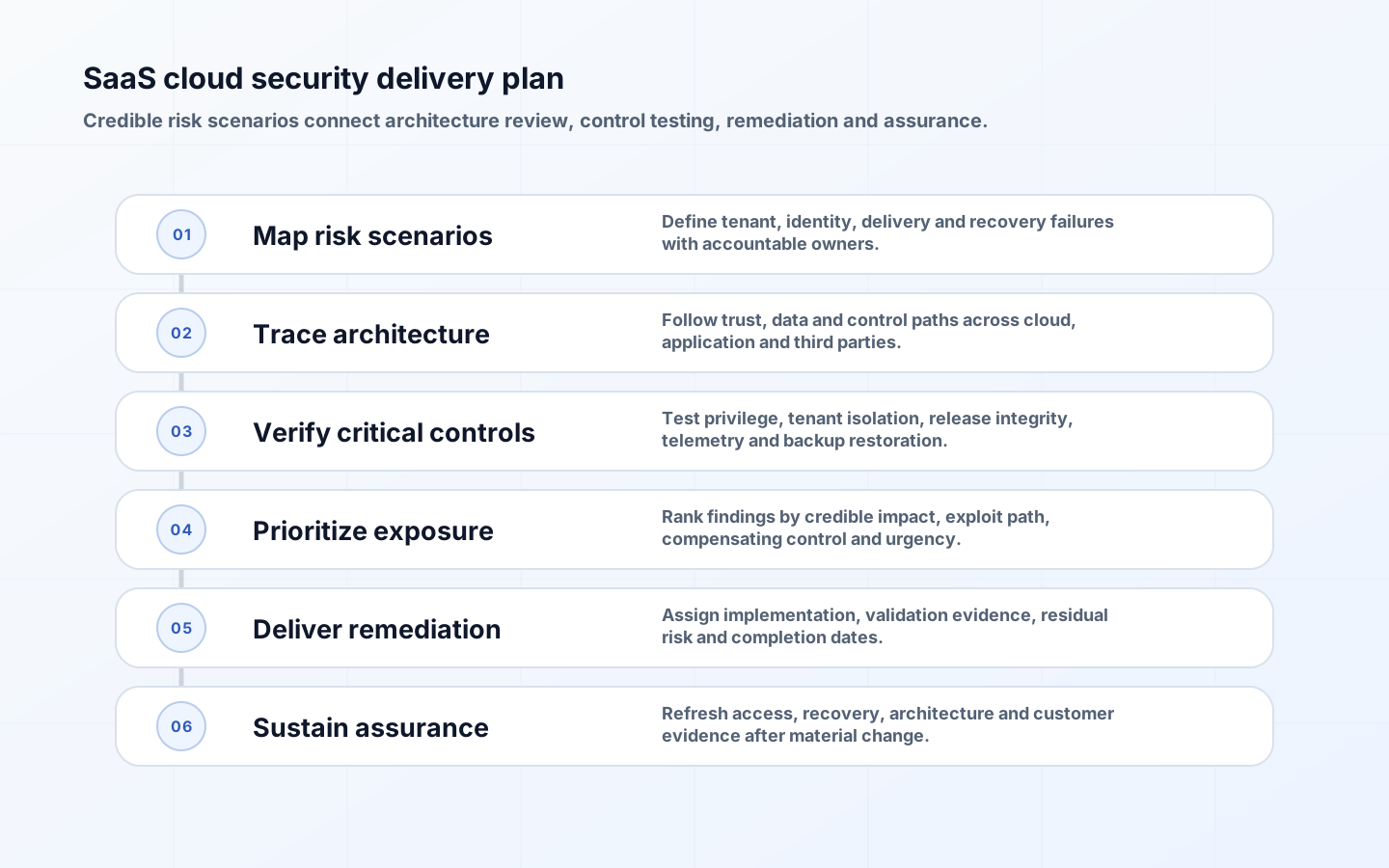
For multi-tenant systems, trace identity and tenant context from the edge through services, jobs, caches and data stores. Verify object-level authorization and administrative impersonation. Review isolation at compute, network, storage, encryption and operational-access layers according to threat. A diagram should show data and control paths, not merely cloud product logos.
Prioritize identity and tenant data controls
Inventory workforce, workload, customer and emergency identities. Find standing administration, shared accounts, dormant roles, weak federation, long-lived keys and unmonitored support access. Establish least privilege, stronger authentication, just-in-time elevation and periodic review. Service identities should be scoped, rotated and linked to deployed workloads; secrets should not be copied through CI variables and local files without governance.
Classify tenant, billing, support, telemetry and backup data. Verify encryption and key access, but spend equal attention on authorization, export, retention and deletion. Test whether support tools, analytics and non-production environments preserve tenant boundaries. Review backup protection and restoration. The SaaS company should be able to explain where customer data exists and what happens when a tenant closes.
Assess the software supply chain and release path
Review source control, branch protection, build identities, dependencies, artifacts, deployment, infrastructure code and emergency change. The NIST SSDF provides practices for preparing the organization, protecting software, producing well-secured releases and responding to vulnerabilities. Determine whether a release can be traced to reviewed source and whether build or deployment credentials can bypass controls.
Use the OWASP ASVS to define verifiable application requirements. Threat-model APIs, file handling, webhooks, administrative interfaces and background jobs. Review dependency inventory, vulnerability triage and patch evidence. Test rollback and database migration recovery. A scanner finding is not a complete assessment, and a clean scan does not prove authorization or business logic.
| Priority | Example finding | Decision rule | Evidence of closure |
|---|---|---|---|
| Immediate | Active exposure or path to broad tenant compromise | Contain now; notify incident authority | Configuration or code fixed and affected scope reviewed. |
| High | Material privilege or release-integrity weakness | Remediate in current delivery cycle | Test demonstrates blocked attack path. |
| Planned | Control gap with bounded compensating protection | Assign owner and deadline | Control implemented and operating evidence collected. |
| Accepted | Residual risk within named tolerance | Executive owner records rationale and expiry | Review date and monitoring remain visible. |
Verify detection, response and recovery
Start from the risk scenarios and ask which events would reveal them. Verify identity, cloud control-plane, application, data-access, deployment and security telemetry. Check completeness, time synchronization, tenant context, retention, integrity and access. Alerts need thresholds, owners and runbooks. Test a sample event from generation through collection and investigation rather than assuming enabled logs are usable.
Exercise an incident involving customer data or production access. Evaluate decision authority, evidence preservation, containment, credential rotation, customer and legal communication, recovery and reconciliation. Restore backups into an isolated environment and measure recovery. The NIST CSF 2.0 connects governance, protection, detection, response and recovery; a consulting plan should improve the complete loop.
Estimate cost and timeline from evidence and change
Cost depends on the number of cloud organizations and accounts, architecture complexity, tenant model, regulated data, identity providers, delivery pipelines, integrations, evidence quality and depth of testing. Separate discovery, architecture assessment, control testing, remediation design, implementation support and validation. A fixed fee can work for a bounded assessment; remediation is often better estimated in phases after findings are verified.
Budget internal time as well as consultant fees. Product and platform owners must explain decisions, provide access, review risk and implement changes. Tool costs may include posture management, identity governance, telemetry, testing and evidence automation, but a new product should not be the default recommendation. Ask which risk decision each tool improves and who will operate it after the engagement.
Build an executable roadmap and assurance cycle
Sequence work by attack path, customer impact, dependency and ease of containment. Include quick containment, foundational architecture changes, control automation and operating practice. Each item needs an owner, due state, expected risk reduction, acceptance evidence and residual risk decision. Avoid roadmaps with dozens of equal-priority recommendations and no capacity model.
Map controls to customer and regulatory evidence only after validating their operation. The Cloud Security Alliance's Cloud Controls Matrix can support structured coverage, but mappings are not proof. Define how evidence is refreshed after changes. Schedule architecture, access, recovery and incident reviews so assurance remains current between audits.
Validate remediation against the original attack path
A finding is not closed because a ticket says fixed or a configuration screenshot changed. Reproduce the original precondition and show that the attack path is blocked in the deployed environment. If the issue was broad support access, test object-level authorization, privileged elevation, session logging and emergency use rather than checking only that a role name changed. If the issue was release integrity, trace a new artifact from reviewed source through the trusted builder, policy gates and production digest. Record the test method, environment, result, residual exposure and reviewer. Where direct retesting would risk production, use an isolated equivalent environment and explain the limitation.
Also verify that remediation did not move risk elsewhere. Tighter network rules may break telemetry; shorter credentials may cause unsafe manual renewal; a new data-loss rule may block legitimate export recovery. Review support burden, service objectives and cost after change. High-risk improvements should include a rollback or forward-recovery plan and a monitoring period. Update architecture, runbooks and customer assurance evidence together. This discipline turns remediation from a one-time hardening event into a controlled product change and gives leadership a defensible basis for accepting any risk that remains.
Key takeaways
- Scope cloud security consulting around credible SaaS risk scenarios and accountable owners.
- Map provider responsibility to the configured product and tenant architecture.
- Prioritize identity, tenant data and release integrity before generic hardening lists.
- Test detection and recovery using real evidence paths.
- Fund remediation and ongoing assurance, not only the assessment report.
Frequently asked questions
Is a penetration test enough for SaaS cloud security?
No. A penetration test can reveal exploitable paths in a defined scope and time, but it may not assess identity governance, tenant design, build integrity, retention, monitoring or recovery. Use testing as one source of evidence inside an architecture and operations review. Retest material fixes and preserve scope limitations.
Which security framework should a SaaS company use?
Choose a framework that supports business obligations and customer communication, then tailor it to the product. NIST CSF 2.0 is useful for enterprise risk outcomes; CSA CCM is cloud-focused; OWASP ASVS supplies application requirements. Combining them can be practical if one control owner and evidence record prevents duplicate work.
Conclusion
Effective SaaS cloud security consulting makes risk and ownership clearer. It follows credible attack paths through identity, tenant data, software delivery and operations, then verifies controls and funds change. The result should be a safer product and a team better able to explain, detect and recover from the risks it retains.