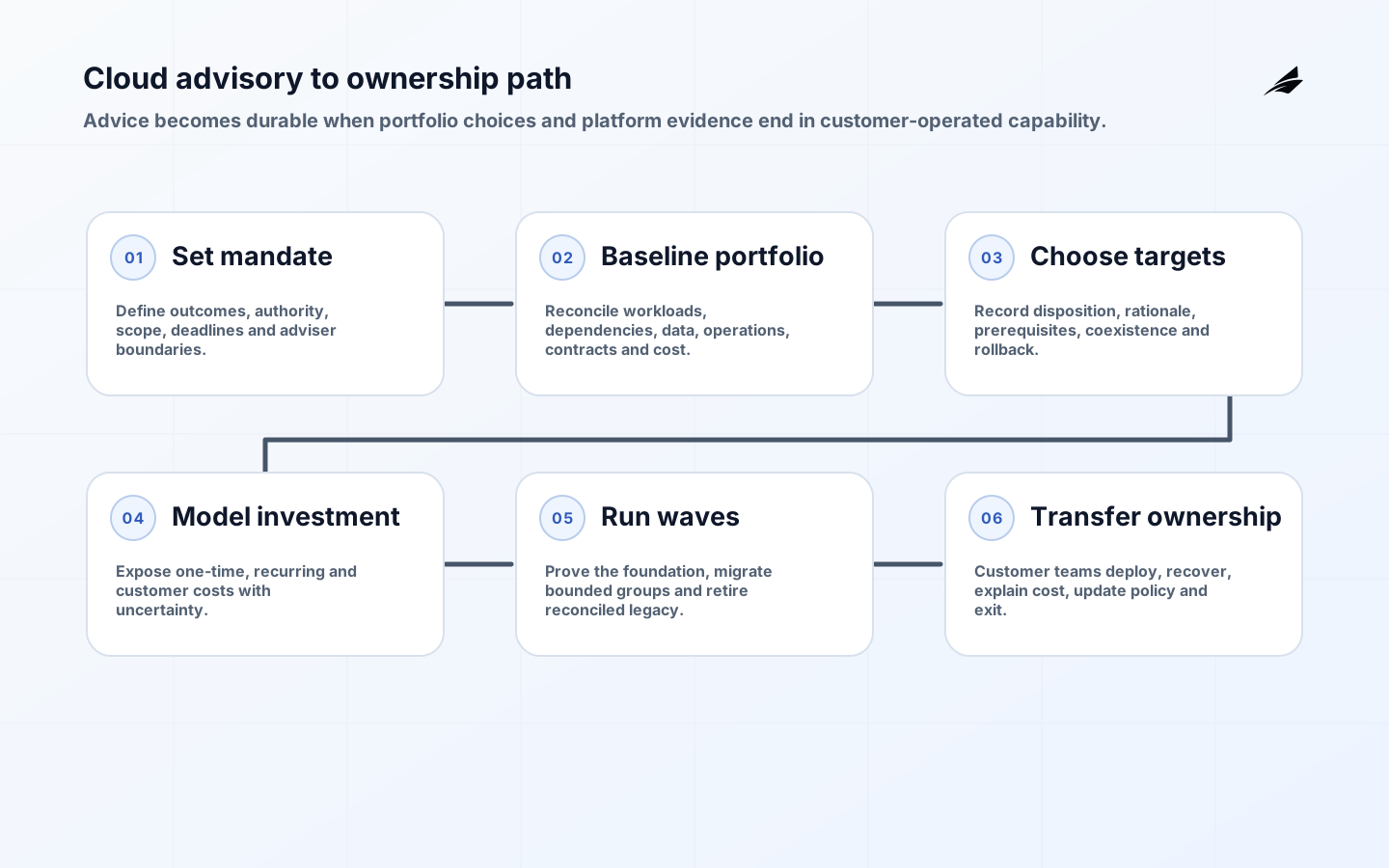
Consulting cloud advisory is valuable when it helps an organization make and execute workload decisions it can later govern itself. A slide deck that recommends cloud in general does not resolve application dependencies, data obligations, operating ownership, cost uncertainty or exit. A credible engagement defines a business mandate, builds a reconciled portfolio baseline, proves the target foundation with real workloads and transfers decision records, automation and operational capability to customer teams.
Use this plan with the cloud advisory strategy guide, the strategy implementation checklist, the cloud advisory FAQ and the advisory delivery checklist. The customer should retain accountable business, technology, security, data, finance and service owners; advisers provide analysis and implementation support, not outsourced accountability.
Define the mandate and decisions
State measurable outcomes such as reducing environment lead time, improving recovery evidence, exiting an expiring facility or enabling a product geography. Define excluded outcomes, risk tolerance, funding authority, decision forums and the date each decision is needed. Clarify whether the work covers strategy, portfolio assessment, landing zone, migration, modernization, operating model, cost governance or supplier selection. Specify deliverables as decisions and executable artifacts with acceptance evidence, not page counts. Record assumptions about skills, contracts, data residency, latency and coexistence.
| Workstream | Useful deliverable | Acceptance evidence |
|---|---|---|
| Business case | Outcome baseline, options and benefit owner | Finance and service owner approve assumptions |
| Portfolio | Reconciled workload and dependency inventory | Sample verified against systems and bills |
| Target platform | Versioned architecture, policy and automation | Representative workload passes controls |
| Wave plan | Sequenced workloads, prerequisites and rollback | Owners accept dates and dependencies |
| Operating model | Named platform, workload and supplier duties | Teams complete an operating exercise |
| Exit | Portability, deletion and termination plan | Export and credential-removal path tested |
Baseline workloads and current operations
Combine automated discovery with interviews, architecture evidence, incident records, bills, contracts and data maps. For each workload capture owner, users, critical journeys, technology, lifecycle, dependencies, data classes, environments, availability, recovery evidence, demand pattern, licenses, support and current cost confidence. Mark unknowns rather than inventing completeness. Validate a sample with people who operate the service. A portfolio record is useful only when it can support a disposition, sequence and cost decision.
Choose workload dispositions and platform boundaries
Compare retain, retire, replace, relocate, replatform and refactor against the business need and constraints. Document rationale, prerequisites, coexistence, migration unit, rollback and acceptance. Do not default every application to a single pattern. NIST distinguishes service and deployment models because responsibility changes across them. Decide what the central platform supplies and what workload teams own, including identity, networking, policy, keys, observability, backup, data and application authorization. Keep a reversible route for uncertain choices.
Estimate cost and commercial exposure
Model one-time discovery, foundation, migration, modernization, testing, data transfer, parallel running, training and retirement. Model recurring compute, storage, requests, network transfer, security, observability, support, licenses and people. Use demand ranges and architecture quantities, not a percentage reduction claim. Separate provider price from total operating cost. Show allocation, currency, taxes, commitment assumptions and uncertainty. Re-estimate after discovery and representative workload proof before buying long commitments. Include the cost of the customer time needed to make decisions and accept work.
| Cost driver | Uncertainty to expose | Control |
|---|---|---|
| Usage | Growth, seasonality and idle capacity | Range and unit forecast |
| Network | Ingress, egress and cross-zone patterns | Traffic model and architecture test |
| Licensing | Mobility, cores and contract restrictions | Vendor confirmation before disposition |
| Delivery | Data quality, interfaces and client decisions | Discovery gate and dependency owner |
| Operations | Support hours, SLO and skills | Target team and runbook exercise |
| Commitments | Stable baseline and term risk | Purchase only after measured usage |
Assign advisory and migration risks
Maintain a live register with cause, consequence, probability, impact, owner, mitigation, trigger and contingency. Typical risks include incomplete inventory, undocumented coupling, data transfer time, unsupported software, security approval, identity design, skills gaps, supplier concentration and delayed retirement. Assign risks to parties able to influence them. Contract for access to methods, source, infrastructure definitions, decision records and cost models. Tie milestones to accepted evidence and define change, subcontractor, incident, audit, data handling and termination duties.
Deliver foundation proof and workload waves
Prove the foundation with a representative workload that exercises identity, policy, connectivity, secrets, telemetry, recovery, deployment and cost allocation. Then run bounded waves grouped by dependency and business impact. Rehearse migration, reconciliation, cutover, rollback and communications. Stabilize against agreed service indicators before moving the next wave. Review architecture quality across operational excellence, security, reliability, performance, cost and sustainability. Retire old resources only after records, traffic, access, backups and supplier charges reconcile.
Transfer cloud operating capability
Customer teams should provision an environment, deploy a representative change, investigate an alert, restore data, explain cost, update policy and remove access before advisory closure. Transfer source, pipelines, inventories, architecture decisions, exception records, runbooks, dashboards and known limitations into customer-controlled systems. Measure outcome progress, workload flow, recovery, policy exceptions, unit cost and adoption. Leave an improvement backlog with owners and dates, and state any residual adviser dependency and its exit condition.
Turn advisory findings into an executable decision pack
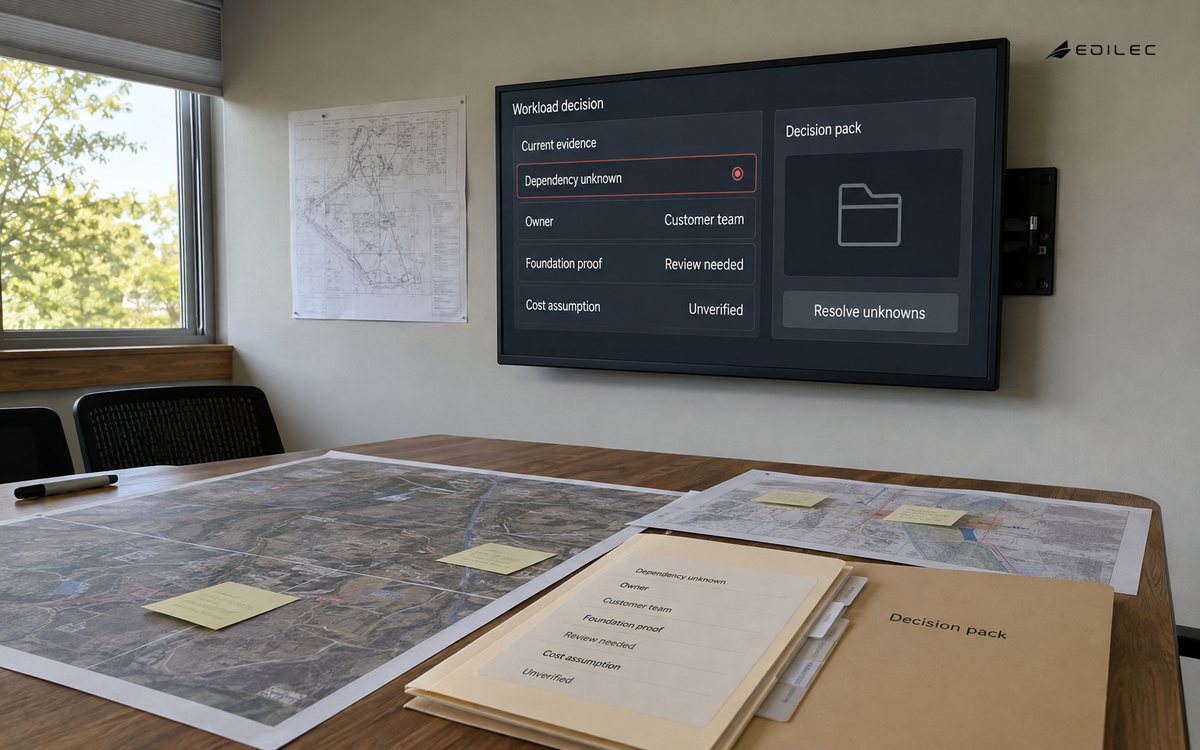
Run an acceptance workshop with the sponsor, application owners, security, finance, operations and delivery leads before final recommendations are approved. Start from the reconciled portfolio, not a presentation summary. Each workload record should show owner, business criticality, dependencies, data constraints, current cost, operational burden, lifecycle state, proposed disposition, prerequisites and confidence. Select a sample that includes a simple candidate, a high-dependency system, a regulated workload and one likely retirement. Ask each accountable owner to confirm facts or record a dispute. Unknown ownership and unverified dependencies are findings that affect sequence and estimate; they are not blanks to conceal with averages.
For each target decision, provide at least two feasible options and the consequence of doing nothing. A customer portal might be rehosted to meet a deadline, replatformed to remove database constraints, retained temporarily while an identity dependency changes, or retired if usage evidence is weak. Compare customer outcome, risk, transition effort, recurring cost, lock-in, operating skills and exit. State assumptions beside the recommendation. A directional architecture diagram should be accompanied by executable evidence such as policy code, an account-vending path, a tested connectivity pattern, a cost model and a restore result from the proposed foundation.
Build the delivery plan from dependency-aware waves. Define entry evidence, migration method, business validation, rollback or forward-repair point, coexistence period and legacy shutdown for every wave. Estimate ranges from workload quantities, data movement, testing, remediation, licensing and customer effort. Show one-time advisory and migration spend separately from platform operation and workload consumption. Include time for access approvals, procurement, change freezes and training. Re-estimate after the foundation workload and first migration expose actual throughput. A portfolio-wide date based on the easiest pilot is not a forecast; preserve uncertainty and explain what would move the range.
Close the workshop with signed decisions and a 30-, 60- and 90-day action register. Every action needs an owner, evidence, due date and dependency. Customer engineers should provision through the approved path, deploy a change, investigate an alert, restore a service and explain the resulting cost without the adviser using private access. Security should update policy through the normal governance route, and finance should reconcile invoices to allocation. The exit pack must contain decision records, code, inventories, runbooks, open risks, supplier obligations and decommission evidence. Advisory is accepted when the customer can repeat the reasoning and operate the outcome, not when the slide deck is delivered.
Define a change process for the decision pack because portfolio facts will move before the last wave completes. When an owner, dependency, business priority, supplier date or cost assumption changes, update the workload record, recalculate affected waves and preserve the superseded rationale. Hold a short evidence review rather than silently editing dates. This keeps the roadmap useful as an operating instrument and lets the sponsor distinguish newly discovered work from delivery variance. It also prevents advisers and customer teams from maintaining incompatible private versions of the plan. Reconcile the register with delivery and finance systems monthly, and close decisions whose workloads have been retired. A stale recommendation with no active owner should not continue to drive spend.
- Reconcile a representative portfolio sample with accountable workload owners.
- Compare feasible dispositions, including retain and retire, against explicit criteria.
- Attach executable foundation, recovery and cost evidence to architecture choices.
- Sequence waves by dependencies and define entry, validation and shutdown conditions.
- Separate customer effort, one-time transition and recurring operating cost.
- Require customer-led deployment, recovery, policy and cost exercises before closure.
Key takeaways
- Buy decisions, executable evidence and capability rather than generic recommendations.
- Validate the portfolio baseline before committing migration cost or dates.
- Estimate ranges from workload quantities and expose customer effort and recurring operations.
- Prove the platform with a real workload before scaling waves.
- Close only when customer teams can govern, operate, optimize and exit the environment.
Frequently asked questions
How long should cloud advisory take?
A focused decision may take weeks; portfolio transformation takes iterative waves. Set time boxes around decisions and evidence rather than promising a universal duration.
Should the adviser be cloud-neutral?
The adviser must disclose incentives and evaluate options against requirements. Provider expertise is useful when tradeoffs, commercial relationships and alternatives remain transparent.
Can advisory be fixed price?
Yes for bounded discovery and defined outputs. Unknown portfolio quality and migration dependencies are better handled through gates, assumptions and re-estimation.
What proves advisory success?
Approved decisions become working, measurable services, and customer teams can repeat the decision and operating process without hidden consultant access.
Conclusion
Effective cloud advisory connects mandate, evidence, target choices, cost, controlled migration and customer ownership. That sequence gives leaders honest decisions under uncertainty and leaves engineering teams with a platform and operating model they can improve long after the engagement ends.