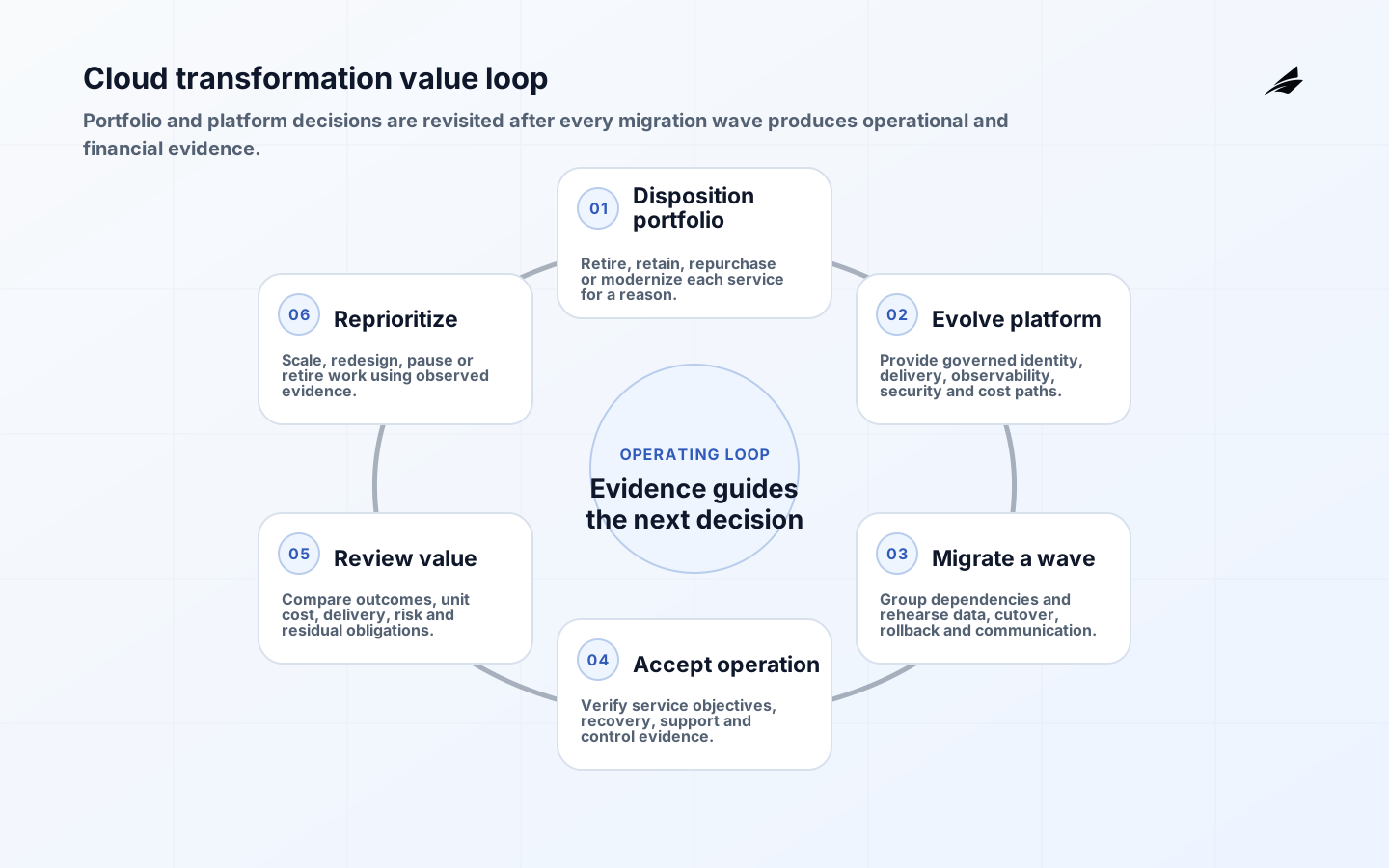
Cloud transformation solutions combine portfolio decisions, platform engineering, application change, data movement, security, finance and operations. They are not a bulk hosting purchase. The useful question is not “How quickly can everything move?” but “Which services should change, why, and what capabilities must improve for the result to last?” This FAQ answers the questions leaders and delivery teams should settle before signing a program plan or migration commitment.
Use these answers with the cloud transformation scope and cost plan, the portfolio and migration implementation checklist and the cloud innovation delivery plan. Cloud contracts, services, regulations and prices change, so validate provider-specific decisions against current documentation and applicable law.
What counts as cloud transformation?
Cloud transformation is a coordinated change in how an organization funds, builds, secures and operates digital services using cloud characteristics. NIST’s cloud definition describes on-demand self-service, broad network access, resource pooling, rapid elasticity and measured service, with service and deployment models. Merely renting virtual machines may change hosting but not delivery lead time, resilience, ownership or economics. Transformation is visible when product teams can use governed capabilities safely and operators can measure and improve outcomes.
The target may be public, private, community, hybrid or multi-cloud depending on mission, data, latency, sovereignty, skills and commercial constraints. Avoid selecting “multi-cloud” as an abstract risk-control slogan. Running every workload on several providers can multiply identity, networking, tooling, evidence and support burden. Decide portability at the workload and data layers where the business impact justifies it.
Where should a transformation start?
Start with business services and an evidence-backed portfolio. For every application, identify owner, user outcome, criticality, data, dependencies, technical health, current cost, recovery needs, contractual constraints and strategic horizon. Retire duplicate or obsolete systems before spending to migrate them. Use a disposition such as retain, retire, repurchase, rehost, replatform or refactor, but define the terms locally and attach a reason. The application’s lifecycle, not a data-center deadline alone, determines the sensible treatment.
In parallel, establish a minimum platform foundation: organizational and account hierarchy, identity federation, network and DNS patterns, logs, keys, secrets, policy controls, backups, cost allocation and automated environment creation. Pilot with a representative but recoverable workload. A trivial website proves little; a mission-critical core makes an expensive first lesson. Choose a workload that exercises real identity, data, deployment and support patterns while allowing safe rollback.
| Portfolio signal | Likely treatment to investigate | Required evidence | Do not assume |
|---|---|---|---|
| No active owner or users | Retire or consolidate | Usage, retention and dependency checks | No traffic means no dependency |
| Stable commodity capability | Repurchase or SaaS | Process fit, export and control review | Subscription removes integration work |
| Short remaining life | Retain or minimal rehost | Exit date and infrastructure risk | Modernization will repay |
| Differentiating service with change pressure | Replatform or refactor | Outcome, architecture and team capacity | Microservices are required |
| Hard latency or equipment dependency | Hybrid or edge pattern | Measured latency and failure behavior | All processing belongs centrally |
How much does cloud transformation cost?
Cost includes portfolio discovery, platform build, application change, data transfer, testing, security and privacy assurance, licenses, provider consumption, support, training, dual running, decommissioning and ongoing improvement. Estimate by migration wave and workload architecture, with baseline, peak, failure and exit scenarios. Include internal labor and the temporary loss of feature capacity. A provider calculator can price configured resources, but it cannot price organizational change or an uncertain legacy interface.
Measured service makes spending observable but not automatically efficient. Adopt the FinOps Framework practices proportionate to scale: allocate spend, forecast, detect anomalies, optimize rates and usage, and connect cost to business value. Share accountability among engineering, finance, procurement and product. Unit measures such as cost per active tenant or completed claim are more actionable than an undifferentiated monthly bill. Avoid premature commitments before stable demand is measured.
| Cost phase | Typical drivers | Evidence to retain | Decision |
|---|---|---|---|
| Discover | Inventory, dependency probes and data samples | Validated portfolio and uncertainty log | Fund or stop assessment |
| Foundation | Identity, network, policy, automation and observability | Tested platform capabilities | Admit first workload |
| Migrate | Build change, replication, testing and dual run | Reconciliation and cutover results | Accept or roll back |
| Operate | Consumption, support, security and reliability work | Unit cost and service objectives | Optimize or redesign |
| Exit | Export, conversion, egress and contract overlap | Restored copy and deletion evidence | Close provider or source |
Does cloud make systems more secure?
Cloud can provide strong identity, encryption, logging and managed security capabilities, but customers still configure access, data, applications and many service controls. Security depends on architecture, operation and shared-responsibility clarity. Map important outcomes with the NIST Cybersecurity Framework, then assign each control to provider, platform, workload, security or supplier owners. Test inherited evidence and customer configuration rather than treating a certification as blanket approval.
Reduce customer and operator burden through secure defaults, consistent guardrails, short-lived credentials, protected audit logs, approved modules and automated policy feedback. CISA’s Secure by Design principles reinforce that technology producers should own security outcomes. At the application layer, threat-model internet exposure, tenant isolation, build provenance, secrets, administrative actions and data flows. Establish incident access and evidence collection before an event.
How should migration waves work?
Group workloads by shared dependencies, business calendar and reusable patterns. A wave has entry evidence, a rehearsed runbook, named decision authority, rollback criteria and exit acceptance. Replicate data with reconciliation totals and business-level samples. Test performance, authorization, observability, backups, restore and operational access. Announce freezes and expected impacts to users and support teams. Never make irreversible source changes before the target proves the critical journey.
- Confirm workload owner, disposition, baseline and dependency map.
- Approve target architecture, responsibilities, data handling and cost scenario.
- Build through versioned automation and test with production-like volume.
- Rehearse replication, cutover, rollback, communication and recovery.
- Execute within a controlled window and reconcile technical plus business records.
- Observe through the agreed stability period, then decommission only after formal acceptance.
What operating model is needed?
Treat the cloud platform as an internal product. Its users are workload teams; its capabilities include environment provisioning, identity, networking, policy, delivery, observability and cost feedback. Assign a product owner, engineering team, service objectives, roadmap and support model. Offer a paved path that is easier than bypassing controls, plus a governed exception process. Centralize scarce expertise and guardrails while leaving workload outcomes with product teams.
Measure environment lead time, deployment performance, platform adoption, control exceptions, incidents, restore results and unit cost. The DORA guides provide research-grounded approaches to software delivery and organizational performance. Use measures to improve the system rather than rank individuals. Invest in documentation, office hours and hands-on migration support; a platform API without usable guidance simply moves integration effort to every application team.
Must applications become cloud native?
No. Modernization depth should match business value and application horizon. Rehosting can meet a time-bound exit but usually preserves operational constraints. Replatforming can adopt managed databases, containers or deployment automation with bounded code change. Refactoring may improve independent delivery and elasticity but carries the highest engineering and behavioral risk. Prove the bottleneck before redesigning. A monolith with automated delivery and strong modular boundaries may outperform a fragmented service estate.
Cloud-native patterns such as containers, orchestration, immutable delivery and declarative configuration are options, not a mandatory sequence for every system. Select technology from service objectives, skills and operational capacity. Account for supply-chain security, upgrades, control-plane recovery and support. Every new layer must have an owner and an exercised failure path. A simpler managed service may create more value than an elaborate portable platform.
How is transformation value proven?
Set baselines before change: time to provision, deployment lead time, release frequency, change failure, recovery time, availability, capacity utilization, unit cost, security remediation, audit effort and customer outcome. Choose a few measures tied to the original thesis. A data-center exit can be successful even if early run cost rises during dual operation; a modernization intended to accelerate change fails if release approval remains a six-week queue.
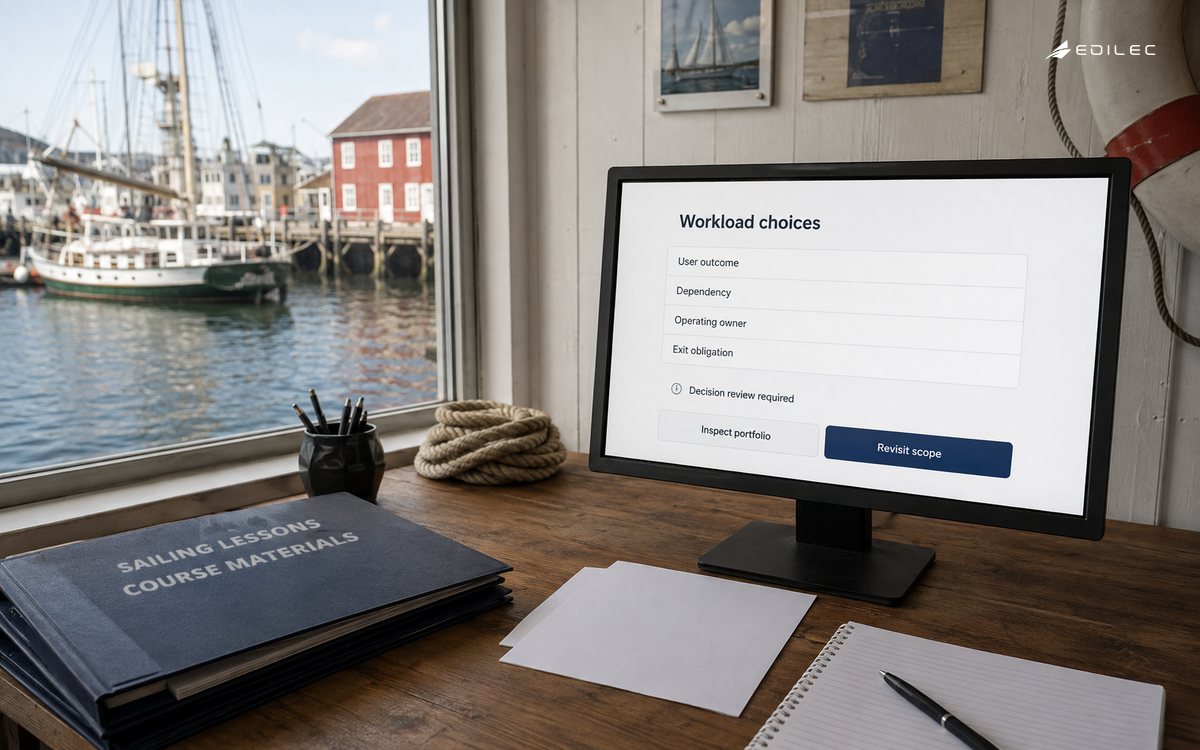
Review benefits by wave and record what caused the result. Separate workload growth, provider price change, architectural change and team behavior. Stop or reshape initiatives that cannot connect spend to an outcome. Include decommissioned licenses and reduced risk, but do not claim avoided cost without a documented counterfactual. Publish residual obligations such as legacy archives, vendor minimums and scarce operational skills.
Key takeaways
- Cloud transformation changes delivery, finance and operations, not only hosting.
- Start with workload evidence, retire unnecessary systems and build a minimum governed platform.
- Estimate discovery, dual running, labor, assurance, operation and exit alongside provider consumption.
- Use migration gates with reconciliation, rollback, recovery and formal operational acceptance.
- Measure service outcomes and unit economics, then adapt the portfolio and platform roadmap.
Frequently asked questions
How long does cloud transformation take?
A first governed workload can take weeks or months; an enterprise portfolio can take years and should be managed as continuing capability change. Duration depends on application count, dependencies, data, assurance, contracts, skills and business windows. Publish wave-level forecasts instead of one distant completion date.
How can vendor lock-in be managed?
Classify the impact, keep source and configuration portable, use standard interfaces where they preserve value, negotiate export terms, and test data recovery. Accept useful provider differentiation when its business benefit exceeds switching cost. Avoid paying a permanent complexity tax for theoretical portability.
Why do cloud programs stall?
Common causes include deadline-led bulk migration, weak application ownership, incomplete dependencies, an unusable platform, unplanned dual running, unclear security responsibility, missing skills and no benefit baseline. Reduce these risks with evidence-based dispositions, representative pilots, gated waves and accountable operations.
Conclusion
Good cloud transformation solutions make workload choices, platform responsibilities, cost, security, migration evidence and operational value explicit. They move the right services for a reason, prove each wave, and continuously improve the platform and financial model. That is a durable transformation; relocation by itself is only an address change.