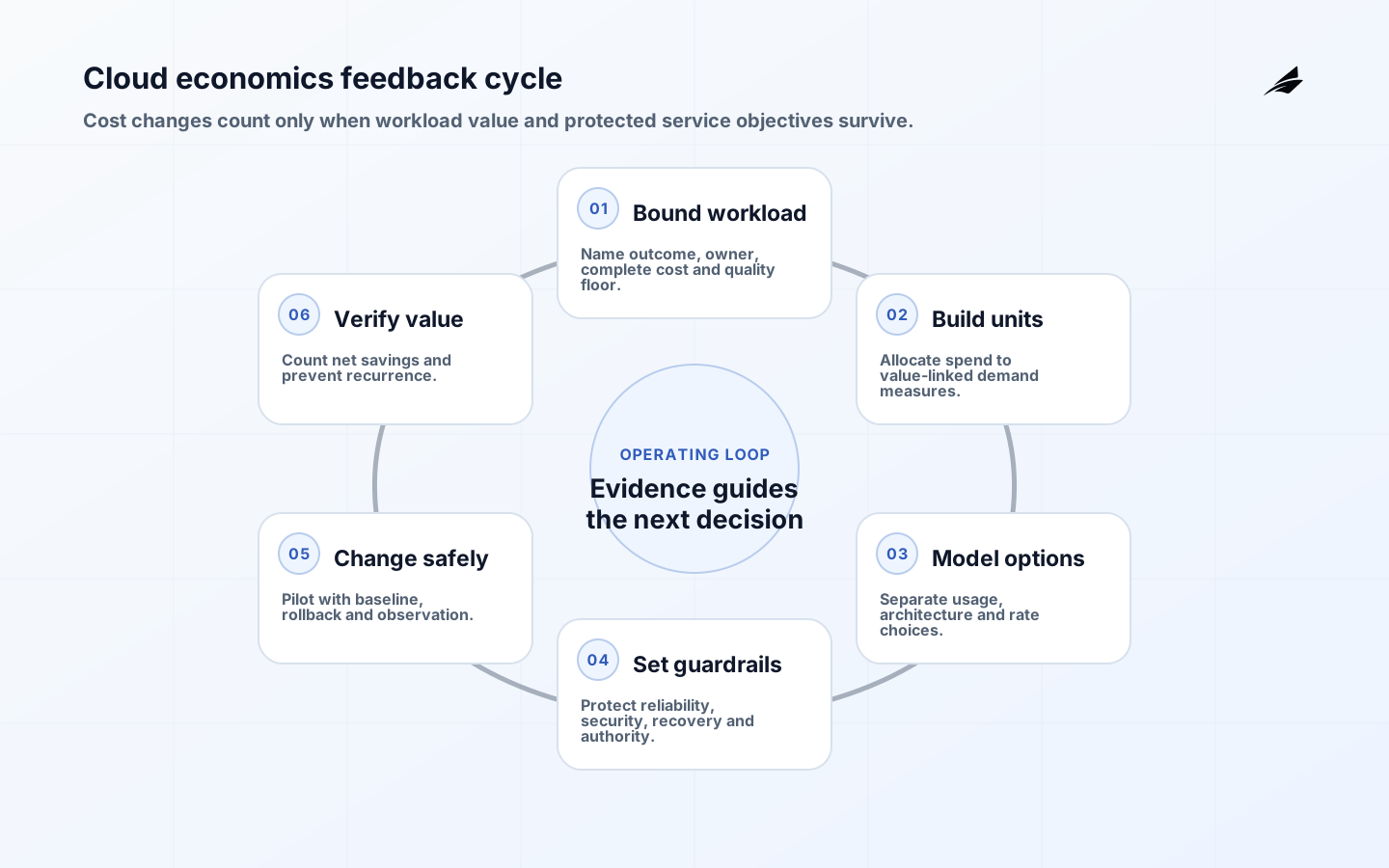
Cost-efficient cloud solutions deliver the required business outcome, reliability, security and recovery at the lowest sustainable total cost. They are not simply the smallest bill. Cloud consumption changes with demand, architecture, managed-service choices, data movement, support and commercial commitments, so a one-time reduction exercise quickly decays. This plan connects scope, unit economics, engineering decisions, financial controls and verified savings into a repeatable delivery cycle.
Pair this guide with the cost-efficient cloud implementation checklist and the cloud cost FAQ. Teams comparing broader options can also use the cloud innovation delivery plan.
Define workload scope and protected outcomes
Start with a workload, product or platform boundary that has an accountable owner. Inventory environments, subscriptions or accounts, services, data flows, licenses, support, shared platforms and external tools. Include commitments, taxes and credits where they affect decisions. NIST defines cloud around characteristics such as measured service and rapid elasticity, but those characteristics create value only when demand and ownership are visible.
Write protected constraints before pursuing savings: user latency, availability objective, recovery time and point objectives, security controls, data residency, retention, release velocity and peak demand. State current baselines and planned changes. This prevents an optimizer from treating resilience, observability or test environments as waste simply because their value is not represented in billing data.
| Scope element | Question | Required evidence |
|---|---|---|
| Business outcome | What demand or service does spending support? | Owner, users and measurable outcome |
| Complete cost | Which direct, shared, license and labor costs apply? | Reconciled cost model and allocation rules |
| Quality floor | What reliability, recovery and security cannot fall? | SLOs, control requirements and test results |
| Demand | Which unit explains consumption? | Usage driver and forecast scenarios |
| Exit | What is retired after change? | Decommission owner and acceptance date |
Build unit economics and allocation
Map spending to owner, product, environment and useful unit such as active tenant, transaction, build minute, analytic query or gigabyte retained. Choose a unit linked to value and stable enough for comparison. Cost per resource can encourage local optimization while total cost per customer outcome rises. Reconcile provider billing exports to invoices before distributing dashboards; disputed totals undermine every later conversation.
Define shared-cost allocation openly. Some foundations can be assigned by measured consumption, others by an agreed driver, and a small common layer may remain centrally funded. Show both allocated and controllable cost so teams are accountable for decisions they can change. FinOps principles place business value, collaboration and ownership at the center, with timely and accurate data enabling decisions rather than replacing them.
Compare architecture and commercial options
Separate usage optimization, architecture optimization and rate optimization. Usage actions remove idle resources, schedule nonproduction demand, rightsize from telemetry and enforce lifecycle policies. Architecture actions may replace self-managed components with managed services, change storage tiers, batch work or redesign data transfer. Rate actions include commitments, reservations and negotiated discounts. They have different risks and should not be combined into one savings estimate.
Model low, expected and high demand. Include requests, storage growth, backups, logs, inter-zone and internet transfer, operations, licenses and migration overlap. Managed services may have higher visible provider cost but lower engineering and incident burden. Commitments lower unit rates only when usage is sufficiently stable; buying them before removing waste can lock in an inefficient baseline. Compare portability and exit implications for material dependencies.
Establish financial and engineering guardrails
Budgets and anomaly alerts need owners, thresholds, response windows and escalation. A budget does not stop spend, and an alert without workload context creates noise. Enforce ownership metadata at provisioning, constrain expensive regions or SKUs where appropriate, set quotas for scarce resources and expire bounded experiments through policy. Keep exceptions time-limited and visible.
Put cost estimates in architecture and change reviews. Teams should see expected monthly range, unit-cost effect and major price dimensions before deployment. Protect emergency and recovery capacity from automatic deletion. Apply least privilege to billing exports, commitment purchases and resource deletion. Cost automation can cause outages as efficiently as it removes waste, so use dry runs, approval tiers and rollback for high-impact actions.
| Opportunity | Decision guardrail | Verification metric |
|---|---|---|
| Idle resource removal | Confirm ownership, state and recovery need | Net recurring cost after observation |
| Rightsizing | Test peak and failure behavior | Unit cost with latency and saturation |
| Storage lifecycle | Validate retention and restore path | Cost per retained unit and restore success |
| Rate commitment | Use conservative stable demand | Coverage, utilization and break-even |
| Rearchitecture | Include engineering and transition cost | Net value after migration and old-system retirement |
Deliver optimization through controlled waves
Create a ranked backlog using expected net value, confidence, effort, operational risk and time to realize. Begin with ownership defects and low-risk waste, then address rightsizing, pricing and architecture. Assign an engineering owner and finance reviewer to each item. Preserve the baseline, hypothesis, protected metrics and rollback. A recommendation is not savings until the change is applied and observed.
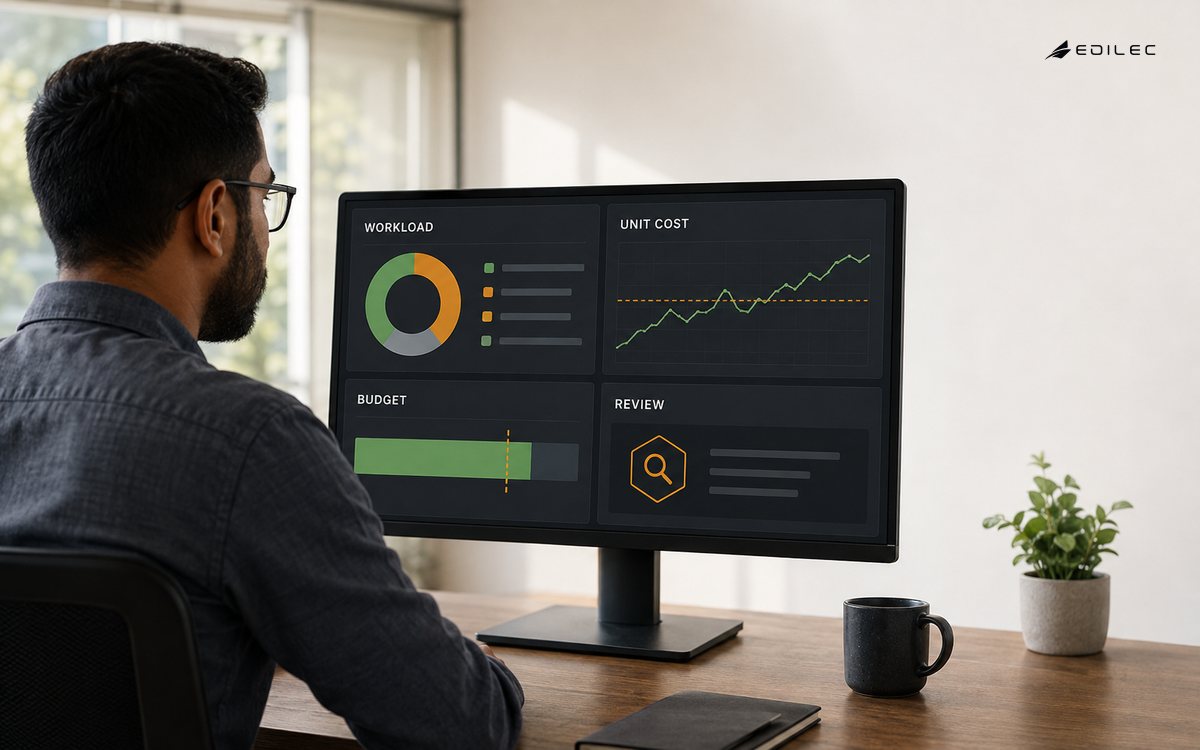
Pilot one representative workload. Test normal demand, peak load, dependency failure, restore and rollback. Observe through at least one meaningful billing and usage cycle, adjusting for seasonality and price changes. Retire old resources, licenses and commitments after acceptance. Report gross reduction, implementation cost, displaced cost and net recurring effect separately so leaders can distinguish accounting movement from economic improvement.
Operate a continuous cloud economics cycle
Establish a regular review among product, engineering, finance, procurement and platform owners. Review forecast variance, unallocated cost, unit trends, anomalies, commitment exposure, optimization backlog and quality guardrails. Provider services and prices change, as do demand and architecture. The AWS, Azure and Google frameworks all describe cost optimization as an ongoing discipline rather than a project ending with migration.
Measure behavior as well as spend: percentage of cost with an owner, time to investigate anomalies, verified opportunity conversion, commitment utilization and age of exceptions. Do not reward teams solely for bill reduction; pair savings with user and reliability outcomes. Fund platform improvements that prevent recurrence, including efficient defaults, deployment templates, retention policies and cost telemetry available during design.
Applied example and assurance notes
A representative optimization case starts with one product and one demand unit. Suppose an API costs 42,000 per month and serves 28 million successful requests. The team separates baseline compute, database, transfer, observability, support and shared allocation, then models expected growth. Rightsizing is accepted only if peak latency and recovery remain within objectives. Report cost per million successful requests before and after, including engineering effort and any new managed-service charge. This prevents a lower invoice from concealing reduced reliability or shifted cost.
Savings forecasts need confidence ranges. Idle-resource deletion can have high confidence once ownership and state are proven; a storage-tier change depends on retrieval patterns; a commitment depends on stable demand; rearchitecture depends on migration and retirement. Rank these separately and record the assumption most likely to reverse each estimate. During review, finance can challenge rate and allocation, engineering can challenge feasibility and risk, and product can challenge whether the workload still creates enough value to optimize.
Cost controls should work at creation time and in operation. Templates can require owner, product, environment, expiry and data class; policy can restrict unapproved regions and public resources; dashboards can show unit trend; anomaly workflows can route to the person able to act. Exceptions need reason and expiry. Quarterly cleanup alone arrives after spend has accumulated and teaches teams that efficient defaults are optional.
- Record the accountable owner and the decision the evidence supports.
- Test a normal journey, a denied path and a realistic failure.
- Keep assumptions, versions and unresolved risks visible.
- Require acceptance evidence before expanding scope or authority.
- Review operating outcomes and close corrective actions.
Before approval, the workload owner should convene product, engineering, platform, finance and procurement for a scenario review. Walk through ordinary use, a denied request, one unavailable dependency, a partial change and recovery. For each step, identify the authoritative record, person with decision rights, expected signal, time limit and safe alternative. Challenge unallocated spend, false savings, commitment exposure and quality erosion. Record assumptions that could change after launch and assign each one a trigger for reassessment. The review is successful when participants can explain not only the preferred path but also how they recognize an unsafe state, who can stop progress, and how users continue while the issue is resolved. Preserve the unit-cost baseline, guarded change and observed net value with the configured release rather than in a detached presentation.
For Cost-Efficient Cloud Solutions: Scope, Economics, Risks and Delivery Plan, conduct a review thirty days after release or completion. Compare actual demand, quality, exceptions, incidents, cost and user effort with the baseline. Separate design defects from training gaps and changed operating context. Sample complete cases because averages can conceal a rare path carrying most consequence. Confirm that temporary access, duplicate infrastructure, transitional policy and manual workarounds have closed or have an owner and expiry. Reforecast the next period and publish decisions to people who operate or depend on the capability. At each material change, refresh cases, assumptions and risk treatment; assurance is a maintained operating practice, not a certificate inherited from the first release.
Cost-Efficient Cloud Solutions: Scope, Economics, Risks and Delivery Plan also needs a concise evidence index that a new reviewer can navigate without oral history. Link the current boundary, named owners, architecture or workflow, decisions, tests, exceptions, operating signals and closure records. Mark superseded artifacts instead of silently replacing them, and protect sensitive material by role. During a review, select one claim from the summary and trace it to its source and observed result. If that trace is slow or ambiguous, improve the index before scale. Good evidence reduces repeated discovery, supports accountable challenge and makes future migration or retirement materially easier.
Key takeaways
- Define the workload, complete cost and quality constraints before identifying savings.
- Use value-linked units and transparent allocation to make decisions accountable.
- Distinguish usage, architecture and rate opportunities because their risks differ.
- Verify net savings after implementation, observation and retirement of the old route.
- Run cost efficiency as a product and engineering feedback cycle, not a periodic cleanup.
Frequently asked questions
Should every workload use the cheapest service?
No. Select the option that meets functional, reliability, security and recovery needs at the lowest total cost. A lower provider rate can create more operations, data movement or incident cost.
Does multicloud automatically reduce cost risk?
No. It can improve negotiation or concentration choices for selected workloads, but duplicated platforms and skills can increase total cost. Target portability and exit evidence to material dependencies instead of assuming every component must run on multiple providers.
How long should savings be observed?
Use a window long enough to include representative demand and complete billing data. A month may be adequate for stable resources; seasonal or commitment decisions require longer comparisons and scenario analysis.
Conclusion
A cost-efficient cloud solution makes economics observable without sacrificing the service it exists to provide. Bound the workload, model complete cost, protect quality, choose the right class of action and verify net results. Continuous ownership and engineering feedback keep the gains from disappearing as demand, prices and systems evolve.