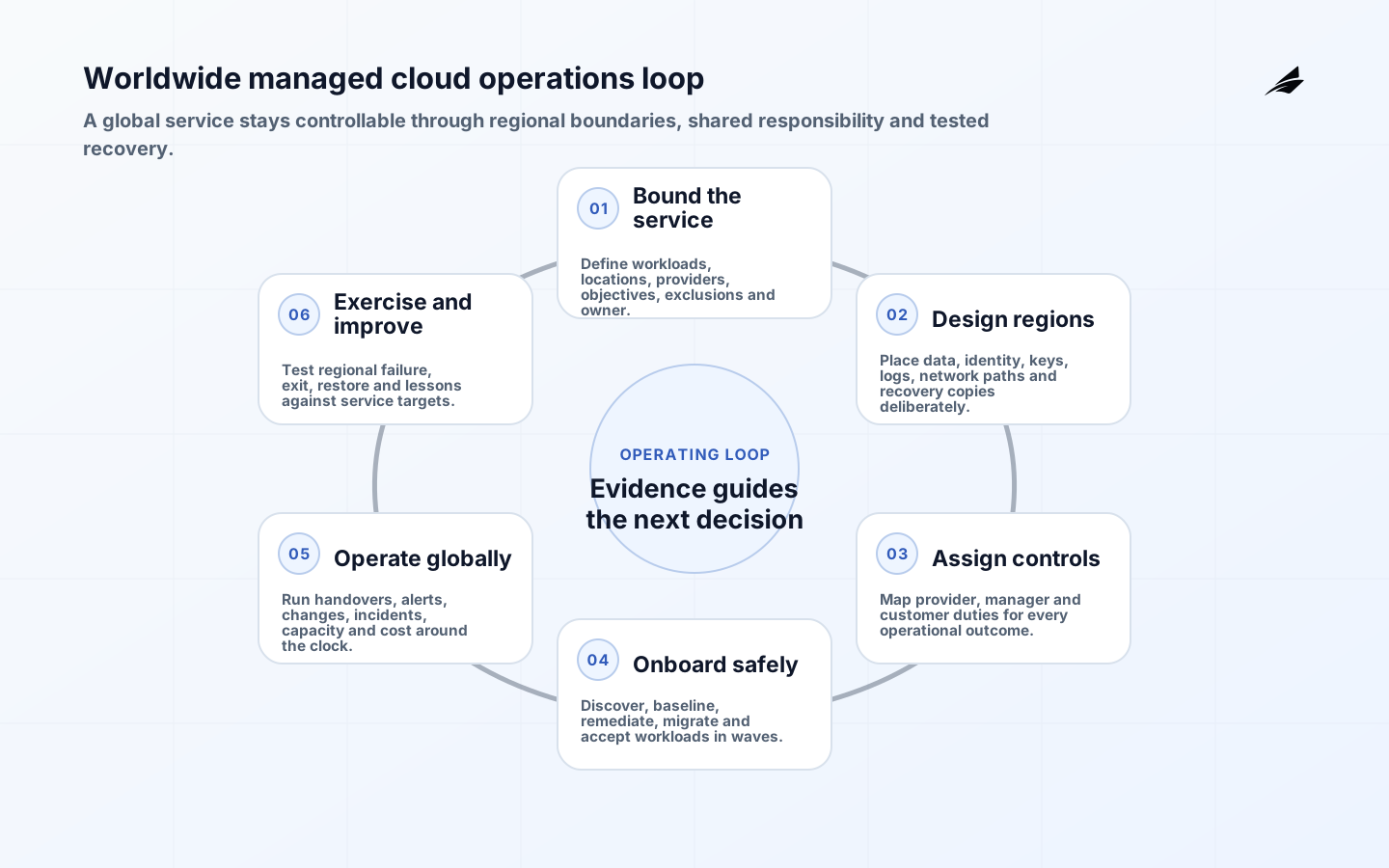
Worldwide managed cloud is an operating model for cloud services that span countries, providers, regions or time zones under coordinated management. It is not simply a remote operations team or a reseller contract. The design must connect workload ownership, jurisdiction, identity, telemetry, service objectives, incident authority, cost and recovery so that a global service remains understandable at 03:00 in every region.
Use this plan with the worldwide managed cloud implementation checklist, managed cloud FAQ, managed-cloud market evaluation guide and small-business managed cloud guide. The objective is a controlled service boundary and evidence path, independent of provider brand.
Define the global service boundary
Inventory applications, accounts or subscriptions, data classes, users, providers, regions, connectivity, external services and existing support. For each workload, record the business owner, service owner, technical owner, permitted locations, recovery objectives, maintenance limits and minimum acceptable service during dependency failure. Mark exclusions such as end-user devices, application code or a legacy data center, then state who manages those interfaces.
NIST defines cloud through essential characteristics, service models and deployment models. Use those terms precisely in the contract. Managing infrastructure as a service differs from managing a software service where the provider controls most of the stack. A global control statement must identify which layer, region and organization implements it. “Encryption is enabled” is incomplete without data scope, key authority, exceptions and evidence.
| Operating layer | Managed-service responsibility | Customer responsibility |
|---|---|---|
| Business service | Monitor user journey and service objective | Set priority, acceptable loss and business fallback |
| Application and data | Operate agreed components, backup jobs and telemetry | Own code, classification, retention and data quality unless transferred |
| Cloud platform | Configure approved services and posture controls | Approve architecture, provider use and residual risk |
| Identity and access | Implement federation, privileged workflow and review | Authorize people, roles and emergency access |
| Provider foundation | Track provider health and support cases | Accept provider dependency and contractual limits |
| Governance | Report evidence, incidents, cost and exceptions | Make risk, investment and regulatory decisions |
Design regions, data and identity deliberately
Map where customer content, metadata, logs, backups, keys, support access and incident artifacts may travel. Regional placement is not automatically residency compliance; provider support, replication and managed-service tooling can create additional paths. Obtain specialist advice for applicable obligations, then encode approved regions, transfer conditions, retention and deletion into policy and onboarding checks. Keep the map current as services and subprocessors change.
Use federated identity with individual accounts, strong authentication, short-lived privileged access and attributable emergency procedures. NIST zero trust guidance rejects implicit trust based only on network location. Apply authorization to users, services and automation at each resource. Central identity can improve control, but design local break-glass access for an identity-provider or network failure, with protected credentials, limited scope, immediate logging and post-use review.
Build a follow-the-sun operating model that can hand over safely
Around-the-clock coverage only works if the next team receives context, authority and current evidence. Define severity, paging, acknowledgement, ownership transfer and escalation in one incident system. A handover should include customer impact, affected resources, timeline, hypotheses, actions taken, risky changes, pending decisions and the named incident commander. Avoid parallel regional tickets that fragment the record. Language and local communication needs should be planned, not improvised during an outage.
Standardize changes through infrastructure as code and versioned policy where feasible. Separate routine pre-authorized changes from high-risk or emergency work. Require peer evidence, rollout cohorts, health checks, stop thresholds and rollback. A worldwide manager should be able to state which configuration is active in each region and why. Measure unauthorized drift, failed change rate, emergency changes, alert-to-owner time and handover defects, not just ticket closure.
Model worldwide managed cloud cost by service and scenario
Total cost includes provider consumption, managed-service fees, premium support, data transfer, observability, security tools, backup, licenses, connectivity, migration, internal owners, tax and exit. Allocate shared cost through a documented rule. The FinOps allocation capability uses accounts, tags, labels and related metadata to assign cost and create accountability. Require an owner before resources are admitted and report unallocated spend rather than burying it in a platform total.
Forecast from workload drivers and planned changes, not only last month’s bill. Include baseline, growth, peak, regional failure, recovery testing and exit scenarios. Commitments and reservations can reduce rates but create utilization and concentration risk. Keep engineering, finance and product owners in the forecast review; they understand different drivers. Useful measures include cost per service unit, forecast variance, commitment coverage and waste, shared-cost transparency and cost of resilience.
| Risk scenario | Control evidence | Exercise or metric |
|---|---|---|
| Region unavailable | Documented traffic, data and dependency strategy | Run a regional failover and measure recovery plus data loss |
| Manager access compromise | Federated least privilege and emergency isolation | Review privileged sessions and revoke within target |
| Provider API degradation | Backoff, queueing, manual fallback and status integration | Inject dependency failure and observe customer journey |
| Telemetry gap | Independent health signals and log-delivery monitoring | Measure detection coverage and blind duration |
| Cost surge | Budgets, anomaly alerts, quotas and owner routing | Time from anomaly to accountable decision |
| Provider or manager exit | Current inventory, export, build and transition rights | Rehearse representative export and clean access removal |
Deliver worldwide managed cloud in controlled waves
Start with discovery that produces a verified inventory and responsibility map, not only interviews. Baseline service health, security findings, cost, backup success and unresolved incidents. Remediate urgent exposure before migration where possible. Select a pilot containing a real user journey and meaningful dependencies but tolerable consequence. Prove onboarding, identity, monitoring, change, incident, cost allocation, restore and exit evidence before expanding the wave.

- Define workload, geographic, provider and service-layer boundaries with named customer owners.
- Approve regional data, identity, key, connectivity, logging, backup and support-access paths.
- Create a control matrix assigning each outcome to provider, manager and customer with required evidence.
- Onboard by waves using baseline, remediation, migration, reconciliation and operational acceptance gates.
- Operate one incident and change record across time zones with explicit authority and handover quality.
- Exercise regional failure, restore and exit; feed results into architecture, contract and forecast decisions.
Acceptance should require observed operation over an agreed period, not merely transferred resources. Confirm user journeys, service objectives, alert routing, support access, vulnerability treatment, backup restoration, cost ownership, documentation and customer fallback. Record residual risks and exceptions with expiry. The customer retains accountability for its business service even when a provider and manager perform most technical controls.
Evaluate providers with evidence, not global coverage claims
Compare exact service locations, staff coverage, certifications and reports, provider partnerships, escalation rights, subcontractors, incident history, insurance, financial resilience and exit assistance. Ask the proposed team to walk through a regional outage and privileged-access incident using your workload. Inspect sample reports and tickets. A long country list is weak evidence if the team cannot show how authority, context and recovery move between locations.
Contract service objectives around customer impact and control outcomes. Infrastructure uptime alone may miss failed authentication, stale data or broken integrations. Define measurement source, exclusions, maintenance, chronic breach, service credits, corrective plans and termination rights. Credits are not recovery. Preserve direct access to provider consoles, billing, logs and support relationships so the customer can oversee the manager and continue during a dispute or transition.
Add a quarterly control-evidence review separate from the monthly service meeting. Sample privileged access, configuration drift, backup restoration, regional data paths, incident handovers, supplier changes and cost allocation. Reconcile the provider’s resource list with the customer inventory and billing export. Test that exceptions still have owners and expiry dates. This catches quiet scope growth and evidence gaps that good headline service levels can conceal.
Capacity planning must also include people and provider quotas. Forecast specialist coverage for major releases, local holidays, regulatory deadlines and regional disaster scenarios. Verify escalation contacts rather than assuming a premium support tier supplies immediate expertise. Track saturation in API quotas, log ingestion, network, backup windows and on-call load. When a stressed scenario exceeds capacity, choose a funded mitigation, graceful degradation or explicit residual-risk acceptance before demand arrives.
Key takeaways
- Treat worldwide managed cloud as an accountable operating model across regions, layers and organizations.
- Map all data, identity, support and evidence paths; resource location alone does not describe the boundary.
- Use one attributable incident and change record with disciplined follow-the-sun handovers.
- Allocate and forecast whole-service cost, including resilience, internal ownership and exit.
- Accept workloads only after real operational, recovery and transition evidence has been demonstrated.
Frequently asked questions
Does worldwide managed cloud require multiple cloud providers?
No. It can span regions and countries on one provider or coordinate several providers and private environments. Add providers only for a demonstrated requirement. More platforms can improve options but also increase identity, data, tooling, skills and recovery complexity.
Can a manager guarantee data residency?
Only within a precisely defined architecture, contract and operating process. Verify customer content, logs, keys, support, backups, subprocessors and incident data. Applicable legal interpretation belongs with qualified counsel; the manager should provide traceable technical and contractual evidence.
What is the most useful service objective?
Choose objectives tied to critical user journeys and recovery, then support them with component indicators. A single uptime percentage cannot represent correctness, latency, data freshness, security or recoverability. Use a small set that drives decisions.
When should exit planning start?
Before onboarding. Inventory, client-owned identities, portable artifacts, data export, build evidence, notice periods and transition rates are cheapest to establish before dependency grows. Exercise a representative exit during steady operation.
Conclusion
Worldwide managed cloud becomes dependable when global reach is translated into explicit boundaries and local accountability. Map responsibilities, engineer regional and identity controls, operate with one evidence trail, expose unit economics and rehearse failure plus exit. The result is not merely continuous technical coverage; it is a service the customer can understand, challenge, recover and change.