Cloud business services combine provider technology with architecture, migration, security, operations, financial management and support. The phrase can describe anything from advisory work to a fully managed platform, so buyers must define outcomes and decision rights before comparing proposals. The central question is not which supplier offers the longest service catalog. It is whether the arrangement creates an operable, measurable capability without obscuring accountability.
This guide covers scope, cost, risk and delivery for organizations buying or restructuring cloud services. It connects to the cloud business services implementation checklist, cloud business services FAQ and infrastructure and cloud delivery plan. Use it to create a statement of work, responsibility model and acceptance plan that can survive sales-to-delivery handoff.
Define the business outcome and service perimeter
Name the capabilities in scope: cloud strategy, landing foundation, workload assessment, migration, modernization, security, operations, reliability engineering, FinOps, data platforms, continuity or service desk. Map each to a business outcome and current baseline. State environments, accounts, regions, applications, users, operating hours, data classes, compliance and transition deadlines. Exclusions are as important as inclusions because unresolved boundaries become incident disputes.
Describe decisions as well as tasks. Who chooses architecture, approves risk, changes policy, declares an incident, accepts downtime, authorizes emergency access, commits spend and retires a workload? A RACI can help, but critical actions need one accountable decision owner and an escalation time. Define interfaces with internal product, security, finance, legal and vendor-management teams. The service must fit the client's actual operating model, not the supplier's generic organization chart.
| Service component | Supplier output | Customer responsibility | Acceptance evidence |
|---|---|---|---|
| Assessment | Workload inventory and disposition options | Provide owners, constraints and baseline | Reviewed decision register |
| Foundation | Automated accounts, identity, policy and logging | Approve risk and enterprise integrations | Provision and control tests |
| Migration | Runbooks, transfer and cutover execution | Business validation and decision authority | Reconciliation and signed outcome |
| Operations | Monitoring, incident and change processes | Product priorities and customer communication | Exercise and service report |
| FinOps | Allocation, budgets and optimization analysis | Business tradeoffs and commitment approval | Attributed bill and action record |
| Exit | Exports, documentation and access revocation | Receiving capability and retention decisions | Completed handback rehearsal |
Write scope as an operating contract
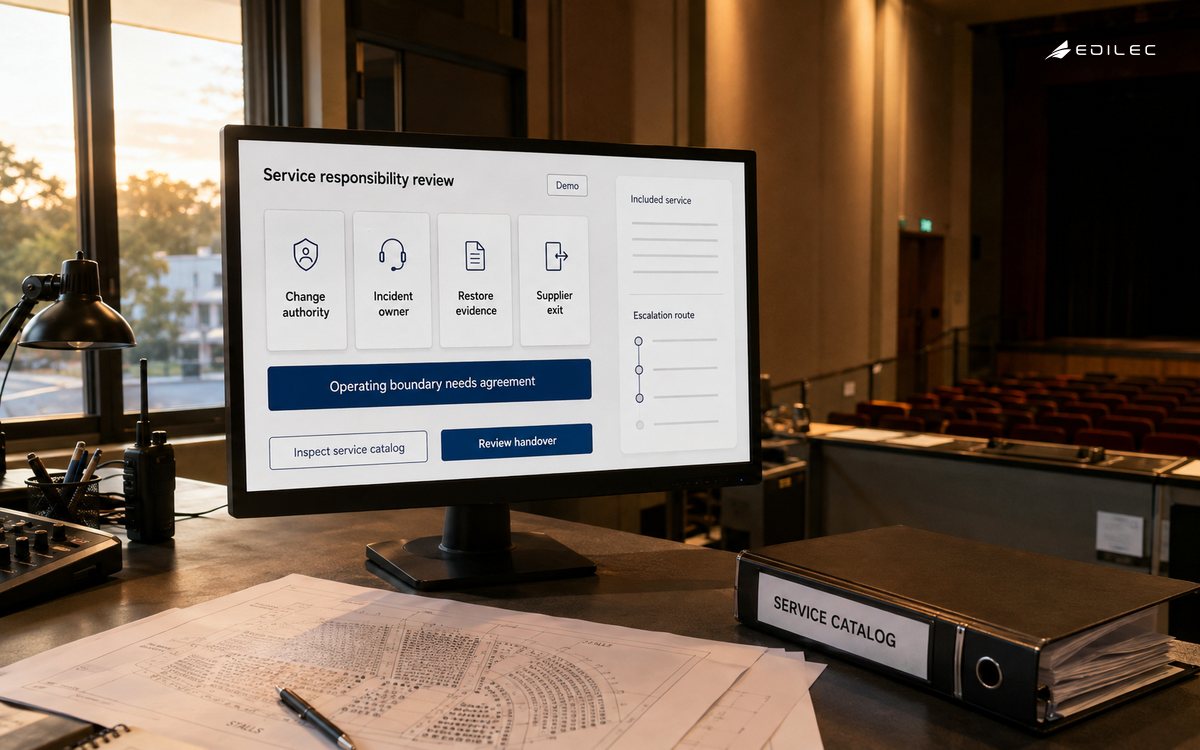
Create a service catalog with request types, hours, priorities, response and resolution targets, maintenance, dependencies, data handling and evidence. Distinguish incident response from root-cause correction and project work. State whether the supplier monitors only platform health or customer journeys and data correctness. Define supported versions and the process for end-of-life software. Include change, vulnerability, backup, restore, access review, capacity and cost responsibilities per service.
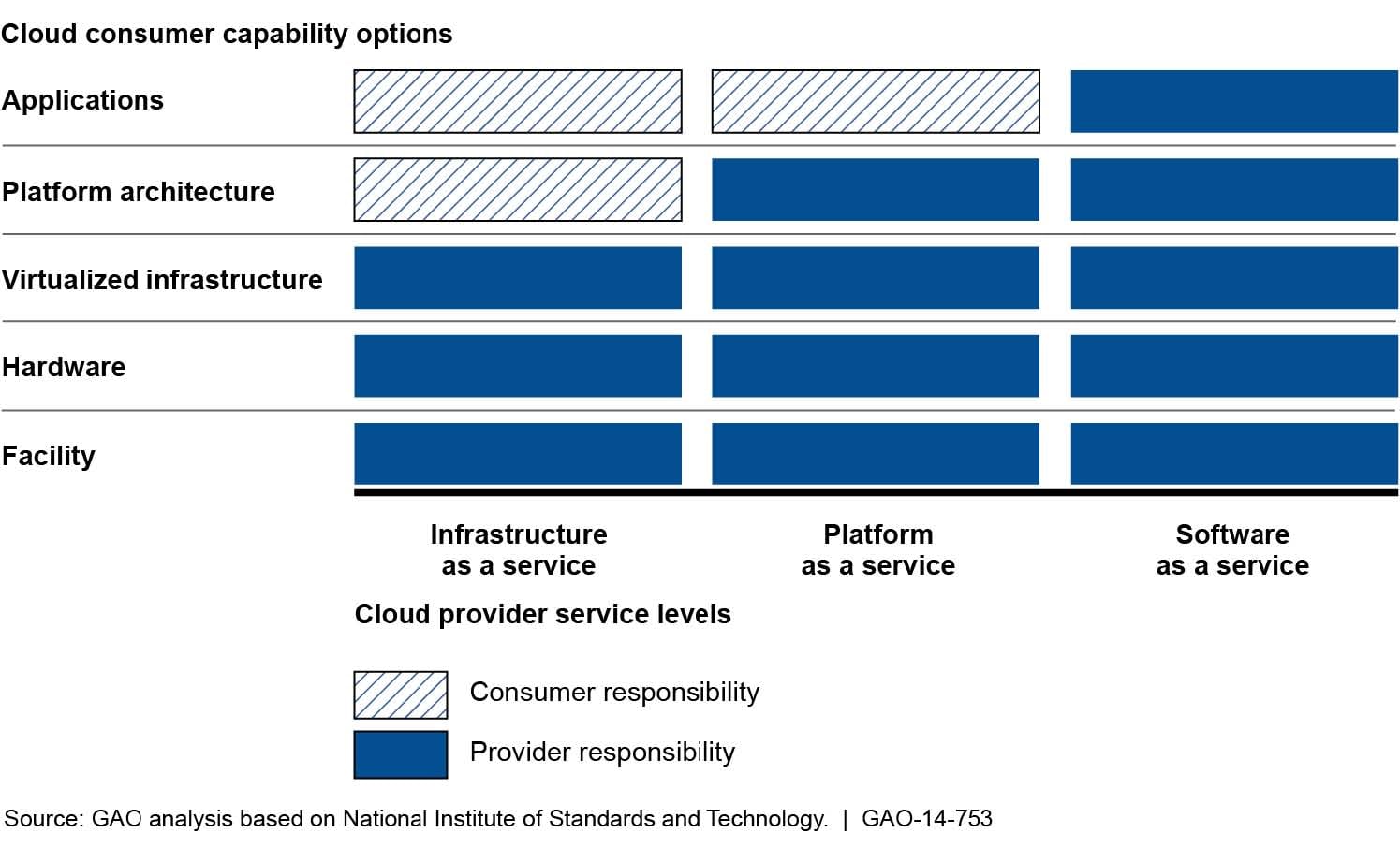
Document shared responsibility below the provider slogan. For a managed database, the cloud provider may own physical systems and service patching while the customer or managed-service partner owns schema, identities, network exposure, backups, retention, queries and application correctness. Repeat the mapping for every material service. NIST supply-chain guidance supports communicating cybersecurity requirements to suppliers and operating the relationship as a risk-management capability, not a one-time questionnaire.
Build a total cost model with variable drivers
Separate one-time discovery, foundation, migration, remediation, testing, training and exit preparation from recurring provider usage, licenses, managed service, support and internal ownership. Model demand drivers such as transactions, users, stored and transferred data, logs, backups, regions and environments. Include tax, currency, support tier and contractual indexation. A low migration quote can hide remediation or leave the client paying for old and new estates longer than planned.
Price managed operations according to transparent units: fixed baseline plus workload, ticket, event, account or consumption tiers where appropriate. Understand minimum commitments and what happens outside assumptions. Avoid incentives that reward ticket volume or discourage preventive work. Establish cost allocation, budgets and anomaly response before production. FinOps practice makes cost a shared engineering, finance and business decision; savings must not compromise service objectives or add more labor than they remove.
| Cost category | Common omission | Useful estimating unit | Control |
|---|---|---|---|
| Transition | Dual running and data transfer | Workload wave and elapsed month | Exit old capacity by gate |
| Consumption | Logs, egress and idle environments | Business unit plus usage driver | Budget and anomaly routing |
| Licensing | OS, database and marketplace terms | Core, user or instance | License-position review |
| Operations | On-call, patching and compliance evidence | Service tier and asset count | Catalog and capacity review |
| Change | Projects outside steady-state scope | Planned release or engineering day | Prioritized change budget |
| Exit | Extraction, knowledge transfer and retention | Workload and data volume | Pre-priced exit schedule |
Address concentration, security and service risks
Maintain a risk register covering account compromise, public exposure, data residency, provider outage, destructive change, skill concentration, proprietary services, subcontractors, financial overrun and failed handover. Assign prevention, detection, response and recovery evidence. Review provider limits and regional architecture against business needs. Multi-cloud is not automatic resilience; independent recovery requires data, identity, deployment and operational capability that can function when the primary provider or supplier is unavailable.
Control supplier access with individual identities, least privilege, approval, expiry and customer-visible logs. Keep ownership of tenants, accounts, domains, encryption decisions and repositories under customer governance. Require vulnerability and incident notification terms, evidence access, subcontractor disclosure and cooperation. Test backup restoration and emergency access. Insurance, certifications and service credits can support governance but do not restore customer data or resolve ambiguous command authority during an incident.
Define service levels around business impact
Choose service-level indicators that reflect user experience: successful transaction, processing timeliness, data freshness, restore success or critical-journey availability. Define calculation, exclusions, measurement source and review. Response time measures acknowledgment, not restoration. Set severity from impact, scope, duration and safety rather than the seniority of the reporter. Specify incident command, customer communication and post-incident review, including who can accept a risky workaround.
Use service objectives to prioritize reliability work, not merely negotiate penalties. Track failed changes, recovery time, recurrent incidents, alert quality, vulnerabilities, backup tests and support escalations. Service credits rarely compensate business impact and may create defensive reporting. A productive governance review examines trends, decisions and funded improvements. Reserve executive escalation for blocked risk decisions rather than using it as the normal request path.
Transition ownership through demonstrated capability
Start with discovery and reconciliation of applications, accounts, access, dependencies, contracts, incidents and runbooks. Do not accept the existing inventory without sampling reality. Use shadow, reverse-shadow and staged authority: the incoming team observes real work, performs it under supervision, then operates while the outgoing team observes. Acceptance requires representative incidents, requests, changes and recovery exercises, not attendance at knowledge-transfer meetings.
Protect service continuity during transition. Freeze only high-risk changes, maintain clear incident command and track missing access or evidence. Transfer credentials through governed systems and revoke outgoing access promptly after acceptance. Keep a decision log for inherited risks and technical debt. If no outgoing provider exists, internal experts still need time to explain hidden procedures. Plan knowledge retention for business context, not only tool operation.
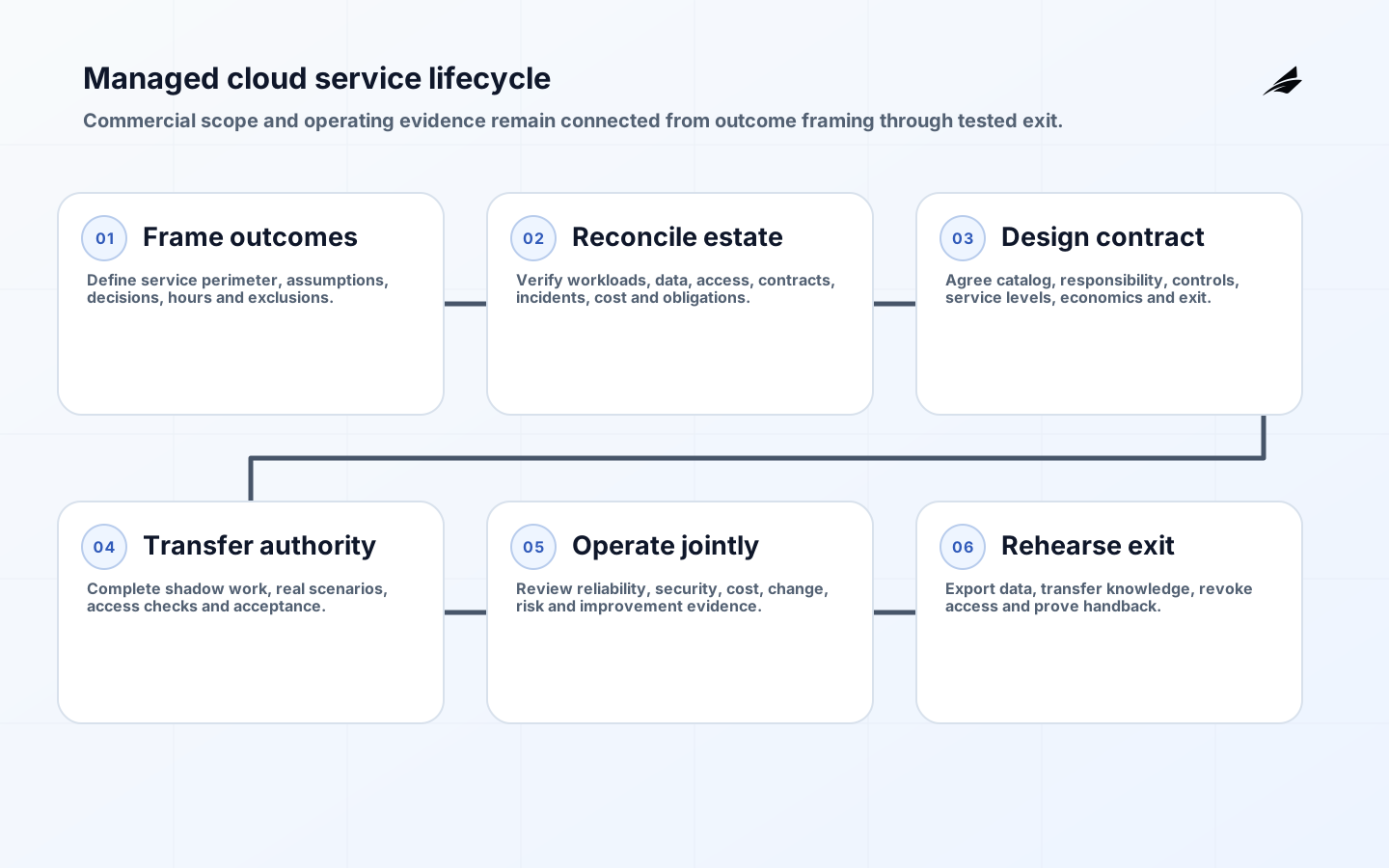
Use a six-stage cloud service lifecycle
- Frame business outcomes, service perimeter, assumptions and accountable decisions.
- Discover the estate and reconcile workloads, data, access, cost and obligations.
- Design the responsibility model, catalog, controls, service levels and economics.
- Transition through shadow operations, exercises and evidence-based acceptance.
- Operate with joint reliability, security, cost and change governance.
- Rehearse exit, export, revocation and handback before dependency becomes critical.
Govern improvement and exit from the first month
Run weekly operational reviews during stabilization and monthly service reviews afterward. Examine outcomes, objectives, incidents, security, cost, change demand, risks and improvement actions. Each action needs an owner and due date; repeated discussion without funding is not governance. Compare supplier reports with customer-visible telemetry and finance records. Retain customer access to raw evidence needed to verify material service claims.
Define exit assistance, notice, formats, fees, deletion, retention, licenses, documentation and access revocation in the initial agreement. Maintain infrastructure definitions, architecture decisions, inventory, runbooks and dependency records throughout the term. Rehearse export and rebuild for a representative workload. Exit readiness also improves incident recovery and negotiation because the customer understands what capability and data must be preserved.
Key takeaways
- Define cloud business services by outcomes, boundaries and decisions, not catalog names.
- Map shared responsibility per service and keep customer governance of critical assets.
- Model total transition and operating cost using transparent demand drivers.
- Accept transition only after real work and recovery scenarios are demonstrated.
- Operate joint governance and rehearse exit before supplier dependency deepens.
Frequently asked questions
What pricing model is best for managed cloud services?
A transparent hybrid often works: a fixed base for retained capability plus defined variable units for scale and separately governed project change. The right model aligns incentives with prevention, reliability and efficient consumption rather than ticket volume.
What should be excluded from an SLA?
Use narrow, explicit exclusions for agreed maintenance and customer-caused conditions with evidence. Broad provider, dependency or force-majeure exclusions can make the objective meaningless. Measure the user outcome even when contractual accountability is shared.
How can vendor lock-in be managed?
Choose proprietary capability consciously where its value exceeds exit cost. Keep data exportable, document interfaces, automate environments, retain skills and test a representative recovery or transfer. Avoid paying a portability tax for services the organization would never move.
Before contract signature, ask shortlisted suppliers to walk through one realistic incident, one cost anomaly, one failed change and one exit request using the proposed responsibility model. Score the evidence, assumptions and named decision paths rather than presentation polish. This exercise exposes catalog gaps and sales-to-operations ambiguity while commercial terms can still be corrected.
Conclusion
Cloud business services work when commercial scope and operational reality describe the same system. Define decisions, responsibilities, costs, service evidence and exit before transition; then accept capability through exercises and govern it with shared data. That creates a service relationship able to improve outcomes without hiding risk behind provider terminology.