A government cloud services delivery plan should begin with a public mission, not a target percentage of workloads in cloud. Agencies must improve service, resilience or delivery while preserving law, records, privacy, accessibility, security and fiscal accountability. Cloud changes the location and division of operational work; it does not remove ownership. The plan should identify which capabilities move, why they move, which risks change and what evidence permits each release. It must also leave government teams able to operate, authorize and exit the resulting service.
Use this plan with Edilec's government cloud implementation checklist and government cloud FAQ. Begin with a shared vocabulary from NIST SP 800-145, which distinguishes cloud characteristics, service models and deployment models. Precision prevents procurement from treating conventional hosting, managed SaaS and elastic infrastructure as interchangeable offerings with identical responsibilities.
Define mission scope and measurable outcomes
Select services or portfolios with named mission owners, users, critical transactions and current constraints. Inventory applications, data, interfaces, identities, suppliers, operational procedures and records obligations. Baseline availability, service completion, performance, incidents, deployment lead time, recovery, cost and workforce effort. State the desired outcome, such as faster benefit processing or improved disaster recovery, and set guardrails for privacy, accessibility and unacceptable service disruption. Retire or replace unnecessary systems before funding migration by default.
Categorize information and system impact under the agency's applicable framework. Identify controlled, sensitive, public and operational data, including logs and support artifacts. Map geographic, sovereignty, retention, disclosure and legal-hold constraints. The scope must include identity, network, endpoints, cloud management, development pipelines, security operations, support and third parties, not only hosted applications. Record assumptions and unknowns as owned discovery work. An optimistic scope that excludes remediation, interfaces or workforce transition produces an unreliable schedule and business case.
| Scope question | Required evidence | Decision authority | Planning consequence |
|---|---|---|---|
| What mission changes? | User journey, baseline and target outcome | Mission owner | Prioritizes capability and acceptable disruption. |
| What is the boundary? | Assets, data, identities, links and suppliers | System and security owners | Defines controls, authorization and cost. |
| What must continue? | Critical transactions and recovery objectives | Continuity owner | Drives architecture and exercise scope. |
| What can be inherited? | Exact provider service and control evidence | Authorizing official | Separates provider and agency implementation. |
| What can exit? | Export, portability, records and deletion needs | Service and contracting owners | Shapes architecture and commercial terms. |
Build a policy-enforced cloud foundation
Create account or project hierarchy, billing, identity federation, environment boundaries, network patterns, DNS, centralized logging, keys, secrets, artifact repositories, deployment pipelines and configuration policy. Implement through version-controlled code and automated tests. Publish approved workload patterns and an exception process with accountable approval, compensating control and expiry. Separate security monitoring from workload administration enough to preserve evidence. Protect shared identity, network, logging and deployment services as high-impact dependencies with their own recovery objectives.
The CISA Cloud Security Technical Reference Architecture offers guidance around shared services, cloud migration, posture management, DevSecOps and zero trust. Use it as an architecture cross-check rather than a product list. A foundation must support continuous visibility and deliberate change. Define who maintains policies, who reviews findings and how workloads receive updates. Pilot onboarding should prove that teams can deploy through the intended path without broad administrative exceptions.
Make authorization and assurance continuous
Define the authorization boundary and control allocation early. Record which provider controls are inherited, which are shared and which the agency implements. Verify that the exact cloud service offering, region and impact level match the use. Trace requirements to architecture, configuration, tests, findings and risk decisions. Reusable provider evidence reduces duplicated assessment but cannot prove the agency configured identity, data, interfaces and applications correctly. Integrate evidence collection into pipelines and operations so documentation reflects deployed state.
FedRAMP's Continuous Reporting Standard requires objective provider reporting to support ongoing agency awareness and risk decisions. Establish vulnerability, incident, configuration, change and evidence review before production. Significant change criteria should cover services, regions, data, identity, architecture and suppliers. Open findings require owners, due dates and validated remediation; risk acceptance should have conditions and review dates. The NIST Cybersecurity Framework 2.0 supplies outcome language to connect cyber governance with mission risk.
Protect identity, access and government data
Use authoritative workforce identity, strong authentication, device and session signals, least privilege and time-bound elevation. Separate workforce, workload and deployment identities. NIST SP 800-207 shifts trust decisions toward resources, subjects and policy rather than network location. Apply this by authenticating each access, minimizing implicit trust and logging decisions. Emergency access must remain independently available, strongly protected and exercised. Contractor identities should enter and leave through agency-governed lifecycle processes.
Map data from collection through processing, replication, backup, analytics, support, archive and deletion. Choose location and key arrangements from the threat model and obligations. Encrypt data appropriately, but retain separate authorization, minimization and exfiltration controls. Apply loss prevention and service perimeters where justified and operationally tested. Mask lower environments and prevent sensitive content from entering unapproved developer or collaboration tools. Define records schedules and legal holds across provider backups and derived datasets, and ensure public-record or discovery processes can retrieve information without uncontrolled administrator access.
| Delivery risk | Leading signal | Mitigation | Release condition |
|---|---|---|---|
| Unknown dependency | Unattributed flows or failed representative transactions | Technical discovery and owner confirmation | Dependency map and tests are complete. |
| Authorization gap | Control lacks current implementation evidence | Automate evidence or remediate design | Official accepts residual risk or control passes. |
| Identity exposure | Standing privilege, keys or shared accounts | Federation, workload identity and bounded elevation | Access tests and review show attribution. |
| Migration loss | Reconciliation or recovery rehearsal fails | Correct runbook and data method | Business totals and recovery objectives pass. |
| Supplier lock-in | No usable export or government-owned automation | Open format, repository control and exit exercise | Artifacts can be transferred and operated. |
Build total lifecycle cost and procurement controls
Model consumption, licenses, network transfer, security, observability, support, migration, remediation, dual operation, authorization, training, staff and exit. Compare against a consistent service level and account for avoided capital or contract costs without claiming they disappear immediately. Establish hierarchy and tags that allocate spend to mission owners. Budgets and anomalies need decision thresholds. Reservations or commitments should follow stable demand and a portability assessment. Track unit cost such as cost per processed application where definitions are reliable.
Procurement should specify service boundary, customer responsibility, data handling, availability, support, accessibility, security evidence, incident notice, subcontractors, change communication, price units, portability, termination and deletion. Evaluate the exact service rather than provider brand. Preserve government ownership or perpetual usable rights for configuration, code and documentation. Require current export formats and transition assistance. Avoid minimum commitments before discovery. Tie professional-services milestones to accepted operational evidence. The related government cloud professional services plan addresses consulting scope in more detail.
Plan migration, continuity and records disposition
Select migration patterns per workload: retain, retire, replace, rehost, replatform or refactor. Prioritize waves by mission value, complexity, security need and learning. For each wave, define data transfer, synchronization, outage, user communication, reconciliation, rollback or forward recovery, support and source disposition. Rehearse with representative volume. Validate transactions, interfaces, records, performance, logs, backups and access. Do not decommission the source until business, records, security and operations owners approve the evidence.
Continuity exercises should include cloud region loss, identity outage, network isolation, corrupted deployment, supplier control-plane failure and compromised credentials. Test decision authority and public communication. Ensure runbooks and contacts remain accessible when a collaboration service is unavailable. Set recovery objectives from mission impact and verify data restoration through business reconciliation. Maintain alternatives for essential services when cloud or internet dependencies fail. Update continuity and records plans when architecture, provider or data location changes.
Use phased delivery gates and capability transfer
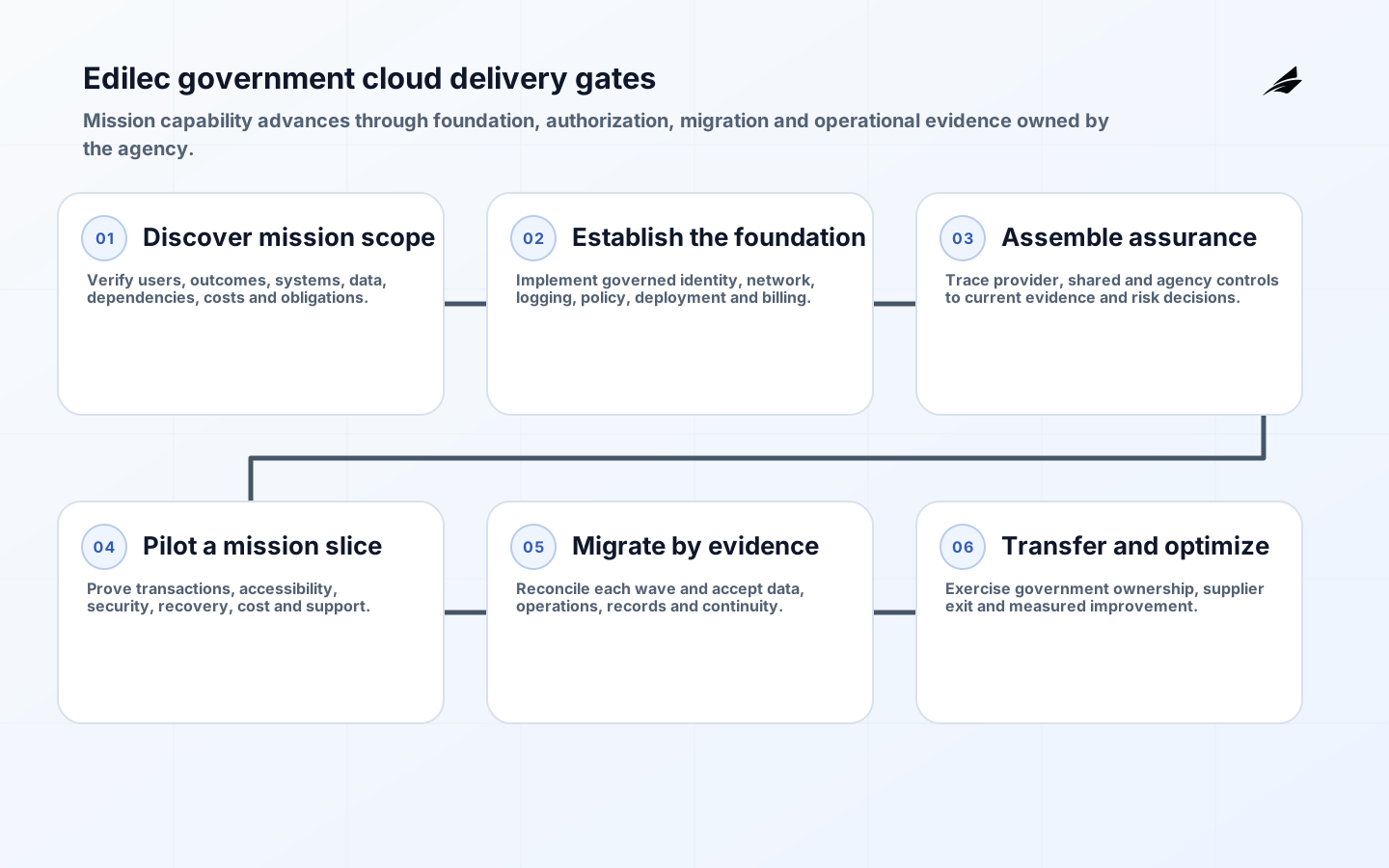
Organize delivery into discovery, foundation, pilot, migration waves, operational transition and optimization. Discovery establishes inventory and business case. Foundation proves guardrails. Pilot validates one complete mission slice and authorization evidence. Each migration wave has technical and business acceptance. Operational transition proves support and recovery. Optimization follows stable telemetry and spend. Every gate should name required evidence, approver, unresolved risk and stop action. Schedule is an input to risk decisions, not a reason to waive unrecorded controls.
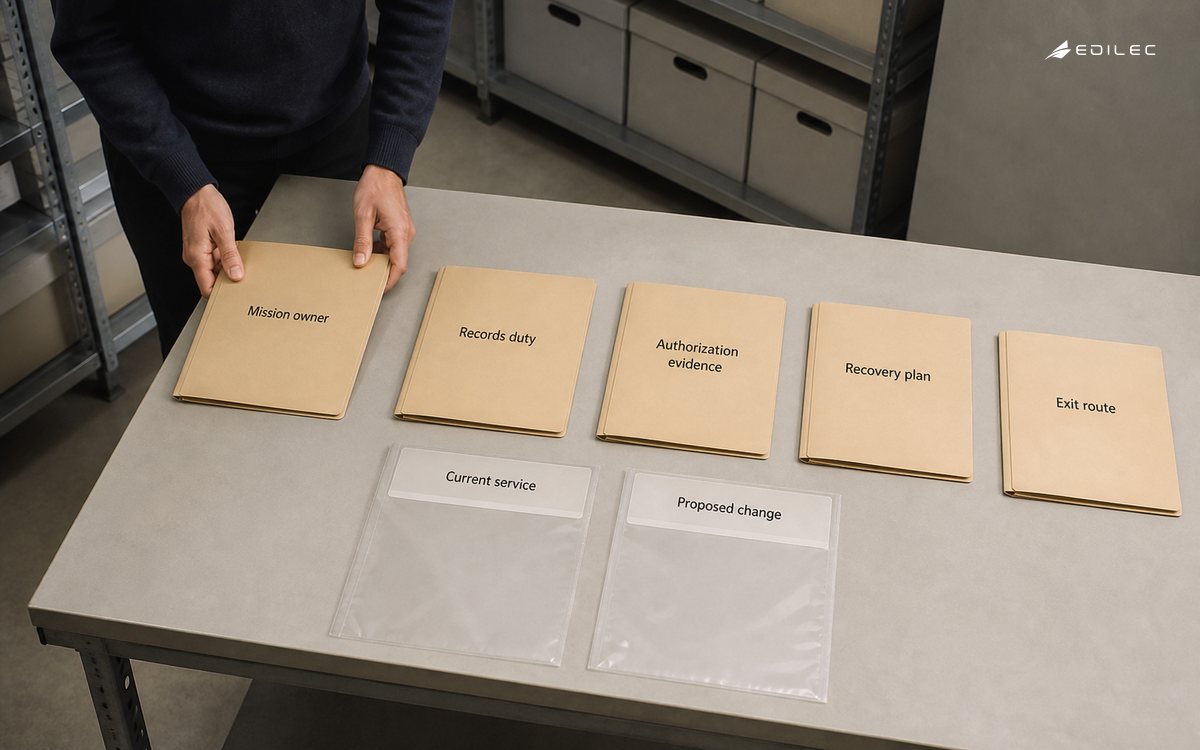
Transfer capability through paired design, government-owned repositories, code review, runbook exercises and role-based training. Measure whether agency teams can deploy, diagnose, assess changes, respond to incidents and restore service. Maintain an architecture and decision record that explains why controls and products exist. Test exit incrementally by exporting data, rebuilding a component, removing supplier access and handing operations between teams. Workforce plans should cover cloud engineering, acquisition, security, finance, data and product management; technology training alone cannot create a cloud operating model.
Government cloud delivery takeaways
- Tie every migration or modernization wave to a mission baseline and measurable public outcome.
- Build identity, network, logging, policy, deployment and billing controls as a governed foundation.
- Maintain traceable authorization evidence and review provider monitoring throughout operation.
- Protect resources through attributable identity, least privilege and tested emergency access.
- Model full lifecycle cost, including authorization, workforce, dual operation and exit.
- Use evidence gates and government-owned artifacts to preserve long-term capability and choice.
Frequently asked questions
Must all government systems move to cloud? No. Choose deployment from mission, security, performance, economics, capability and legal constraints. Retain or replace workloads when cloud migration does not create sufficient value or a required condition cannot be met.
Does provider authorization cover agency applications? It provides reusable evidence for controls within the authorized offering. The agency must assess its configuration, application, data, identities, interconnections and customer responsibilities and authorize its implemented system under applicable rules.
How should an agency measure success? Combine public-service outcomes with reliability, recovery, security exposure, delivery lead time, cost allocation, workforce capability and unresolved risk. Resource migration counts or cloud spend alone do not demonstrate mission improvement.
Conclusion
Government cloud services succeed when mission ownership remains visible through every technical decision. A policy-enforced foundation, continuous authorization evidence, protected data, realistic economics, tested continuity, phased acceptance and durable government capability allow cloud benefits without weakening public accountability. This plan provides the decision structure needed to move deliberately and improve after launch.