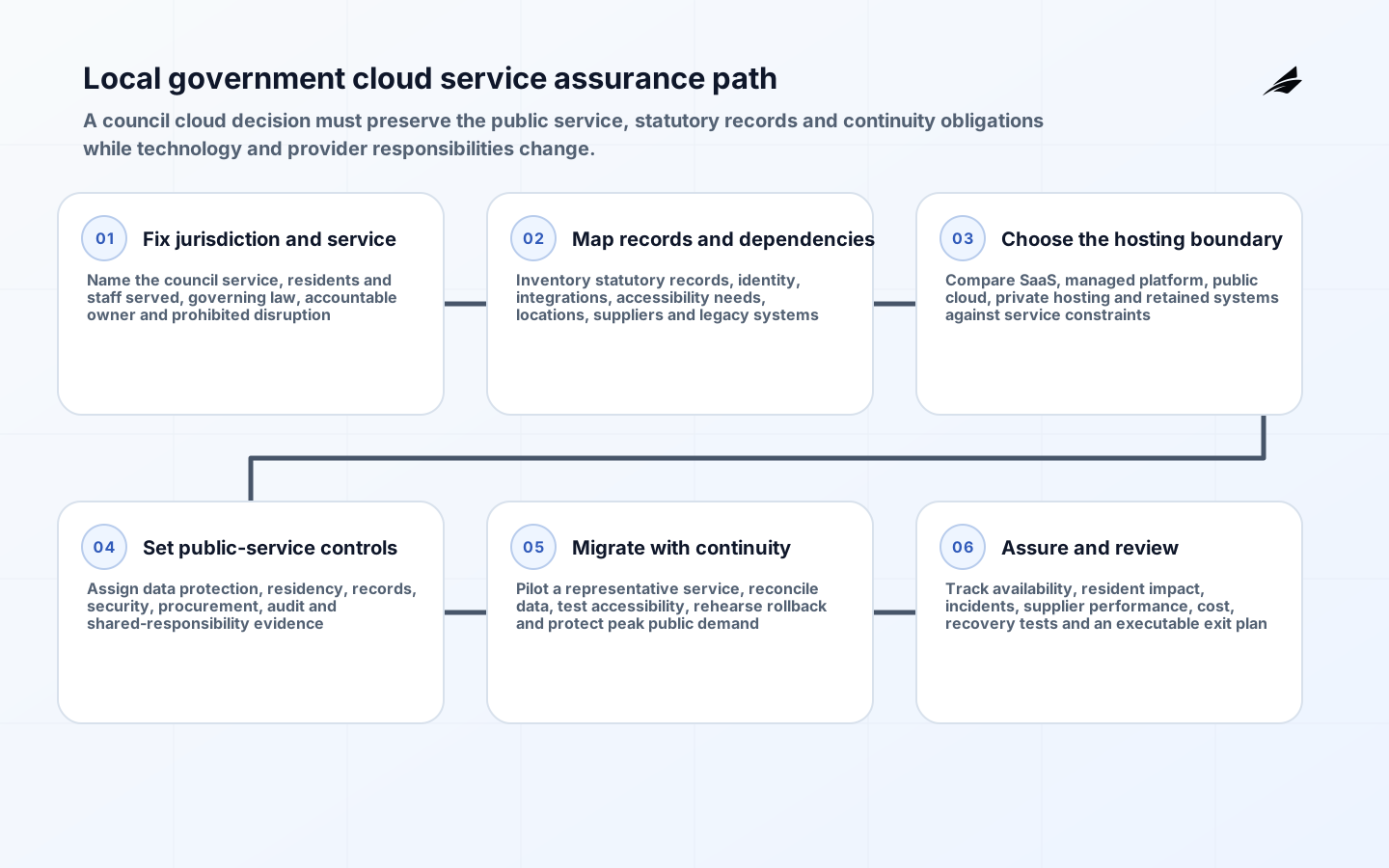
Local government cloud services can improve resident access and reduce infrastructure toil, but the public obligation does not move to the provider. A council, municipality or county remains accountable for essential services, public records, privacy, accessibility, procurement and continuity. The useful question is therefore not whether cloud is modern; it is whether a specific service design improves public outcomes within lawful, affordable and recoverable boundaries.
This local government cloud services FAQ complements the scope, cost and risk plan and the detailed implementation checklist. It is vendor-neutral and not legal advice. Assign records, privacy, security, accessibility and procurement specialists to interpret obligations in the relevant jurisdiction.
Which local government services are suitable for cloud?
Start with the service and its users. Public websites, collaboration, case management, geospatial analysis and development environments can all be candidates, but suitability depends on data, latency, integration, offline operation and supplier concentration. NIST SP 800-145 defines cloud by characteristics and service models; a hosted legacy server does not automatically gain elasticity, measured service or operational resilience.
Build a workload record containing the public outcome, critical periods, users, owner, records class, sensitivity, dependencies, demand, recovery objective and current cost. Include vulnerable residents, low-bandwidth access, assisted channels and field staff. A digital path that excludes a population or fails during an emergency is not successful because average transaction time improved.
| Service characteristic | Cloud implication | Evidence before approval |
|---|---|---|
| Public information | High availability, accessibility and traffic absorption | Accessible page tests and surge exercise |
| Benefits or permits | Identity, case evidence and appeal continuity | Role tests and complete audit trail |
| Emergency operations | Provider and network dependencies may coincide | Offline procedure and recovery exercise |
| Public records | Retention, search, hold, export and deletion must coexist | Records schedule mapped to configuration |
How should a local authority procure cloud services?
Procure a measurable service boundary rather than a catalogue of technology. Requirements should name data locations, subcontractors, incident notification, evidence access, accessibility, performance, recovery, support, price dimensions and exit. Ask bidders to demonstrate one representative transaction and restore, not just provide certifications. Independent reports can reduce duplicated assessment, but they do not prove the authority's configuration or application behavior.
Define ownership of accounts, repositories, domains, encryption keys, logs and infrastructure code. Retain audit rights proportionate to risk and require timely notification of material service or subcontractor changes. Score lifetime cost, migration and exit alongside implementation price. Avoid minimum commitments based on unvalidated demand, and reserve a controlled way to add capacity during elections, tax deadlines, severe weather or public emergencies.
How should public data and records be governed?
Classify information by purpose and consequence, not only confidentiality. Integrity of a property, licensing or election-related record may matter as much as secrecy. Identify the authoritative system, lawful use, access roles, retention schedule, legal hold, publication status and correction process. Track copies in analytics, search, support tickets, logs and backups because lifecycle commitments apply beyond the primary database.
Configure geographic placement and cross-border support access from actual requirements. Minimize collection and avoid using production resident data for casual testing. Make bulk export exceptional, approved and monitored. Preserve provenance when data moves among departments and partners. Residents and case workers should be able to understand source, status and correction routes where records influence a decision.
What does shared security responsibility mean?
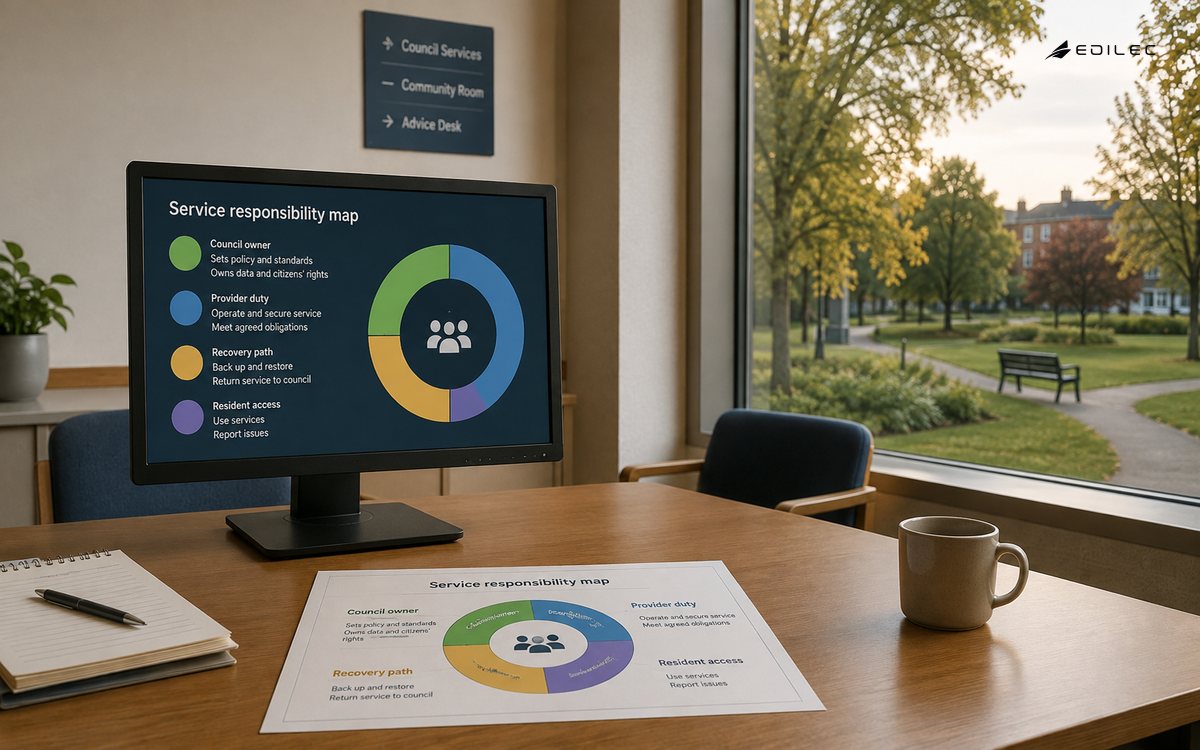
The provider protects portions of facilities, hardware and managed service layers; the authority still controls users, permissions, data, configuration and application logic. Create a control matrix for each service model and name the evidence and operator. CISA's Cloud Security Technical Reference Architecture highlights shared services, migration and cloud posture management, useful concepts beyond its federal audience.
Apply phishing-resistant multifactor authentication to administrators where feasible, short-lived workload identity, least privilege, separation for high-impact actions, central logs and protected deployment. NIST SP 800-207 explains zero trust as resource-focused access decisions rather than trust based on network location. Test authorization at the record and tenant level; a secure login does not prevent an authenticated user seeing the wrong case.
How do accessibility and public inclusion affect architecture?
Accessibility is a release requirement, not a final content review. Include keyboard operation, screen readers, zoom, contrast, plain language, error recovery and document formats in acceptance. Test with representative users and assistive technology. Preserve telephone, in-person or delegated routes where needed, and ensure staff can see the same transaction state so residents do not restart a process when changing channel.
Plan for digital exclusion and identity exceptions. A resident may lack a modern device, stable address or standard identity evidence. Strong fraud controls should offer proportionate alternative proof and review, not silently deny access. Measure completion and abandonment by meaningful segment while limiting analytics data. Public value includes fairness, comprehensibility and the ability to challenge a decision, not only online adoption.
How should legacy systems be migrated?
Map service transactions and dependencies before choosing rehost, replatform, replace or retire. Profile data quality, undocumented reports, batch exchanges, staff workarounds, supplier interfaces and statutory calendar events. Pilot a thin but complete journey with identity, records, support and recovery. Do not migrate a defective process unchanged merely because moving its servers is faster.
For each wave, reconcile counts, balances, attachments, permissions and business outcomes. Define the authority during coexistence and prevent conflicting writes. Rehearse cutover and rollback with operational staff. Keep the legacy environment only for an approved evidence period, then revoke access, terminate interfaces, archive required records and remove cost. A migration is unfinished while the old obligation remains operationally necessary.
| Lifecycle gate | Authority evidence | Decision |
|---|---|---|
| Discovery | Service owner, users, obligations, baseline and dependencies | Prioritize or stop |
| Foundation | Identity, network, logging, policy, records and billing controls | Permit pilot |
| Pilot | Accessible transaction, security tests, restore and support | Approve migration wave |
| Closure | Reconciliation, public continuity, legacy retirement and exit artifacts | Accept service |
How should continuity and incident response be tested?
Set recovery objectives from public impact and seasonal criticality. Exercise provider outage, identity failure, ransomware, connectivity loss and corrupted data. Validate alternate channels, contact lists, delegated authority, status communications, backup isolation and transaction reconciliation. Include elected leadership and communications staff in scenarios where public confidence or emergency messaging is affected.
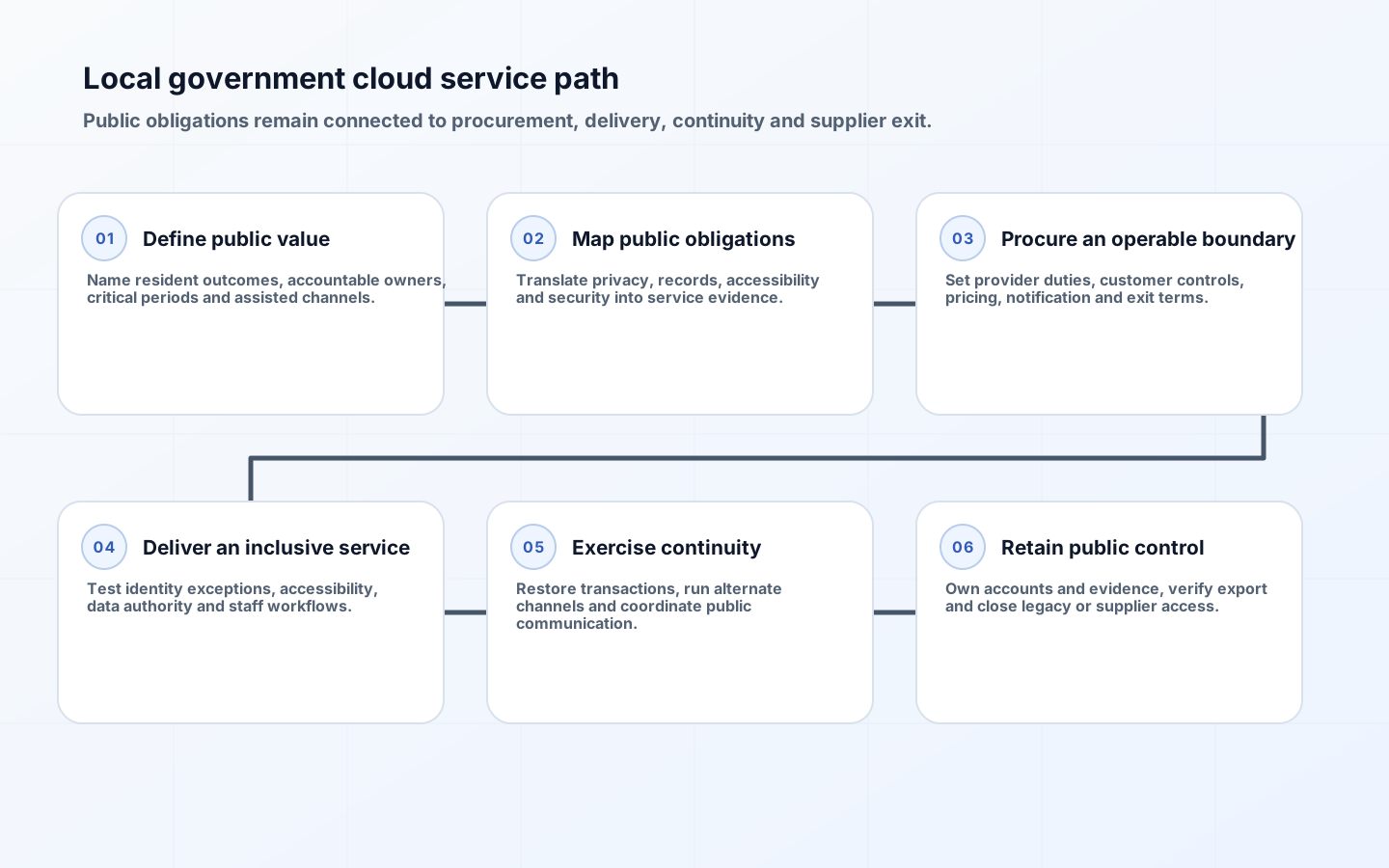
NIST SP 800-61 Rev. 3 integrates incident response across cybersecurity risk management. Maintain one incident timeline across authority and suppliers, preserve evidence lawfully and define notification thresholds before pressure rises. After an exercise or incident, verify corrective actions and update risk, architecture and procurement assumptions rather than filing a retrospective with no operating change.
How are cost and supplier exit controlled?
Model subscription, consumption, network transfer, support, security, records, migration, staff and exit. Allocate spend to service owners and compare it with transactions or public outcomes, not only departmental budgets. Set anomaly alerts and review idle assets, but preserve resilience. The cheapest month can create the most expensive outage if backup retention or redundant capacity is removed without a risk decision.
Maintain an exit plan with data formats, export time, interface inventory, configuration, repositories, keys, domains, records disposition and supplier assistance. Test a sample export and independent restore before renewal. NIST's CSF 2.0 gives supplier risk and governance greater visibility; use that lens to ensure elected accountability and internal capability survive a provider change.
Govern change after launch through a multidisciplinary service review. Provider releases, new analytics, AI-assisted features and altered subcontractors can change privacy, accessibility or records behavior without a traditional migration. Maintain a tested configuration baseline, assess material changes and communicate resident-facing effects in plain language. Invite frontline staff to report workarounds because unofficial spreadsheets and manual queues often reveal where the digital service no longer matches policy or lived need.
Publish a proportionate service record for oversight: accountable department, purpose, main supplier, data categories, accessibility route, service status and contact. Transparency must not expose security-sensitive architecture, but it can help residents and officials understand where decisions and corrections belong. Maintain the record as the service changes rather than producing it only during procurement.
Local government cloud takeaways
- Start from a resident service and public obligation, not a cloud target.
- Make records, privacy, accessibility and alternate channels part of architecture.
- Map shared controls to named authority and supplier operators.
- Accept migration waves only with reconciliation and continuity evidence.
- Retain account ownership, export capability and tested supplier exit.
Frequently asked questions
Must all government data remain in one country? Requirements vary by jurisdiction and data class; determine the actual legal, contractual and risk position. Is cloud automatically more secure? No. Providers can offer strong capabilities, but identity, configuration and operations determine outcomes. Can small authorities share a platform? Yes, if tenant isolation, decision rights, records and incident coordination are explicit.
Should certification replace due diligence? No. It can supply useful independent evidence for a defined boundary and period, but the authority must assess service fit and its own implementation. What is the best first migration? A meaningful service with manageable dependencies and measurable public value, not necessarily the least important system or the largest technical estate.
Conclusion
Local government cloud succeeds when technology choices strengthen public service accountability. Select workloads from evidence, procure an operable boundary, protect every access path and rehearse continuity with suppliers and frontline staff. A small, accessible service that can be explained, recovered and exited provides a better foundation than a broad migration target with no resident-centered acceptance test.