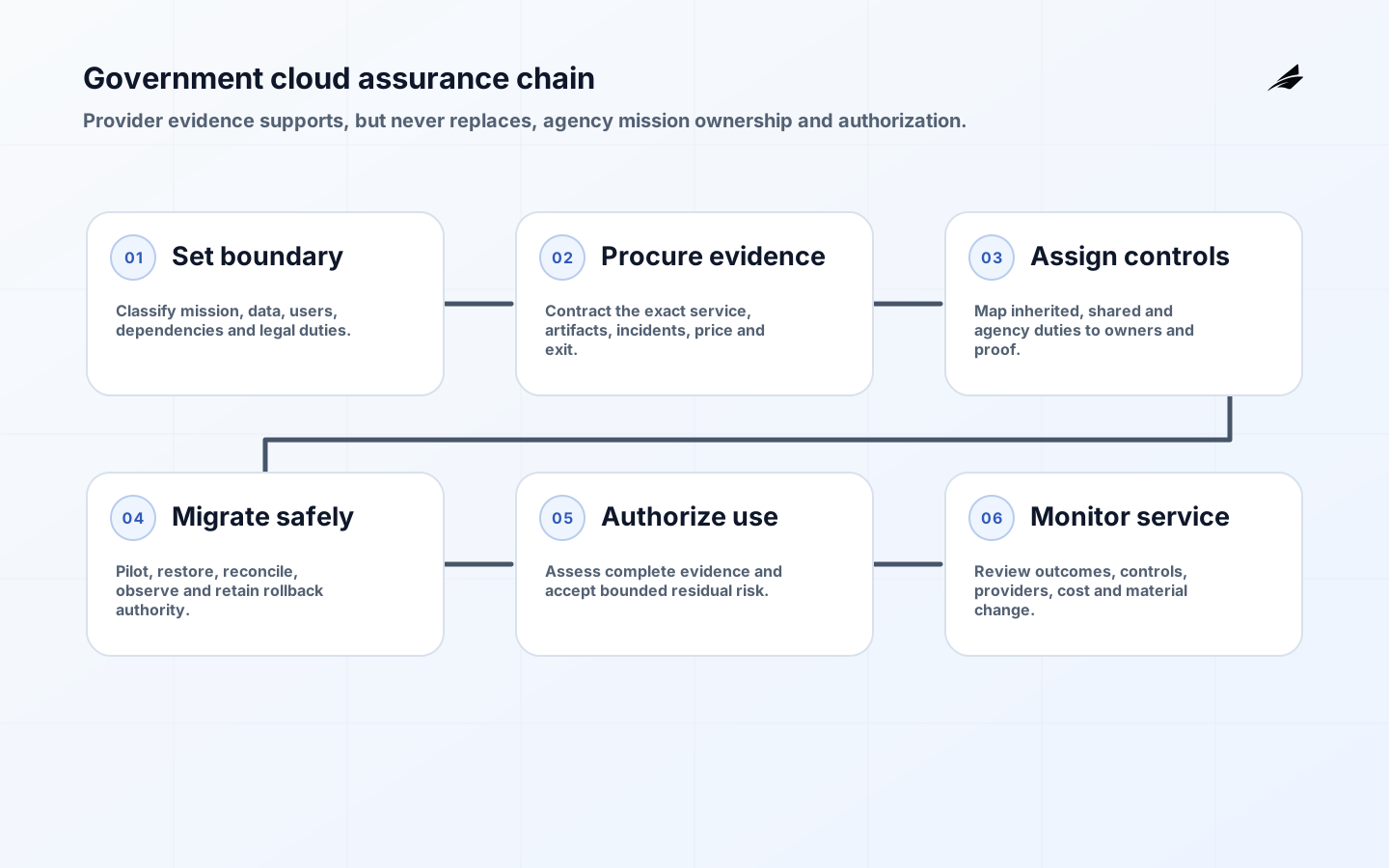
This government cloud services FAQ explains the decisions a public-sector team must own even when a provider operates much of the technology. Cloud can supply on-demand resources, reusable controls and managed platforms, but it does not automatically authorize an agency system or satisfy every mission obligation. The agency remains responsible for lawful purpose, information handling, service outcomes, risk acceptance, records, accessibility, continuity and supplier oversight within its jurisdiction.
NIST defines cloud computing through on-demand self-service, broad network access, resource pooling, rapid elasticity and measured service, with infrastructure, platform and software service models. Those distinctions matter because responsibility moves with the service model. Start with the government cloud scope and delivery plan, then use the government cloud implementation checklist to collect acceptance evidence.
What makes a cloud service suitable for government?
Suitability begins with the mission and information impact, not a government label in a product name. Identify the service, users, data, transactions, external interfaces, geographic constraints and harm from loss of confidentiality, integrity or availability. Determine which statutes, policies, records rules, procurement terms and sector requirements apply. A provider authorization is valuable reusable evidence for the provider boundary; it is not a blanket approval for every agency application, configuration or data set.
Evaluate the exact service and region, not the provider brand as a whole. Marketplace status, authorization level and service inclusions can differ. Confirm whether identity, logging, backup, support, key management, network connections and subprocessors are inside the assessed boundary. Record limitations and customer responsibilities. When assurance terms such as Low, Moderate or High are used, tie them to the governing scheme and system categorization instead of treating them as universal quality grades.
| Decision | Evidence to inspect | Agency-owned question |
|---|---|---|
| Service boundary | Authorization package, architecture and included-service list | Does our exact region, feature and connection fall inside it? |
| Control inheritance | Control implementation summary and responsibility matrix | Which shared and customer controls remain to be implemented? |
| Data handling | Contract, location, encryption and deletion terms | Can the complete data lifecycle meet mission and legal duties? |
| Operations | SLA, incident process, maintenance and monitoring evidence | Can the agency detect, respond and communicate to the public? |
| Exit | Export formats, deletion proof, assistance and fees | Can service continue through migration or provider failure? |
How does shared responsibility work?
Create a control allocation at the implementation level. A provider may secure physical facilities and hypervisors while the agency owns identities, application code, data classification and business continuity. A platform may patch its runtime while the application team must restage workloads and remediate dependencies. Cloud.gov, for example, describes inherited, shared and customer controls; agencies using another service need the corresponding authoritative matrix for that service.
For every relevant control, name the implementer, evidence, monitoring source, review cadence and exception authority. Resolve gaps where each party assumes the other is responsible. Include the integrator and managed-service operator because contracts often split responsibility among more than two parties. NIST SP 800-53 is a control catalog to tailor through risk management; copying controls into a system security plan without evidence and ownership does not implement them.
What should procurement require?
Write requirements around measurable service behavior and evidence access. Cover the authorized service boundary, notification of material changes, vulnerability and incident timelines, log availability, identity federation, encryption and key options, records retention, legal requests, accessibility, subcontractors, service levels, price changes, audit cooperation, portability, deletion and termination assistance. Require notice when an included service leaves or changes its assessed boundary.
Avoid prescribing one architecture when an outcome and test can protect the mission more effectively. At the same time, do not accept a generic compliance statement in place of evidence. Specify the artifacts evaluators and operators will receive, their update cadence and rights to use them. Make exit economics visible before award: egress, parallel operation, data transformation, replacement interfaces, remaining commitments and secure media disposition can dominate late-stage cost.
| Risk scenario | Preventive control | Operational proof |
|---|---|---|
| Privilege misuse | Federated identity, least privilege and separated admin roles | Access review, privileged event and break-glass exercise |
| Provider or region outage | Designed redundancy and tested continuity path | Recovery exercise with measured RTO and reconciled data |
| Uncontrolled service change | Approved service catalog and configuration policy | Drift report and material-change review |
| Incomplete incident picture | Agency-owned log access and clock correlation | Joint incident exercise and retained evidence |
| Vendor lock-in | Portable data, interface abstraction and funded exit plan | Timed export, restore and replacement-service rehearsal |
How should migration be planned?
Inventory applications, information, identities, interfaces, certificates, schedules, records, recovery objectives and operational owners. Choose a disposition per workload: retain, retire, replace, rehost, replatform or refactor. Migration is not modernization by default. Establish the landing environment and guardrails before workloads arrive, including account hierarchy, network paths, policy, logs, keys, approved services, budgets and incident integration.
Pilot a representative but bounded service. Test normal use, denied access, dependency loss, backup restore, performance under expected demand and rollback. Reconcile records and transactions at cutover; DNS success is not business acceptance. Keep the old service only for an agreed observation period, with authority and criteria for reversal. After acceptance, revoke obsolete access, sanitize or dispose of media according to policy, update inventories and close duplicated operating paths.
How do authorization and continuous monitoring connect?
Authorization should consume provider evidence, agency implementation evidence and an assessment of residual risk. The authorizing official needs a truthful boundary, current control allocation, open findings, remediation plans and mission context. Reusable evidence can reduce duplicate assessment, but inherited controls still need applicability and dependency checks. Document compensating controls where the standard implementation cannot apply and identify who accepts the resulting risk.
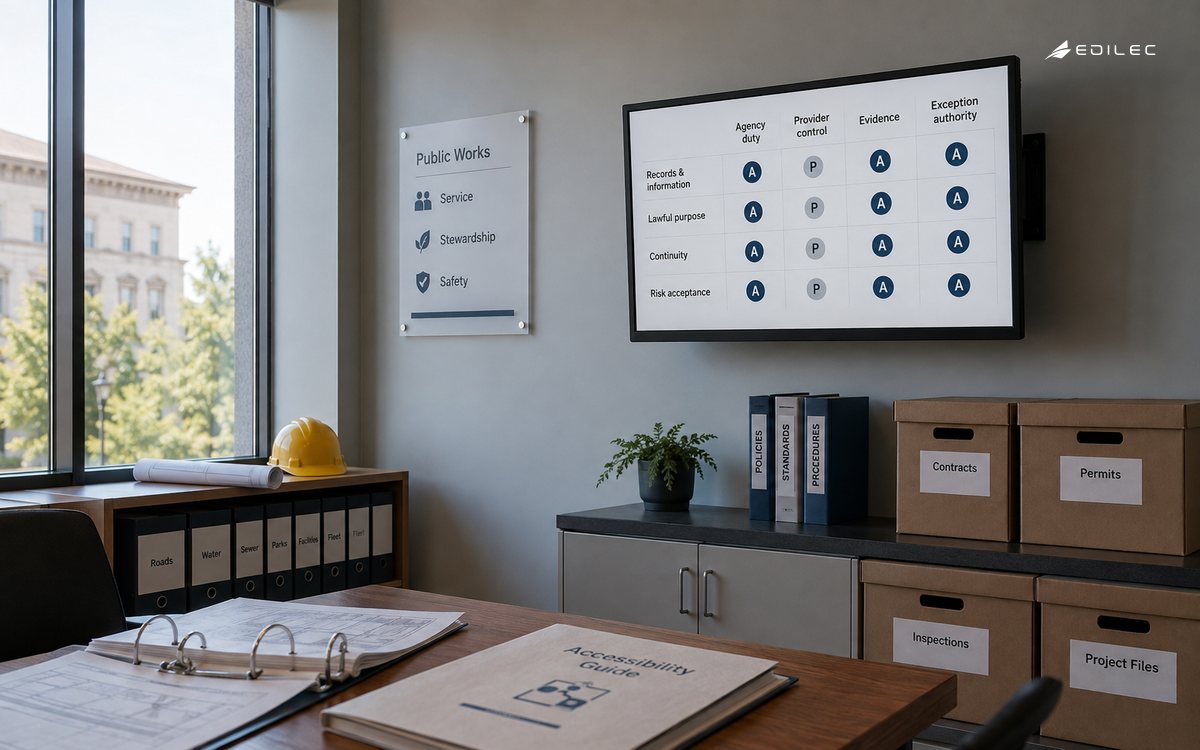
Treat authorization as an operating decision, not an endpoint. Feed vulnerability findings, configuration drift, identity changes, provider notices, incidents, control assessments and recovery tests into continuous monitoring. Establish thresholds for escalation and material change. A new region, data class, identity path, AI feature or subcontractor may alter the authorization boundary even when the application name stays the same.
What does good government cloud operation look like?
Operate around public-service outcomes. Define service level indicators at the citizen, employee or partner journey, then map provider and component signals beneath them. Keep agency access to telemetry and incident evidence. Rehearse cross-organization escalation so contacts, severity language and decision authority work under pressure. Provider status alone may not reveal an agency-specific identity, integration or data-quality failure.
Track full cost: provider usage, premium support, network transfer, security tools, licenses, integration, assessment, staffing, backup, recovery and exit obligations. Allocate ownership metadata at provisioning and review anomalies. Optimization must preserve authorized configurations and mission objectives. Turning off a recovery copy or shrinking log retention to meet a budget can transfer cost into risk rather than create value.
How should records, accessibility and public accountability be handled?
Determine which cloud artifacts are official records: submitted forms, decisions, correspondence, audit events, configurations, approvals and incident evidence may all have schedules or legal holds. Assign the authoritative repository and ensure exports preserve metadata, timestamps and relationships. Provider backup retention is not a records-management strategy. Test discovery, correction, hold and disposition workflows before the first regulated record enters the service.
Government digital services also need accessibility across the complete journey, including provider consoles used by public employees where applicable. Set applicable standards and testing evidence in procurement, then verify identity, forms, documents, status messages, support and emergency communication with disabled users and assistive technology. A compliant hosting platform does not make an inaccessible application compliant. Publish limitations and remediation ownership rather than hiding them behind supplier claims.
Keep public accountability proportional to sensitivity. Maintain a service owner, plain-language purpose, data categories, supplier boundary, performance evidence and complaint or redress route where policy requires or public trust benefits. Do not disclose security detail that would increase risk, but do not use security as a reason to conceal who is accountable for the service and how people can correct an error.
What six-stage procedure should agencies use?
- Define the mission service, information impact, users, jurisdictions, dependencies and accountable risk authority.
- Procure the exact authorized service boundary, evidence rights, operational duties, pricing protections and exit support.
- Build a governed landing environment and assign inherited, shared and agency controls with verifiable owners.
- Pilot and migrate recoverably, testing denied paths, restore, reconciliation, performance and rollback.
- Assess the complete system evidence and authorize the bounded use with known residual risks and remediation dates.
- Continuously monitor service outcomes, controls, providers, cost and portability; reassess material changes and rehearse exit.
Key takeaways
- Match the exact service and assessed boundary to the mission and information impact.
- Translate shared responsibility into control-level owners, evidence and monitoring.
- Contract for incident, evidence, records, accessibility, price and exit behavior before migration.
- Prove recoverability and transaction reconciliation, not merely infrastructure deployment.
- Keep authorization current through material-change review and continuous operating evidence.
Frequently asked questions
Does FedRAMP authorization give an agency an ATO?
No. FedRAMP provides standardized assessment and reusable cloud-provider evidence for US federal use. An agency authorizing official evaluates the complete agency system, including application and customer controls, and makes the authorization decision. Other countries and levels of government use their own legal and assurance schemes.
Is data residency the same as data sovereignty?
No. Residency describes where data is stored or processed. Sovereignty concerns the laws and authorities that may apply to data, providers and operations. Assess corporate control, support access, subprocessors, legal requests, encryption keys, backups and metadata as well as primary storage location.
Does government require multicloud?
Not universally. Multicloud can support specific resilience, procurement or capability goals, but it adds identity, network, security, skills and operating complexity. Choose it only when a defined scenario and tested design justify that cost. Portability and a credible exit plan can be valuable without running every workload on several clouds.
Conclusion
Government cloud services work when reusable provider capability is joined to accountable public-sector control. Mission classification, exact-boundary evidence, recoverable migration and continuous oversight matter more than a cloud label. Teams commissioning external support can use the government cloud professional services plan and its implementation checklist to define supplier deliverables and acceptance.