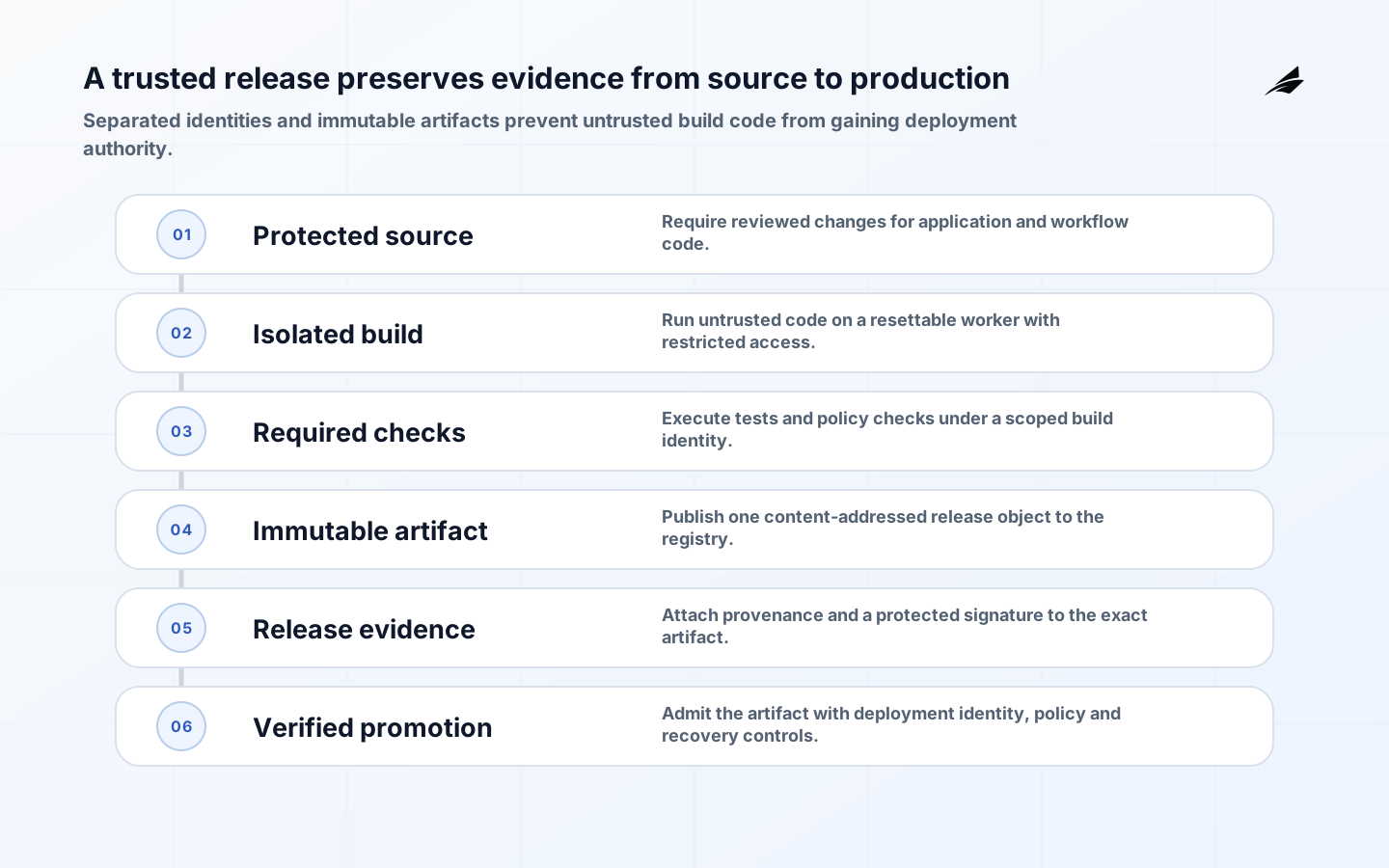
CI/CD modernization is the improvement of how changes become trusted, deployable software. It may consolidate fragmented tools, standardize reusable pipelines, isolate runners, replace long-lived credentials, add artifact provenance, automate environment promotion or make releases observable and recoverable. The aim is not a fashionable pipeline diagram. It is a delivery system that gives teams faster feedback while maintaining evidence, separation of duties and production safety.
A useful engagement starts from application and regulatory needs, not a mandate to force every repository into one template. A static website, mobile application, regulated service and legacy packaged system need different tests and release paths. The cloud and DevOps service is relevant only after owners define outcomes, constraints and migration evidence; modernization should not invent unsupported claims about a provider or delivery timeline.
Scope the complete delivery system
Inventory repositories, branch protections, build definitions, runners, dependencies, registries, environments, secrets, approvals, deployment mechanisms and rollback procedures. Include manual handoffs and spreadsheet approvals because they are part of the actual system. Map which identity initiates each step, where untrusted code can execute, which network destinations are reachable and who can change pipeline policy. Capture support status and ownership for every plugin and integration.
| Scope area | Questions | Required output |
|---|---|---|
| Portfolio | Which services, release patterns and risk tiers exist? | Migration cohorts with owners |
| Source | How are reviews, protected branches and exceptions governed? | Version-control policy and exception process |
| Build | Where do jobs run and what can they access? | Runner trust zones and hardened images |
| Artifact | What is built once, stored, signed and promoted? | Immutable artifact and provenance design |
| Deployment | How are environments changed, verified and recovered? | Promotion, approval and rollback model |
| Operations | Who monitors failures, updates templates and supports teams? | Service ownership and support objectives |
Define a paved path with explicit escape routes
A paved path should provide a maintained default: reusable workflow components, approved build images, secure identity federation, dependency caching, standard tests, artifact publishing, environment promotion, telemetry and documentation. It should be versioned and tested like a product. Teams need a clear extension mechanism and an exception process for legitimate workload differences. Copying a central YAML file into hundreds of repositories creates drift rather than standardization.
Separate control logic from application-specific steps. The platform can enforce source identity, artifact handling, secret access and production gates while teams own build commands and service tests. Prefer short-lived workload identity over static cloud keys where platforms support it. Build once and promote the same immutable artifact through environments; rebuilding for production weakens confidence that the tested object is the released object.
Modernize software supply-chain controls with the pipeline
NIST's SSDF frames secure development across organizational preparation, software protection, well-secured production and vulnerability response. Translate that into release behavior: protected source, reviewed pipeline changes, pinned and governed dependencies, isolated builds, protected signing identity, vulnerability handling and traceability from deployed version to source and build. SLSA provides a framework for provenance and increasing assurance against tampering; adopt the level and controls justified by risk rather than claiming a label without verification.

Generate a software bill of materials or other inventory where required, but connect it to ownership and response. A file that nobody can query during a vulnerability disclosure is weak evidence. Sign artifacts when the verification path is also implemented. Policy at deployment should verify identity, integrity, provenance and allowed source before admitting an artifact. Preserve logs long enough for incident investigation under approved retention rules.
Estimate cost across transition and steady-state operation
A modernization estimate depends on repository count, pipeline diversity, test maturity, build duration, runner isolation, environments, compliance evidence, migration support and tool contracts. Separate one-time discovery and migration from recurring compute, storage, licenses and platform ownership. Include dual-running old and new systems, team enablement, template maintenance, integration upgrades and decommissioning. License comparison alone misses the labor and risk held in fragmented pipelines.
| Cost area | Primary drivers | Evidence for estimate |
|---|---|---|
| Discovery | Unknown pipelines, owners, plugins and release paths | Inventory and representative cohort assessment |
| Platform foundation | Identity, runners, network zones, registries and observability | Target architecture and threat model |
| Application migration | Custom steps, tests, packaging and deployment method | Repository archetypes and pilot results |
| Assurance | Required provenance, scanning, approvals and retention | Control mapping and evidence plan |
| Transition | Parallel licenses, support and freeze constraints | Wave schedule and exit criteria |
| Operation | Job volume, compute, cache, artifacts and platform team | Usage baseline and support model |
Example: migrate one representative service without changing its architecture
Consider a hypothetical API currently built by a shared server with a static deployment credential. A bounded first migration moves source checks, tests and packaging into the new platform, publishes one immutable artifact, uses federated identity for a non-production deployment and records provenance. Production remains on the old path until test parity, access review, recovery rehearsal and operator acceptance are complete. The application itself is not rewritten.
The pilot reveals migration facts: unsupported plugins, test flakiness, required network access, build duration, cache behavior, evidence gaps and support demand. Those results refine estimates for similar services. The team should not claim organization-wide improvement from one repository, but it can decide whether the paved path is viable and what must change before the next cohort.
Manage migration and operating risks
| Risk | Mitigation | Signal |
|---|---|---|
| Privileged runner compromise | Isolate trust zones, use ephemeral workers and restrict egress | Unexpected process, network or identity use |
| Secret exposure | Use short-lived identity, scoped tokens and redaction | Secret alerts and unusual authentication |
| Template blast radius | Version templates, test changes and roll out by cohort | Failure rate by template version |
| Slower feedback | Measure queues, cache effectiveness and test duration | Commit-to-feedback time |
| Control bypass | Protect pipeline and deployment policy with audited exceptions | Unverified deployments and exception age |
| Failed rollback | Use immutable artifacts and rehearse recovery | Recovery test result and time to restore |
Use a phased, reversible delivery plan
- Frame: agree application-level outcomes, risk tiers, non-negotiable controls and platform ownership.
- Discover: inventory pipelines, identities, runners, artifacts, environments, metrics, contracts and manual handoffs.
- Design: define paved-path components, extension points, trust zones, evidence and migration exit criteria.
- Prove: migrate representative repositories in shadow or non-production mode and compare outputs with the existing path.
- Pilot: release a low-risk service with staffed monitoring, rollback rehearsal and a documented return path.
- Expand: migrate cohorts with similar patterns, versioned templates, office hours and adoption telemetry.
- Retire: disable old jobs, revoke credentials, archive required evidence and close licenses and infrastructure.
- Operate: measure delivery and reliability outcomes, patch components and review exceptions as a platform product.
Use DORA's delivery measures at the application or service level and in context: deployment frequency, lead time for changes, change fail rate, failed deployment recovery time and reliability. Avoid turning metrics into individual targets. Pair them with queue time, flaky-test rate, platform availability, policy exceptions, artifact verification and developer feedback. Baseline definitions before migration so changes are interpretable.
Adoption is part of the product scope. Publish migration examples by repository archetype, provide office hours and observe where developers leave the paved path. Measure support demand, failed first migrations, time to useful feedback and recurring exceptions. Feed common friction into the platform backlog instead of shifting all adaptation to application teams. At the same time, keep control boundaries firm: convenience is not a reason to restore broad credentials or privileged shared runners. A platform succeeds when secure defaults are also the easiest supported route.
Procurement and exit planning deserve the same rigor as build design. Confirm data export, log access, artifact portability, identity integration, service limits, support response and notice for material platform changes. Document which reusable workflows depend on proprietary features and how releases continue during a provider outage. A credible exit plan need not promise rapid replacement, but it should prevent loss of source, artifacts, evidence and operational authority.
Key takeaways
- Inventory identities, runners, artifacts and manual release work, not only pipeline files.
- Offer a versioned paved path with governed extensions for different workload needs.
- Build once, promote immutable artifacts and verify provenance at deployment.
- Estimate migration, dual running, enablement and platform operation alongside licenses.
- Migrate representative cohorts with measurable exit and decommission criteria.
Frequently asked questions
Does modernization require replacing the CI/CD platform?
No. An existing platform may support the target controls after configuration, template and operating-model changes. Replace it when support, architecture, integration, security or economics cannot meet defined requirements. Prove migration value before committing the whole portfolio.
Should every team use one pipeline?
Standardize control interfaces and common components, not every command. Workloads need different builds and tests. A paved path should cover common cases while allowing reviewed extensions that preserve identity, artifact, policy and evidence requirements.
How much does CI/CD modernization cost?
There is no defensible universal amount. Estimate platform foundation, migration by repository archetype, assurance, enablement, transition and steady-state operation. Narrow the range using a representative pilot and actual job and storage volumes.
How do we know modernization worked?
Teams should receive faster, more reliable feedback; releases should be traceable and recoverable; exceptions and privileged credentials should decline; and old infrastructure should actually be retired. Evaluate service outcomes and developer experience together.
Conclusion
CI/CD modernization is a production-system change, not a YAML migration. The strongest programs define workload-aware standards, secure build identities, create verifiable artifacts and move repositories in evidence-backed cohorts. They budget for platform ownership and finish decommissioning. The outcome is a delivery path teams can understand, auditors can trace and operators can recover when a release goes wrong.