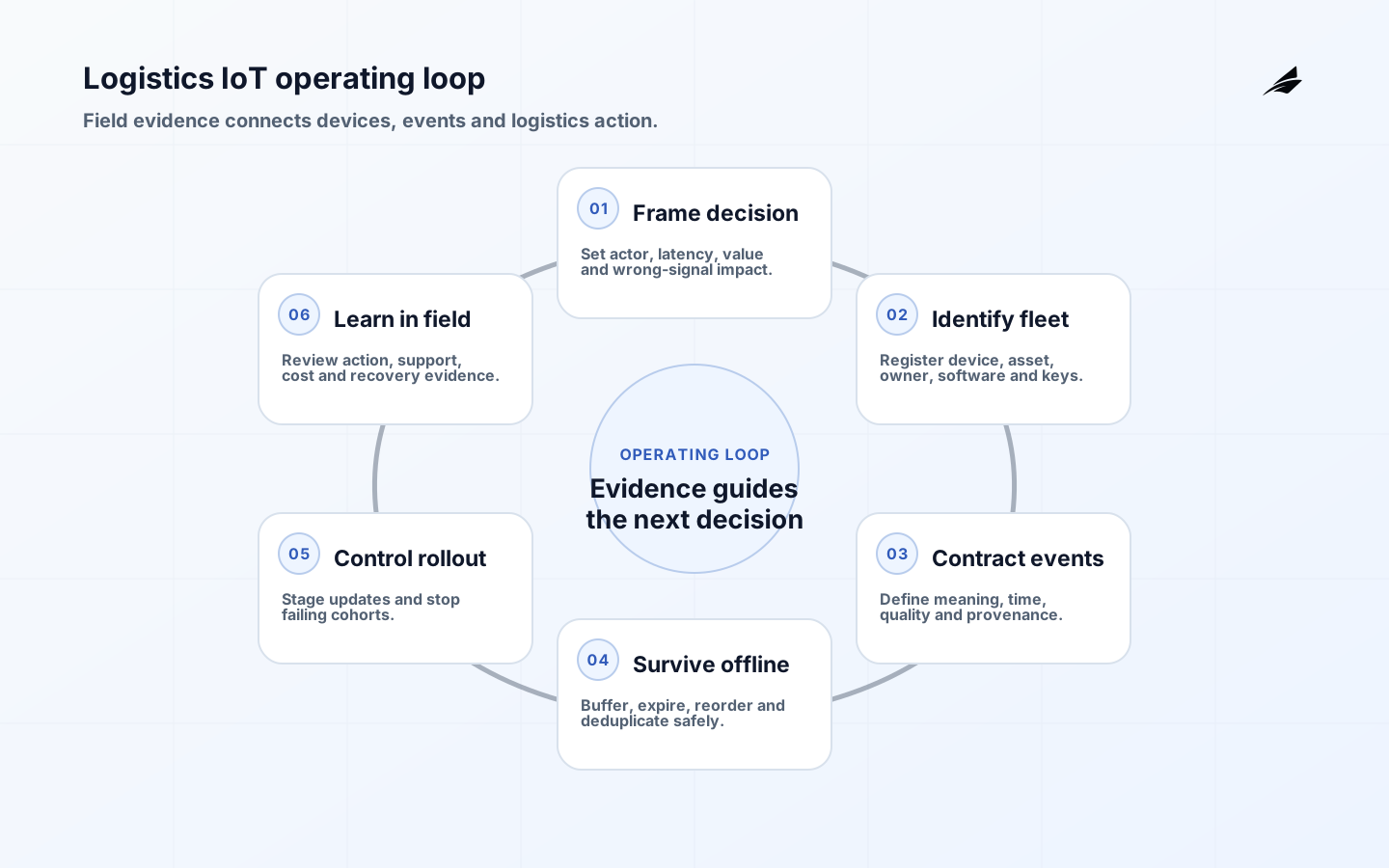
An IoT software development company for logistics must deliver a system that remains trustworthy across vehicles, depots, handhelds, gateways, networks and cloud services. A map marker is only the visible edge. Production success depends on device identity, event semantics, intermittent connectivity, secure updates, fleet support, retention and recovery. This implementation checklist turns those concerns into acceptance evidence for shippers, carriers, warehouse operators and technology teams.
Partner selection for logistics IoT should connect the business case to implementation evidence. Use the checklist after defining the scope and cost in the logistics IoT scope and cost guide, and consult the logistics IoT FAQ for focused procurement questions. Give each stage a client owner and a field test, not only a laboratory demonstration.
1. Define the logistics decision and operating boundary
Name the decision the system will improve: detect temperature excursion, predict arrival, verify custody, reduce empty travel, locate returnable assets or trigger maintenance. Define the actor, current baseline, target, acceptable delay and consequence of a wrong signal. Do not begin with a generic goal to collect real-time data. Some decisions need seconds; others are better served by a reliable batch that costs less and survives weak coverage.
Map vehicles, trailers, containers, facilities, device models, networks, countries, cloud regions, applications, suppliers and support teams. State who owns hardware, SIMs, firmware, certificates, installation, calibration, subscriptions, data and decommissioning. Include leased and subcontracted assets. Define whether the system advises a dispatcher or automatically changes physical operation; automation that can affect safety or custody needs stronger authority, validation and fallback.
| Implementation record | Minimum content | Acceptance question |
|---|---|---|
| Use case | Decision, user, latency, baseline and consequence | Does the signal cause a useful, authorized action? |
| Asset profile | Device, vehicle or container, owner and environment | Can every deployed component be identified and supported? |
| Data contract | Event meaning, units, time, quality and version | Can consumers distinguish fact, estimate and missing data? |
| Connectivity profile | Coverage, bandwidth, roaming and offline duration | Does the workflow remain safe without a network? |
| Security profile | Identity, interfaces, update and disclosure support | Can compromise be limited and remediated? |
| Lifecycle plan | Install, monitor, replace, transfer and retire | Can the operator control the fleet at scale? |
2. Establish device identity and lifecycle control
Maintain a registry linking physical identifier, logical identity, model, hardware revision, firmware, certificate, assigned asset, installer, activation time, owner and status. Provision unique credentials through a controlled process; avoid fleet-wide shared secrets. A device should prove its identity before publishing or receiving commands, and the platform should reject revoked or unexpected identities. Record custody when equipment moves between carriers, sites or customers.
The NISTIR 8259 series gives manufacturers a current lifecycle framework and core technical capabilities such as identification, configuration, data protection, interface access, software update and cybersecurity state awareness. Translate them into product requirements and supplier obligations. Plan installation, battery replacement, certificate rotation, repair, lost-device response, end of support and cryptographic erasure before the pilot becomes a distributed estate.
3. Engineer event meaning, time and provenance
Define what each event asserts and how it was derived. A location may be measured by GNSS, inferred from a gateway or entered by a driver. Store event time, observation time and receipt time separately. Include coordinate reference, units, accuracy, sensor state, sequence or source position, device identity, asset relationship and contract version. Preserve raw evidence only as long as policy and troubleshooting justify; detailed movement data can reveal sensitive commercial and personal patterns.
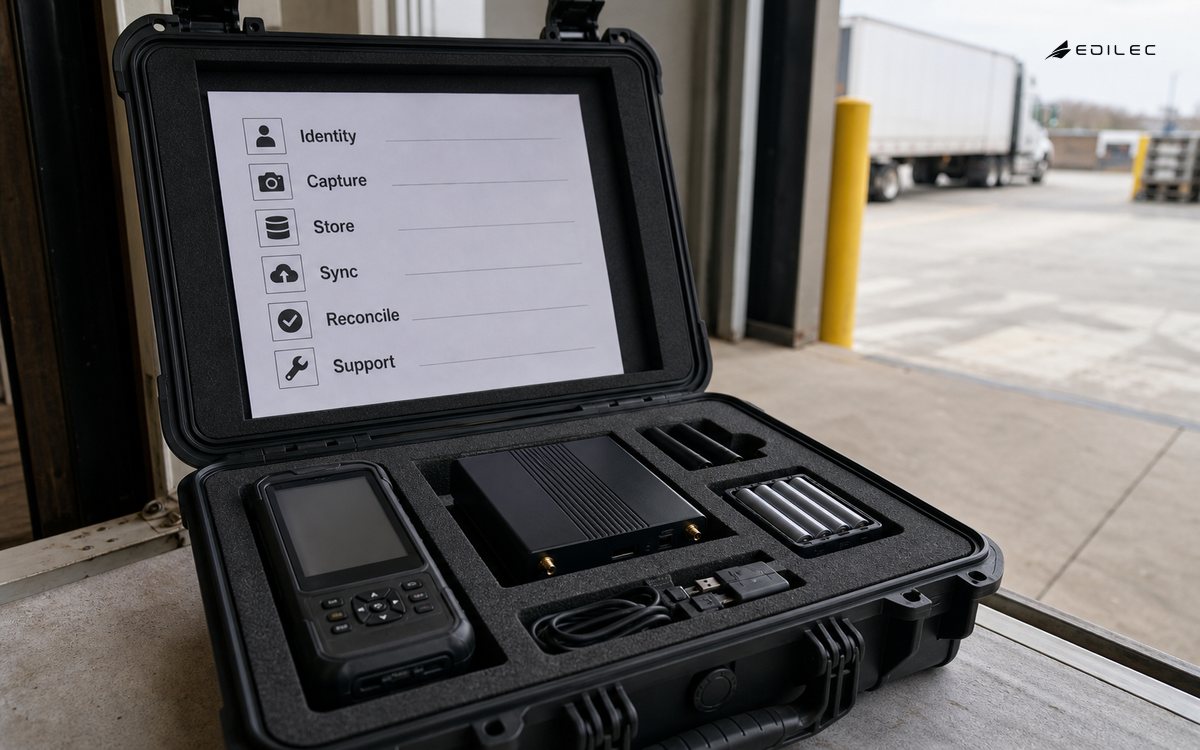
Use established semantics where they fit. The GS1 EPCIS 2.0.1 standard models visibility events around what, when, where, why and how, including sensor elements. Adoption does not remove the need to agree identifiers, business steps and vocabularies with trading partners. Version contracts, publish compatibility rules and give consumers notice and test examples before changing meaning.
4. Design for intermittent connectivity and duplicates
Assume tunnels, yards, borders, warehouses and rural routes will interrupt connectivity. Define local buffering capacity, priority, expiry, compression and behavior when storage fills. Commands need validity windows and acknowledgement; a delayed door-unlock or route instruction may be unsafe. Preserve sequence so late events can be identified. Make consumers idempotent because reconnect and retry can deliver duplicates. Display last-known time and confidence rather than presenting stale state as current.
MQTT 5.0 defines protocol features and quality-of-service levels, but a transport guarantee is not an end-to-end business guarantee. Broker acknowledgement does not prove that a warehouse system committed a unique custody event. Specify identity, authorization, session behavior, topic structure, payload limits, retention, duplicate handling and destination commit together. Load-test reconnect storms after a regional outage.
5. Secure devices, gateways and operational access
Inventory interfaces and disable those not required. Protect debug ports, local administration, wireless pairing, APIs and update services. Use least-privilege identities for devices and operators, separate tenants and fleets, encrypt appropriate communications and stored data, and monitor configuration drift. Segment IoT services from enterprise and operational systems according to risk. NIST OT security guidance emphasizes that controls must respect performance, reliability and safety requirements.
Sign and verify updates, prevent unauthorized downgrade, stage releases and retain a recovery image where feasible. Publish support periods and a vulnerability-reporting route. CISA's Secure by Design guidance places responsibility for customer security outcomes on manufacturers rather than relying on every operator to discover unsafe defaults. Contracts should require security notices, remediation targets, component information and support for credential or ownership transfer.
| Failure scenario | Safe behavior | Evidence to test | Owner |
|---|---|---|---|
| Network unavailable | Buffer priority events and show stale status | Field run through coverage loss and reconnect | Product and network owners |
| Device stolen | Revoke identity without disabling the fleet | Revocation and denied publish attempt | Security operations |
| Bad firmware | Pause cohort and recover supported version | Signed rollback or roll-forward exercise | Device engineering |
| Duplicate events | Commit each business effect once | Replay with repeated and reordered input | Data engineering |
| Cloud unavailable | Preserve local workflow within defined limits | Dependency outage exercise | Service owner |
| Sensor drift | Flag confidence and route calibration | Known-reference comparison | Fleet maintenance |
6. Pilot in representative field conditions
Select routes, equipment, facilities and users that expose real constraints: temperature, vibration, metal obstruction, weak coverage, multiple carriers, shift changes and customs boundaries. Include enough time to observe battery use, mounting failures, support workload and seasonal conditions. Compare the IoT signal with an authoritative operational record and investigate disagreement. A pilot that shows dots on a map but does not change a measured decision has not established value.
Set gates for expansion: data completeness, false alert rate, action completion, installation time, battery forecast, network cost, support cases, security findings and recovery results. Record exceptions by device model and operating context. Train dispatchers, drivers, warehouse staff and support teams on degraded states and escalation. The startup IoT implementation checklist offers additional product-lifecycle questions relevant to a new device platform.
7. Scale operations, observability and recovery
Operate fleet dashboards around action, not vanity counts. Monitor active and expected devices, last contact, firmware, certificate expiry, battery, signal quality, queue age, rejected events, duplicate rate and consumer lag. Correlate an event across device, broker, processing and destination without logging sensitive payload unnecessarily. Alert owners with a runbook. Separate a physical asset problem from a platform outage so maintenance and software teams respond appropriately.
Exercise mass certificate rotation, failed update, broker outage, cloud-region recovery, device replacement and data replay. Restore application-usable state, including registry relationships and pending commands, then reconcile with transport and warehouse systems. Define who can authorize fleet-wide action and protect that path independently. Scale only when the permanent team can identify affected assets, contain a bad cohort, recover and communicate with carriers and customers.
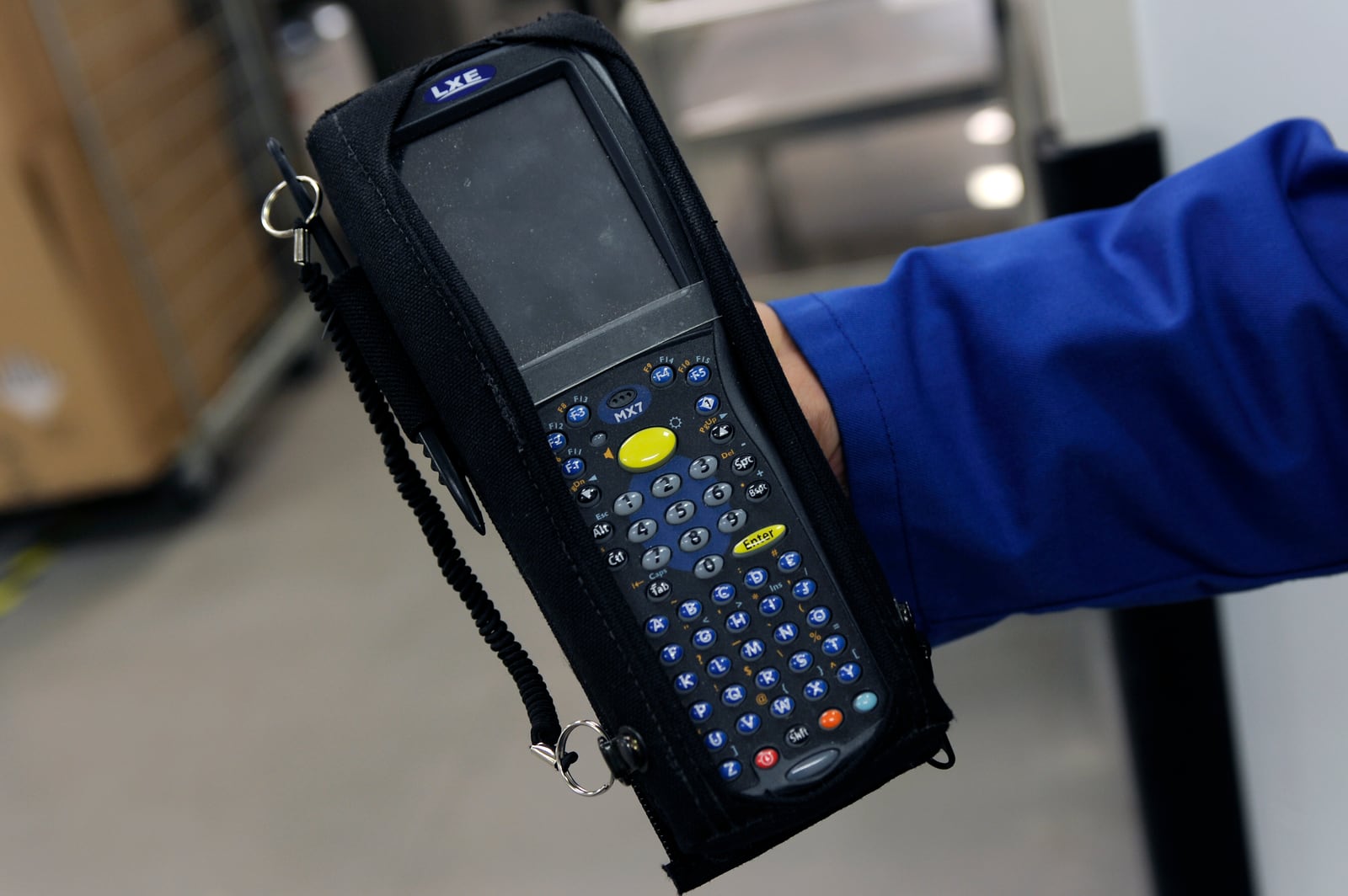
Treat installation and reverse logistics as part of software quality. Record installer, mounting position, calibration or pairing result, removed device and packaging disposition. A replacement must inherit the correct asset relationship without inheriting the old credential. Sample returned devices for physical, power, storage and update failures, and connect those findings to hardware and firmware versions. This closes the loop between support tickets and engineering rather than attributing every missing event to network coverage. Measure installation defects and repeat field visits by contractor and device batch, then improve fixtures, instructions and acceptance checks before the next cohort. Retain installer evidence and batch history so recurring physical defects can be separated from software faults.
Key takeaways
- Begin with a logistics decision, latency need and consequence, not a sensor catalog.
- Give every device a unique identity, owner, software state and lifecycle record.
- Contract event meaning, time, quality and provenance across trading partners.
- Design offline buffering, expiry, ordering and idempotency as one behavior.
- Stage secure updates and prove cohort recovery before fleet-wide rollout.
- Measure field action, support burden and reconciliation alongside platform uptime.
Logistics IoT implementation FAQ
Is cellular connectivity required? No. Connectivity should follow route, payload, latency, power and cost needs. Many systems combine cellular, local wireless, satellite or depot synchronization.
Does exactly-once messaging prevent duplicate shipments or alerts? No. Business idempotency requires a stable event identity and destination transaction design even when transport offers stronger delivery semantics.
Who owns device security after launch? Responsibilities are shared across manufacturer, software provider, operator and connectivity partners. The contract must name update, monitoring, disclosure and end-of-support duties.
How large should a pilot be? Large enough to cover representative devices, routes, users and failure conditions, but bounded enough to investigate every exception and change the design before scale.
Conclusion: prove the whole fleet lifecycle
An IoT software development company for logistics should be accepted on the reliability of the whole operating loop: identified devices produce meaningful events, the system survives disconnection, authorized users act, security updates reach controlled cohorts and failures can be recovered without losing custody or trust. Build from a measurable decision, test in the field and expand only from operated evidence.