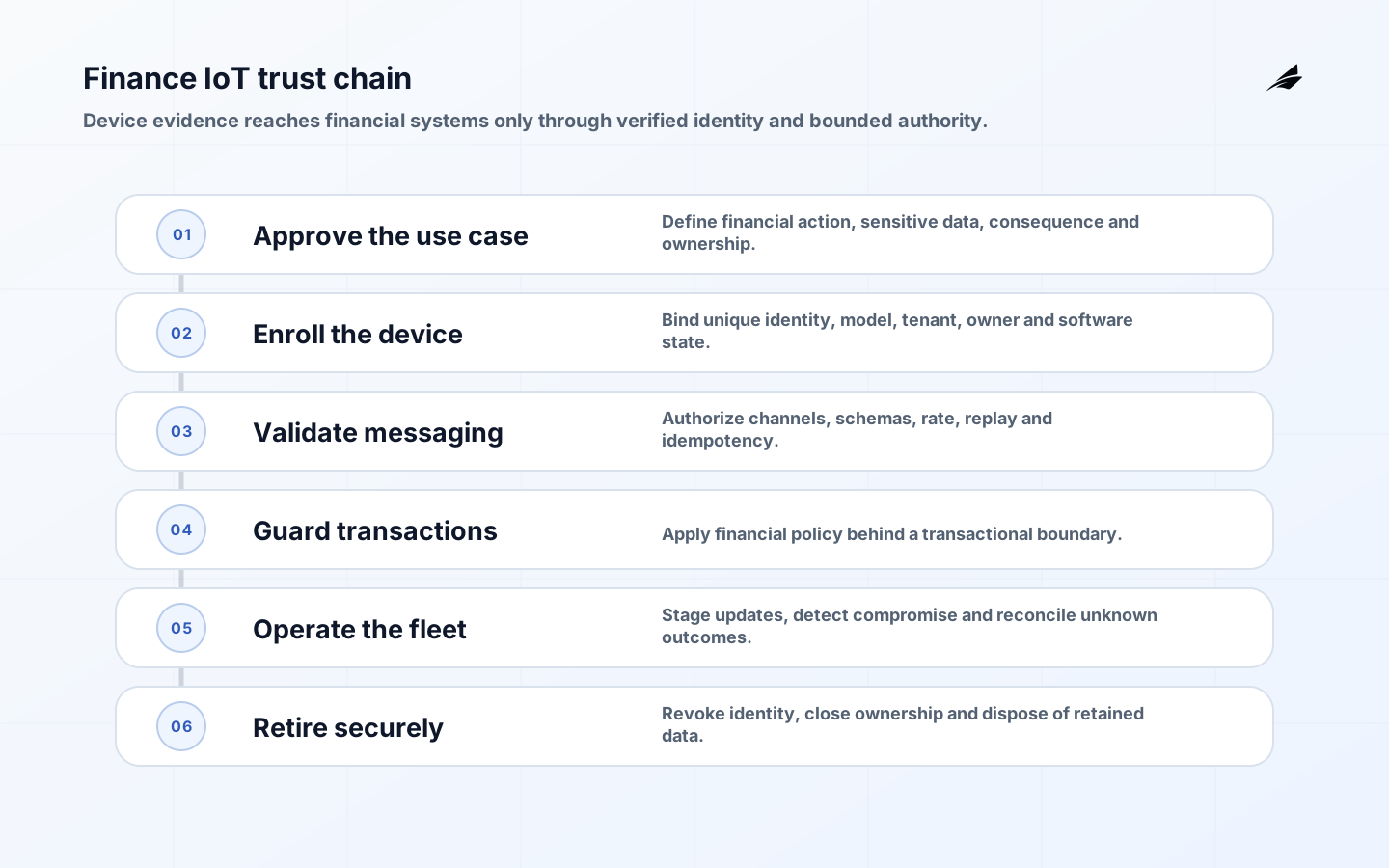
IoT software development for finance connects physical devices and real-world events to systems where identity, money, privacy and auditability matter. Examples include payment terminals, branch sensors, insured assets, cash equipment, connected kiosks and operational telemetry. The engineering challenge is not simply receiving data. The product must bind each message and command to the correct device, customer and authorization context while continuing safely through intermittent networks, updates and fraud attempts.
This guide frames scope, cost, risk and delivery for a financial institution, fintech or device vendor selecting a development partner. Use the finance IoT implementation checklist for detailed gates and the finance IoT FAQ for procurement questions. Early products can compare the startup IoT delivery guide.
Define the financial outcome and trust boundary
Name the business action enabled by the device: accept a payment, detect tampering, reconcile an asset, manage a queue or reduce equipment downtime. Map users, device models, locations, network paths, downstream ledgers, customer records and support roles. Distinguish telemetry from instructions that can move money or alter physical state. Set transaction volume, latency, offline behavior, retention, regional and recovery requirements. A prototype count of devices is not enough; connection churn, message rate, firmware diversity and support geography drive architecture and cost.
Draw the trust boundary around device hardware, firmware, local applications, gateways, brokers, cloud services, operator consoles, APIs and financial systems. Mark where payment account data, credentials, personal data and audit records appear. PCI DSS v4.0.1 was published as a limited revision with clarifications and no new or deleted requirements, according to the PCI SSC notice. Determine applicability with qualified compliance and legal specialists; architecture should minimize sensitive-data handling rather than assume encryption alone removes scope.
| Scope question | Design consequence | Acceptance evidence |
|---|---|---|
| Can the device authorize value? | Stronger identity, command authorization and non-repudiation controls | Signed transaction and replay tests |
| Must it operate offline? | Bounded local rules, secure queues, clock and reconciliation | Disconnect, duplicate and delayed-sync scenarios |
| Does it handle account data? | Tokenization, segmentation, retention and compliance scope | Verified data-flow and storage inspection |
| Who owns the device? | Tenant, lifecycle, transfer and decommission rules | Ownership-change and credential-revocation test |
| What can support staff see? | Fine-grained access, masking and audit trails | Role matrix plus privileged-session review |
Design a verifiable device-to-transaction architecture

Give every device a unique, rotatable identity anchored as strongly as the hardware permits. Enrollment should verify model, ownership, software state and intended tenant before issuing credentials. Separate manufacturing, staging and production authorities. The NIST IoT device cybersecurity baseline identifies capabilities such as device identification, configuration, data protection, logical access, software update, state awareness and cybersecurity-state communication. Translate each into product requirements and support procedures.
Ingestion must authenticate the connection, authorize topics or endpoints, validate schemas, constrain rate and record attributable events. MQTT 5.0 provides session, delivery and reason-code mechanisms, but protocol features do not choose authorization or business idempotency for you. Use unique transaction identifiers, sequence or replay controls, bounded retries and deduplication. Financial posting should remain in a transactional domain that validates policy; a device message should be evidence for a decision, not unchecked authority.
Build security across the product lifecycle
NIST finalized IR 8259 Rev. 1 in April 2026. It asks IoT manufacturers to perform foundational cybersecurity activities before sale so customers receive needed capabilities and information. Build threat modeling, secure defaults, component tracking, vulnerability intake, coordinated disclosure, support-period commitments and update engineering into the delivery plan. Define who monitors exploited components and how urgent fixes move through development, signing, rollout and customer communication.
Updates need cryptographic authenticity, rollback protection, staged deployment and device-health telemetry. Design for partial fleets: some devices will be offline, low on power or unable to update. Maintain supported-version policy and quarantine rules. Never share a fleet-wide secret that turns one extraction into universal access. Protect debug interfaces and manufacturing credentials. NIST’s SP 800-213 helps acquirers express device cybersecurity requirements; use it to align procurement evidence with engineering acceptance.
Control privacy, fraud and resilience together
Collect only telemetry needed for the stated service, security or regulatory purpose. Separate customer identifiers from operational measurements where possible, document retention and make exports and deletion traceable. Consider location, behavioral and employee-monitoring implications. Encrypt data in transit and at rest, but also constrain who can query, join and export it. Production support should see masked values by default, with time-bound escalation for sensitive inspection.
Threats include cloned devices, credential extraction, replayed events, forged commands, malicious updates, physical tampering, broker compromise and denial of service. NIST IR 8228 describes how IoT can affect device and data security, privacy and reliability. Design degraded modes explicitly: reject unsafe commands, queue bounded work, surface stale state and reconcile after recovery. Test regional failure, identity-service loss and a compromised operator account, not only device disconnect.
Deliver through risk-reducing stages
Stage one proves the use case and threat model with representative hardware. Stage two establishes identity, enrollment, telemetry, command and audit paths. Stage three integrates a sandboxed financial workflow with synthetic data. Stage four pilots a limited fleet in controlled locations. Stage five expands through deployment rings and staffed support. Stage six governs fleet health, vulnerabilities, unit economics and retirement. Each stage should remove a named uncertainty rather than merely add features.
| Gate | Required proof | Failure case to exercise |
|---|---|---|
| Device identity | Unique enrollment, rotation and revocation | Cloned or transferred device |
| Messaging | Authorized schema-valid events with idempotency | Duplicate, reordered and replayed message |
| Transaction boundary | Policy validation and attributable audit chain | Device requests unauthorized value |
| Update | Signed staged release with rollback control | Interrupted and malicious package |
| Resilience | Measured service and recovery objectives | Broker, region and identity outage |
| Operations | Fleet inventory, support and retirement workflow | Unsupported device returns online |
Estimate cost from fleet behavior
Cost includes device integration, firmware and application work, identity infrastructure, message ingestion, storage, rules, APIs, dashboards, test hardware, security review, compliance evidence and support tooling. Recurring cost follows active connections, messages, payload size, storage and retention, egress, observability, certificates, updates and human support. Model normal, peak and attack or malfunction scenarios. A faulty sensor can multiply ingestion and alert cost without creating value.
Ask a development company to separate reusable platform capability from product-specific workflows and third-party charges. Price hardware labs, field testing, security assessment, certification support and long-term maintenance. Define ownership of firmware, infrastructure code, schemas, signing systems and build pipelines. Include end-of-support and migration obligations. The cheapest launch estimate may be expensive if it omits secure update, fleet visibility or production support.
Evaluate the development partner
Request architecture and threat-model examples, device-lifecycle experience, secure-development practices, protocol expertise and evidence from operated fleets. Have the team explain duplicate handling, credential rotation, tenant isolation, update failure, audit reconstruction and compromised-device response. Verify who performs firmware work and field diagnosis. A polished dashboard is weak evidence if the team cannot describe authority and failure at the transaction boundary.
Contract for source and infrastructure code, reproducible builds, component inventory, vulnerability handling, documentation, service objectives, data return and transition assistance. Define access to production telemetry and support records. Keep financial policy and risk acceptance with accountable customer leaders. Use independent security and compliance review at architecture and pre-production gates, not only as a final penetration test.
Example: a connected payment terminal rollout
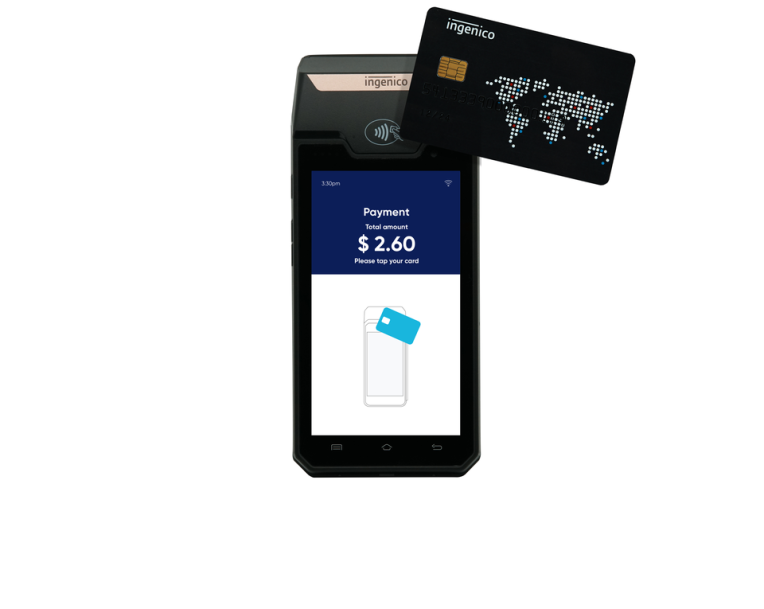
A terminal product can keep card authorization within a certified payment component while sending operational health through a separate device channel. Enrollment binds terminal identity, merchant, location and software version. Health messages contain no account data. Configuration commands require an authorized operator, desired-state version and expiry. The backend records request, device acknowledgement and resulting state, treating a timeout as unresolved until reconciliation.
Pilot rings include varied acquirers, networks and terminal models. Tests cover duplicate health events, offline transaction reconciliation, certificate rotation, interrupted update, stolen-device revocation and a regional broker outage. Support sees terminal and software state but not payment details. Fleet dashboards separate connectivity from transaction success so teams do not infer financial behavior from operational telemetry. Retirement revokes identity and confirms merchant ownership closure before equipment reuse.
- Separate sensitive payment processing from general fleet telemetry by design.
- Bind configuration authority to merchant, device and expiring desired state.
- Pilot across real network and hardware variation, not only laboratory devices.
- Give support useful health evidence without exposing transaction data.
- Reconcile unknown outcomes before retries can create duplicate financial effects.
Key takeaways
- Scope the financial action, sensitive-data path and device authority before selecting protocols.
- Bind every event and command to unique device, tenant, user and transaction context.
- Engineer enrollment, updates, vulnerability response and retirement as product features.
- Test duplicates, replay, offline operation, partial fleet updates and provider failure with production-shaped devices.
- Model unit cost from connections, messages, retention and support, including abnormal fleet behavior.
Frequently asked questions
Does financial IoT require blockchain?
Usually not. Most products need strong identity, authorized messaging, transactional records and tamper-evident audit controls. A distributed ledger adds value only when multiple parties need shared state without an accepted operator and can support its governance and privacy consequences.
How large should the pilot fleet be?
Large enough to represent device models, networks, locations, user roles and failure conditions, yet small enough to contain harm and support closely. Define learning and exit criteria rather than selecting a percentage of the eventual fleet.
Does tokenization remove all PCI obligations?
Do not assume so. Tokenization can reduce exposure, but applicability depends on the complete data flow, systems, administration and service-provider relationships. Confirm scope with qualified specialists and maintain evidence that the implemented architecture matches the reviewed design.
Conclusion
Financial IoT is a trust system spanning hardware, networks, software and human operations. Keep financial authorization behind explicit policy, make device identity and lifecycle verifiable, minimize sensitive data and prove failure behavior before scale. A capable partner should leave the organization with operated security, audit and fleet evidence, not only connected devices.