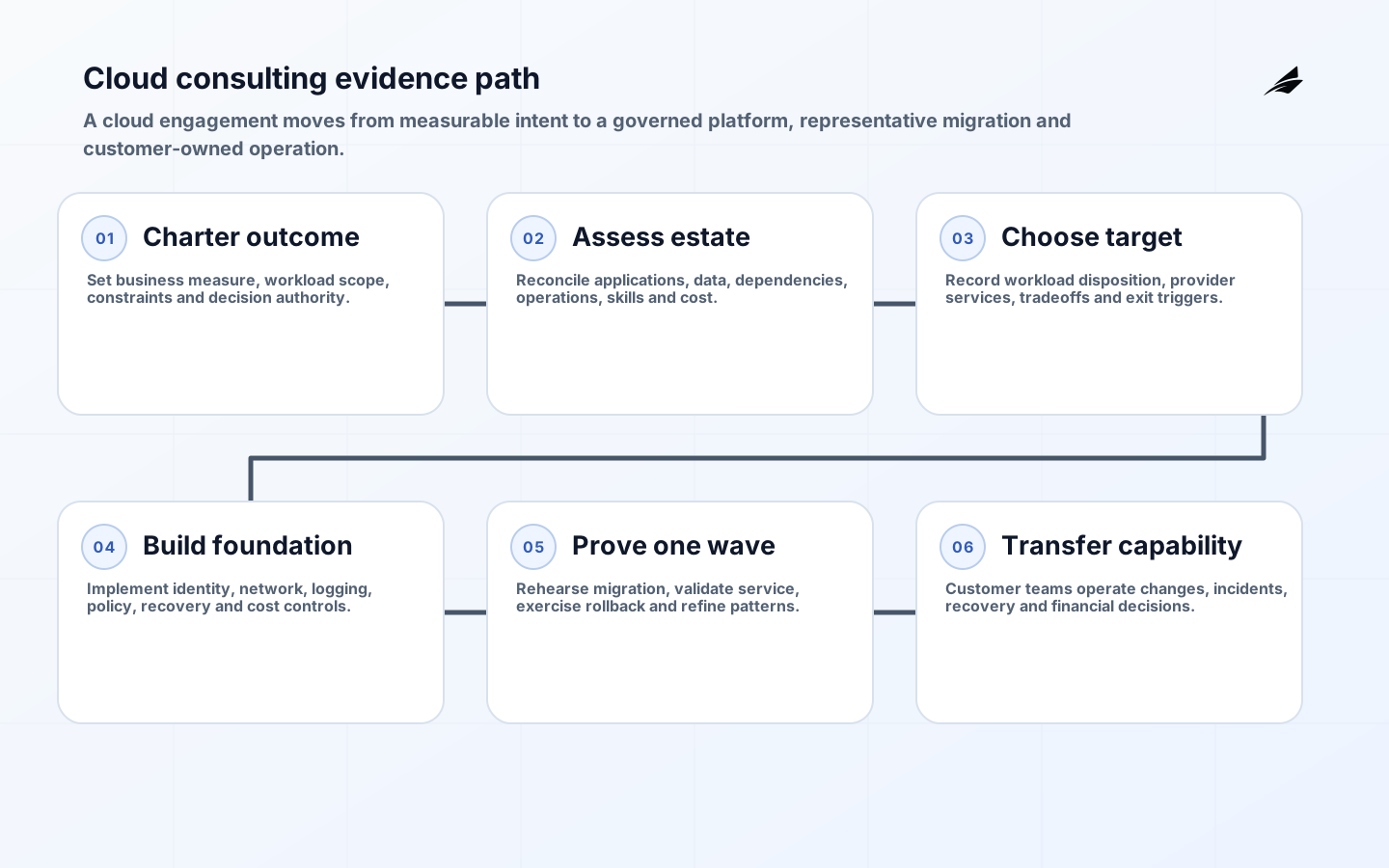
A cloud computing consulting engagement should leave an organization able to choose, build, govern and operate cloud services—not merely with an architecture deck or a larger provider bill. Cloud adoption changes provisioning, ownership, security, cost and recovery. NIST defines cloud computing through on-demand self-service, broad network access, resource pooling, rapid elasticity and measured service, with distinct service and deployment models. Those characteristics are useful only when the engagement connects them to a business workload and installs an operating model that permanent teams can sustain.
This implementation checklist is for buyers, technology leaders and delivery teams planning a migration, modernization, new cloud platform or hybrid operating model. It is deliberately provider-neutral. The major cloud frameworks differ in services and terminology, but they converge on business alignment, secure foundations, reliability, operations, performance and cost. A consultant should use provider guidance as an engineering baseline while documenting the organization-specific decisions, exceptions and evidence that a generic framework cannot supply.
Write an outcome-based engagement charter
State why cloud is being considered and which workloads or capabilities are in scope. A useful objective might be to reduce environment lead time for a product team, provide tested regional recovery for a customer service, retire unsupported hardware, or create governed analytics capacity. “Move to cloud” is an activity, not an outcome. Attach baseline measures, constraints and a decision owner. Include data residency, latency, integration, support hours, skills, existing contracts and deadlines. Record which outcomes can be achieved without migration so options remain honest.
Define deliverables as accepted capabilities: a reconciled workload assessment, target decisions, landing-zone controls, infrastructure code, tested migration waves, runbooks, cost ownership and trained operators. Name artifacts the client owns and the repositories or accounts where they will live. Identify decision rights between consultant, cloud provider, internal platform, security, finance and workload teams. The engagement should include exit criteria from the start; otherwise advisory work can create continuing dependence on the people who designed the environment.
| Charter element | Weak wording | Acceptance-ready wording |
|---|---|---|
| Outcome | Improve agility | Reduce approved test-environment lead time from the measured baseline while preserving controls |
| Scope | Migrate applications | Assess 24 named workloads and move the approved first wave of three |
| Security | Apply best practices | Implement and test named identity, network, logging and key controls |
| Cost | Optimize cloud spend | Allocate agreed consumption, forecast monthly and govern commitment decisions |
| Handover | Provide documentation | Permanent team operates representative changes and recovery using owned artifacts |
Assess workloads and the current operating system
Build a workload inventory that reconciles applications, data stores, interfaces, identity dependencies, batch jobs, certificates, domains, backup, monitoring, licenses, owners and business calendars. Automated discovery is useful but incomplete; validate it with people who operate and use each service. Capture demand pattern, availability need, recovery objectives, data classification, current incidents, deployment process and unit cost. Identify dependencies that cross the proposed migration boundary. An application server may be easy to rehost while its authentication, file transfer or reporting chain prevents a safe cutover.

Assess organizational capability alongside technology. Who can approve architecture, create accounts, respond to an alert, accept security risk, buy commitments and restore data? Which skills and on-call arrangements exist? Examine source control, continuous delivery, infrastructure automation, service ownership and incident management. A target based on managed services may reduce infrastructure work but increase needs in data governance, vendor management and application observability. The recommendation should show both work removed and new work introduced.
Make workload disposition decisions explicitly
For each workload, compare retain, retire, replace with software as a service, rehost, replatform or refactor. Avoid treating the categories as a maturity ladder. A stable system near retirement may be retained; a commodity capability may be replaced; a differentiating service may justify redesign. Document benefit, migration effort, operational change, portability, data movement and exit path. Validate licensing and support. Select a target region and service only after checking residency, capacity, availability design, feature maturity and dependent-service limits.
Architecture decisions should include rejected alternatives and triggers for review. Record account and subscription structure, network connectivity, identity federation, key ownership, data services, integration patterns, deployment model, observability, recovery and supplier boundaries. Use a well-architected review as a structured conversation, not a compliance certificate. The AWS and Google frameworks both emphasize secure, reliable, efficient and operable systems; the engagement must translate those qualities into workload-specific tests and ownership.
Build a minimum viable landing zone
A landing zone is the governed environment into which workloads arrive. Establish organization hierarchy, accounts or subscriptions, identity federation, privileged access, network patterns, name resolution, approved regions, logging, security monitoring, key management, backup, policy, tagging and cost allocation. Implement it through version-controlled infrastructure and policy where practical. Keep the first version small enough to test. A landing zone that takes a year to perfect can drive teams into unmanaged accounts; one that omits identity and logging exports risk into every workload.
Test the foundation using representative actions: create and remove an environment, deploy an application, access a secret, route logs, deny an unapproved resource, restore data and identify spend. Verify emergency access without normal federation and review its use. Establish an exception process with owner, rationale, compensating control and expiry. Microsoft’s cloud-governance guidance recommends automated enforcement and a monitor-first approach where a new policy could disrupt unknown workloads. The consultant should leave policy tests and evidence, not only enabled settings.
| Foundation area | Implementation evidence | Operational test |
|---|---|---|
| Identity | Federated roles and time-bound privileged path | Joiner, leaver and emergency-access exercise |
| Network | Approved ingress, egress, DNS and connectivity patterns | Trace one application flow and blocked path |
| Logging | Central collection, access and retention policy | Generate and find a security and workload event |
| Policy | Versioned rules and exception register | Attempt a prohibited deployment and expire an exception |
| Recovery | Backup scope and recovery runbook | Restore representative service data in isolation |
| Cost | Allocation structure, budgets and billing export | Reconcile provider invoice to owner and service |
Deliver one representative migration wave
Choose a first wave that is useful enough to expose real dependencies but small enough to recover. Define entry criteria for assessment completeness, target environment, application testing, data reconciliation, security review, support and rollback. Rehearse deployment and data movement. Run performance and recovery tests under representative load. Cutover planning should name freeze, synchronization, validation, traffic switching, communications, decision authority and rollback deadline. Do not call a migration complete while the old environment still receives data, retains unowned credentials or remains the only recovery path.
Use the first wave to refine reusable patterns, not to produce a one-off success. Measure elapsed migration work, defects, manual steps, policy exceptions, cost variance and operator questions. Update infrastructure modules, test suites and runbooks before the next wave. Maintain a decision log when a workload deviates from the platform pattern. Standardization should reduce repeated decisions while allowing justified exceptions; forcing every workload into one architecture can merely move complexity into hidden workarounds.
Establish operations and cloud financial management
Define service ownership, support boundaries, severity, on-call routing, change process, vulnerability handling, backup monitoring, capacity and supplier escalation. Instrument service-level indicators that represent user experience and critical processing, then connect alerts to runbooks and authority. Exercise a provider outage, identity failure and accidental configuration change. Cloud reliability is not inherited automatically; workloads must be designed across failure domains and permanent teams need tested recovery procedures.
Measured service makes cost visible but not self-governing. Implement allocation using account structure and tags, expose billing data, set forecast and anomaly cadence, and name budget owners. Separate consumption, support, licenses, network transfer, consultant fees and migration overlap. Use unit measures where the business has a stable denominator. FinOps is a collaborative operating practice across engineering, finance and business teams; recommendations should state performance and resilience consequences, and long-term commitments need explicit approval rather than automatic purchasing.
Transfer capability and close the engagement
Handover is demonstrated through work. Permanent teams should deploy a change, investigate telemetry, approve an exception, respond to an incident, restore data and explain cost using client-owned accounts and repositories. Deliver architecture decisions, inventories, code, tests, pipeline configuration, runbooks, threat models, supplier contacts and open risks. Remove consultant access and rotate shared or bootstrap credentials. Verify that licenses, domains and support contracts are registered to the organization. Keep a prioritized improvement backlog with owners rather than presenting unresolved work as a vague future phase.
Run a final outcome review against the original baseline. Report what changed, what did not, recurring cost, residual risk and evidence quality. Avoid using resource count or migration completion as the only success measure. Environment lead time, change performance, reliability, recovery, security findings, operator effort and unit economics show whether adoption improved the system. Where results are uncertain, state the observation period and responsible owner. Honest closure is more useful than a transformation narrative that permanent teams cannot verify.
Key takeaways
- Contract for accepted cloud capabilities and outcomes, not advisory activity.
- Assess dependencies, operations and skills as carefully as servers and applications.
- Use a small, testable landing zone with identity, logging, policy, recovery and cost foundations.
- Migrate in representative waves and turn lessons into reusable code and controls.
- Complete the work by proving permanent-team operation and removing consultant dependency.
Frequently asked questions
Should a cloud consultant choose the provider?
The consultant can structure and test the decision, but the organization should own it. Compare workload fit, residency, existing skills, commercial terms, support, portability and operating model. Disclose partner incentives and document rejected options.
Is multicloud a requirement for avoiding lock-in?
No. Running equivalent workloads on multiple clouds can add cost and operational complexity without creating practical portability. Preserve owned data, source, automation, interfaces and exit procedures; use another provider where a specific business or resilience need justifies it.
How long should a consulting engagement last?
Duration follows scope and acceptance evidence. A focused assessment may take weeks; a landing zone and representative migration take longer. Use capability gates and review points rather than one open-ended transformation contract.
Conclusion
Effective cloud computing consulting changes how an organization makes and verifies technology decisions. It connects a business outcome to workload evidence, a governed foundation, a tested migration and an operable service. The strongest final deliverable is not a presentation. It is a permanent team that can deploy, secure, recover, measure and improve the cloud environment with artifacts and authority it owns.