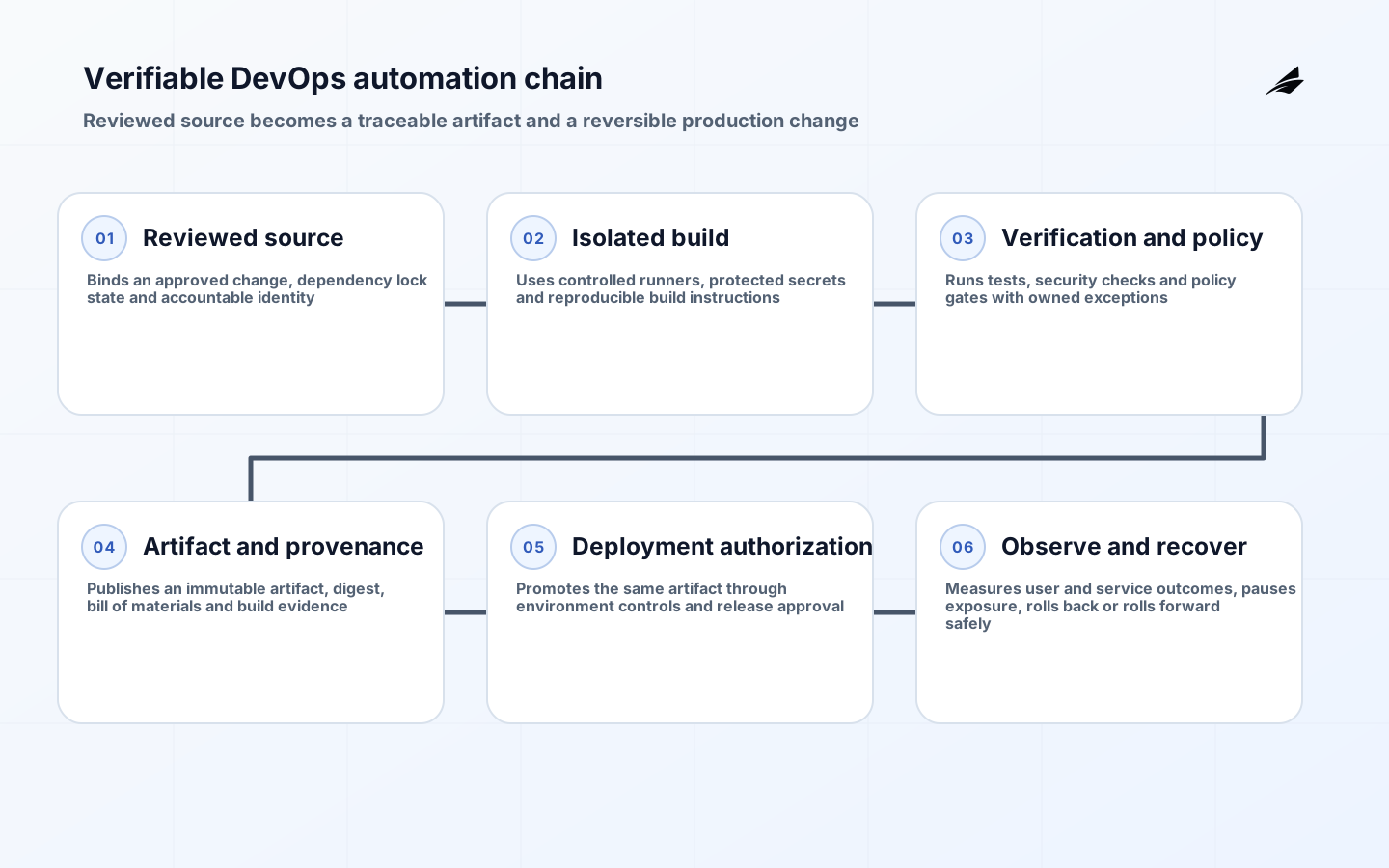
DevOps automation in cloud environments is not a single tool or process but a cohesive system of practices that must address security, compliance, and operational continuity simultaneously. Unlike traditional automation approaches that prioritize speed over security, this implementation focuses on embedding safeguards at every stage of the delivery pipeline. The critical distinction lies in the integration of security requirements into the automation workflow rather than treating them as separate phases. This approach ensures that security is not an afterthought but a foundational element of the delivery process, reducing the risk of vulnerabilities being introduced during rapid deployments.
Why Security Must Be Embedded in Automation, Not Added Later
The most common mistake in DevOps automation is treating security as a separate phase that occurs after the code is built. This creates a critical gap where vulnerabilities can be introduced during deployment without being detected. By contrast, embedding security into the automation workflow ensures that every artifact undergoes verification before it reaches production. This is particularly important in cloud environments where infrastructure as code (IaC) templates and deployment scripts can contain security misconfigurations that lead to data breaches or service disruptions. The Secure Software Development Framework (SSDF) from NIST provides a structured approach to integrating security into the development lifecycle, emphasizing the need for continuous security validation throughout the pipeline.
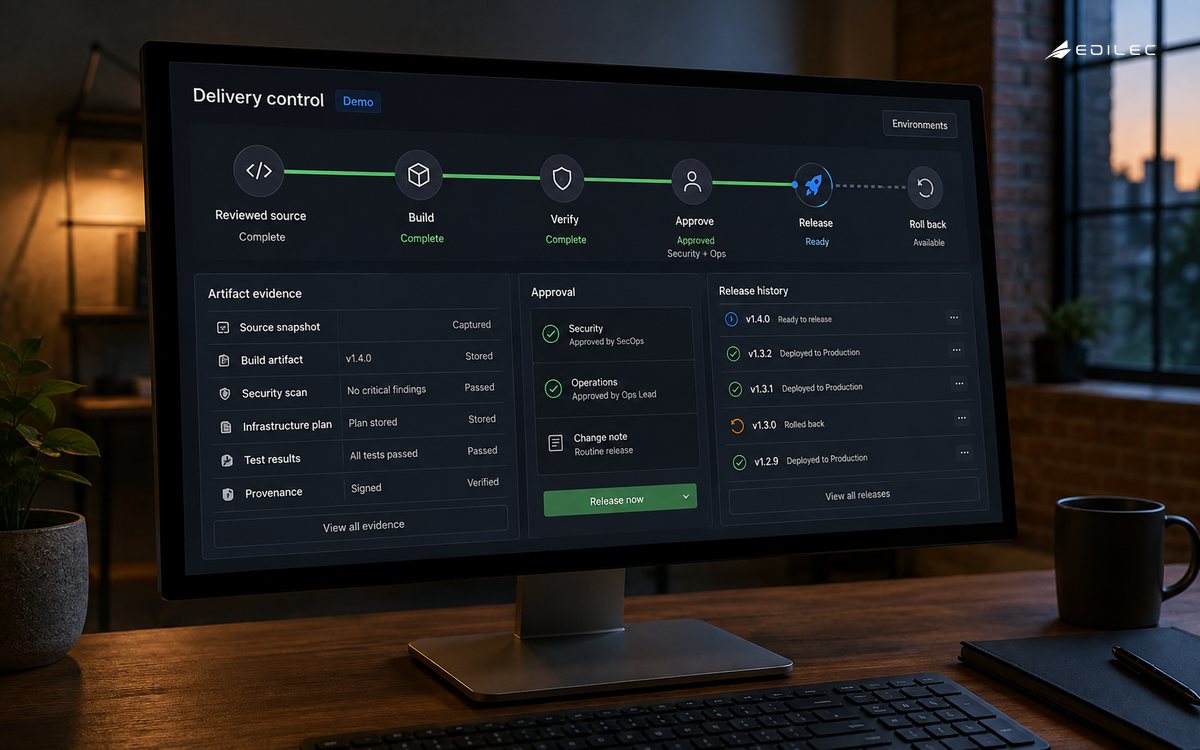
- Automated vulnerability scanning during the build phase to catch misconfigurations early
- Integration of supply chain security checks to verify artifact integrity
- Real-time monitoring of deployment pipelines for anomalous activity
| Automation Stage | Security Practice | Risk Mitigation |
|---|---|---|
| Code Build | Static application security testing (SAST) | Prevents vulnerabilities in source code before deployment |
| Infrastructure Provisioning | Infrastructure as code (IaC) scanning | Ensures secure configuration of cloud resources |
| Deployment | Canary releases with rollback capability | Minimizes impact of deployment failures |
The integration of security into automation is not a theoretical concept but a practical necessity. In cloud environments, where infrastructure changes are frequent, security must be continuously validated to prevent breaches. The SLSA (Supply Chain Levels for Software Artifacts) specification provides a framework for verifying the integrity of software artifacts throughout their lifecycle, ensuring that each component is signed and verified before deployment. This level of scrutiny is critical in environments where a single misconfiguration can lead to significant security incidents.
Navigating Compliance Without Overcomplicating the Pipeline
Compliance automation in cloud environments often leads to overly complex pipelines that slow down delivery. Many organizations attempt to integrate compliance checks at every stage, resulting in a pipeline that is too rigid to be practical. The key is to identify the most critical compliance requirements and automate only those that have a direct impact on security and operational continuity. For example, in regulated industries, certain data handling practices must be enforced through automation, but other compliance aspects can be managed through manual oversight or periodic audits. This balanced approach ensures that compliance does not become a bottleneck but rather a facilitator of secure delivery.
- Automate high-priority compliance checks for data encryption and access controls
- Use compliance-as-a-service tools for routine checks that don't require deep technical expertise
- Implement manual verification for high-risk compliance areas where automation might not be feasible
| Compliance Requirement | Automation Approach | Complexity Level |
|---|---|---|
| Data Encryption at Rest | Automated key rotation and encryption checks | Medium |
| Access Control Policies | Real-time policy validation against role-based access controls | High |
| Audit Logging | Automated log retention and anomaly detection | Low |
The challenge of compliance automation is not about claiming perfect compliance but about finding the right balance between security and agility. Organizations that over-engineer their compliance pipelines often find themselves unable to deliver new features quickly, which undermines the very purpose of DevOps. By focusing on high-impact compliance areas and using automation to handle routine checks, teams can maintain both security and speed without sacrificing either.
Ensuring Systems Can Handle Real-World Variability
Cloud environments are inherently dynamic, with traffic patterns, resource usage, and failure modes that vary significantly over time. DevOps automation must account for this variability to ensure that systems remain resilient under real-world conditions. This includes implementing automated failover mechanisms, load balancing strategies, and self-healing capabilities that respond to changing conditions without human intervention. The DORA metrics highlight the importance of stability in delivery pipelines, showing that systems with high stability have fewer failures and faster recovery times. By automating resilience checks, teams can proactively identify and address potential issues before they escalate into outages.
- Automated load testing to simulate traffic spikes and identify bottlenecks
- Self-healing mechanisms that automatically reroute traffic during failures
- Real-time monitoring of system health metrics to trigger automated recovery actions
Operational resilience is not a one-time configuration but an ongoing process. As cloud environments evolve, new failure modes emerge, and automation must adapt to these changes. The Secure by Design framework emphasizes the need for systems to be resilient from the outset, which means that automation should be designed to handle both planned and unplanned changes without compromising security or performance.
Avoiding the Cost Overruns in Automation Implementation
One of the most significant challenges in DevOps automation is accurately estimating costs. Many organizations underestimate the resources required for security and compliance automation, leading to budget overruns and project delays. The cost of automation is not just about the tools but also the time spent on configuration, testing, and maintenance. By using the DORA metrics as a baseline, teams can better understand the cost implications of their automation efforts. For example, a pipeline that achieves high stability (as measured by DORA) typically requires more robust automation but also reduces the cost of incident resolution over time.
- Break down automation costs into tooling, configuration, and maintenance
- Use historical data to estimate the cost of security checks and compliance validation
- Allocate budget for continuous improvement of automation to address emerging risks
Cost estimation in automation is a balancing act between immediate needs and long-term sustainability. Organizations that focus too much on short-term savings may find themselves with inadequate resources to maintain security and compliance over time. A realistic cost model should include the cost of potential breaches, which can be significantly higher than the cost of proper automation.
Identifying and Mitigating Risks Before They Become Incidents
Automation introduces new risks, such as misconfigured pipelines, untested integrations, and security gaps that can lead to incidents. The key to effective risk management is to identify these risks early and implement controls that prevent them from becoming incidents. The Secure Software Development Framework provides a structured approach to risk assessment, helping teams prioritize which risks to address first. For example, a pipeline that fails to validate the integrity of software artifacts could lead to a breach if an attacker injects malicious code into the deployment process.
- Conduct regular risk assessments to identify automation-specific vulnerabilities
- Implement automated validation of critical security controls before deployment
- Use canary releases to test new automation features in a controlled environment
Risk management in automation is not about avoiding all risks but about reducing their impact. By focusing on high-impact risks and implementing controls that are both effective and practical, teams can ensure that their automation processes remain robust and reliable without becoming overly complex.
Building a Phased Delivery Plan for Automation
A successful DevOps automation implementation requires a phased approach that starts with small, manageable changes and gradually expands to more complex areas. This approach minimizes disruption and allows teams to learn from each phase before scaling up. The first phase should focus on automating security and compliance checks for the most critical components, such as code builds and infrastructure provisioning. The second phase can then address operational resilience and cost management, building on the foundation established in the first phase.
- Start with security and compliance automation for high-risk components
- Implement operational resilience in the second phase to ensure system stability
- Use cost estimation as a guide for the third phase to optimize resource usage
Phased delivery ensures that teams can adapt to changes and address issues as they arise without overwhelming the entire system. This approach also allows for continuous feedback, which is essential for refining automation processes over time.
Key takeaways
DevOps automation in cloud environments must be designed with security, compliance, and operational resilience as core principles from the outset. This requires embedding security checks into the automation workflow, focusing on high-impact compliance areas, and ensuring that systems can handle real-world variability. Cost estimation should be based on realistic scenarios that account for both immediate and long-term needs, and risk management must prioritize high-impact vulnerabilities before they become incidents. Finally, a phased delivery plan that starts with security and compliance automation provides the most sustainable path to secure and reliable cloud delivery.
Frequently asked questions
What are the essential security checks for automation pipelines?
The essential security checks for automation pipelines include static application security testing (SAST) during code builds, infrastructure as code (IaC) scanning for secure configuration, and canary releases with rollback capabilities to ensure deployment stability. These checks help prevent vulnerabilities from being introduced into production and ensure that the pipeline remains secure throughout the delivery process.
How can I avoid compliance over-engineering in my automation pipeline?
To avoid compliance over-engineering, focus on high-impact compliance requirements and automate only those that have a direct effect on security and operational continuity. For example, automate data encryption and access control checks but use manual oversight for less critical areas. This ensures that compliance does not become a bottleneck but rather a facilitator of secure delivery.
What are the most common risks in DevOps automation?
The most common risks in DevOps automation include misconfigured pipelines, untested integrations, and security gaps that can lead to incidents. These risks often arise from inadequate risk assessments or insufficient validation of critical security controls. Implementing automated validation of security controls and canary releases can help mitigate these risks before they escalate.
How do I structure a phased automation delivery plan?
A phased automation delivery plan should start with security and compliance automation for high-risk components, followed by operational resilience in the second phase, and cost optimization in the third phase. This approach ensures that teams can build confidence in each phase before moving to more complex areas, minimizing disruption and maximizing long-term sustainability.
Conclusion
DevOps automation in cloud environments is a critical component of secure and reliable software delivery. By embedding security, focusing on high-impact compliance areas, and implementing a phased delivery plan, organizations can achieve the balance between speed and security that modern cloud environments demand. The key is to start small, validate each step, and continuously refine the automation process to ensure it remains effective as the organization grows.