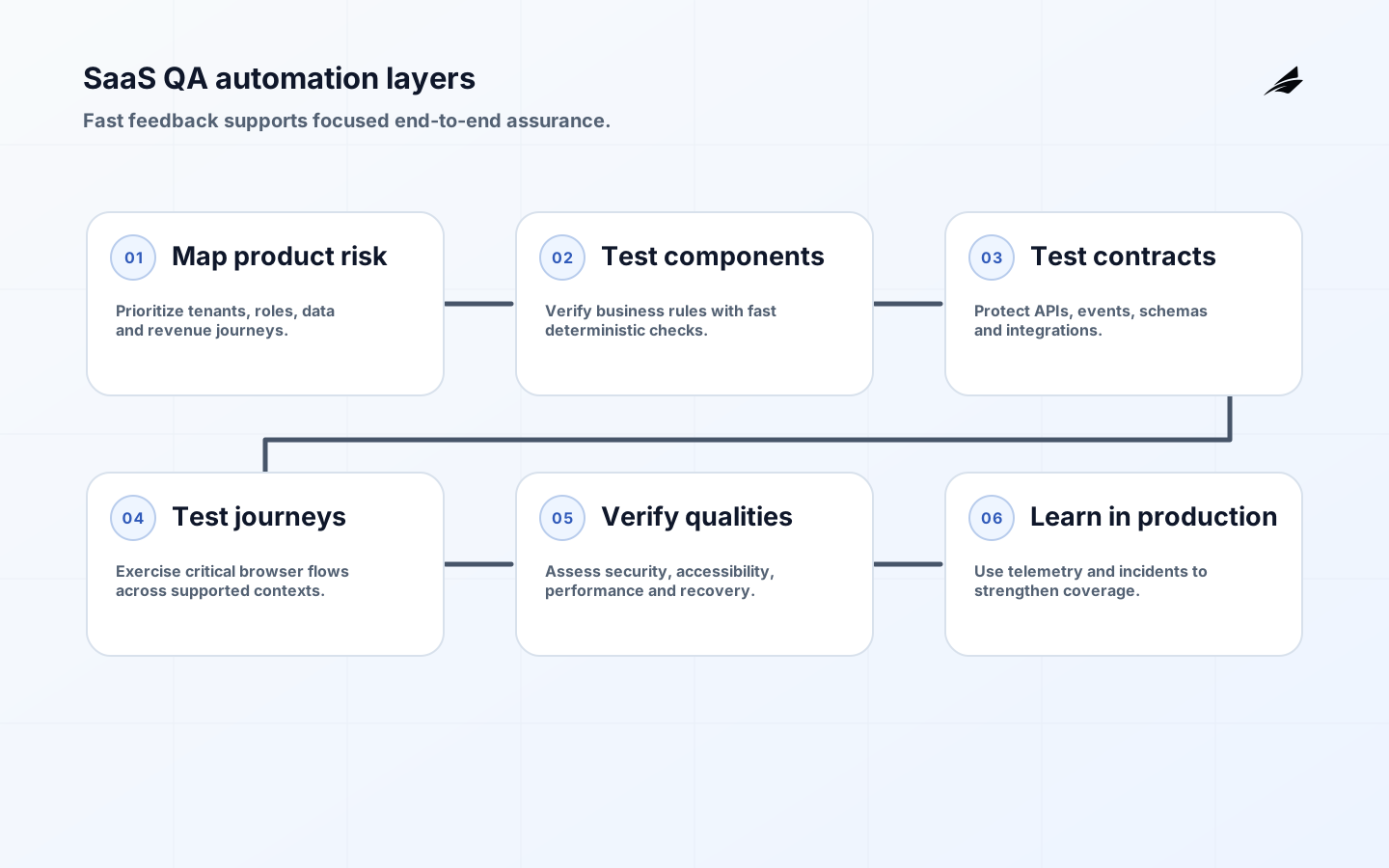
QA automation for SaaS should produce fast, credible evidence about product risk across tenants, roles, integrations, data and continuously deployed releases. The goal is not to automate every manual case or maximize a test counter. A dependable program puts deterministic checks close to the code, reserves end-to-end tests for critical journeys, tests qualities that functional scripts miss, and learns from production. This implementation checklist turns those principles into an operating test system.
Begin with the QA automation for SaaS best-practices guide and use the SaaS QA FAQ to settle ownership and tooling questions. The QA automation consulting plan and consulting implementation checklist help frame external support. Keep product risk, test ownership and release authority with the product team even when specialists build the framework.
1. Build a SaaS product risk model
Map user journeys and failure consequences: sign-up, authentication, authorization, subscription, billing, data import, core tasks, collaboration, notification, reporting, administration, export and account deletion. Add tenant isolation, regional storage, audit history, support impersonation, rate limits, feature flags, background jobs, third-party dependencies and upgrade paths. Rank by business impact, change frequency, defect history, technical complexity and detectability. Give every high-risk behavior an owner and a planned test layer.
Define supported browsers, devices, locales, time zones, plans, roles and integration versions from product policy and actual usage. Avoid a full combinatorial matrix. Select a primary CI context, targeted compatibility pairs and scheduled broader suites based on risk. Include negative permissions and cross-tenant attempts, not only happy paths. Review the model after incidents, architecture changes and major customer commitments. A static regression spreadsheet quickly stops representing a continuously changing SaaS product.
| Risk area | Automation evidence | Manual or operational complement |
|---|---|---|
| Business rules | Fast parameterized unit and service tests | Exploratory boundary analysis |
| Tenant isolation | Authorization and cross-tenant API tests | Threat modeling and security review |
| Integration | Consumer or provider contracts and failure simulation | Partner certification for material changes |
| User journey | Focused browser test across supported contexts | Usability and exploratory sessions |
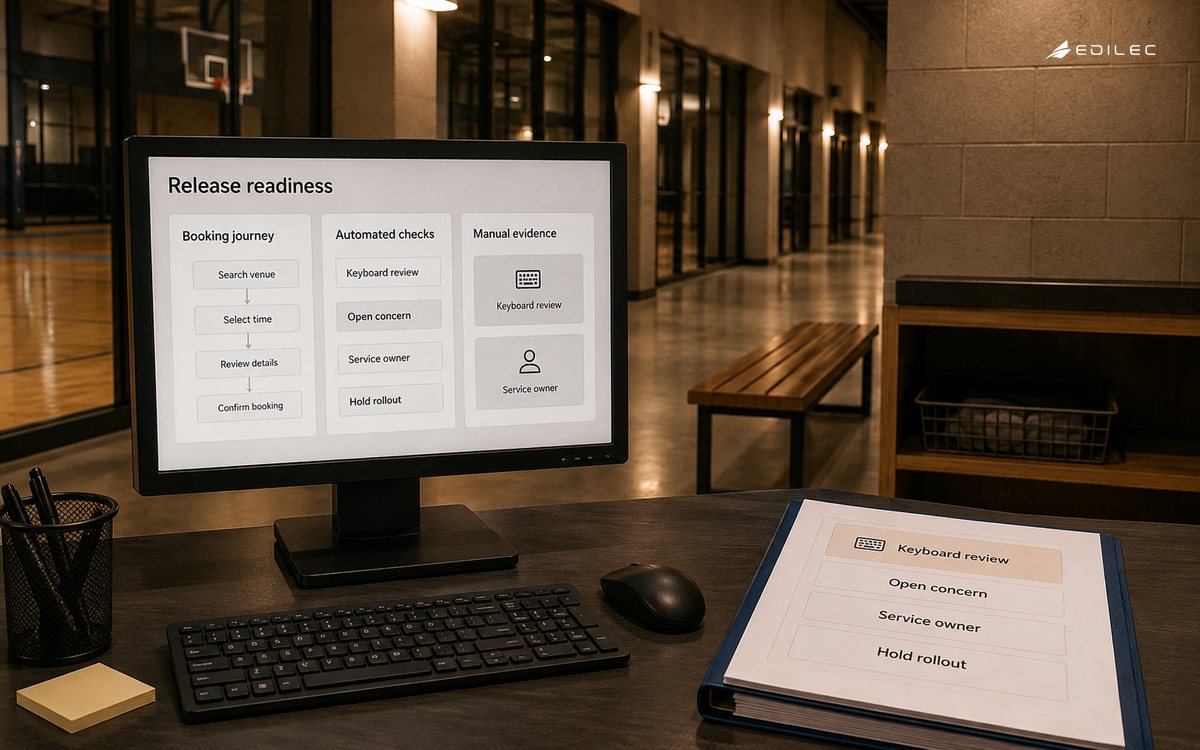
| Accessibility | Component and page rules in CI | Keyboard and assistive-technology review |
| Resilience | Timeout, retry, queue and recovery tests | Game day and production runbook exercise |
2. Design a layered test architecture
Put most deterministic business-rule tests at unit or service level where feedback is fast and failures are local. Test database and message behavior through real components where mocks would hide contracts. Add API contract tests for schema, status, authorization, pagination, idempotency and version compatibility. Use browser tests for a small set of valuable journeys whose integration through the user interface matters. Duplicating every assertion at every layer raises maintenance without proportionate confidence.
Playwright’s current best-practices guidance recommends testing user-visible behavior, isolating tests, using resilient locators and avoiding dependencies on third-party services. Apply those ideas regardless of tool. Select controls by accessible role, label or stable test contract rather than brittle CSS structure. Keep setup through supported APIs when the setup itself is not under test. Each test creates or receives its own data and leaves an environment that other tests can understand.
3. Make test data and environments deterministic
Provide factories for tenant, user, role, plan, feature, billing state and domain records. Generate unique identifiers and control clock, locale and time zone for date-sensitive rules. Seed only the minimum shared reference data. Protect production information: prefer synthetic data, or use approved minimization and masking when representative shape is essential. Maintain explicit schema and fixture versions. A test should fail because behavior changed, not because another parallel worker consumed its coupon or changed its account.
Make CI environments reproducible through versioned application, infrastructure and configuration. Track dependency and migration versions. Use disposable environments where cost and architecture allow; otherwise isolate by tenant or namespace and run a health check before the suite. Stub external providers at contract boundaries for normal CI and run a smaller controlled integration suite against provider sandboxes. Simulate timeout, malformed response, duplicate callback, rate limit and delayed event; a successful sandbox happy path is weak failure evidence.
4. Build fast CI feedback and trustworthy release gates
Order checks so inexpensive, diagnostic tests fail first: format and static analysis, unit, component, contract, integration, critical browser, then scheduled extended suites. Parallelize isolated tests and shard only after measuring bottlenecks. Cache immutable dependencies safely. Publish logs, screenshots, traces, network records and environment versions for failed browser runs. The test report should connect failure to owner and changed component. Block releases on risk-based required suites, not on a giant unstable nightly run nobody trusts.
Retries can separate transient behavior from deterministic failure, but they must not silently turn red into green. Playwright documents tests as passed, flaky or failed when retries are enabled. Report flaky tests, quarantine only with owner and expiry, and fix their cause. Track time to repair and repeated signatures. Use failure injection to verify product retry behavior separately from test-runner retry. A flaky test may reveal race conditions, shared state or weak observability in the product itself.
| Release gate | Required signal | Failure response |
|---|---|---|
| Change checks | Owned unit, component and contract tests pass | Fix code or update reviewed contract |
| Critical journeys | Selected browser paths pass in primary context | Inspect trace; do not blind retry |
| Security | Applicable verification and dependency findings within policy | Remediate or approve dated exception |
| Accessibility | Automated rules plus required manual evidence | Correct component or document limitation |
| Performance | Latency, throughput and resource budgets met | Profile regression and capacity impact |
| Deployment | Smoke, telemetry and rollback validation pass | Stop rollout or execute recovery |
5. Automate security, accessibility and performance evidence
Translate security requirements into tests for authentication, session, authorization, tenant boundaries, input handling, file processing, secrets, logging and business logic. The OWASP ASVS currently identifies stable version 5.0.0 and provides testable web application requirements. Select the applicable versioned requirements and combine automation with review and penetration testing. NIST’s Secure Software Development Framework adds organizational, software-protection and vulnerability-response practices that scanners alone cannot verify.
Run accessibility rules at component and page level, then perform human keyboard, focus, zoom and assistive-technology testing on critical journeys. WCAG 2.2 is designed for automated and human evaluation; an automated zero does not demonstrate conformance. For performance, test APIs and journeys against explicit latency, throughput, concurrency and resource budgets with representative data shape. Include noisy-neighbor, tenant quotas, background jobs and third-party degradation. Observe saturation and error behavior, not just average response time.
6. Connect automation to safe delivery and production learning
Use progressive delivery, feature flags and tenant cohorts with clear ownership and cleanup. Validate deployment health through synthetic journeys and business indicators, then compare error, latency, support and conversion signals for the exposed cohort. Define automatic stop conditions and a rehearsed rollback or forward-fix path. Test schema and event compatibility before mixed versions run. Production checks should use dedicated accounts and safe data, respect rate limits and never create uncontrolled financial or customer effects.
Feed escaped defects, incidents, support themes and near misses into the risk model and test backlog. Track lead time, deployment frequency, failed deployment recovery time, change fail rate and deployment rework rate using current DORA definitions, alongside escaped severity, flaky rate, suite duration, requirement coverage and time to diagnose. Do not use test count or automation percentage as a quality target. Delete redundant tests and invest where evidence changes release decisions.
Assign test ownership close to the behavior. Developers maintain unit, component and service checks with their code; platform teams own environment and deployment verification; security and accessibility specialists provide standards, tooling and focused assessment; product and QA leaders maintain the cross-journey risk model. A central quality team should enable and challenge rather than become the last gate for every change. Define who investigates failures, approves quarantines and updates shared fixtures. Unowned tests decay even when the dashboard remains green.
Test feature flags and entitlement explicitly. Verify defaults for new and existing tenants, role and plan combinations, server and client consistency, flag-service failure and removal after rollout. Keep flag configuration versioned and observable. A disabled user interface control does not prove the API rejects the action. Include migration tests for customers moving between plans or regions and for records created under older behavior. Remove stale flags and their test branches; permanent conditional complexity makes both production and automation harder to reason about.
Key takeaways
- Map SaaS risk across tenants, roles, plans, data, integrations and operating qualities.
- Put deterministic checks low in the stack and reserve browser tests for critical journeys.
- Make test data isolated, environments versioned and third-party failure behavior explicit.
- Treat retries and quarantine as visible debt with ownership and expiry.
- Join CI evidence with progressive delivery and production learning instead of targeting test volume.
Frequently asked questions
What automation coverage percentage is good?
There is no universal percentage. Measure whether material risks have credible evidence at the right layer and whether failures are diagnostic. Line coverage can reveal unexecuted code but does not prove business, authorization or integration behavior.
How many end-to-end tests should a SaaS product have?
Enough to protect critical integrated journeys and deployment confidence, while lower layers cover permutations. If browser tests dominate runtime and maintenance, move rule assertions down and keep a smaller journey portfolio. Decide from risk and diagnostic value, not an industry ratio.
Can AI generate the test suite?
It can propose cases and code, but product owners and engineers must verify requirements, assertions, data safety and maintenance. Generated tests often mirror implementation without challenging risk. Review them like production code and prove they fail for the intended defect.
Conclusion
Strong QA automation for SaaS is a layered evidence system. Build it from product risk, deterministic data, resilient tests, explicit release gates and production feedback. When the suite stays fast, diagnostic and connected to real outcomes, teams can release more confidently without mistaking automation volume for quality.