How Engineering Teams Should Think About Background Jobs
This background jobs case requires a distinct owner, evidence trail, and correction route. Sources and related decisions: schema design contract thinking delivery checklist. Context sources: Amazon SQS queue types SQS at-least-once delivery Transactional outbox pattern OpenTelemetry traces.
Define the job contract
| Decision element | Question to settle | Evidence to keep |
|---|---|---|
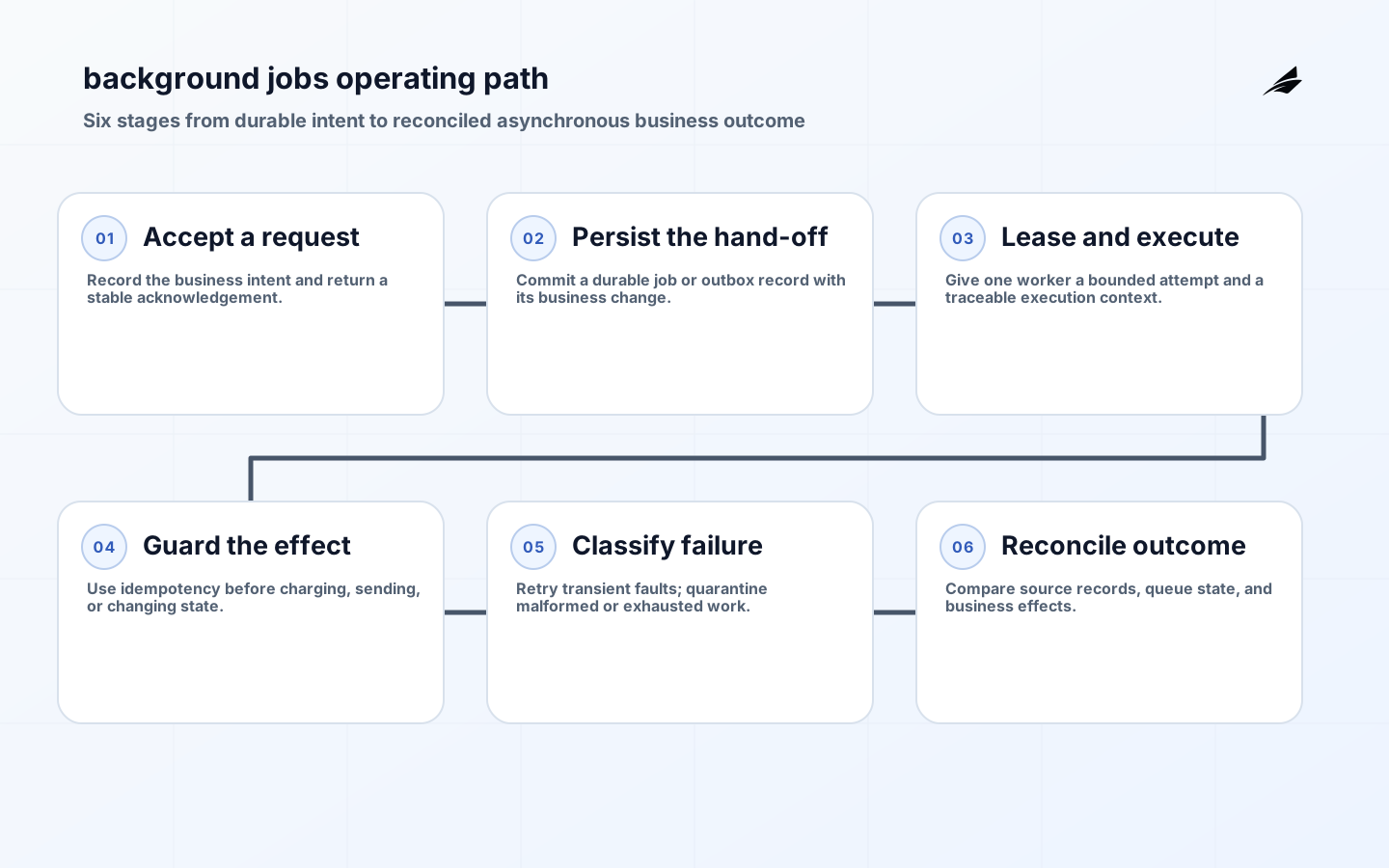
| For one representative job, define the business effect, completion signal, owner, and correction path. | What does a successful job mean to the business? | Named owner, completion condition, and user-visible result |
| Trace acceptance from validation through authorization, state transition, and the response shown to the caller. | When is a job accepted, changed, or refused? | Input validation, authorization rule, and state transition |
| Exercise duplicate delivery and an expired lease, then record classification, retry limits, and escalation. | How will the team handle duplicate delivery and an expired worker lease? | Classification, recovery action, and escalation owner |
| Observation | Which signal will show healthy operation? | age of the oldest eligible job, retry rate, and time to a terminal outcome |
Choose delivery semantics
| Model concern | Practical design choice | Review question |
|---|---|---|
| Trace the same case across intake, execution, and reconciliation so support can find one authoritative status. | Require the worker to expose a durable state change, not merely a process completion signal. | Can a support person find the same case across systems? |
| Make legal state transitions explicit, and give ambiguous inputs a controlled rejection or parking path. | Make legal transitions explicit and reject or park ambiguous inputs. | Does each state tell the user and operator what comes next? |
| Bind every approval and access check to the action that changes job state, not to a generic worker role. | Bind approval and access checks to the requested action. | Who may change this state, and who may correct it later? |
| Retain actor, timestamp, reason, and correlation context so a later review can reconstruct the outcome. | Retain actor, time, reason, and correlation context. | Could the team explain this outcome six weeks later? |
Make execution repeat-safe
Expose progress and terminal state
Background jobs takeaways
- Start with the outcome: move work out of a request only when the caller can receive a clear acknowledgement and the later outcome has an owner.
- Treat one business effect per idempotency key as a checkable service rule.
- Model job state and ownership before adding automation or interface detail.
- Design recovery for duplicate delivery and an expired worker lease; do not rely on an informal workaround.
- Review age of the oldest eligible job, retry rate, and time to a terminal outcome with real cases, not in isolation.
- Expand only after one path can be observed, supported, and corrected.
Recover queues without guesswork
What should the first background jobs release include?
How do we know when background jobs is ready to scale?
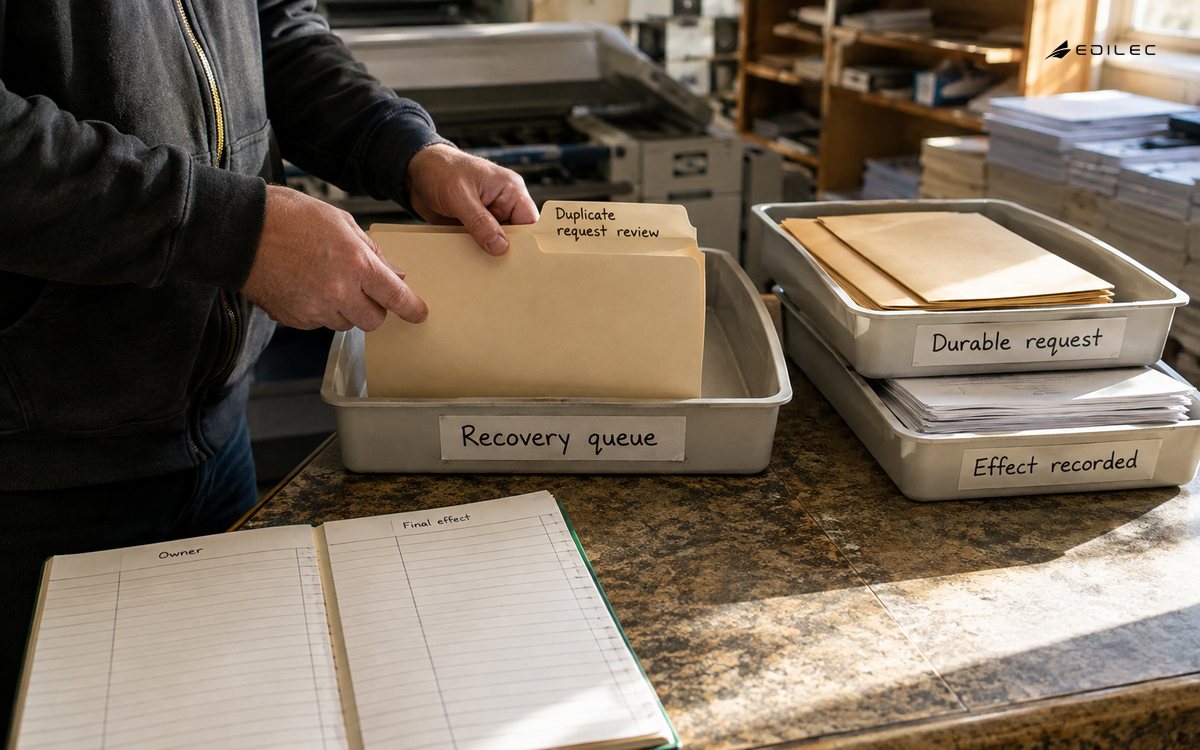
For Background jobs, For background jobs, readiness means a duplicate request cannot create a second business effect, queue age has an owner, and a dead-lettered item reaches a named recovery queue. For background jobs, Add workers only after one representative job can be traced from durable request through its final effect and correction.
Conclusion
Background jobs: operating evidence
For Background jobs, For How Engineering Teams Should Think About Background Jobs, keep the decision boundary visible in the runbook and connect each exception to an owner, evidence trail, and recovery action. For background jobs, Review the result with the people who use the workflow, then change scope only when the measured outcome supports it.
Background jobs decision 1 should name the actor, the trusted input, the observable state, and the point where a person can intervene. Case decision 1 follows the background jobs boundary and records its exception. The background jobs record for decision 1 names the evidence, owner, and correction route. Decision 1 remains bounded, inspectable, and ready to revise.
Background jobs decision 2 should name the actor, the trusted input, the observable state, and the point where a person can intervene. Case decision 2 follows the background jobs boundary and records its exception. The background jobs record for decision 2 names the evidence, owner, and correction route. Decision 2 remains bounded, inspectable, and ready to revise.
Background jobs decision 3 should name the actor, the trusted input, the observable state, and the point where a person can intervene. Case decision 3 follows the background jobs boundary and records its exception. The background jobs record for decision 3 names the evidence, owner, and correction route. Decision 3 remains bounded, inspectable, and ready to revise.
Background jobs decision 4 should name the actor, the trusted input, the observable state, and the point where a person can intervene. Case decision 4 follows the background jobs boundary and records its exception. The background jobs record for decision 4 names the evidence, owner, and correction route. Decision 4 remains bounded, inspectable, and ready to revise.
Background jobs decision 5 should name the actor, the trusted input, the observable state, and the point where a person can intervene. Case decision 5 follows the background jobs boundary and records its exception. The background jobs record for decision 5 names the evidence, owner, and correction route. Decision 5 remains bounded, inspectable, and ready to revise.
Background jobs decision 6 should name the actor, the trusted input, the observable state, and the point where a person can intervene. Case decision 6 follows the background jobs boundary and records its exception. The background jobs record for decision 6 names the evidence, owner, and correction route. Decision 6 remains bounded, inspectable, and ready to revise.
Background jobs decision 7 should name the actor, the trusted input, the observable state, and the point where a person can intervene. Case decision 7 follows the background jobs boundary and records its exception. The background jobs record for decision 7 names the evidence, owner, and correction route. Decision 7 remains bounded, inspectable, and ready to revise.
Background jobs decision 8 should name the actor, the trusted input, the observable state, and the point where a person can intervene. Case decision 8 follows the background jobs boundary and records its exception. The background jobs record for decision 8 names the evidence, owner, and correction route. Decision 8 remains bounded, inspectable, and ready to revise.
Background jobs decision 9 should name the actor, the trusted input, the observable state, and the point where a person can intervene. Case decision 9 follows the background jobs boundary and records its exception. The background jobs record for decision 9 names the evidence, owner, and correction route. Decision 9 remains bounded, inspectable, and ready to revise.
Background jobs decision 10 should name the actor, the trusted input, the observable state, and the point where a person can intervene. Case decision 10 follows the background jobs boundary and records its exception. The background jobs record for decision 10 names the evidence, owner, and correction route. Decision 10 remains bounded, inspectable, and ready to revise.
Background jobs decision 11 should name the actor, the trusted input, the observable state, and the point where a person can intervene. Case decision 11 follows the background jobs boundary and records its exception. The background jobs record for decision 11 names the evidence, owner, and correction route. Decision 11 remains bounded, inspectable, and ready to revise.
Background jobs decision 12 should name the actor, the trusted input, the observable state, and the point where a person can intervene. Case decision 12 follows the background jobs boundary and records its exception. The background jobs record for decision 12 names the evidence, owner, and correction route. Decision 12 remains bounded, inspectable, and ready to revise.
Background jobs decision 13 should name the actor, the trusted input, the observable state, and the point where a person can intervene. Case decision 13 follows the background jobs boundary and records its exception. The background jobs record for decision 13 names the evidence, owner, and correction route. Decision 13 remains bounded, inspectable, and ready to revise.
Background jobs decision 14 should name the actor, the trusted input, the observable state, and the point where a person can intervene. Case decision 14 follows the background jobs boundary and records its exception. The background jobs record for decision 14 names the evidence, owner, and correction route. Decision 14 remains bounded, inspectable, and ready to revise.
Background jobs decision 15 should name the actor, the trusted input, the observable state, and the point where a person can intervene. Case decision 15 follows the background jobs boundary and records its exception. The background jobs record for decision 15 names the evidence, owner, and correction route. Decision 15 remains bounded, inspectable, and ready to revise.
Background jobs decision 16 should name the actor, the trusted input, the observable state, and the point where a person can intervene. Case decision 16 follows the background jobs boundary and records its exception. The background jobs record for decision 16 names the evidence, owner, and correction route. Decision 16 remains bounded, inspectable, and ready to revise.
Background jobs decision 17 should name the actor, the trusted input, the observable state, and the point where a person can intervene. Case decision 17 follows the background jobs boundary and records its exception. The background jobs record for decision 17 names the evidence, owner, and correction route. Decision 17 remains bounded, inspectable, and ready to revise.
Background jobs decision 18 should name the actor, the trusted input, the observable state, and the point where a person can intervene. Case decision 18 follows the background jobs boundary and records its exception. The background jobs record for decision 18 names the evidence, owner, and correction route. Decision 18 remains bounded, inspectable, and ready to revise.
Background jobs decision 19 should name the actor, the trusted input, the observable state, and the point where a person can intervene. Case decision 19 follows the background jobs boundary and records its exception. The background jobs record for decision 19 names the evidence, owner, and correction route. Decision 19 remains bounded, inspectable, and ready to revise.
Background jobs decision 20 should name the actor, the trusted input, the observable state, and the point where a person can intervene. Case decision 20 follows the background jobs boundary and records its exception. The background jobs record for decision 20 names the evidence, owner, and correction route. Decision 20 remains bounded, inspectable, and ready to revise.
Background jobs decision 21 should name the actor, the trusted input, the observable state, and the point where a person can intervene. Case decision 21 follows the background jobs boundary and records its exception. The background jobs record for decision 21 names the evidence, owner, and correction route. Decision 21 remains bounded, inspectable, and ready to revise.
Background jobs decision 22 should name the actor, the trusted input, the observable state, and the point where a person can intervene. Case decision 22 follows the background jobs boundary and records its exception. The background jobs record for decision 22 names the evidence, owner, and correction route. Decision 22 remains bounded, inspectable, and ready to revise.
Background jobs decision 23 should name the actor, the trusted input, the observable state, and the point where a person can intervene. Case decision 23 follows the background jobs boundary and records its exception. The background jobs record for decision 23 names the evidence, owner, and correction route. Decision 23 remains bounded, inspectable, and ready to revise.
Background jobs decision 24 should name the actor, the trusted input, the observable state, and the point where a person can intervene. Case decision 24 follows the background jobs boundary and records its exception. The background jobs record for decision 24 names the evidence, owner, and correction route. Decision 24 remains bounded, inspectable, and ready to revise.
Background jobs decision 25 should name the actor, the trusted input, the observable state, and the point where a person can intervene. Case decision 25 follows the background jobs boundary and records its exception. The background jobs record for decision 25 names the evidence, owner, and correction route. Decision 25 remains bounded, inspectable, and ready to revise.
Background jobs decision 26 should name the actor, the trusted input, the observable state, and the point where a person can intervene. Case decision 26 follows the background jobs boundary and records its exception. The background jobs record for decision 26 names the evidence, owner, and correction route. Decision 26 remains bounded, inspectable, and ready to revise.
Background jobs: operating evidence