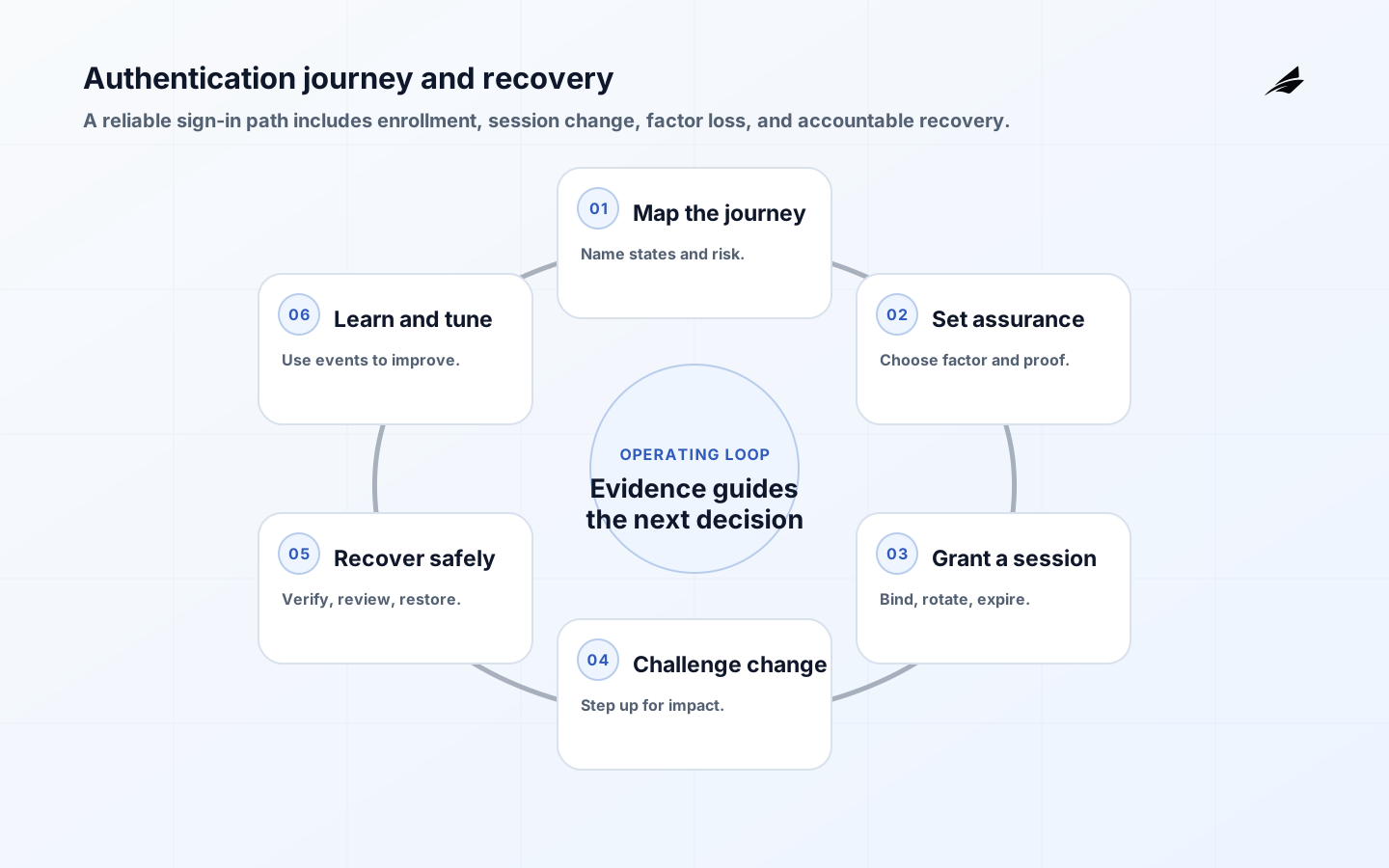
Authentication flows are the sequence by which a person proves control of an authenticator, receives an application session, and recovers when the normal path fails. In custom software, that sequence spans more than a sign-in screen: invitation, enrollment, password or passkey ceremony, multi-factor challenge, session renewal, logout, device change, support intervention, and deprovisioning all affect the same trust decision. A convenient happy path can still create a weak recovery path or a session that survives the reason access was removed. Design the journey as an operational contract before choosing a library or identity provider.
Start from the user’s task and the harm of a wrong result. A low-risk internal tool may prioritize a fast workforce identity-provider redirect, while a customer portal handling financial or personal records may need stronger enrollment, step-up authentication, and tighter session controls. Pair this article with REST API contracts, error handling for custom software, database schema design, and GraphQL trade-offs in production to keep identity decisions connected to the systems that enforce them.
Define the authentication flow boundary
Name the actors, states, and transitions that the application owns. The boundary should cover account invitation, enrollment, primary authenticator, second factor, session creation, session refresh, logout, recovery, support access, and deprovisioning. It should state what the identity provider decides and what the application decides after authentication. Do not let an interface label such as active user stand in for a server-side permission check. The NIST Digital Identity Guidelines are useful for calibrating authenticator and assurance choices, but the application still needs a journey-specific policy and an owner for exceptions.
| Journey stage | Decision to make | Evidence to retain |
|---|---|---|
| Enrollment | Who may create or bind an account? | Invitation, proofing, and binding record. |
| Authentication | Which authenticator and assurance level are required? | Policy, factor result, and reason code. |
| Session | When is a session created, renewed, or ended? | Session ID, event, and expiry policy. |
| Recovery | What stronger proof is required when a factor is lost? | Recovery request, reviewer, and outcome. |
| Deprovisioning | How quickly is access removed across sessions and jobs? | Revocation event and reconciliation result. |
A useful authentication flow also defines the evidence carried between transitions. Store a state identifier, assurance result, session event, recovery case, or deprovisioning decision that an operator can inspect without exposing credentials or personal data. This matters when the browser disappears between MFA steps, a user changes devices, or a support agent receives an ambiguous request. Designing those handoffs early keeps the journey coherent across the interface, API, identity provider, and operational queue.
Model the journey as states, not screens
Useful states include invited, enrolled, challenged, authenticated, session-active, step-up-required, locked, recovery-pending, suspended, and deprovisioned. Each transition should have an initiating event, an authority, an expiry, and a safe failure result. For example, a one-time invitation should expire and become unusable after acceptance; a password-reset request should not reveal whether an account exists; and a session should not become active until the server has completed the required checks. State modeling makes interruptions visible, especially when a browser closes during MFA or a support agent changes a role while a session is still open.
Keep identity, session, and authorization distinct
Authentication establishes that a subject has satisfied a defined ceremony. A session is the application’s time-bounded representation of that result. Authorization decides which action the subject may take on a resource in its current context. Treating these as one Boolean encourages stale privileges and makes logout ambiguous. Check authorization at the protected operation, rotate session material after a meaningful privilege change, and re-evaluate high-impact actions when assurance or context changes. This separation also gives support a safe answer to the question of what a person could do at a particular time.
Choose controls that fit the journey
Use a risk-based control set. Prefer phishing-resistant authenticators where the impact of account takeover warrants them, require MFA for administrative or sensitive operations, and use rate limits and generic error messages to reduce enumeration. For browser authorization, use exact redirect URI matching, state binding, and PKCE as appropriate; RFC 9700 explains why weaker browser modes and loose redirects create avoidable exposure. OWASP’s Authentication Cheat Sheet is a practical cross-check for password policy, session handling, MFA, and recovery behavior. Controls should act before the harmful effect, not merely record it afterward.
- Can the server distinguish an unauthenticated request from an authenticated but unauthorized request?
- Does a failed challenge reveal only what the user needs to continue safely?
- Are reset, invite, and recovery tokens single-use, scoped, expiring, and protected from replay?
- Does a role or factor change affect existing sessions and background work according to a written policy?
- Can operators revoke access without asking users to perform an unsafe workaround?
- Are authenticators and recovery channels inventoried so a lost device is an actionable event?
Make recovery harder to abuse than to ignore
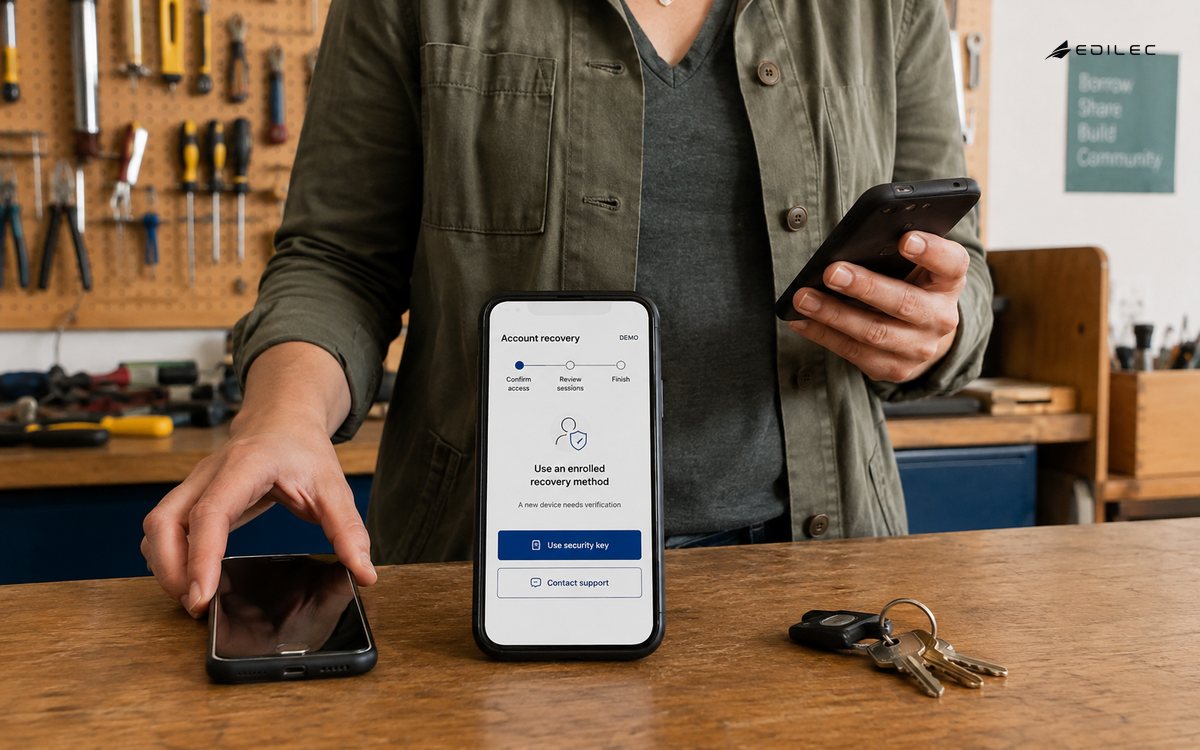
Recovery is part of the authentication boundary, not a customer-service afterthought. Decide what proof a person must present when a password, passkey, phone, or device is lost, and make the proof at least as strong as the access it restores. Use time limits, notification, rate limits, and a visible pending state for manual review. A support override should have a reason, scope, approver, and expiry. If a recovery request is ambiguous, preserve the existing access boundary and ask for stronger evidence rather than changing the account because a caller knows a convenient profile detail.
| Failure or request | Safe default | Operational response |
|---|---|---|
| Forgotten password | Use a single-use, expiring reset path with generic responses. | Review abuse rate and unusual destinations. |
| Lost second factor | Require a documented stronger recovery ceremony. | Record proof, reviewer, and replacement event. |
| Stolen session | Revoke the session and rotate relevant credentials. | Correlate device, time, and protected actions. |
| Role removed | Deny new actions and re-evaluate active sessions. | Reconcile tokens, jobs, and support views. |
| Locked account | Show a safe next step without leaking account state. | Route repeated cases to the named owner. |
Implement the path behind stable interfaces
Keep identity-provider integration, session management, authorization policy, and recovery orchestration behind interfaces that can be tested independently. Store the minimum identity attributes and use stable identifiers rather than mutable display fields. Make session cookies secure, scoped, and protected from client-side access where the browser model permits. Return safe, consistent errors and correlation identifiers without exposing whether a particular account exists. For federated sign-in, use OpenID Connect Core for protocol behavior and document the application-specific mapping of provider subjects, claims, tenants, and local permissions.
Release in slices that prove the negative path
A controlled rollout can start with one user group, one authenticator policy, and one recovery route. Test sign-in, logout, expiry, denied permissions, factor loss, provider outage, duplicate invitations, concurrent password resets, and a role removal while a session remains open. Instrument the journey before broadening it. A rollback plan should say which policy version, provider configuration, session rule, and communication step returns the system to a known state. Avoid a migration that silently converts every account to a new identity key; preserve a reconciliation report and a named owner for unresolved mappings.
Operate authentication flows with meaningful signals
Measure user consequence and control health together: sign-in success by flow, challenge completion, recovery attempts, session revocation time, repeated failures by reason, MFA enrollment coverage, suspicious device changes, and authorization denials after a role update. Separate a user-cancelled challenge from a provider outage and a policy rejection. Log security events before and after important changes, but keep secrets, reset tokens, and unnecessary personal data out of general telemetry. Review exceptions and recovery age on a regular cadence. A good dashboard answers which owner should act, not merely how many requests occurred.
Authentication flows takeaways
- Design a stateful journey with explicit ownership for enrollment, authentication, session, recovery, and deprovisioning.
- Separate authenticated identity from application session and per-resource authorization.
- Use controls proportionate to consequence, with phishing resistance and step-up where risk justifies them.
- Treat recovery and support access as security-critical paths with stronger proof and visible expiry.
- Release one bounded path, test interruption and denial, and keep a reversible policy change.
- Use signals that expose user harm, stale privilege, abuse, and time to revoke access.
Authentication flows FAQ
When should an application require MFA?
Require it when the account or action has enough consequence that one stolen authenticator is not an acceptable single barrier. Administrative access, sensitive exports, payment changes, and recovery operations are common step-up candidates. Calibrate the policy to the assurance and user experience the product can actually support.
How long should a session last?
There is no universal duration. Choose a policy from the sensitivity of the work, device context, idle behavior, reauthentication needs, and revocation ability. Document what happens after privilege changes or a suspected compromise rather than relying on one long expiry value.
What makes account recovery safe?
It asks for proof that matches the access being restored, limits retries, expires requests, notifies the account where possible, and keeps ambiguous cases pending. Manual support action should be reviewable and temporary, never an invisible permanent bypass.
Can one provider solve every authentication problem?
A provider can supply important identity and authenticator capabilities, but the application still owns sessions, authorization, recovery, data minimization, support workflows, and the user-visible behavior of failure. A provider boundary reduces work; it does not remove application responsibility.
Conclusion: make authentication a dependable journey
Strong authentication flows are designed around the work a person must complete and the ways that work can be interrupted, challenged, or revoked. Define the states, separate identity from authorization, make recovery at least as deliberate as sign-in, and preserve evidence for every consequential transition. With those decisions in place, custom software can add providers, authenticators, or roles without turning each change into a new security experiment.