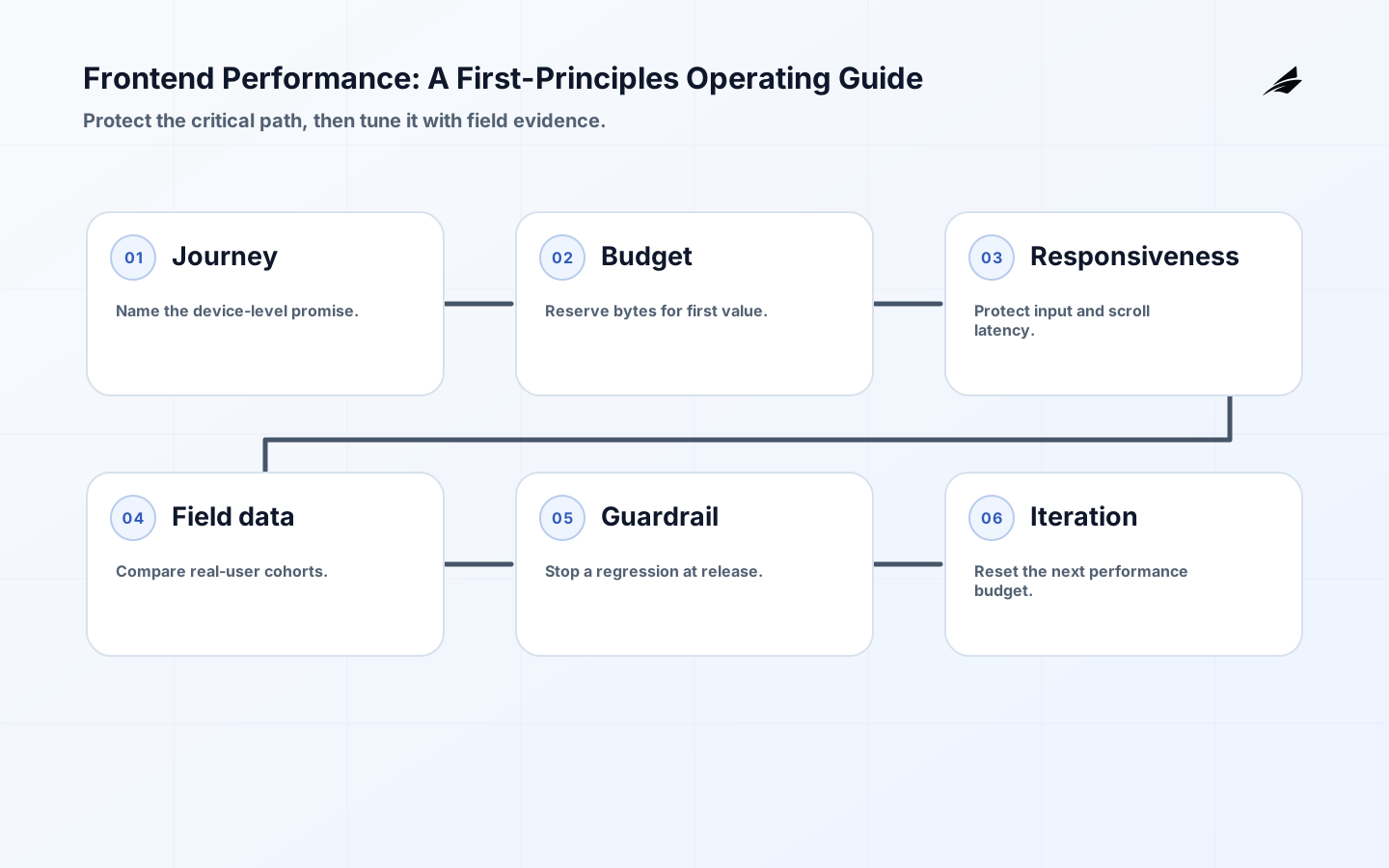
Frontend Performance: Explained from First Principles is a practical guide to frontend performance for teams that need a result they can operate, not a fashionable architecture diagram. In this context, frontend performance means the time and stability of a route as experienced on a particular device, network, cache state, and user task. For frontend-performance route, the work is valuable only when a person can see the promised outcome, understand its limits, and recover when reality disagrees with the happy path in the opening promise.
For frontend-performance route, the planning move that changes the conversation is to begin with a decision boundary in the opening promise. For frontend performance, choose a route and task before optimizing. “The site is slow” is vague; a mobile visitor unable to see a price or use the first form field on a cold connection is measurable. For frontend-performance route, that framing connects technical choices to the people who approve, perform, support, and audit the work in the opening promise.
Set the frontend performance decision boundary
Choose a route and task before optimizing. “The site is slow” is vague; a mobile visitor unable to see a price or use the first form field on a cold connection is measurable Write the promise in plain language: reader, desired outcome, authoritative record, timing, owner, and intervention threshold. This prevents a technical handoff from being mistaken for completion.
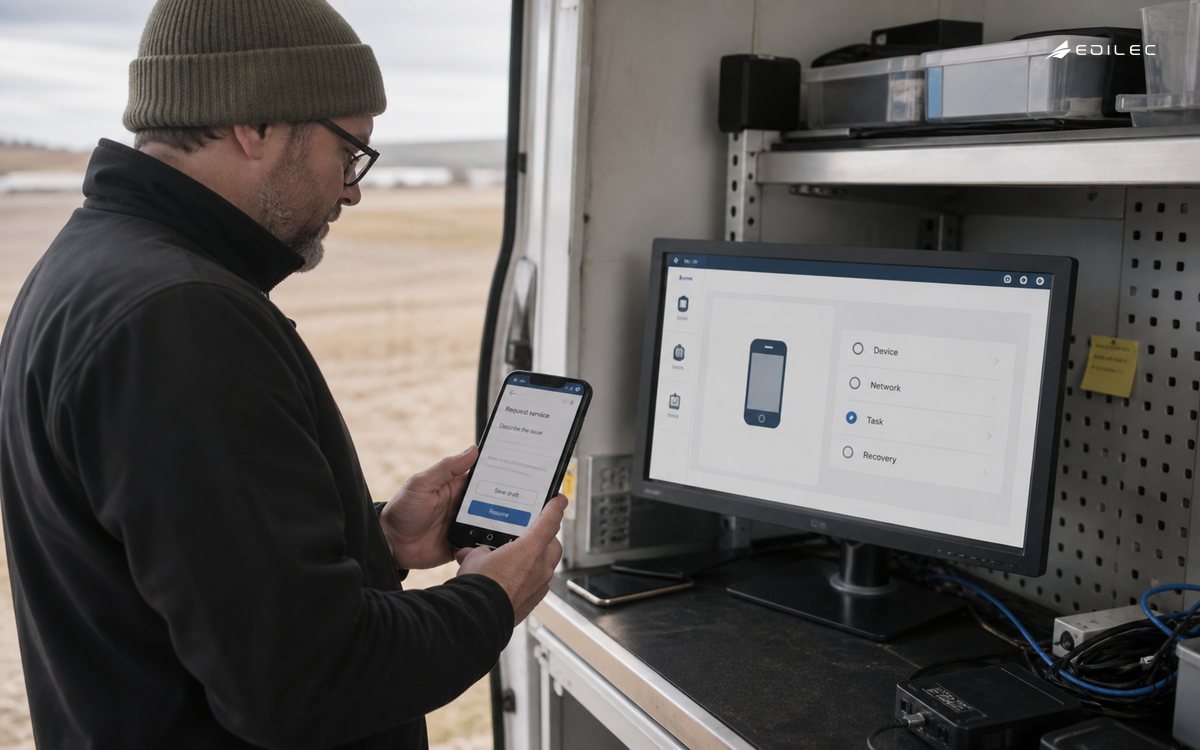
For frontend performance, a boundary also creates an honest non-goal. The first release does not need to solve every adjacent workflow. For frontend-performance route, it needs an observable path with real state, a known exception, and a person who can make the next safe decision in the opening promise.
| Question | Useful answer | Evidence to keep |
|---|---|---|
| What outcome matters? | A concrete completion or decision. | Business record and acceptance example. |
| What can fail? | Named conditions with recovery paths. | Classification and owner. |
| Who decides? | A role able to change rules or stop rollout. | Decision log. |
| What proves success? | Behavior in the relevant environment. | Trace, test, or workflow record. |
Shape the performance budget around the critical path
Budget the critical path. Render content that establishes the task early, keep the largest visual element discoverable, defer nonessential code, and use cacheable correctly sized media. Do not make first render wait for analytics or chat. For frontend-performance route, draw the boundary between trusted state, side effects, and observability before implementation in the design boundary. For frontend-performance route, it reveals where inputs are validated, who can trigger an effect, and how a later reader can reconstruct the decision in the design boundary.
In frontend performance architecture, prefer interfaces that make safe behavior ordinary. For frontend-performance route, stable identifiers, explicit data ownership, reviewable change impact, and a modest first scope matter more than novelty in the design boundary. For frontend-performance route, an architecture that the current team cannot explain or operate is not ready for broad adoption in the design boundary.
Instrument the route’s first valuable interaction
Instrument real-user metrics by route, device class, and release. Pair them with traces, request waterfalls, long-task inspection, and image candidates before changing framework settings. For frontend-performance route, include authorization, real state, a representative error, and a visible outcome in the first vertical slice in the design boundary. A polished demonstration that skips those concerns can support a conversation, but it is not evidence that frontend performance can carry production work.
- Name accountable business and technical owners.
- Capture a stable identifier for material actions.
- Exercise normal, invalid, and interrupted cases.
- Show state and next action to the relevant reader.
- Document correction, rollback, and communication steps.
| Choice | Use it when | Trade-off |
|---|---|---|
| Small pilot | Workflow and ownership are still being learned. | Some manual handling remains. |
| Guarded rollout | Happy path is proven but scope needs control. | Support coordination increases. |
| Broad adoption | Recovery and measurement are routine. | Governance costs become visible. |
| Redesign | Core boundary no longer fits the task. | Short disruption prevents a larger false economy. |
Make slow and failed visits recoverable
Averages hide the people having the hardest visit. Optimizing a synthetic home page while slow authenticated or product routes carry the workflow produces a false sense of progress. Put failure states beside the happy path. For frontend-performance route, the team should know what is retried, reversible, or sent to human review, and how a user or support agent finds current state without needing raw infrastructure access in the operating review.
- Could a timeout leave an ambiguous result?
- Can a repeated action cause a second effect?
- Does a public message reveal too much?
- What happens to late, missing, or unauthorized data?
- Who notices, and what can that person do?
Review field cohorts and release deltas
Track LCP, INP, and CLS with conversion, API latency, error rate, and bytes transferred. Segment the slow tail and annotate releases so a regression begins with evidence. Review these with the people receiving the consequences, not solely maintainers. For frontend-performance route, combine technical timing, business completion, support evidence, and a small sample of real cases to determine whether the stated promise holds in the operating review.
For frontend-performance route, establish a baseline before changes and annotate releases, policy changes, and unusual load in the operating review. That turns “it got worse” into an investigation with evidence. The best frontend performance metrics connect a system event to the person or record affected.
Rendering performance is also content design. A page that puts the price, eligibility, or next action behind a late client-side fetch has chosen a slower decision path even if its JavaScript bundle is small. Inspect server response timing, cache headers, font loading, image priority, and hydration cost together. A budget should be negotiated per route because an authenticated operational screen has different constraints from a public marketing page.
Avoid turning a performance incident into a one-off cleanup. Keep a release comparison for the affected route, identify the responsible asset or task, and add a guard that would have caught the regression earlier. For images, that may be dimensions and responsive candidates; for code, a dependency-size check or interaction trace. The lasting improvement is a change to delivery practice, not a screenshot of a better score.
Performance investigations need a reproducible view of the affected experience. Capture device, connection assumptions, route state, locale, feature flags, and the release artifact with each trace. Without that context, an engineer can “fix” a desktop warm-cache trace while the actual regression remains on a lower-end device after authentication. Reproduction details also make the eventual fix reviewable: another person can validate the same task rather than interpreting an isolated metric screenshot.
Assign performance budget owners and release stops
Put route budgets into normal delivery. Evaluate third-party scripts as procurement decisions because each adds execution time, privacy surface, and dependency failure risk. For frontend-performance route, version decisions that affect consumers, retain enough history for audit and learning, and make current rules easy to find in the operating review. For frontend-performance route, maturity means a new team member can understand a problem and take the next safe action without private memory in the operating review.
The technical foundation for this approach is web.dev performance guidance and Web Vitals learning path. For frontend-performance route, those references describe mechanisms and standards; applying them responsibly still requires a local decision about users, risk, and operating constraints in the takeaway. Additional implementation context appears in Navigation Timing Level 2 and MDN web performance.
Where performance connects to adjacent engineering work
Adjacent decisions often decide whether frontend performance succeeds in practice. Read Design Systems Architecture: Decisions for Durable UI Reuse, Code Review Systems: Buyer and CTO Guide for Sustainable Delivery, How Operations Leaders Should Think About Test Strategy to connect this topic with testing, architecture, delivery, and operational ownership. For frontend-performance route, these are design context, not a substitute for observing the workflow in front of you in the takeaway.
Key takeaways for frontend performance
- Frontend performance is a contract for a real outcome, not a tool configuration.
- Name ownership, authoritative state, recovery, and evidence before expanding scope.
- For frontend-performance route, use a complete pilot to learn the failure path as well as the happy path in the takeaway.
- Measure the promise in the workflow where people rely on it.
Frontend performance FAQ
What should be decided first?
What comes first? The visible content and action on the slowest important route.
What is the most common planning mistake?
Do Web Vitals replace other measures? No; completion, accessibility, and errors need separate evidence.
When is the work ready to expand?
Is code splitting always helpful? Only when it removes work from the current route.
Choose a task before a metric
A performance program needs a human-visible promise. For a pricing route, the promise might be that a mobile visitor can read the plan and open the comparison control without waiting for secondary scripts. That statement determines what to measure, which device classes matter, and what a regression means. A synthetic score can help locate a problem, but it cannot replace evidence from the task itself. Record the route, connection profile, device class, cache state, and release identifier with each meaningful observation.
Turn budgets into release decisions
A budget is useful only when it changes behavior. Set separate limits for initial bytes, long tasks, layout movement, and interaction delay, then name the person who can stop a release when a limit is exceeded. Keep budgets close to the user journey: an account dashboard can tolerate a different loading sequence from a campaign landing page. Review exceptions explicitly, because a waived budget without an expiry date becomes the new default.
Apply frontend performance in production
A frontend budget decision example
Review a cold-load pricing route with one accountable engineer, one user promise, one rejected budget condition, and a documented recovery step. For frontend performance, the review is complete only when a teammate can explain what happened from the evidence without relying on memory. Record the route budget, review date, and release signal that would trigger a rollback or redesign. For frontend performance, keep the implementation tied to a reproducible field case so the next maintainer can investigate a regression without guesswork. For frontend performance, preserve device class, connection type, cache state, and release beside the route budget example so the decision remains reviewable.
| Check | Example question | Evidence |
|---|---|---|
| Boundary | What is deliberately out of scope? | Decision record |
| Ownership | Who can change the behavior? | Named owner |
| Failure | What happens after rejection or timeout? | Test and runbook |
| Review | What signal changes the decision? | Metric or audit |
Frequently asked questions about frontend performance
What should a team decide first about frontend performance?
Begin with the page and person most exposed to delay. Decide whether the promise is readable content, usable input, or completed navigation, then attach it to a route and release. A performance review that cannot name the task will drift toward scores that are easy to report but hard to act on.
How should frontend performance be introduced safely?
Ship the pricing route with real cache behavior, a visible loading state, measurable interaction readiness, and a documented recovery path. Widen the budget only after field cohorts show that the route remains usable under the slow conditions it promises to support. For frontend performance, preserve device class, connection type, cache state, and release beside the safe-introduction check so the decision remains reviewable.
What is a useful review signal for frontend performance?
Use a performance signal tied to the promise: time to useful content, interaction readiness, layout stability, or completed task rate. Read release deltas with representative traces and support cases so an improved median does not hide a slower mobile cohort. For frontend performance, preserve device class, connection type, cache state, and release beside the review-signal check so the decision remains reviewable.
Frontend performance references
Continue with Design Systems Architecture: Decisions for Durable UI Reuse, Code Review Systems: Buyer and CTO Guide for Sustainable Delivery, How Operations Leaders Should Think About Test Strategy. Use the linked engineering guides to compare route budgets with component ownership, test strategy, and release practice.
Conclusion: make frontend performance accountable before scaling it
The durable test for frontend performance is straightforward: can the team describe the promised outcome, show current state, recover from a known failure, and explain the decision to the person affected? For frontend-performance route, begin with one accountable path, retain evidence that matters, and widen adoption only when that path behaves reliably in the conclusion. For frontend-performance route, it is a quieter form of progress, but it creates software that earns trust under ordinary pressure in the conclusion.