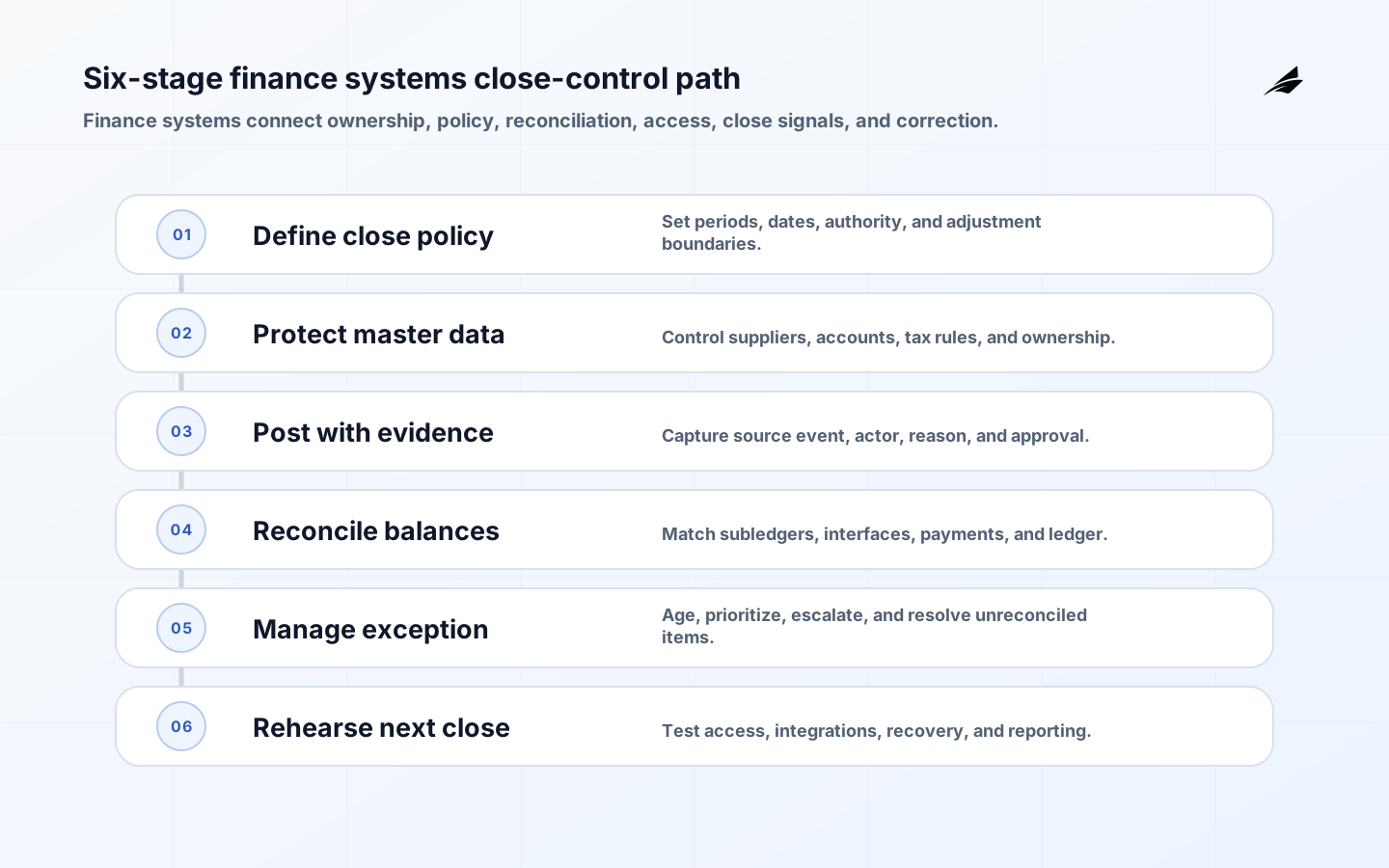
Finance systems mistakes often look like software problems when the root cause is an unclear operating decision. A ledger can be technically available while teams disagree about when revenue is earned, who may change a supplier, which system owns a cost center, or how a late event belongs in close. The consequences are familiar: manual journals without explanation, repeated reconciliations, late management reports, and anxiety around audit or cash decisions. The fixes are not glamorous. They make ownership, evidence, period policy, access, and exceptions visible before a team adds more integrations or dashboarding. A finance system should let people explain a material balance from reported figure back to source event and authorized adjustment.
Finance systems: Fix ownership before adding automation
The first mistake is treating every finance field as if the general ledger owns it. Finance may own posting and accounting treatment, while procurement owns approved purchase intent, HR owns an employment change, and billing owns the service event that creates a receivable. Map the business fact, authoritative source, finance representation, consumer, and correction route. The system-of-record design guide is useful for resolving these boundaries. Then name who approves a change to account mapping, entity structure, tax treatment, or close policy. The NIST Cybersecurity Framework reinforces the point that governance must connect to operational protection and recovery, not sit outside the system.
| Common mistake | Practical fix | Evidence of improvement |
|---|---|---|
| Unclear source authority | Map fact ownership by process and attribute. | Fewer overwrite and mapping disputes. |
| Period rules in tribal knowledge | Document event, posting, and adjustment timing. | Consistent close treatment. |
| Manual journals without rationale | Require source, reason, approver, and reversal policy. | Traceable adjustment population. |
| Finance-only reconciliation | Compare operational events to financial postings. | Earlier exception detection. |
Finance systems: Make time and policy explicit
A finance system needs several notions of time: when an activity occurred, when it was approved, when it was posted, when the business learned of it, and which reporting period it affects. The second common mistake is collapsing these into one timestamp. Define the policy for late invoices, corrections, accruals, reversals, currency rates, and master-data changes, then make it testable in the process. Keep policy versions and effective dates alongside the transactions they govern. A close process becomes less fragile when a reviewer can see why an event landed where it did rather than infer it from a period label.
- State the event-time and posting-time rules for each major process.
- Version accounting mappings, approval thresholds, and tax or pricing policies.
- Use explicit reversal references instead of overwriting prior postings.
- Classify exceptions as timing, policy, data, integration, or unresolved investigation.
- Revalidate open adjustments when close rules change.
Finance systems: Control changes and access
Another recurring mistake is allowing a convenient operational role to accumulate broad power over vendors, bank details, posting logic, and reporting. Separate routine entry from high-impact approval and execution, and capture the old value, new value, actor, reason, and affected population. The OWASP Application Security Verification Standard gives concrete application-control themes: authorization should be enforced by the system, inputs should be validated, and consequential activity should be logged. Where personal or pay-related data appears, use the NIST SP 800-122 to minimize who receives it through exports, alerts, and support workflows.
| Change type | Minimum control | Review signal |
|---|---|---|
| Supplier payment detail | Separate approval and verified change record. | High-risk change review. |
| Account mapping | Test with sample postings and effective date. | Unexpected posting destination. |
| Manual journal | Reason, source, approver, and reversal link. | Adjustment volume and aging. |
| Role assignment | Least privilege and periodic recertification. | Dormant or excessive access. |
Finance systems: Reconcile the whole operating path
A ledger total matching a bank or subledger total is necessary but not enough. Reconcile the operational population that should have produced the finance result: approved purchases to commitments, shipments to cost recognition, service events to receivables, time records to payroll, and payments to settlement status. Differences should have an owner and a status, not a private spreadsheet. The billing operations checklist is a useful illustration of tracing customer-facing financial events through issue, collection, and correction. Use sampling to verify that an individual reported figure can be followed to source evidence and authorized policy.
Set a practical materiality rule for report review. Not every minor display issue needs the same response as a changed balance that will influence cash, covenant, tax, or management decisions. Define who decides whether a correction requires restatement, notification, or a future-cycle fix, and record the rationale. That makes report quality proportionate to consequence while preserving a reliable route for people to flag anomalies before they become accepted as normal.
Design report access and distribution deliberately. A finance leader may need consolidated performance while an operating manager needs a narrower view of the drivers they can influence. Avoid sending extracts by habit when a permissioned report can provide a fresher, more traceable view. For exported data that is necessary, define recipient, purpose, retention, and update process. These decisions reduce both confidentiality risk and the chance that a stale copy becomes an unrecognized source for a later decision.
Management reports are often where finance-system ambiguity becomes visible, because they combine account structures, entities, periods, operational drivers, and manual explanations. Treat important reports as controlled products with an owner, intended decision, definition of each material measure, source lineage, refresh status, audience, and change process. A report should show whether it is preliminary, closed, or restated. This is more useful than presenting a polished number when period treatment and completeness are unknown. Link a reported figure to the reconciled source population and adjustment evidence so a reviewer can ask a focused question rather than start an unstructured data hunt.
Guard against spreadsheet shadow processes without treating all local analysis as a failure. A temporary workbook can be valuable for investigation, scenario work, or a carefully documented close adjustment. The problem begins when it becomes the only place a recurring calculation, mapping, or explanation exists. Identify repeated spreadsheets that feed material decisions, document their inputs and owner, then either bring the logic into a governed system or establish a proportionate review and versioning practice. This respects real operating needs while reducing dependence on a single person's memory.
Use restatements and report disputes as learning signals. If a reported value must change, record what changed, why, which periods and audiences were affected, and how future recurrence will be prevented. Distinguish a source correction from a definition change and from an implementation defect; each calls for a different response. A transparent change note can preserve trust better than pretending the prior figure was never published. Over time, the pattern of questions from finance partners and leaders reveals where definitions, data contracts, or review steps need to become more explicit.
Finance systems: Operate close with signals
Monitor close readiness through the age and value of unreconciled items, failed interfaces, manual journal count, pending approvals, late operational feeds, and time to resolve a material difference. Use Google SRE monitoring guidance to keep alerting tied to an action: an unexpected payment-feed failure may need immediate ownership, while recurring mapping exceptions deserve trend analysis and a controlled fix. Hold a short review after close that distinguishes one-off business events from process defects. Give every chosen improvement an owner, due date, and test of completion.
Finance systems key takeaways
- Clarify fact ownership before asking finance software to automate it.
- Make event time, posting time, period policy, and reversals explicit.
- Separate high-impact financial changes from routine operational entry.
- Reconcile reported balances to the operational populations that produced them.
- Use close signals to surface exceptions early and improve the process after each cycle.
Finance systems FAQ
What is finance system reconciliation?
It is the controlled comparison of financial records with their relevant subledgers, operational events, bank or payment outcomes, and approved adjustments. It explains differences rather than assuming a matching aggregate balance proves every underlying item is correct.
Where should a team start fixing a finance system?
Start with the process that creates the most material, recurring reconciliation work or decision uncertainty. Map its source event, authority, policy, posting, correction, and close evidence before selecting a platform enhancement or automation project.
Conclusion
Finance systems become more reliable when their reported numbers remain connected to ownership, time policy, source evidence, and controlled correction. Fix those operational fundamentals first; they make future automation and reporting safer instead of merely faster.
For finance systems, anchor the work to one material flow such as procure-to-pay or close: name source authority, posting rule, approval boundary, expected result, and reversal route. Preserve transaction identifiers and effective dates so a correction can explain the original entry and downstream reports now.
For finance systems, exercise a new supplier, changed tax rule, late invoice, reversed payment, closed period, privileged access request, and unreconciled balance. Confirm that each exception has an owner, effective date, approval evidence, and reversible action rather than a hidden spreadsheet workaround during the monthly close rehearsal and control review cycle.
| Decision area | Question to answer | Evidence or response |
|---|---|---|
| Define scope | What must be true before release? | Named owner and boundary record |
| Validate evidence | Is the input current and authoritative? | Source, version, and test result |
| Apply control | What action is allowed? | Policy decision and durable receipt |
| Review state | What happens when assumptions change? | Status, exception route, and owner |
Review finance systems under change
The release is not complete when finance systems works once. Exercise a new supplier, changed tax rule, late invoice, reversed payment, period lock, privileged access request, and unreconciled close item. For each case, name the authoritative source, accountable owner, decision window, safe degraded state, and evidence that must survive correction, for the close process. Decide in advance whether the result is held, marked provisional, quarantined, retried, reversed, or escalated to a person, at the posting boundary. Keep a durable receipt with the input version, policy or rule version, actor, timestamp, correlation identifier, outcome, and reason for any exception, during reconciliation. This makes a later investigation answerable without relying on memory or a screenshot, for the close process. Review both false alarms and missed failures: a noisy control teaches operators to ignore important signals, while a silent failure creates unrecorded business risk, at the posting boundary. Measure the signals that matter to the decision, such as freshness, exception age, manual bypasses, correction time, duplicate effects, failed dependencies, and the percentage of cases that reach a named owner before the deadline, during reconciliation. Do not treat activity as success; a report viewed, workflow completed, or gateway connected can still be operationally weak if users export data, work around the control, or cannot recover safely, for the close process. For finance systems, compare the first related canonical guide, the second related canonical guide, and the third related canonical guide as adjacent context. Expand scope only after the first path has a stable ownership model, a tested exception route, and evidence that users make a better or safer decision because the service exists, at the posting boundary. The next iteration should remove one repeated ambiguity, reduce one costly manual handoff, and make one failure condition easier to see, during reconciliation. That is the practical standard for a professional operating release: bounded authority, inspectable evidence, visible uncertainty, and a recovery path that remains usable after the original builder has moved on, for the close process.
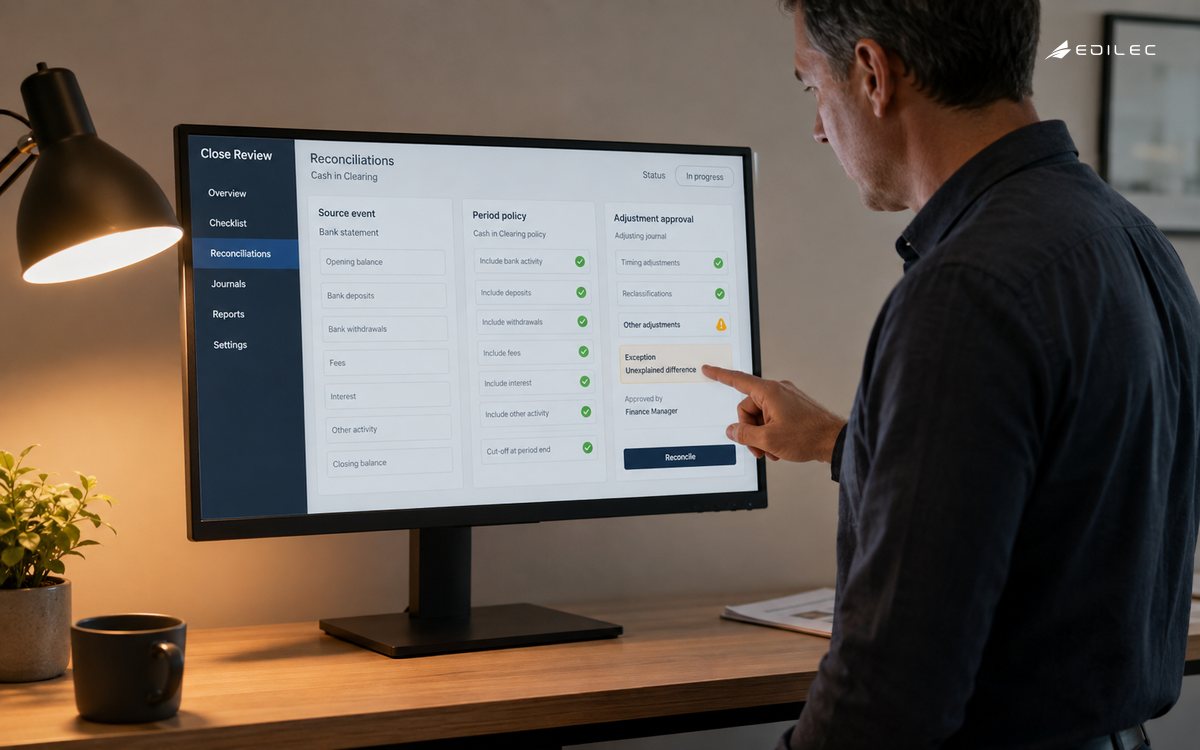
Keep the exception visible beside the ordinary result, and make the next safe action easy for the accountable operator to find, during reconciliation. Close readiness should be demonstrated. Rehearse a correction, locked period, integration retry, and privileged access review with the people who perform the work. Capture the evidence they actually need, then remove steps that add ceremony without control. The finance system is ready to scale when its exceptions are visible, assigned, and recoverable under time pressure.