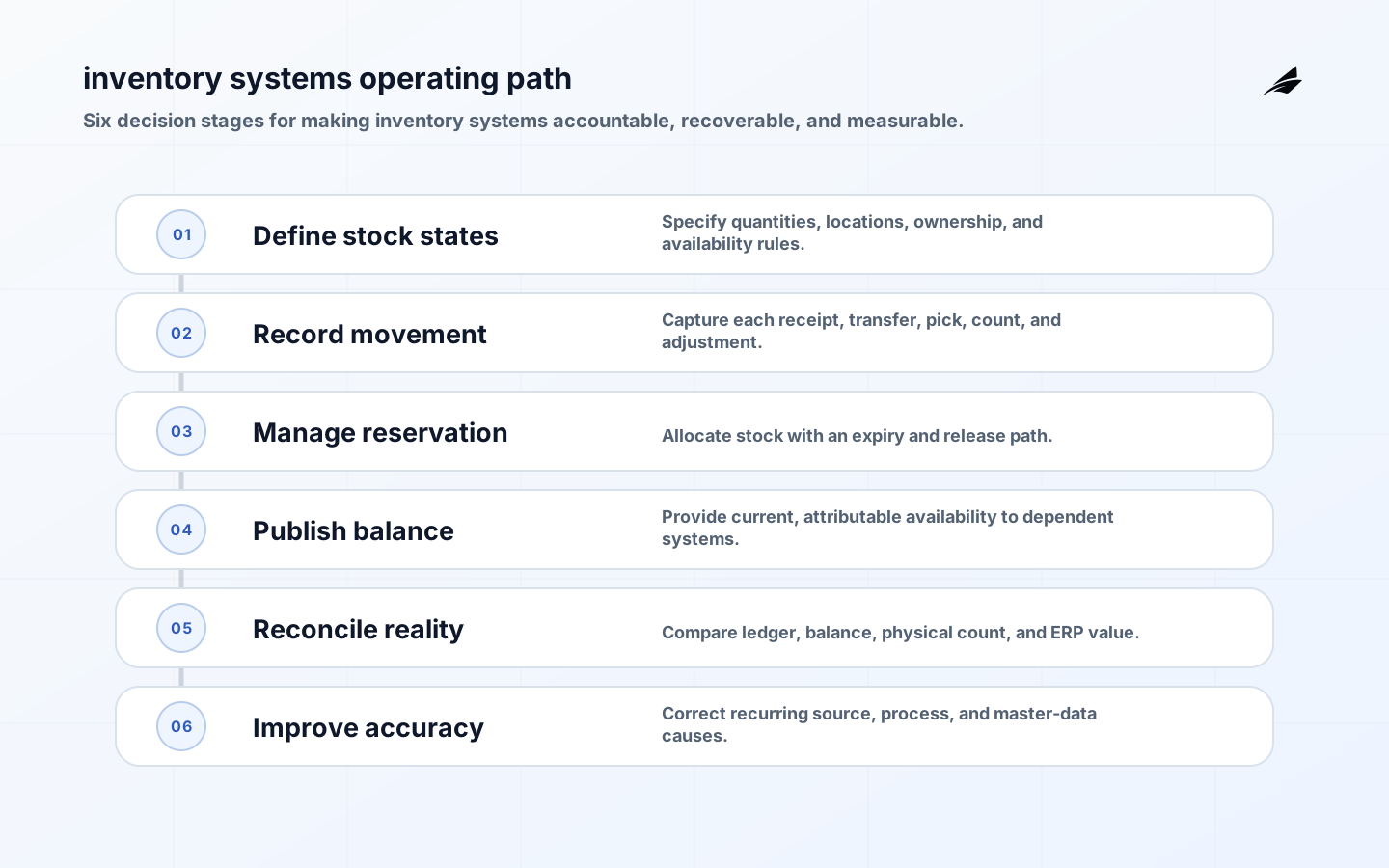
Inventory systems become production-critical when a stock figure decides whether a customer can buy, a warehouse can pick, or finance can value goods. The number is only trustworthy when the team can explain its location, status, ownership, reservation, and movement history. Before the first build, decide what event creates an inventory movement and which system has the authority to state available-to-promise stock.
Set the decision boundary for inventory systems
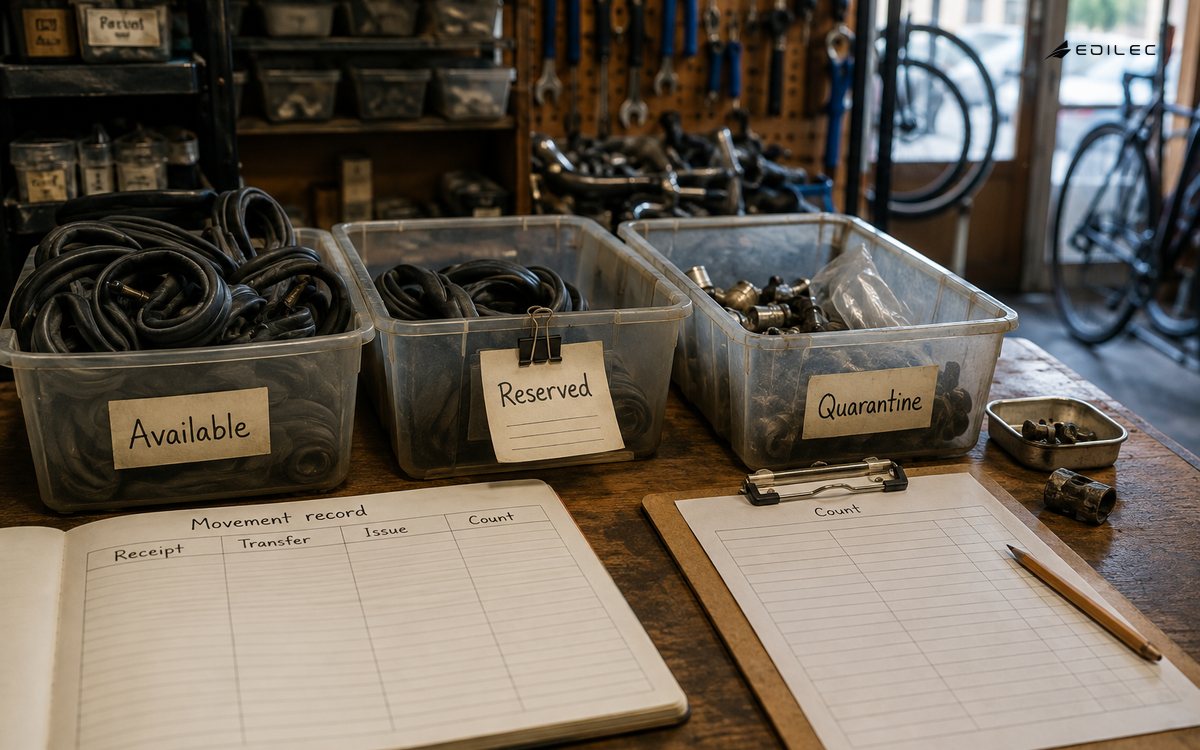
Start with one stock domain such as a single warehouse, fulfillment model, or product family. Define the inventory unit, location hierarchy, ownership model, statuses, reservation rules, and the transaction that changes each quantity. Distinguish physical on-hand, allocated, available, in-transit, quarantined, and damaged stock. Collapsing them into one balance makes reconciliation and customer promises unreliable.
| Design concern | Decision to make | Evidence to retain |
|---|---|---|
| Inventory state | On-hand, reserved, available, in-transit, quarantined, or damaged | Location, ownership, and quantity definition |
| Movement | Receipt, pick, ship, transfer, count, or adjustment | Transaction ID, cause, actor, and time |
| Reservation | Order-linked allocation with expiry | Commitment scope and release rule |
| Reconciliation | Ledger, balance, physical count, and ERP value | Difference owner and correction evidence |
Keep records that explain the outcome
An inventory movement needs a durable transaction ID, SKU or item reference, quantity and unit of measure, from and to location or status, event time, operator or source, and a causal reference such as purchase receipt, order, transfer, or count. Keep adjustments explicit with a reason and authorization. A current balance without a movement ledger cannot be audited or reliably rebuilt after an integration failure.
Design inventory systems as an accountable flow
Use an append-oriented movement ledger to derive balances, then expose read models suited to reservation and fulfillment decisions. A reservation is a commitment with an expiry or release rule, not merely a subtraction performed in a user interface. Integrations with order management, warehouse systems, and ERP need idempotency and ordering rules so a repeated shipment confirmation does not reduce stock twice.
| Operating stage | Control to design | Signal to review |
|---|---|---|
| Event capture | Unit, location, and status validation | Rejected and duplicate movement rate |
| Balance derivation | Ordered movement processing and replay control | Processing lag and ledger-to-balance difference |
| Reservation | Expiry and allocation rules | Oversell attempt and stale reservation count |
| Stock review | Cycle count and adjustment authorization | Adjustment value and physical variance trend |
Put authority and evidence into the controls
Restrict manual adjustments and require evidence for count discrepancies, damage, or write-offs. Separate the authority to initiate a movement from the authority to approve high-value adjustments where appropriate. Log stock-affecting actions with correlation references, and make replay or backfill tools deliberate operational capabilities rather than unrestricted administrator shortcuts.
For inventory systems, NIST's Cybersecurity Framework helps connect availability decisions with protected operational processes and recoverable exceptions. SP 800-53, SP 800-34, and SP 800-92 support adjustment authority, disruption recovery, and the movement records needed for investigation.
Release with exceptions in view
Pilot a bounded location and reconcile the movement ledger to physical count and ERP valuation. Test partial receipt, cancelled order, expired reservation, transfer in transit, offline scanner retry, and a count correction. The go-live plan needs a cutover rule for in-flight movements; otherwise two systems may both believe they own the same inventory event.
Measure operating reliability, not activity alone
Track ledger-to-balance differences, negative-stock attempts, reservation expiry, count-adjustment value, movement processing lag, duplicate suppression, and unfulfilled orders caused by inventory mismatch. Pair automated metrics with periodic physical counts. A system can process every event quickly and still be wrong if process discipline or item master quality has drifted.
Pre-build decision register
- For inventory systems, confirm item identity and unit-of-measure rules; write the rule, named owner, effective time, audit evidence, failure signal, and recovery action into the build decision record before release.
- For inventory systems, test item identity and unit-of-measure rules with normal, delayed, corrected, and failed inputs; retain the result so the operating team can explain and safely repeat the decision.
- For inventory systems, confirm location hierarchy and stock ownership model; write the rule, named owner, effective time, audit evidence, failure signal, and recovery action into the build decision record before release.
- For inventory systems, test location hierarchy and stock ownership model with normal, delayed, corrected, and failed inputs; retain the result so the operating team can explain and safely repeat the decision.
- For inventory systems, confirm definitions for available, reserved, and quarantined stock; write the rule, named owner, effective time, audit evidence, failure signal, and recovery action into the build decision record before release.
- For inventory systems, test definitions for available, reserved, and quarantined stock with normal, delayed, corrected, and failed inputs; retain the result so the operating team can explain and safely repeat the decision.
- For inventory systems, confirm movement events that change each balance; write the rule, named owner, effective time, audit evidence, failure signal, and recovery action into the build decision record before release.
- For inventory systems, test movement events that change each balance with normal, delayed, corrected, and failed inputs; retain the result so the operating team can explain and safely repeat the decision.
- For inventory systems, confirm idempotency keys for scanners and integrations; write the rule, named owner, effective time, audit evidence, failure signal, and recovery action into the build decision record before release.
- For inventory systems, test idempotency keys for scanners and integrations with normal, delayed, corrected, and failed inputs; retain the result so the operating team can explain and safely repeat the decision.
- For inventory systems, confirm ordering rules for shipment and receipt events; write the rule, named owner, effective time, audit evidence, failure signal, and recovery action into the build decision record before release.
- For inventory systems, test ordering rules for shipment and receipt events with normal, delayed, corrected, and failed inputs; retain the result so the operating team can explain and safely repeat the decision.
- For inventory systems, confirm reservation expiry and release behavior; write the rule, named owner, effective time, audit evidence, failure signal, and recovery action into the build decision record before release.
- For inventory systems, test reservation expiry and release behavior with normal, delayed, corrected, and failed inputs; retain the result so the operating team can explain and safely repeat the decision.
- For inventory systems, confirm authority for high-value stock adjustments; write the rule, named owner, effective time, audit evidence, failure signal, and recovery action into the build decision record before release.
- For inventory systems, test authority for high-value stock adjustments with normal, delayed, corrected, and failed inputs; retain the result so the operating team can explain and safely repeat the decision.
- For inventory systems, confirm reason codes and evidence for count variance; write the rule, named owner, effective time, audit evidence, failure signal, and recovery action into the build decision record before release.
- For inventory systems, test reason codes and evidence for count variance with normal, delayed, corrected, and failed inputs; retain the result so the operating team can explain and safely repeat the decision.
- For inventory systems, confirm in-transit transfer completion criteria; write the rule, named owner, effective time, audit evidence, failure signal, and recovery action into the build decision record before release.
- For inventory systems, test in-transit transfer completion criteria with normal, delayed, corrected, and failed inputs; retain the result so the operating team can explain and safely repeat the decision.
- For inventory systems, confirm ledger-to-balance and physical-count reconciliation; write the rule, named owner, effective time, audit evidence, failure signal, and recovery action into the build decision record before release.
- For inventory systems, test ledger-to-balance and physical-count reconciliation with normal, delayed, corrected, and failed inputs; retain the result so the operating team can explain and safely repeat the decision.
- For inventory systems, confirm cutover rule for in-flight warehouse movements; write the rule, named owner, effective time, audit evidence, failure signal, and recovery action into the build decision record before release.
- For inventory systems, test cutover rule for in-flight warehouse movements with normal, delayed, corrected, and failed inputs; retain the result so the operating team can explain and safely repeat the decision.
Key takeaways for inventory systems
- Represent inventory as explicit movements and statuses, not one mutable quantity.
- Separate physical, reserved, available, in-transit, and quarantined stock.
- Give reservations their own lifecycle, expiry, and audit record.
- Reconcile system balances to movement evidence and physical count before expanding scope.
Frequently asked questions
Why keep a movement ledger instead of only the current stock balance?
The ledger explains how the balance was reached, supports audit and recovery, and makes discrepancies traceable to a specific event.
What is available-to-promise inventory?
It is the quantity the business can commit after accounting for on-hand stock, reservations, holds, and its fulfillment rules.
How should manual adjustments be handled?
Use an authorized, reason-coded adjustment that preserves the prior quantity, supporting evidence, and any necessary approval.
Conclusion
A dependable inventory systems implementation is a system of explicit choices: what is authoritative, who can decide, which state is real, how an exception is recovered, and how the team verifies the result. Build the smallest flow that proves those choices with real evidence, then extend it deliberately. Related reading: inventory systems in production, system of record design, service delivery systems.