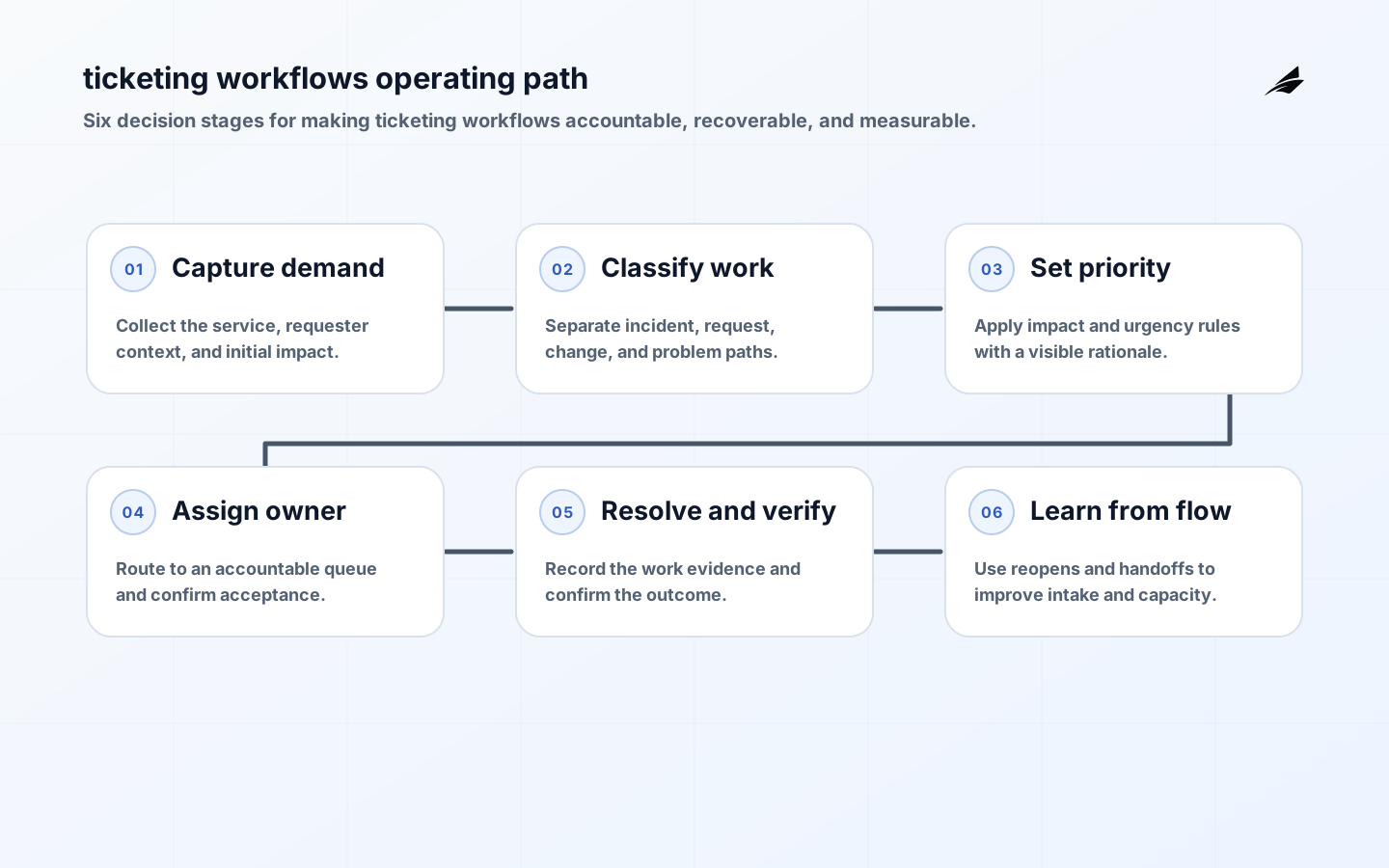
Ticketing workflows become production systems when a ticket is more than an inbox message. It is a durable statement of demand, impact, accountability, and work performed. Teams feel the difference when an urgent request bypasses a queue, an assignment has no accountable owner, or a closed ticket has no evidence that the requester received the promised outcome.
Set the decision boundary for ticketing workflows
Choose one service and its request-to-closure boundary. Identify who may submit a request, which classifications are actionable, the service owner, the response and resolution commitments, and the condition for closure. Separate incident, service request, change, and problem records when they imply different urgency, authority, or follow-up. A single generic ticket type conceals the decisions that determine safe routing.
| Design concern | Decision to make | Evidence to retain |
|---|---|---|
| Request class | Incident, request, change, or problem | Different routing and closure rules |
| Priority | Impact and urgency with override authority | A recorded rationale and review trail |
| Assignment | Queue, role, and accepting person | Handoff timestamps and escalation target |
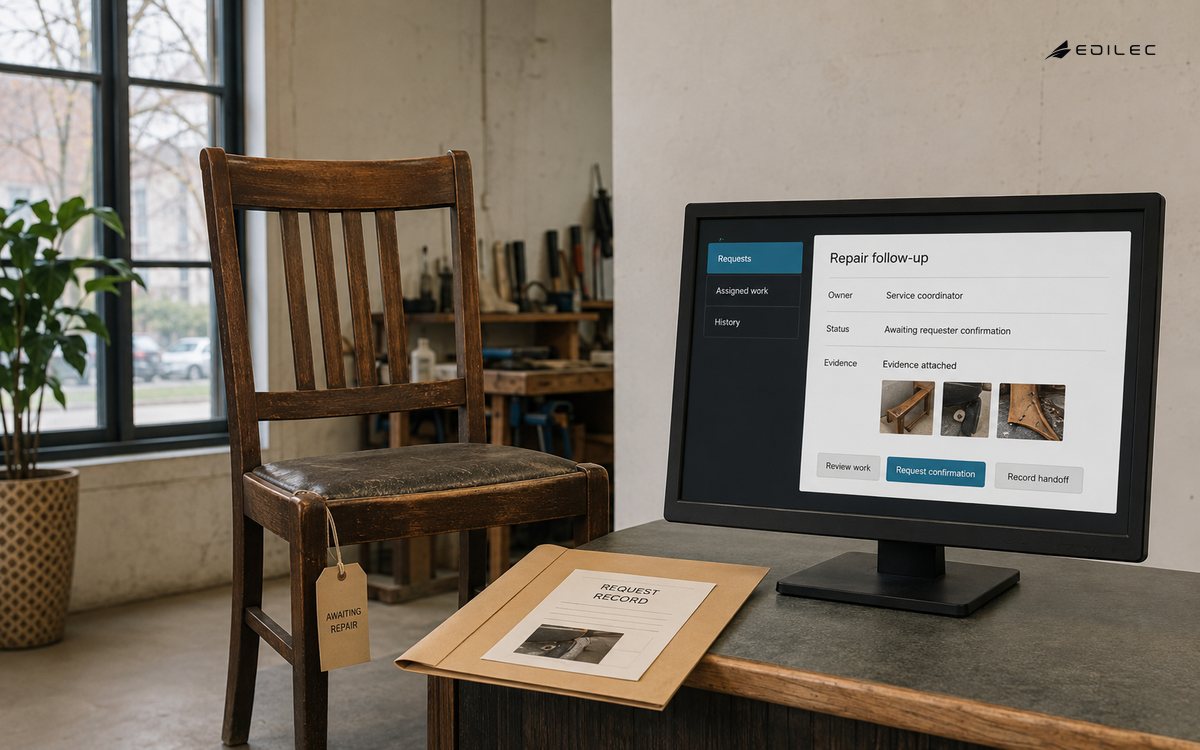
| Closure | Resolution evidence and requester notice | Reopen path and follow-up owner |
Keep records that explain the outcome
A useful ticket record keeps the requester context, affected service, impact, urgency, priority rationale, assignment history, timestamps, and resolution evidence. Store the policy or routing rule version when automation assigns a queue. That makes an unexpected assignment debuggable and permits a manager to distinguish a capacity problem from a classification rule that was wrong.
Design ticketing workflows as an accountable flow
Build the workflow around explicit states such as submitted, triaged, assigned, waiting, resolved, and closed. Events should move the state; comments alone should not. Integrations with monitoring, asset records, and identity systems need idempotent keys so one alert does not create a swarm of tickets. Escalation must preserve the original context while recording who accepted responsibility at each handoff.
| Operating stage | Control to design | Signal to review |
|---|---|---|
| Intake | Required service, impact, and requester data | Incomplete submission and classification correction |
| Routing | Policy version and idempotent event key | Duplicate ticket and wrong-queue rate |
| Work state | Named transitions and waiting reason | Aged work and repeated reassignment |
| Service review | Percentile timing and reopen analysis | Commitment misses by service and priority |
Put authority and evidence into the controls
Priority should be explainable. Use a defined model of impact and urgency, allow an authorized override, and log who made it. Restrict sensitive queues and attachments, especially where tickets may contain personal data or security details. Audit trails should capture assignment, status, approval, and access changes rather than relying on a reconstructed chat history.
For ticketing workflows, NIST's Cybersecurity Framework supports a lifecycle of identifying services, protecting queue access, detecting service disruption, responding through accountable work, and recovering with evidence. SP 800-53, SP 800-34, and SP 800-92 provide complementary guidance on access, resilience, and the logs needed to reconstruct a handoff.
Release with exceptions in view
Begin with a limited catalog and a small set of queues. Run parallel triage for a short period, compare routing outcomes, and make exception patterns visible to the service owner. Test the uncomfortable cases: a duplicate alert, a ticket that waits for the requester, a reassignment after a shift change, and an attempted closure without customer confirmation.
Measure operating reliability, not activity alone
Track time to acknowledge, time to resolve, reopen rate, reassignment count, aged waiting tickets, and routing corrections. Use percentiles rather than only averages; the tail often contains the customers and dependencies that the workflow is failing. Review categories with high manual reassignment, then simplify the form or rule before adding another automation branch.
Pre-build decision register
- For ticketing workflows, confirm request types that need distinct service commitments; write the rule, named owner, effective time, audit evidence, failure signal, and recovery action into the build decision record before release.
- For ticketing workflows, test request types that need distinct service commitments with normal, delayed, corrected, and failed inputs; retain the result so the operating team can explain and safely repeat the decision.
- For ticketing workflows, confirm required intake facts for each service category; write the rule, named owner, effective time, audit evidence, failure signal, and recovery action into the build decision record before release.
- For ticketing workflows, test required intake facts for each service category with normal, delayed, corrected, and failed inputs; retain the result so the operating team can explain and safely repeat the decision.
- For ticketing workflows, confirm impact and urgency definitions used to calculate priority; write the rule, named owner, effective time, audit evidence, failure signal, and recovery action into the build decision record before release.
- For ticketing workflows, test impact and urgency definitions used to calculate priority with normal, delayed, corrected, and failed inputs; retain the result so the operating team can explain and safely repeat the decision.
- For ticketing workflows, confirm queue ownership during shifts and handovers; write the rule, named owner, effective time, audit evidence, failure signal, and recovery action into the build decision record before release.
- For ticketing workflows, test queue ownership during shifts and handovers with normal, delayed, corrected, and failed inputs; retain the result so the operating team can explain and safely repeat the decision.
- For ticketing workflows, confirm acceptance evidence for every reassignment; write the rule, named owner, effective time, audit evidence, failure signal, and recovery action into the build decision record before release.
- For ticketing workflows, test acceptance evidence for every reassignment with normal, delayed, corrected, and failed inputs; retain the result so the operating team can explain and safely repeat the decision.
- For ticketing workflows, confirm waiting states that pause or preserve commitments; write the rule, named owner, effective time, audit evidence, failure signal, and recovery action into the build decision record before release.
- For ticketing workflows, test waiting states that pause or preserve commitments with normal, delayed, corrected, and failed inputs; retain the result so the operating team can explain and safely repeat the decision.
- For ticketing workflows, confirm duplicate-alert suppression and correlation behavior; write the rule, named owner, effective time, audit evidence, failure signal, and recovery action into the build decision record before release.
- For ticketing workflows, test duplicate-alert suppression and correlation behavior with normal, delayed, corrected, and failed inputs; retain the result so the operating team can explain and safely repeat the decision.
- For ticketing workflows, confirm authorized rules for priority overrides; write the rule, named owner, effective time, audit evidence, failure signal, and recovery action into the build decision record before release.
- For ticketing workflows, test authorized rules for priority overrides with normal, delayed, corrected, and failed inputs; retain the result so the operating team can explain and safely repeat the decision.
- For ticketing workflows, confirm attachment access for sensitive incident details; write the rule, named owner, effective time, audit evidence, failure signal, and recovery action into the build decision record before release.
- For ticketing workflows, test attachment access for sensitive incident details with normal, delayed, corrected, and failed inputs; retain the result so the operating team can explain and safely repeat the decision.
- For ticketing workflows, confirm closure criteria for requester and operator; write the rule, named owner, effective time, audit evidence, failure signal, and recovery action into the build decision record before release.
- For ticketing workflows, test closure criteria for requester and operator with normal, delayed, corrected, and failed inputs; retain the result so the operating team can explain and safely repeat the decision.
- For ticketing workflows, confirm reopen triggers and follow-up ownership; write the rule, named owner, effective time, audit evidence, failure signal, and recovery action into the build decision record before release.
- For ticketing workflows, test reopen triggers and follow-up ownership with normal, delayed, corrected, and failed inputs; retain the result so the operating team can explain and safely repeat the decision.
- For ticketing workflows, confirm review cadence for high-reassignment categories; write the rule, named owner, effective time, audit evidence, failure signal, and recovery action into the build decision record before release.
- For ticketing workflows, test review cadence for high-reassignment categories with normal, delayed, corrected, and failed inputs; retain the result so the operating team can explain and safely repeat the decision.
Key takeaways for ticketing workflows
- Model request types and states around operational decisions, not a generic inbox.
- Record the impact and urgency rationale behind priority and escalation.
- Make handoffs accountable with acceptance evidence and clear queue ownership.
- Use reopen and reassignment patterns to improve intake and routing rules.
Frequently asked questions
Should every request become a ticket?
Use tickets for work that needs traceability, routing, or a service commitment. Lightweight collaboration can remain outside the workflow when no durable record is needed.
How should priority be calculated?
Base it on defined impact and urgency criteria, then allow controlled overrides with a recorded rationale.
What proves that a ticket is complete?
A verified resolution state, relevant work evidence, requester communication, and any required follow-up record.
Conclusion
A dependable ticketing workflows implementation is a system of explicit choices: what is authoritative, who can decide, which state is real, how an exception is recovered, and how the team verifies the result. Build the smallest flow that proves those choices with real evidence, then extend it deliberately. Related reading: ticketing workflows practical guide, case management, workflow exceptions.