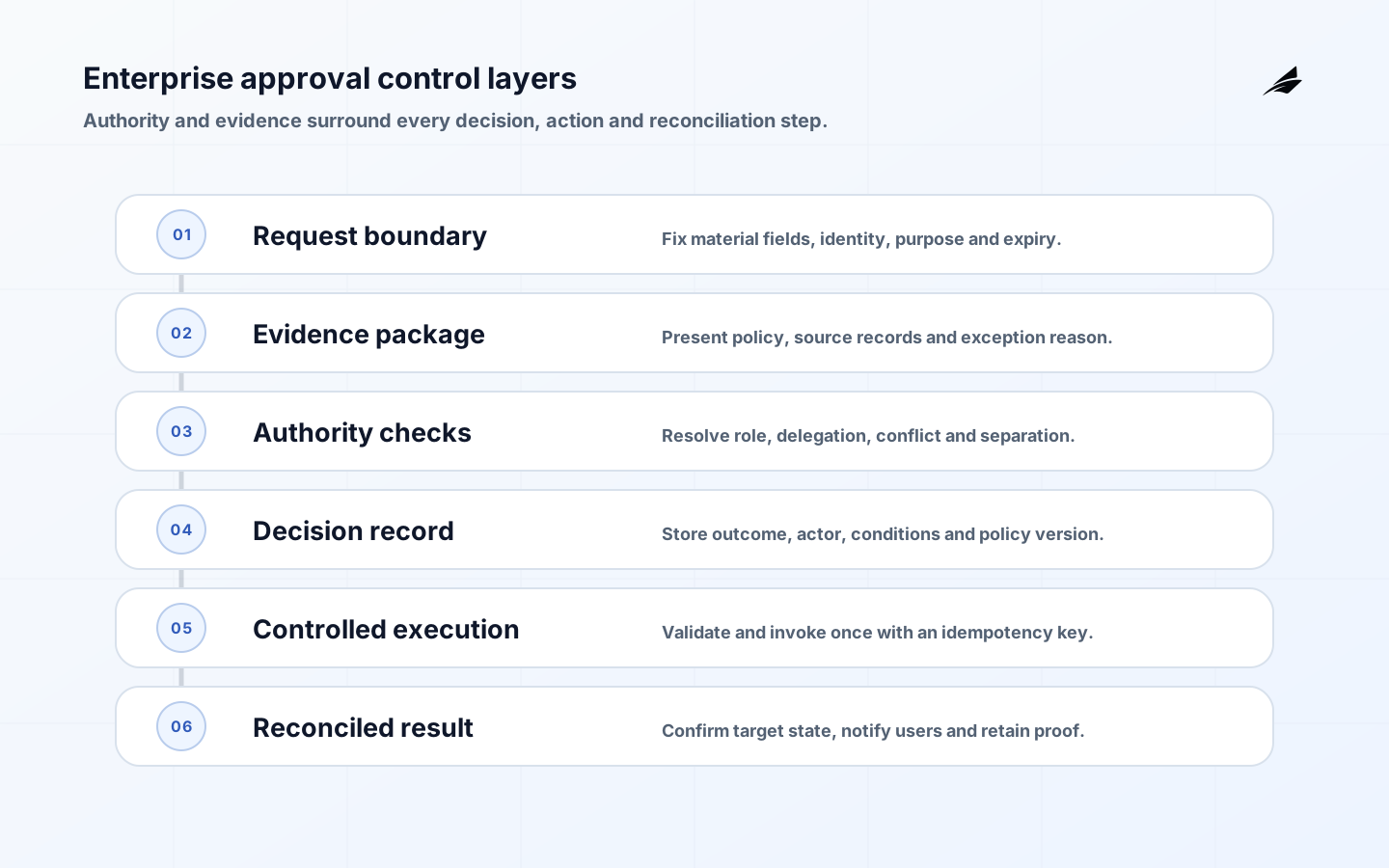
Enterprise approval workflows should turn a consequential request into an accountable decision and a verifiable system effect. The form is the easy part. Architecture must establish current authority, required evidence, delegation and conflicts, expiry, execution and reconciliation. Without those semantics, digitization only makes ambiguity move faster.
Use the workflow exceptions guide, role-based operations, and system-of-record design. The finance systems guide provides a high-control example.
Relevant primary references are NIST Cybersecurity Framework 2.0, the NIST Privacy Framework, Google SRE's monitoring workbook, and the OWASP Application Security Verification Standard. Translate them into local decisions and tests.
Define the decision and its authority
Start with the smallest population where approval workflows change a meaningful outcome. Write lifecycle states in plain language and identify who may create, approve, amend, cancel, investigate, or close each state. Capture stable references, source authority, and effective time at the moment a decision is made. Ask what a newcomer would need to explain a completed case without unrestricted access or a private spreadsheet. That question reveals the minimum evidence the workflow must retain.

| Decision | Working rule | Evidence to retain |
|---|---|---|
| Boundary | State the approval workflows outcome and exclusions. | Examples, lifecycle states, and success condition. |
| Authority | Name business, technical, and exception owners. | Role, delegation, and escalation route. |
| Identity and time | Keep durable references and effective dates. | Source reference, policy version, and change history. |
| Exception | Route ambiguity visibly rather than silently bypassing it. | Queue, reason, resolver, and disposition. |
Model delegation, evidence, and separation of duties
Represent changing policy as data. Preserve the request snapshot, policy version, approver role, delegation, timestamp, rationale, expiry, and execution result. Bind approval to the reviewed version rather than a broad object that can change later.
Test a delegated manager, a request amended across a monetary threshold, and a downstream execution failure. Authority should be recalculated, evidence preserved, and retries constrained to what was actually approved.
| Failure mode | Design response | Review signal |
|---|---|---|
| Incomplete input | Reject or hold records with an explainable reason. | Required-field and validation-failure trend. |
| Duplicate action | Use stable keys, idempotent handling, and reconciliation. | Duplicate rejection and replay volume. |
| Ownership gap | Escalate to a named decision-maker with context. | Aged queue and transfer count. |
| Late correction | Link the compensating action to the original record. | Correction cycle time and recurrence. |
Use evidence and controls deliberately
For approval workflows, use NIST Cybersecurity Framework guidance to name governance and recovery responsibility, and use the NIST Privacy Framework to evaluate data purpose and exposure. Apply OWASP ASVS to sensitive actions, authorization, and audit evidence. Google's monitoring guidance is useful for separating a signal that needs action from diagnostic context that helps someone understand a failure. These references inform design choices; they do not replace the policy and evidence appropriate to the organisation.
- State the approval workflows decision in language product teams can test.
- Keep source, state, timing, policy, and correction rationale together.
- Limit service identities and recovery permissions to the action required.
- Test normal work alongside retries, corrections, unavailable dependencies, and disputed outcomes.
- Reconcile intended work to the final result before treating expansion as success.
Make escalation and execution observable
Run approval workflows as an observable service. Give normal and exceptional work a clear state, durable reference, accountable owner, and a defined point where the final result is verified. Exercise unavailable dependencies, late messages, disputed results, and correction paths during rollout. Before expanding to another team, channel, or region, sample completed cases and inspect whether the evidence supports a safe recovery. Connect this work to a related enterprise systems guide so the workflow remains part of the wider operating model.
Make the human interface carry the operational context. A user should see what happened, what evidence is missing, who owns the next decision, and what action is permitted in the current state. Support teams need a constrained view that keeps sensitive data and privileged actions out of routine handling. When policy changes, update the interface, integration contract, runbook, training material, and exception queue together. Otherwise a locally sensible but obsolete workaround becomes the actual process. For approval workflows, tailor that context to the person at the point of action: a steward needs provenance, a responder needs current impact, and a reviewer needs policy evidence. Design the view around the decision rather than a generic record form, then test whether someone can complete the permitted action without resorting to an untracked message or spreadsheet.
Measure latency with quality and control
Track request age by class, complete-evidence rate, delegation use, rejected execution, reversal rate, and post-approval exceptions. Median speed without quality measures can reward unsafe approvals. Review the measures with people who create, approve, operate, support, and consume the result. When a measure worsens, trace it to a rule, source, integration, interface, or ownership decision rather than merely asking staff to work faster.
| Signal | Question it answers | Action when it worsens |
|---|---|---|
| Aged exceptions | Where has normal processing failed to produce a final result? | Assign a resolver, classify the cause, and prevent blind replay. |
| Manual overrides | Which rule, input, or ownership boundary is failing? | Review the decision trail and repair the upstream cause. |
| Reconciled outcomes | Did expected work produce the intended result? | Pause expansion until material differences are understood. |
Build a controlled first release
Build the first release around one consequential approval workflows decision and a deliberately limited population. Bring the business owner, technical owner, operator, and support path into the same review so they can agree what a correct result looks like. The scope should be small enough to inspect completed cases, but real enough to exercise actual handoffs, source data, and dependencies. This is where assumptions become testable operating rules.
Write acceptance checks that retain stable identifiers, source evidence, effective time, policy version, and the final business outcome. Confirm that the workflow produces the intended effect once and that a person can explain why it happened. Use examples from current operations, including incomplete input and a changed circumstance. A concrete case gives engineering and operations a common reference when implementation details begin to hide the underlying decision. In approval workflows, acceptance evidence should connect the initiating fact to the resulting operational state, including the version of any rule or contract used. That makes a completed test meaningful to both the delivery team and the person who will later resolve an exception.
Exercise the exception path before expanding approval workflows. Decide what may retry, what must pause, who can correct a result, and how recovery is verified. Corrections should be bounded by an identifiable record and connected to the original action; broad replay or direct editing is rarely an adequate response to a consequential problem. A rehearsed recovery route makes the normal path safer because staff do not need to invent authority during pressure.
Hold a recurring evidence review that samples completed work as well as unresolved items. Look for missing context, unnecessary overrides, repeated upstream defects, or handoffs that leave a customer or colleague without a clear next step. Turn the finding into an owned improvement to policy, interface, source quality, contract, or support guidance. Metrics identify where to look; representative cases reveal what must change. For approval workflows, make the review population deliberate: choose an ordinary completed case, a delayed or rejected case, and a correction from the same period. Trace each item from the initiating evidence through every handoff to its final result. Ask whether the stated owner could act with the available context, whether a downstream consumer received the right state, and whether a customer, employee, supplier, or colleague would receive an intelligible explanation. Record a specific improvement and return to the same measure in the next review; otherwise a meeting can describe a known weakness without changing it.
As approval workflows grows, keep operational change close to the work. Version meaningful rules and contracts, notify affected owners, test a representative population, and retain a rollback or compensating option. Expansion is justified when the current scope can reconcile expected work, explain exceptions, and recover predictably. Adding volume before those behaviours are proven creates more activity without creating more control.
Separate approval from execution
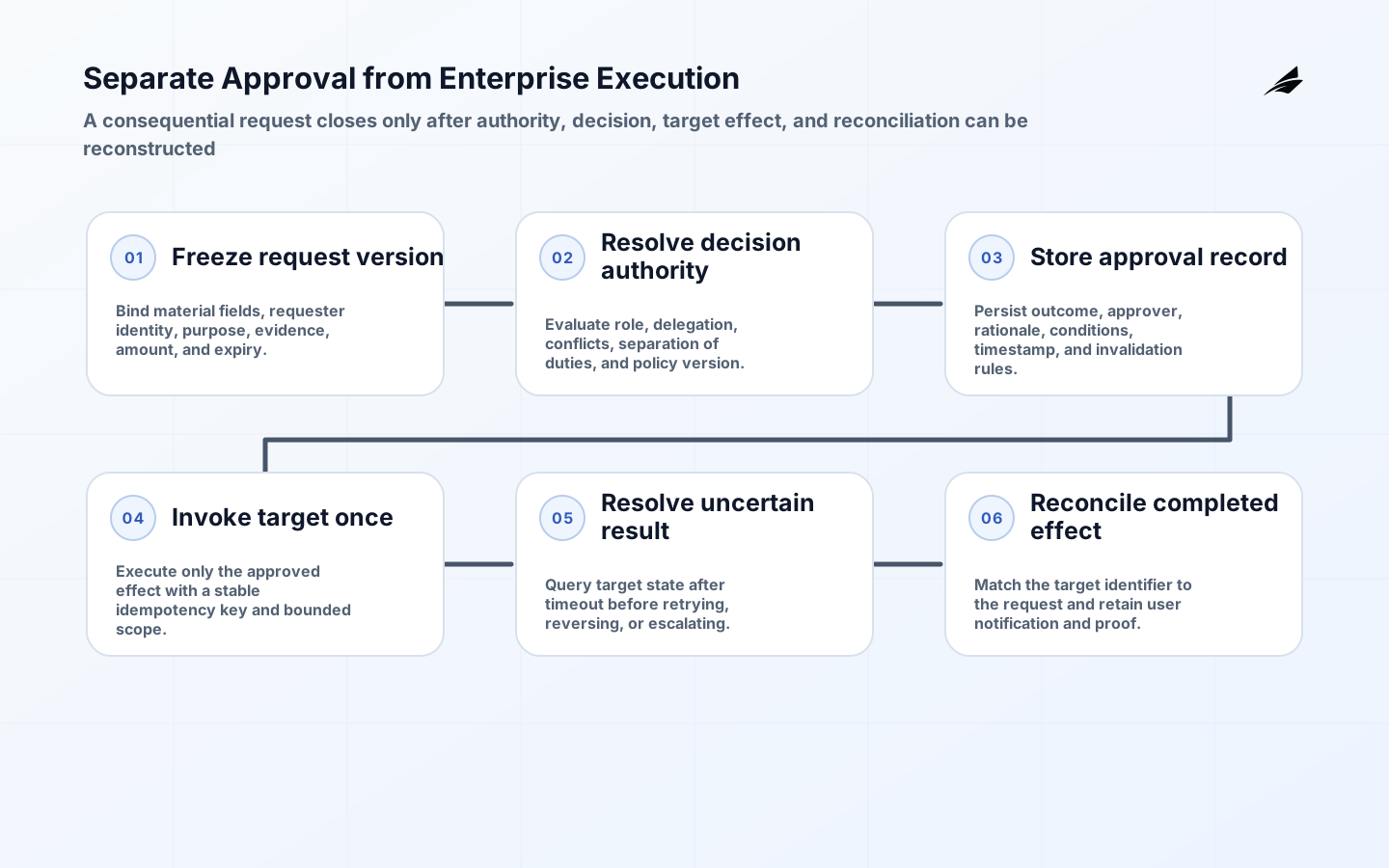
Store the decision, authority, evidence version and conditions before invoking a target system. Execution uses a stable idempotency key and returns durable success, rejection or uncertainty. If the target times out, query transaction state before retrying. This prevents duplicate payments, grants or purchase orders.
For purchasing, amount and cost center determine authority at submission. A delegate cannot approve their own request, and a material edit invalidates approval. The workflow closes only after the ERP identifier is reconciled. An emergency path requires a reason, narrow duration and retrospective review.
- Define request, authority source, evidence and expiry.
- Evaluate conflicts at decision time.
- Invalidate decisions after material changes.
- Keep approval, execution and reconciliation distinct.
- Provide delegation, cancellation and emergency states.
- Measure latency with reversals and control failures.
Key takeaways
- Anchor approval workflows in a consequential decision rather than a platform ambition.
- Make state, authority, timing, and evidence visible where people act.
- Design correction, retry, and reconciliation before scaling automation.
- Use recurring exceptions to improve upstream quality and policy.
- Judge success by reliable outcomes for the people affected.
Frequently asked questions
When should approval be invalidated?
When a material field, evidence item, policy version, authority condition or risk classification changes. Define materiality explicitly.
What is a good escalation rule?
It names the trigger, destination, context, authority and deadline and never turns non-response into consequential approval.
What is the first practical step for approval workflows?
Do approvals need several reviewers? Use the smallest authority set that satisfies risk, policy, and separation requirements.
How should teams handle exceptions?
Can approval be automated? Yes for bounded policies with reliable inputs and reviewable exceptions; record the policy and request version used.
Conclusion
Approval workflows becomes dependable when the operating decision is clearer than the implementation. Define authority and evidence, make the exception path visible, observe the final result, and use each correction to improve the next cycle. That is how the system becomes part of daily work rather than another destination for data.