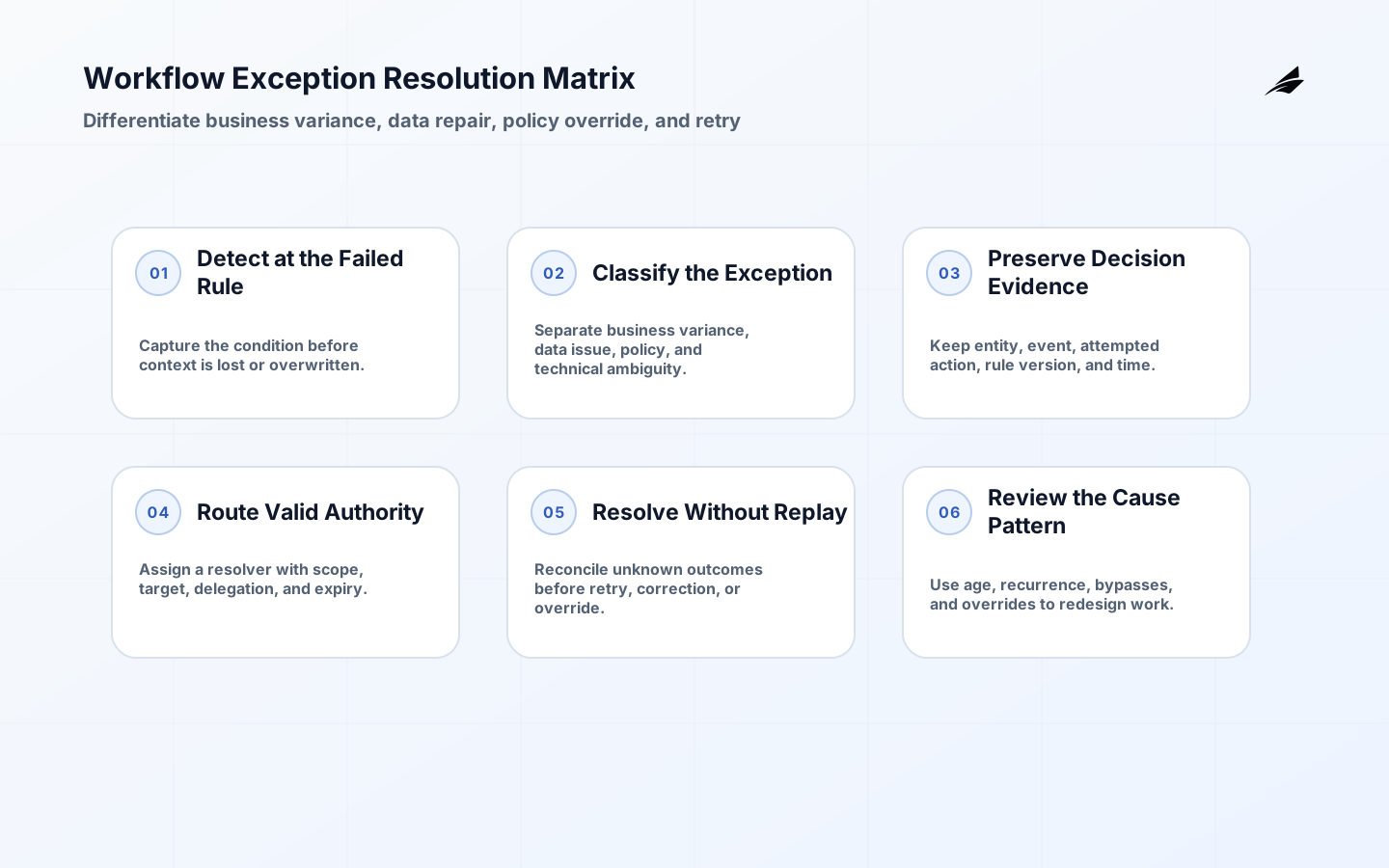
The happy path is usually the easiest part of enterprise workflow. Hard work appears when data is missing, approval is late, policy conflicts with a commitment, or an integration returns an ambiguous result. Workflow exceptions should be first-class operating states. When teams force them through a normal route or resolve them in private messages, they lose decision evidence and teach people that the system cannot be trusted.
Build workflow exceptions around a clear operating model
An exception is not merely an error. It is a condition needing a different decision, extra evidence, or authority outside the normal rule. Separate expected business exceptions, such as a justified threshold override, from technical failures, such as a timeout with unknown completion. Each type needs cause, severity, owning role, response target, and permitted resolution. That stops one failed status from mixing customer choices, data defects, and service incidents.
| Decision | Practical definition | Why it matters |
|---|---|---|
| Type | Example | Decision |
| Business variance | Nonstandard term | Approve or revise |
| Data issue | Required ID absent | Correct source |
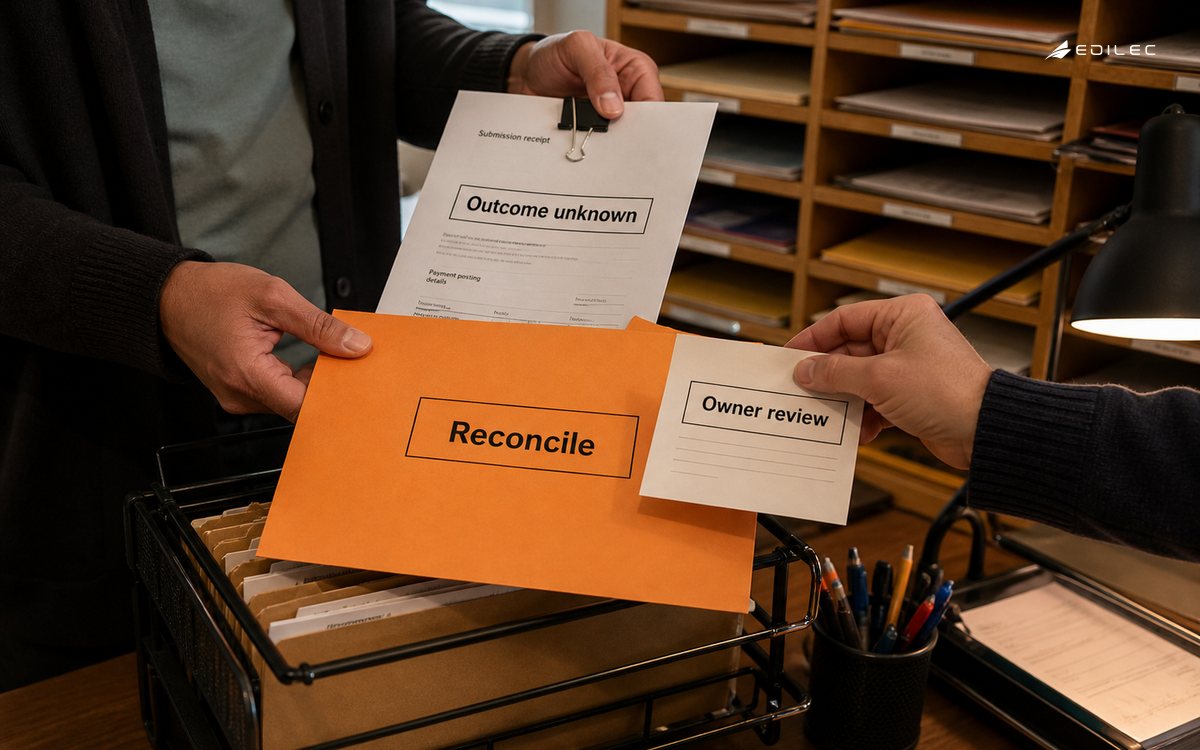
| Technical ambiguity | Timeout after posting | Reconcile before retry |
| Policy override | Urgent work over limit | Use delegated authority |
Design the workflow exceptions workflow and handoffs
Detect the condition near the rule that cannot proceed, preserve input and correlation ID, then route it to someone empowered to decide. Resolution should create a new auditable state rather than editing history. The approval workflows guide explains why a recorded decision and server-side enforcement matter: an interface note cannot authorize an action by itself.
- Name the business outcome and accountable owner.
- Use stable identifiers for records and related entities.
- Document the normal path before configuring automation.
- Make authority, limits, and effective dates explicit.
- Route uncertainty to a named role with a response target.
- Test correction and reconciliation with representative records.
Keep workflow exceptions data and evidence usable
Exception records need enough context for the next person to act without reopening five systems. Include affected entity, source event, attempted action, rule version, timestamps, customer impact, and links to evidence. Do not copy sensitive material indiscriminately into a queue. Where users need a record, use scoped references with underlying authorization. Retry behavior must be explicit: retrying payment, posting, or notification must not create a second effect.
Control workflow exceptions without hiding them
Dangerous patterns are unlimited overrides, ownerless queues, and automatic retries against unknown outcomes. Give overrides bounded permission and expiry. Escalate aging exceptions before their business deadline. Technical exceptions that may have succeeded require reconciliation against the target before replay. A human can close a ticket, but the authoritative record needs proof that the outcome is known.
| Control area | Signal to review | Action when it fails |
|---|---|---|
| Control | Evidence | Response |
| Ownership | Assignee and target | Escalate aging item |
| Rule version | Policy at detection | Review changed rule |
| Retry safety | Idempotency and status | Reconcile before replay |
| Closure | Verified result and rationale | Reopen or correct |
Deliver workflow exceptions in a manageable sequence
Mine a month of manual workarounds, reversals, reopened tickets, and integration errors. Group them by decision rather than application team. Select the two costliest types and design evidence, ownership, and recovery. Test with an operator who did not build it: resolve, transfer, request information, and explain the result. That is more revealing than demonstrating a pristine automatic flow.
Use workflow exceptions signals that lead to action
Watch volume by cause, age against target, repeat rate, override frequency, and detection-to-verified-resolution time. Declining volume is not automatically good; people may have found a new bypass. Sample closed cases for policy gaps, confusing inputs, recurring customer conditions, and automation that needs redesign rather than another patch.
Run a practical workflow exceptions design review
A useful design review for workflow exceptions begins with a specific operating decision rather than a product demonstration. Put the requester, operator, policy owner, and technical maintainer around the same example. Ask what starts the work, which record is authoritative, what decision changes the state, and what evidence must remain available afterwards. This makes assumptions visible before they become configuration. It also reveals where a label such as approved, active, delivered, or closed has different meanings to different teams. For this design choice, name the accountable owner, supporting evidence, exception route, and next measurable check.
Next, test the boundary conditions that make workflow exceptions costly in real life: incomplete input, a duplicate request, changed authority, a late event, a conflicting record, or a dependency that never responds. For each condition, state whether the system should stop, queue work, request information, apply a bounded rule, or escalate. The answer should include a named role and a time expectation. A workflow that only describes successful completion gives operators no useful instruction when normal conditions break. Within this design choice, name the accountable owner, supporting evidence, exception route, and next measurable check.
Walk through a payment posting that times out after submission. Trace rule outcome, target-system status, and escalation authority from the first event to final confirmation. The group should identify every handoff, ID, and external effect, then deliberately repeat the scenario after a timeout or correction. This exercise exposes hidden manual reconciliation and identifies actions that must be idempotent. It is more concrete than a high-level architecture review because it asks whether the evidence available to the next person is enough to make a defensible decision. When implementing this design choice, name the accountable owner, supporting evidence, exception route, and next measurable check.
Treat data changes as part of the operating model. Workflow exceptions needs clear validation at the point where facts enter, a way to record why a value changed, and a controlled route to repair a bad value. Downstream readers need to know whether they are seeing a current result, a historical result, or a pending correction. Without that distinction, teams compensate with spreadsheets and informal messages, which makes later reconciliation slower and less trustworthy. Before releasing this design choice, name the accountable owner, supporting evidence, exception route, and next measurable check.
For IT managers working on workflow exceptions, this recovery path should connect workflow authority, system-of-record ownership, approvals, exceptions, reconciliation, and reporting to evidence an accountable owner can inspect. Make the human interaction deliberate. Automation can route, calculate, notify, or prevent an unsafe action, but it cannot remove responsibility for ambiguous business context. Give people a concise queue with the reason work arrived, the impact of delay, the decision they are permitted to make, and links to the evidence they need. Give them an explicit way to return, reassign, or escalate work. This produces faster decisions than a generic task list because it respects the limits of the rule. In this operating review, move beyond the recovery path only after the owner can show the accepted result, the exception path, and the signal for another review.
In workflow exceptions, IT managers should make the relationship between workflow authority, system-of-record ownership, approvals, exceptions, reconciliation, and reporting explicit and reviewable. Plan day-two operations while the design is still small. Name who monitors failures, who approves policy changes, who owns source data, and who decides that a recurring exception deserves redesign. Define the minimum logs, alerts, and reconciliation routine before launch. The aim is not exhaustive monitoring. It is a short set of signals that makes an emerging problem visible while a responsible team can still correct the system, notify affected people, and preserve an accurate record. This operating review should close the recovery path only when the result, unresolved exception, and next review condition are recorded.
A dependable workflow exceptions design makes workflow authority, system-of-record ownership, approvals, exceptions, reconciliation, and reporting visible to the owner responsible for this recovery path. Set release acceptance around observable outcomes. A release should demonstrate a normal record, an invalid record with a useful explanation, an authorized exception, and a correction that reaches dependent systems without a duplicate effect. Include access and audit checks where the workflow handles sensitive data or consequential decisions. Record the test data and expected result so later changes can be compared. This kind of acceptance evidence protects both operators and engineers when pressure builds to expand scope. The next step in this operating review is justified when the team can trace the accepted outcome, the fallback route, and the owner of follow-up.
Validate workflow exceptions through a complete operating case
Use this operating guide to validate workflow exceptions with one complete operating case before widening the scope. IT managers should trace one business case across intake, validation, approval, system updates, downstream handoffs, and an operator-visible completion state. Begin with the initiating business record, accountable role, approval state, integration handoff, exception reason, and reconciled outcome, cross each policy and dependency boundary, and finish in a durable state that a customer or operator can recognize. Record the expected state at every handoff, who may change it, and which evidence proves that the next step was justified. This walkthrough gives product, engineering, security, and support a shared acceptance case instead of allowing each team to assume that another layer owns the transition. Use representative roles, realistic timing, and the constraints that exist during an ordinary operating day.
The operating guide should also test a second workflow exceptions case that deliberately challenges the design. Include a disputed record, unavailable approver, duplicate handoff, policy exception, or mismatch between systems of record. The purpose is not to demonstrate that every dependency always succeeds; it is to prove that the service can stop safely, preserve useful evidence, and expose the next responsible action. Review record version, approval evidence, queue age, exception owner, reconciliation result, and service outcome together so the team can distinguish a policy refusal from bad input, a software defect, a delayed dependency, or an operator decision. A useful result is specific enough for a support or incident owner to act without reconstructing the entire journey from unrelated logs and messages.
Turn both cases into release evidence for workflow exceptions. Keep the input conditions, expected states, observed result, decision owner, and unresolved exceptions in one reviewable record. Define the recovery action in advance: protect the authoritative record, isolate the disagreement, assign the exception, reconcile affected systems, and document the resolution. Re-run the same cases after a material policy, interface, data, model, infrastructure, or entitlement change so that improvements do not silently weaken an earlier control. For this operating guide, readiness means that the normal path is usable, the failure path is understandable, and ownership remains visible after launch rather than ending when implementation work is declared complete.
- Choose one representative workflow exceptions journey and state the customer or operator result in plain language.
- Capture the initiating business record, accountable role, approval state, integration handoff, exception reason, and reconciled outcome as evidence, with a named owner for each consequential handoff.
- Exercise a disputed record, unavailable approver, duplicate handoff, policy exception, or mismatch between systems of record before broader exposure and verify that the safe state is visible.
- Review record version, approval evidence, queue age, exception owner, reconciliation result, and service outcome after release and assign every unresolved exception to a person and date.
Key workflow exceptions takeaways
- Workflow exceptions should support a concrete business outcome, not a generic feature list.
- Authority, identifiers, and correction paths need design before scale.
- A visible exception route is safer than an informal bypass.
- Logs and history should help an accountable person reconstruct an outcome.
- Pilot one consequential path with real operators and awkward cases.
- Use signals to improve work, not only count activity.
Workflow exceptions FAQ
Must exceptions have human review? No; a known low-risk case can resolve deterministically, but its rule remains visible. What is an override? An authorized decision outside a standard rule, not a retry or data correction. How long keep history? Define retention around business, regulation, privacy, and investigation needs before a dispute occurs.
Conclusion: make workflow exceptions dependable in ordinary work
Workflow exceptions are where control design becomes real. Give every condition a state, evidence, authority, and recovery route, then use patterns to reduce avoidable work without hiding legitimate judgement.