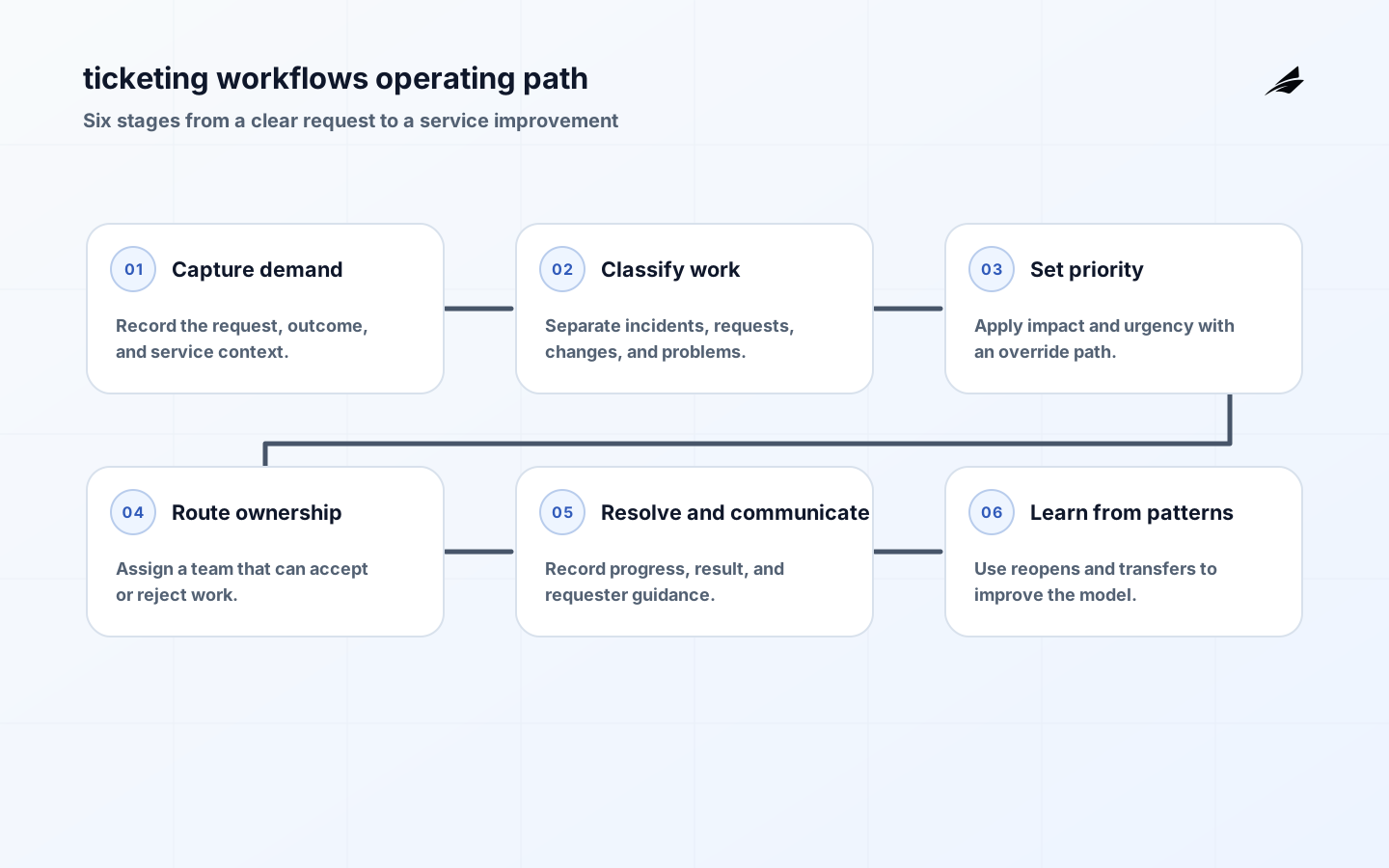
A ticket is useful only when it represents a real obligation: someone owns the next action, the requester can see what happened, and the team can learn from the outcome. Ticketing workflows become brittle when every request is treated as an incident or when a form simply moves email into another inbox. A buyer or CTO should judge the workflow by how it handles intake, priority, handoffs, escalation, and closure under ordinary pressure.
Build ticketing workflows around an accountable operating model
Separate service requests, incidents, problems, changes, and work tasks before choosing fields or automation. A password reset may follow a predictable request model; an outage needs impact and urgency; a recurring fault needs problem investigation. The same tool can support all of them, but a single lifecycle cannot express their different commitments. Define where work enters, which teams may accept it, and which system remains authoritative for affected services and assets. Teams planning adjacent work should also consider this operations control rooms guide, because shared records and handoffs often determine whether an apparently local improvement survives production use.
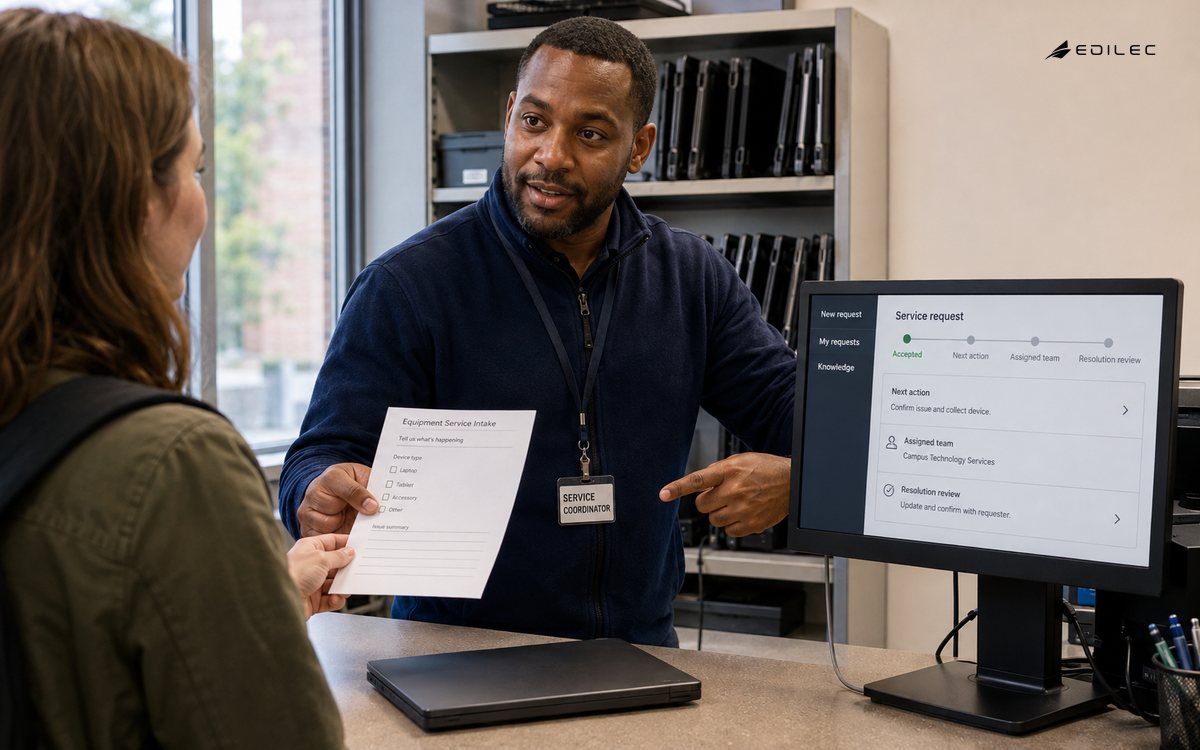
Define the records and states that make ticketing workflows explainable
A practical workflow has explicit states, entry criteria, exit criteria, and accountable roles. “Waiting” should say what is awaited and who owns the follow-up. Priority should be derived from transparent impact and urgency rules, with a clear route for human override. Assignment rules may suggest a team based on service, location, or category, but the receiving team must be able to reject a misrouted ticket with a reason that improves the rule.
| Decision | Practical definition | Why it matters |
|---|---|---|
| Work type | Request, incident, problem, change, or task | Aligns lifecycle and service promise |
| Priority | Impact, urgency, and documented override | Makes escalation explainable |
| Routing | Service, category, location, and team capacity | Reduces bounce and lost ownership |
| Closure | Outcome, resolution evidence, and reopen policy | Creates usable service history |
Set ownership and controls before automating the happy path
Governance starts with service promises that can actually be measured. Define acknowledgement, update, and resolution targets separately, and pause a timer only for documented reasons. Give requesters meaningful status language rather than internal queue jargon. For major incidents, name the incident lead, communications owner, and decision cadence before the next emergency. Post-incident work should create owned corrective actions, not merely a carefully written timeline. The related approval workflows guide is a useful comparison when the design includes cross-team rules, because both practices depend on knowing whose decision controls the next state.
- Classify the first set of requests and incidents by outcome, not by department.
- Write state entry and exit criteria that agents can apply consistently.
- Set priority rules and document the override authority.
- Map every routing rule to an owner and a reason code for rejection.
- Test escalation and communications during an out-of-hours scenario.
- Audit a sample of closed tickets for resolution quality and correct category.
Deliver ticketing workflows in slices and make exceptions visible
Pilot the workflow with one service and its most common requests. Import only the knowledge, categories, and asset data that agents will use in that path; excessive catalog design delays learning. Integrate identity and monitoring after the base records have stable ownership and audit history. Test duplicates, reassignment, an unavailable resolver group, an urgent request outside business hours, and closure followed by a requester reopening the ticket.
Use operating signals that lead to an action
Measure flow as well as speed: age by state, transfers before resolution, reopen rate, breached updates, and the proportion of tickets solved through a known solution. Segment results by request type and service, because one blended average conceals a failing queue. Regularly sample closed tickets for accurate categorization and a complete resolution note. Those checks make trend data credible enough to guide staffing and service improvement.
| Control area | Signal to review | Accountable role |
|---|---|---|
| Queue health | Age and unassigned tickets by state | Service desk lead |
| Routing quality | Transfers and rejection reasons | Process owner |
| Service targets | Acknowledgement, update, and resolution breaches | Service owner |
| Record quality | Closure-note and category sampling | Knowledge manager |
Common ticketing workflows failure modes and practical responses
Ticketing workflows have their own failure patterns. A configured tool can still fail because a key record is ambiguous, authority is missing, or an integration hides a rejected change. Treat each repeated exception as a case with evidence, a named owner, and a specific decision about whether policy, data, process, or code must change. That approach preserves operational learning without normalizing a workaround as part of the system.
Use a decision workshop before expanding scope
A useful decision workshop for ticketing workflows starts with a concrete operating case rather than a platform diagram. Put the people who create the record, apply the policy, consume the result, and repair failures in the same discussion. Ask them to trace the first design choice: work type. The team should agree on request, incident, problem, change, or task and why it matters: aligns lifecycle and service promise. Then repeat the exercise for priority. Disagreement is useful evidence; it often reveals that two teams have been using the same term for different business conditions.
Turn the workshop into a short operational rehearsal. First, classify the first set of requests and incidents by outcome, not by department. Next, write state entry and exit criteria that agents can apply consistently. Then test whether the team can set priority rules and document the override authority. Do this with a representative, non-sensitive record and an ordinary time constraint. A review that only describes the ideal path will miss the handoff, authorization, or missing-data condition that causes the real escalation. The purpose is to make ownership and evidence usable before more users depend on the workflow.
The exception path deserves equal design attention. Use the next steps as a practical test: map every routing rule to an owner and a reason code for rejection. Also, test escalation and communications during an out-of-hours scenario. Finally, audit a sample of closed tickets for resolution quality and correct category. Record the decision with the relevant source evidence and avoid repairing a symptom in a private message. When an exception returns, compare it with the earlier case; recurrence is a signal to change the input rule, policy, mapping, or service boundary rather than simply closing another ticket.
As scope grows, preserve the second set of design choices. For routing, the operating definition is service, category, location, and team capacity; this matters because it reduces bounce and lost ownership. For closure, use outcome, resolution evidence, and reopen policy so the team can create usable service history. These details are where a pilot becomes a service other teams can rely on. They also give reviewers a stable way to distinguish a legitimate exception from an undocumented bypass.
Review evidence on a regular cadence with the people able to change the system. Look at queue health through age and unassigned tickets by state, owned by service desk lead. Pair that with routing quality: transfers and rejection reasons. The goal is not a perfect dashboard. It is a short list of decisions: which failure needs an immediate repair, which trend needs a policy change, and which measurement no longer represents the operating outcome the team cares about.
Use a written acceptance test for the next release of ticketing workflows. The test should show that a normal record completes, an invalid record is stopped with a useful reason, and a corrected record can continue without creating a second outcome. It should also prove the policy behind work type remains visible to the person reviewing the result. These tests create shared confidence between the business owner and the delivery team, especially when a change crosses an integration boundary.
Keep the review practical by sampling a recent case and asking the questions users actually ask: What is the difference between an incident and a service request? Should priority be selected by the requester? When should a ticket be closed? Then compare the answers with the current evidence in the system. The control view should help the responsible team inspect service targets through acknowledgement, update, and resolution breaches, and decide whether the next improvement belongs in policy, data, product behavior, or operations. This small discipline prevents a growing system from accumulating unexplained exceptions.
Key ticketing workflows takeaways
- Different kinds of work need different lifecycles even when they share one platform.
- A status without an owner or next action is not a usable workflow state.
- Routing and closure data are product feedback for the operating model.
Frequently asked questions about ticketing workflows
What is the difference between an incident and a service request?
An incident is an unplanned interruption or degradation that needs restoration; a service request is a defined request for access, information, or a standard service. Distinguishing them prevents both artificial urgency and hidden service commitments.
Should priority be selected by the requester?
Let requesters describe impact, but calculate or review priority using published rules. They may not see the full business impact, while agents need a documented path for raising or lowering priority when evidence changes.
When should a ticket be closed?
Close when the defined outcome is delivered, the requester has the information needed, and the record contains a useful resolution or next step. A closure policy should also state when a ticket may be reopened and how that affects reporting.
Conclusion
Ticketing workflows are not a purchase of forms and timers. They are a shared service contract expressed in records, queues, and decisions. Begin with a small request and incident scope, make each handoff explainable, and use actual reopened or misrouted tickets to revise the design. That is how a service desk becomes a reliable operating system rather than a more formal inbox.